Devices for Detecting Voids and Secret Caves
A Comprehensive Guide to Understanding the Technology and Choosing the Right Device
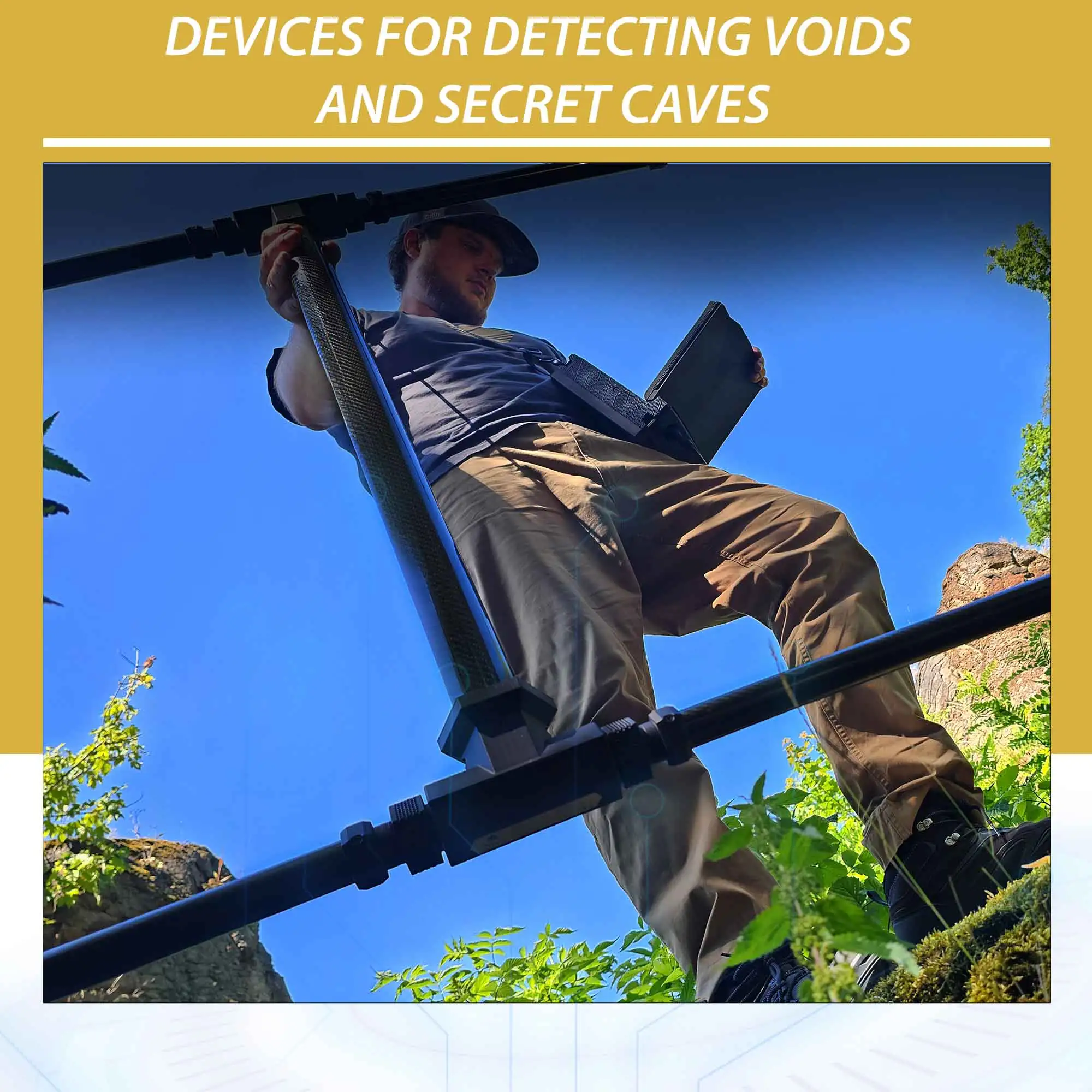
Devices for detecting voids and secret caves are among the most important tools used in many fields such as archaeology, exploration, searching for tunnels and buried rooms, and even in engineering and construction works. They are specifically designed to detect empty spaces beneath the ground surface, such as natural caves, tombs, ancient tunnels, and secret chambers.
What are Devices for detecting voids and secret caves ?
They are electronic devices that rely on advanced physical technologies to analyze the soil and what lies beneath it, and to identify differences in density or the presence of voids underground. When the device passes over an area that contains a void, a different signal or reading appears compared to solid soil, indicating the presence of a cave or cavity.
Main technologies used in void detection devices
1. Ground Penetrating Radar (GPR) technology
It works by sending electromagnetic waves that penetrate the ground and are reflected when they hit an object or a void.
Advantages:
-
Provides a شبه three-dimensional image of what is underground
-
Very accurate in determining depth and shape
-
Used in archaeological and engineering research
2. 3D imaging technology
It works by drawing layered cross-sections of the soil and showing voids in different colors on the device screen.
Advantages:
-
Clarifies the size and shape of the void
-
Helps distinguish between natural voids and man-made structures
-
Easy to read for professional users
3. Seismic wave technology
It depends on measuring the speed of vibration transmission through the soil, as the speed changes when a void is present.
Advantages:
-
Effective at great depths
-
Suitable for natural caves and long tunnels
Uses of void and secret cave detection devices
-
Searching for tombs and archaeological graves
-
Discovering secret tunnels
-
Locating natural caves
-
Detecting buried rooms or underground corridors
-
Examining land before construction or excavation
Advantages of void and secret cave detection devices
-
Save time and effort instead of random digging
-
Reduce the risk of ground collapse
-
Provide more accurate results compared to regular metal detectors
-
Determine the approximate depth of the void
Difference between a metal detector and a void detector
| Metal Detector | Void Detector |
|---|---|
| Detects gold and metals | Detects voids and cavities |
| Relies on magnetic frequencies | Relies on radar or imaging |
| Does not show the shape of the target | Shows the shape and size of the void |
Tips when choosing a void detection device
-
Determine the target (cave, tomb, tunnel, room)
-
Choose a device that supports 3D imaging
-
Make sure the detection depth is suitable (5 m – 30 m depending on the device)
-
Choose a device that is easy to use with a clear analysis program
-
Buy from a trusted company with training and warranty
Are void detection devices accurate?
Yes, but they require:
-
Correct usage
-
Professional interpretation of the results
-
Understanding the nature of the soil
-
Repeating the scan for confirmation
The results are not random; rather, they depend on differences in density between the void and the surrounding soil.
Conclusion Devices for detecting voids and secret caves
Devices for detecting voids and secret caves represent a qualitative leap in the field of underground exploration, whether for archaeological, scientific, or engineering purposes. With the continuous development of imaging and analysis technologies, these devices have become more accurate and easier to use, making them an ideal choice for anyone seeking professional solutions to discover what is hidden beneath the ground surface.