
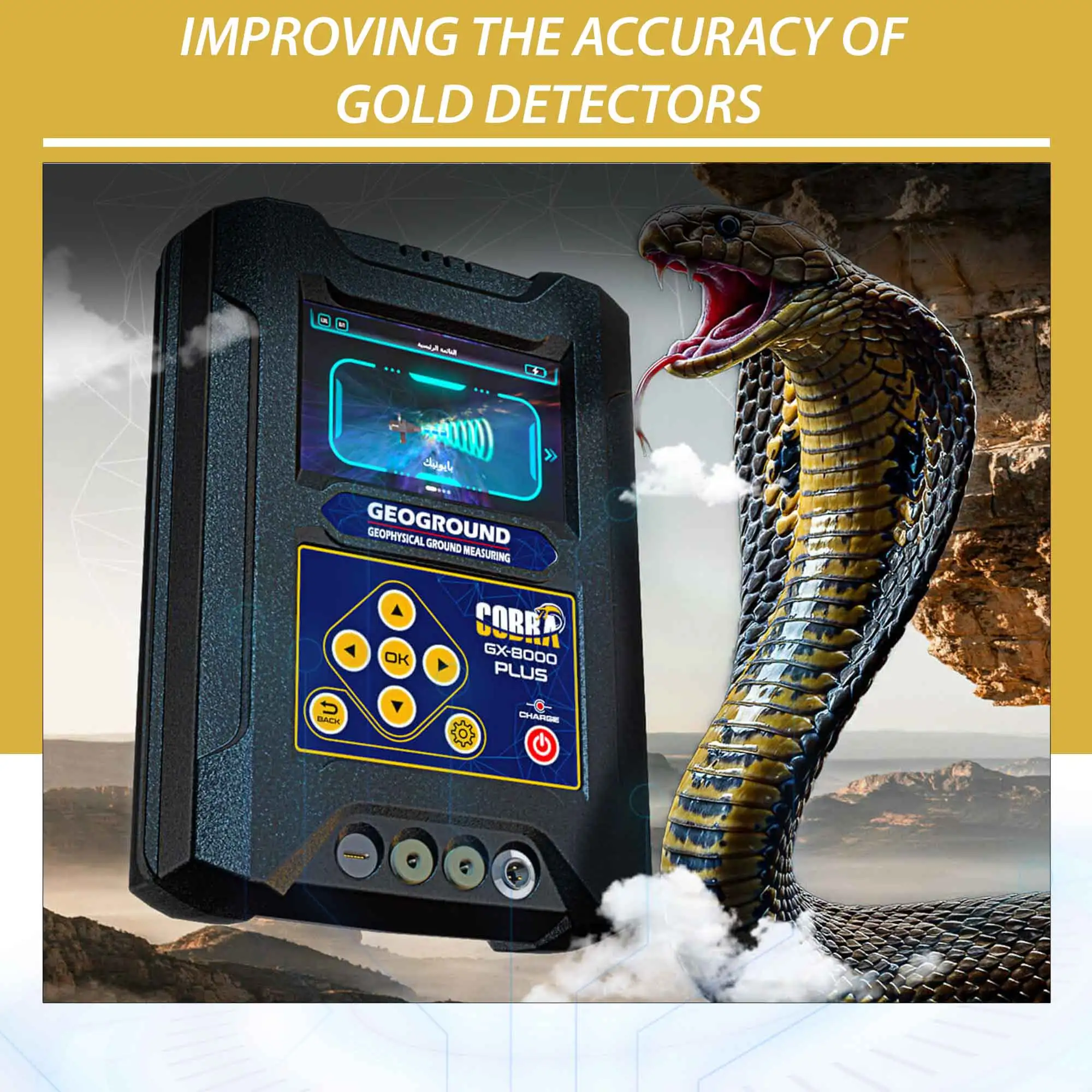
Improving the Accuracy of Gold Detectors
A gold detector is one of the most important tools relied upon by prospectors and precious metal seekers, whether for professional exploration or as a hobby. However, owning an advanced device alone is not enough to achieve successful results, as the effectiveness of the detector mainly depends on its ability to accurately distinguish real gold from other metals. Therefore, improving the accuracy of gold detectors is a key factor in reducing false signals and increasing the chances of finding genuine targets.
Correct Adjustment of Device Settings
The first step in improving the accuracy of gold detectors is adjusting the settings according to the nature of the ground and the type of target sought. One of the most important settings is ground balance, as soil contains different levels of natural minerals that may cause signal interference.
When ground balance is set accurately, the device becomes more stable and the effect of unwanted minerals is reduced.
It is also recommended not to raise the sensitivity level to the maximum immediately, as this may lead to receiving weak or false signals.
The better approach is to set the sensitivity to a medium level and then increase it gradually until the best possible performance is achieved without interference.
As for the discrimination feature, it helps exclude unwanted metals such as iron, making gold signals clearer and more precise.
Choosing the Appropriate Search Coil
The search coil plays a major role in improving the accuracy of gold detectors . Small coils are more capable of detecting tiny gold nuggets, while large coils are used to detect larger and deeper targets, but they are less accurate in discrimination.
The shape of the coil is also important, as narrow or elliptical coils are suitable for rocky areas or places filled with metallic debris because they reduce signal overlap.
Training and Understanding Device Signals
User skill is no less important than the quality of the device itself. Recognizing the nature of audio or digital signals helps in distinguishing gold from other metals. Gold signals are usually stable and clear compared to the intermittent signals produced by common metals.
It is best to test the device on real gold samples before going into the field, as this helps the user memorize the specific gold signal pattern, which increases the accuracy of digging decisions during the search.
Selecting the Right Search Location
improving the accuracy of gold detectors is also related to the place where the search is conducted. Areas that are geologically known for gold presence offer much higher chances of success than random locations.
It is also preferable to avoid places full of iron scrap or metal waste, as the abundance of such materials causes signal interference and reduces result accuracy. Old riverbeds and rocky mountainous areas are considered among the best potential sites for finding raw gold.
Regular Maintenance of the Device
Keeping the device in good condition directly reflects on its accuracy. It is necessary to ensure that the coil cable is intact and free from cuts or damage, as any defect in the cable may lead to false readings.
It is also recommended to clean the coil after each use to remove dirt and mud, and to check the battery regularly to ensure stable electrical power, because a weak battery may affect signal strength and accuracy.
Using Modern Technologies
improving the accuracy of gold detectors varies depending on the technology used. Devices that operate with high-frequency technology are more sensitive to small gold, while pulse induction devices are distinguished by their ability to work efficiently in mineralized soil and difficult rocky environments. Choosing the appropriate technology for the type of ground greatly helps increase accuracy and reduce false signals.
Conclusion Improving the Accuracy of Gold Detectors
gold detectors the most important tools relied upon by prospectors and precious metal seekers, whether for professional exploration or as a hobby. However, owning an advanced device alone is not enough to achieve successful results, as the effectiveness of the detector mainly depends on its ability to accurately distinguish real gold from other metals. Therefore, improving the accuracy of gold detectors is a key factor in reducing false signals and increasing the chances of finding genuine targets.