
How to Use GPZ 8000 in Mineralized Soil: Practical Field Guide
The Minelab GPZ 8000 is a flagship gold prospecting detector built for serious goldfields. It uses GeoZVT technology, Z-Set concentric toroidal coils, and ground-optimized detection to help users find small to larger gold in challenging ground. But powerful technology does not remove the need for skill. In mineralized soil, the difference between a productive day and a frustrating day often comes down to ground type selection, sensitivity control, coil choice, sweep discipline, and audio interpretation.
This practical guide explains how to use GPZ 8000 mineralized soil settings and field technique. It is based on official Minelab GPZ 8000 information, Minelab FAQ guidance, the GPZ 8000 manual references available online, and product information from Orient Detectors GPZ 8000.
Why Mineralized Soil Is Difficult
Mineralized soil contains minerals that produce their own detector response. Iron-rich ground, red clay, basalt, black sand, salt, hot rocks, and conductive wet soil can create ground noise. Minelab FAQ explains that if a detector is noisy while sweeping but quiet when stopped, it may be responding to mineralized ground. The solution is not always more sensitivity. Often, it is better ground type selection, noise cancel, ground balance, and stable settings.
The GPZ 8000 is designed for these conditions, but it still needs the right setup. Minelab describes it as using GeoZVT technology for high performance in mineralized, conductive, and EMI-heavy ground, with Z-Set coils engineered for specific ground conditions and reduced ground noise in mineralized soils.
Start With the Right Ground Type
Ground Type is one of the most important GPZ 8000 settings. The official specifications list search modes/ground types such as Difficult Deep, Difficult High Yield, Normal Deep, and Normal Extra Deep. Minelab FAQ further discusses settings such as Difficult Salt, Difficult High-Yield, Normal Salt, and Normal Extra-Deep.
The practical rule is simple: use the deepest normal setting only when the ground is quiet enough. If the detector becomes unstable or noisy, move toward a more difficult or salt-handling setting. Stable operation is more valuable than theoretical maximum depth.
| Ground Situation | Practical Starting Point | Reason |
|---|---|---|
| Quiet, low-mineral ground | Normal Extra Deep / Normal Deep | Best depth potential when soil allows |
| Typical mineralized goldfield | Difficult High Yield | Better stability with good gold response |
| Conductive or salty mineralized soil | Difficult Salt | Reduces conductive/mineralized noise |
| Unstable or noisy detector | Move to more stable ground type | Quiet operation improves usable performance |
Do Not Chase Maximum Sensitivity
GPZ 8000 offers manual sensitivity levels from 1 to 10 and automatic options. The manual reference notes that the correct sensitivity maximizes detection depth for individual conditions. It also explains the trade-off between Auto and Manual: Auto prioritizes smooth operation and ease of use, while Manual gives experienced users greater control.
In mineralized soil, the best sensitivity is the highest stable setting, not the highest number. If sensitivity creates chatter, false signals, or unstable threshold, lower it. A quiet detector can reveal faint gold better than an unstable detector running too hot.
Use Noise Cancel Before Serious Searching
Electromagnetic interference can imitate ground problems. Power lines, radio transmitters, generators, vehicles, other detectors, and storms can create noise. GPZ 8000 includes Auto and Manual Noise Cancel. Run noise cancel before serious detecting, especially when changing locations or noticing unstable audio.
If the detector remains noisy after noise cancel, check ground type and sensitivity. Do not assume every noise is EMI; mineralized ground can produce similar frustration.
Understand GPZ 8000 Coil Choices
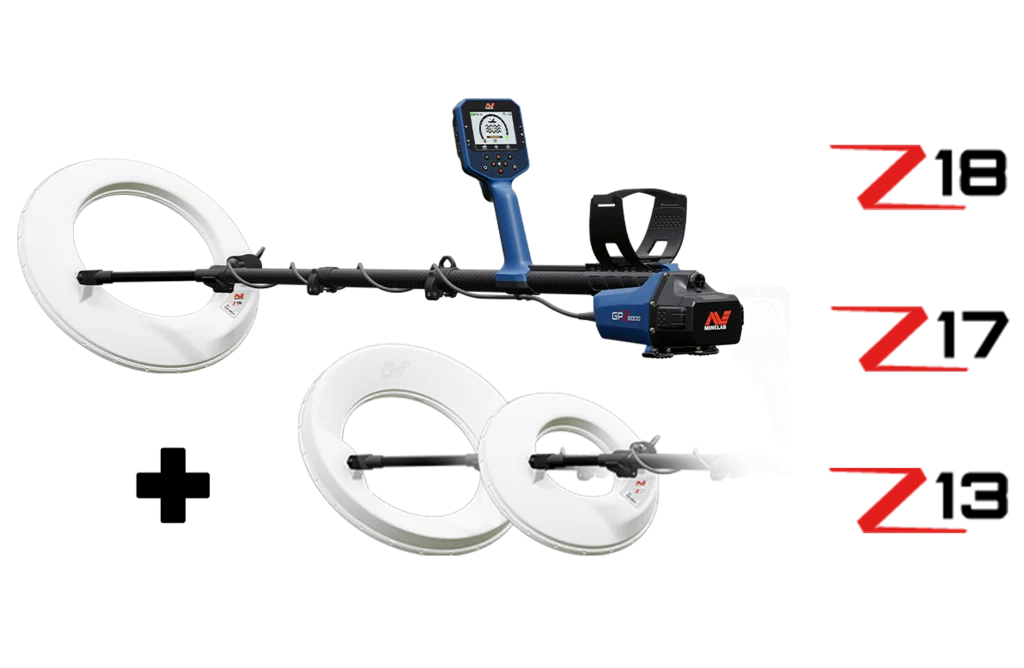
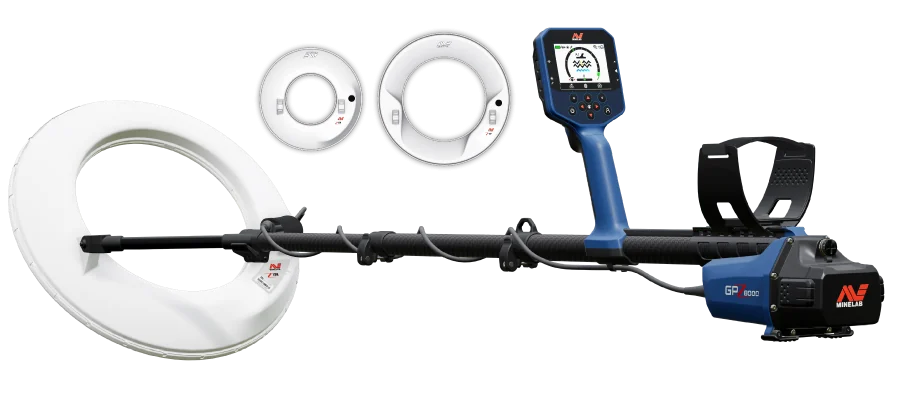
Minelab describes GPZ 8000 Z-Set concentric toroidal coils: Z18, Z17, and Z13. The Z18 18-inch coil focuses on maximum depth and wide coverage in mineralized ground, especially for medium to large gold. The Z17 is designed for high EMI and conductive soils with stable operation and strong target response on small to medium gold. The Z13 suits vegetation-heavy terrain and supports accurate detection of small to medium gold with easier handling.
| Coil | Best Use | Field Note |
|---|---|---|
| Z18 | Open ground, depth, medium to large gold | Use when coverage and depth are priorities |
| Z17 | High EMI or conductive soil, small to medium gold | Useful when stability matters |
| Z13 | Vegetation, tighter terrain, small to medium gold | Better control and reduced fatigue |
Use Mineralization Level as a Field Clue
Manual references describe a Mineralization Level display that can show approximate levels of ground mineralization, with values and a color bar from green for low mineralization to red for high mineralization. This is useful because it helps users see where the ground is changing. Boundaries between soil layers can be important in goldfields because gold may accumulate near changes in ground type or structure.
Do not stare at the display instead of listening. Use Mineralization Level as a supporting clue. If values rise and the detector becomes noisy, slow down, confirm ground type, and reduce sensitivity if needed.
Practical Field Setup for Mineralized Ground
- Assemble the detector and adjust the harness for comfort.
- Move away from vehicles and interference sources.
- Run Noise Cancel.
- Start with a stable ground type such as Difficult High Yield for mineralized goldfields.
- Use Auto or a moderate manual sensitivity until the threshold is stable.
- Sweep slowly with coil low and level.
- Listen for repeatable changes in the threshold.
- Investigate faint signals from multiple directions.
- If the detector becomes unstable, lower sensitivity or choose a more stable ground type.
How to Sweep in Mineralized Soil
Keep the coil close to the ground, level, and moving at a consistent height. Do not scrub hard against rocks unless the coil and terrain allow it safely. Do not swing in a high arc. Overlap each sweep. In mineralized soil, lifting and dipping the coil can create false changes in the threshold.
For faint targets, shorten your sweep and isolate the signal. Approach from multiple directions. If a signal remains in the same spot and improves after scraping a shallow layer, treat it seriously. Small or deep gold can be subtle.
Target ID and Digging Decisions
Minelab FAQ states that there is not one specific Target ID for gold nuggets. Very small gold can provide lower Target ID, while larger gold increases in number. Ranges can overlap with foil, lead shot, iron fragments, small coins, hot rocks, and large iron. The FAQ recommends digging all targets because gold can appear across different IDs.
For serious gold prospecting, do not rely only on numbers. Use audio repeatability, target shape, ground context, and excavation response. If you are in known gold ground, a weak repeatable signal is worth attention.
Troubleshooting Noisy Operation
| Problem | Likely Cause | Action |
|---|---|---|
| Noise only while sweeping | Mineralized ground | Use Difficult/Stable ground type and reduce sensitivity |
| Noise even when stopped | EMI | Run Noise Cancel or move away from interference |
| False signals on hot rocks | Ground mineral response | Recheck from different direction and adjust settings |
| Weak signals disappear | Sweep inconsistency or target angle | Shorten sweep, scrape soil, rescan carefully |
| Fatigue affects swing | Detector weight and long session | Adjust harness and take breaks |
Common Mistakes With GPZ 8000
Using Normal settings in noisy ground
Normal settings can provide excellent depth in quiet soil, but mineralized soil may require Difficult or Salt-type settings for stability.
Running sensitivity too high
High sensitivity that produces chatter reduces practical performance. Use the highest stable level.
Ignoring coil choice
Z18, Z17, and Z13 serve different terrain and target needs. The largest coil is not always best.
Sweeping too fast
Mineralized soil and faint targets require controlled movement. Slow down and overlap sweeps.
Depending on Target ID too much
Gold can appear across a range of IDs. Serious prospectors dig repeatable signals in good ground.
Recommended Workflows
Small to medium gold in mineralized soil
Use a stable Difficult setting, moderate sensitivity, careful sweep, and a coil suited to control. Consider Z13 or Z17 depending on terrain and EMI.
Medium to large deep gold in open ground
Use Z18 where terrain allows. Start stable, then test deeper Normal settings only if the ground is quiet. If instability appears, return to Difficult-type settings.
Conductive or salty ground
Use salt-handling settings and keep sensitivity conservative. Conductive soil after rain can be deceptive, so prioritize quiet operation.
How to Test Settings Before Covering Large Ground
One of the best habits with the GPZ 8000 is testing settings before committing to a full day of searching. Choose a small test patch that represents the ground you will search. Run Noise Cancel, choose a stable ground type, and listen to the threshold while sweeping normally. If the detector is stable, raise sensitivity one step or test a more aggressive ground type. If the threshold becomes unstable, return to the previous setting.
Make only one change at a time. If you change sensitivity, ground type, and coil technique together, you will not know what improved or worsened the detector. Professional users build a mental map of how the detector responds because they isolate variables. Beginners often lose performance by changing too many settings too quickly.
| Test | What You Are Checking | Good Result |
|---|---|---|
| Noise Cancel test | EMI level | Detector quiet when held still |
| Ground sweep test | Mineral response | Stable threshold while sweeping |
| Sensitivity step test | Usable gain | More response without chatter |
| Direction test | Signal repeatability | Target repeats from multiple angles |
| Scrape test | Target vs ground noise | Signal becomes clearer after removing soil |
Understanding Hot Rocks and Ground Signals
Mineralized goldfields often contain hot rocks: stones with stronger mineral response than the surrounding ground. Some hot rocks produce sharp signals that can imitate targets. Others produce broad soft responses. The GPZ 8000 can handle difficult ground well, but the operator must still learn the difference between a localized target and a ground response.
A target tends to stay in one place and become more defined as you shorten the sweep. A ground response may spread over a wider area or change when you change coil height. A hot rock may move with the rock if you kick or remove it. When unsure, scrape carefully and rescan. If the signal stays in the hole and becomes more defined, keep investigating. If the signal moves with a stone or disappears as the ground is disturbed, it may not be gold.
Working Slowly With a Powerful Detector
The GPZ 8000 is powerful, but it still benefits from slow searching. A common mistake is treating a professional detector like a fast coverage machine. In difficult ground, slow coil control matters. Maintain a constant coil height, overlap sweeps, and listen to the threshold. Deep or small gold may not produce a loud obvious sound. It may be a soft rise, dip, or repeatable change that becomes clearer after careful checking.
When using a larger coil such as the Z18, slow down even more. Larger coils cover more ground but also require better control. In uneven terrain, a smaller coil may produce better practical results because it maintains a stable height and fits between rocks and vegetation. The “best” coil is the one that lets you keep control in the actual terrain.
Field Strategy for Mineralized Goldfields
Mineralized soil often changes over short distances. A detector that is stable in one wash may become noisy on a nearby ridge. Use these changes as information. Gold is often associated with geological transitions: changes in rock type, ironstone zones, quartz veins, old water channels, and contact lines. The Mineralization Level display can help you notice changes, but the landscape should also guide you.
Instead of covering the whole area evenly, prioritize likely traps. Search around exposed bedrock, old diggings, shallow gullies, wash edges, quartz rubble, ironstone patches, and areas where heavy material naturally collects. Use conservative settings until you understand the ground. Once you locate a productive patch, tighten your grid and search more slowly.
Recovery Technique for Deep or Uncertain Signals
Deep targets in mineralized soil can be difficult to judge. Before digging deeply, mark the signal center. Scan from multiple directions. Remove soil in controlled layers, and rescan after each layer. If the signal becomes stronger and more centered, continue. If it widens or becomes inconsistent, reassess the settings and the target shape.
Large iron can sometimes sound convincing, and gold does not have one guaranteed Target ID. Serious prospectors accept that digging is part of the work. However, organized recovery saves time. Keep removed soil in a clean pile, scan the pile, scan the hole, and avoid mixing layers until the target is located.
When to Change Settings in the Field
Change settings only when you have a reason. If the detector becomes noisy while sweeping but quiet when still, adjust for mineralized ground. If the detector is noisy even when still, run Noise Cancel or move away from EMI. If faint repeatable targets are easy to hear and the threshold is stable, do not adjust simply because a higher number is available.
After every setting change, scan the same patch again for a minute or two. If performance improves, keep the change. If not, return to the previous setup. This simple habit prevents the common problem of slowly making the detector worse during the day.
FAQ
Does GPZ 8000 need a ferrite for ground balancing?
Minelab FAQ states that GPZ 8000 does not require a yellow ferrite when ground balancing.
Can GPZ 8000 discriminate gold from iron?
Minelab FAQ states that GPZ 8000 does not have discrimination capability. Digging decisions should rely on audio, repeatability, and field context.
Which coil is best for mineralized soil?
It depends. Z18 is for depth and open coverage, Z17 helps in EMI/conductive conditions, and Z13 helps in vegetation and tighter terrain.
Should I use Auto or Manual sensitivity?
Auto is smoother and easier. Manual gives experienced users more control. In mineralized soil, stability matters more than the highest number.
Final Field Advice
The GPZ 8000 is a powerful professional detector, but mineralized soil punishes aggressive settings. Start stable, listen carefully, and adjust one thing at a time. Choose the right ground type, use sensible sensitivity, match the coil to the terrain, and dig repeatable signals in known gold ground. With a disciplined workflow, GPZ 8000 can turn difficult mineralized ground into productive detecting ground.