
This guide helps you build a technically suitable shortlist. It explains which differences matter in use, how current device examples fit different tasks, and how to test whether the proposed configuration answers your needs. Recommendations are editorial comparisons of documented capabilities, not results from a common independent field test.
Once you have a shortlist, use our guide to buying metal detectors to compare quotations, package contents, supplier checks, delivery, and support. Those purchase checks follow the selection decision; they do not replace it.
1. Choosing the Right Metal Detector Starts with a Search Brief
Describe the target more precisely than “gold” or “treasure”
A gold ring, a small natural nugget, and gold dispersed through rock are different detection problems. A ring may produce a usable response among common park rubbish. A small nugget may require sensitivity and careful ground handling. Dispersed gold can be beyond a handheld detector and may require geological sampling and appropriate analysis.
Coins and relics also vary in size, composition, orientation, and surrounding metal. Decide whether your priority is separating closely spaced responses, covering open ground, reaching awkward gaps, or investigating a particular kind of target. The more specific the requirement, the more useful a demonstration becomes.
Write one sentence that includes your main target and environment. For example: “I mainly search permitted inland sites for jewelry among modern trash.” Another buyer might write: “I search shallow, rocky goldfield surfaces for small natural targets.” These briefs should lead to different comparisons.
| Main activity | Prioritize | Question to test |
|---|---|---|
| Coins and jewelry among trash | Usable target information, response separation, and coil control | Can you distinguish nearby responses without rejecting desirable targets? |
| Small natural gold | Relevant sensitivity, ground handling, and suitable coil access | Can you recognize a representative small target in the local soil? |
| Wet salt beaches | Salt-capable operation and appropriate water protection | Does the setup remain usable across the wet-sand transition? |
| Shallow underwater searching | Whole-system submersion rating and usable underwater feedback | Is every required component suitable for the intended exposure? |
| Subsurface survey work | Relevant sensors, repeatable acquisition, and interpretation skills | Can an anomaly be repeated and checked independently? |
Choose for your regular activity
List the locations you can actually visit rather than the trips you might make someday. Occasional use on one unusual site may not justify compromising the activity that occupies most of your time. Conversely, regular work on wet salt sand should influence the shortlist from the beginning.
Set a realistic spending ceiling, but use it to constrain suitable options rather than define the technology automatically. If no configuration within that ceiling serves the task, reconsider the task or timing. A low-cost mismatch is still a mismatch.
2. Match the Detector to Ground, Water, and Target Density
Mild soil and heavily mineralized ground
In relatively mild soil, an appropriate general-purpose detector may provide a manageable starting point. Mineralized ground adds a background response that can make weak targets difficult to recognize. The useful comparison is not which machine sounds loudest indoors, but which configuration gives you interpretable information on the intended ground.
Ground balance reduces the effect of local ground response. It does not tune a detector exclusively to gold, and it cannot guarantee that every hot rock disappears. Use the manufacturer’s procedure, then evaluate normal sweeping on suitable reference ground before judging a target.
Wet salt and waterproofing are separate requirements
A waterproof detector can still be a poor match for a particular conductive surface. Salt handling concerns the response to the environment; waterproofing concerns protection against water ingress. Compare both when selecting equipment for the waterline or shallow water.
Check whether the rating applies to the control unit, coil, connectors, battery arrangement, and headphones. A waterproof coil does not make the control box submersible. A depth printed beside a water rating describes permitted exposure under specified conditions, not target detection depth.
Trash and obstacles change the problem
Where several objects influence the coil, response separation and a suitable footprint can matter more than a headline depth claim. In rough terrain, keeping the coil under control may be more valuable than increasing diameter. Consider vegetation, gaps, slope, and the space needed to investigate an uncertain response.
| Condition | Selection implication | Avoid assuming |
|---|---|---|
| Variable mineralization | Compare documented ground routines and usable stability | Maximum sensitivity is always useful |
| Conductive salt | Test a supported salt-capable configuration | Waterproof means salt-stable |
| Closely spaced metal | Compare coil access and response separation | Every displayed target is isolated |
| Broken rocky surface | Choose a manageable coil and working height | A larger coil always improves the search |
| Nearby electrical interference | Evaluate interference controls and realistic operating conditions | All noise is caused by soil |
3. Understand the Technology Without Choosing by Label Alone
Single-frequency and simultaneous multi-frequency
Single-frequency operation uses one operating frequency at a time. Selectable-frequency models offer choices, while simultaneous multi-frequency platforms use several frequencies together. A list of frequency numbers does not by itself establish simultaneous operation.
These categories contain models with different priorities. A general-purpose multi-frequency machine and a gold-focused platform can share a broad technology description while offering different controls and intended workflows. Frequency alone does not predict performance on every target or soil.
Pulse induction for a defined ground problem
Dedicated PI prospecting equipment deserves comparison when the intended ground makes specialist handling important. It should not be treated as the automatic best choice for every beginner, every jewelry site, or every deep-target question. Compare the exact controls, coil, and target information the platform provides.
Do not transfer a procedure between detectors just because both are called PI. A supported coil or a mode on one machine may have no direct equivalent on another. The relevant question is whether the proposed setup solves your actual field problem.
Multiple functions and ground imaging
“Multi-system” is a product description rather than a standardized guarantee of which technologies are included. Ask what each sensor or function measures. Several menu options do not establish independent confirmation of a target.
Ground scanning also requires a different workflow from sweeping for an individual object. Scan lines, acquisition consistency, data quality, and interpretation matter. A colored anomaly is not an underground photograph, and a cavity indication is not proof of a safe or valuable void.
4. Prioritize Features That Help You Make Field Decisions
Target ID and discrimination
Target ID describes aspects of a measured response. It can support a decision about investigation, but it is not chemical identification. Gold can overlap unwanted metal responses, and nearby objects or difficult conditions can complicate the display.
Discrimination changes which responses are accepted, rejected, or emphasized. More rejection is not automatically better. For mixed targets, compare what happens to a desirable object near unwanted metal rather than only testing isolated objects on a clean surface.
Audio, recovery behavior, and pinpointing
Listen to the proposed detector rather than selecting only from screen photographs. Ask whether you can recognize a weak response, distinguish nearby responses, and understand the effect of relevant audio settings. A configurable sound is useful when it improves your interpretation.
Pinpointing helps narrow a response location. It does not establish identity or guarantee the exact center of an irregular object. A separate handheld pinpointer may support recovery, but that is an accessory decision once the main detector’s suitability is established.
Depth claims and sensitivity
A meaningful depth comparison needs the target, orientation, coil, ground, settings, and test method. A large object detected at depth does not establish small-nugget performance. Likewise, an indicated depth on a display is not a measurement of the eventual excavation.
Sensitivity should support usable target recognition. Higher settings may also expose more interference or ground effects. Compare a secured known target and target-free ground after a controlled adjustment; do not infer an improvement merely from increased audio activity.
5. Choose the Coil and Carrying Setup as Part of the Detector
Coils change access, coverage, response behavior, and physical balance. Smaller coils can be useful around obstacles and closely spaced responses. Larger coils can help coverage or certain larger targets, but neither size produces a universal advantage.
Check compatibility by exact detector and coil model. DD, concentric, and monoloop describe construction, not an interchangeable ranking. Read the model’s instructions after changing a coil because some functions depend on the fitted configuration.
Hold the complete detector at your working shaft length with its intended battery and coil. Try a controlled search path rather than a quick lift. Consider front weight, grip, armrest, collapsed length, and whether a harness is appropriate and comfortable.
Your most useful configuration is one you can operate consistently. Fatigue that lifts the coil, lengthens your steps, or reduces attention can affect the quality of the search. A slightly different coil or carrying arrangement may address that practical limitation better than a more complex control unit.
6. Current Examples for Different Search Requirements
The following devices illustrate selection directions available in the Orient range. They are not ranked by a common measured test. Check the exact model and manufacturer instructions, and use the linked metal detectors category to investigate suitable alternatives.
| Device example | Why compare it? | Main suitability check |
|---|---|---|
| The Legend 2 | Mixed-target simultaneous multi-frequency detecting | Can you interpret targets among the site’s common rubbish? |
| MANTICORE | Detailed conductive and ferrous target information | Will you learn and use the additional information? |
| Gold Monster 2000 | Gold-focused searching with a compact coil | Does it serve the natural targets and soil you expect? |
| GPX 6000 | Dedicated PI goldfield comparison | Do the ground and target justify specialist equipment? |
| Gold Stinger X6 | Several coil-based search and analysis functions | Can each useful function be demonstrated and understood? |
| PulseDive 2-in-1 | Handheld scuba and pointer workflow | Do you need close-range handheld use rather than a full-length detector? |
The Legend 2 and MANTICORE: mixed-target comparisons
The Legend 2 is relevant to a varied recreational brief. Nokta documents simultaneous multi-frequency operation, several site modes, 99 target IDs, and submersion to five meters under its requirements. These features provide starting points for evaluating the intended use, not proof that every site will be straightforward.
MANTICORE offers a different interface for a buyer who wants more target information. Minelab specifies Multi-IQ+ and conductive/ferrous indications. Compare how well you can use the information, especially in mixed metal, before deciding that a more elaborate display is valuable to you.

Gold Monster 2000 and GPX 6000: natural-gold tasks
Gold Monster 2000 belongs on a gold-focused shortlist. Its specifications identify Multi-Au simultaneous operation and a five-inch DD coil. Its control pod is rainproof IP55 and its coil is waterproof to one meter; these are different limits.

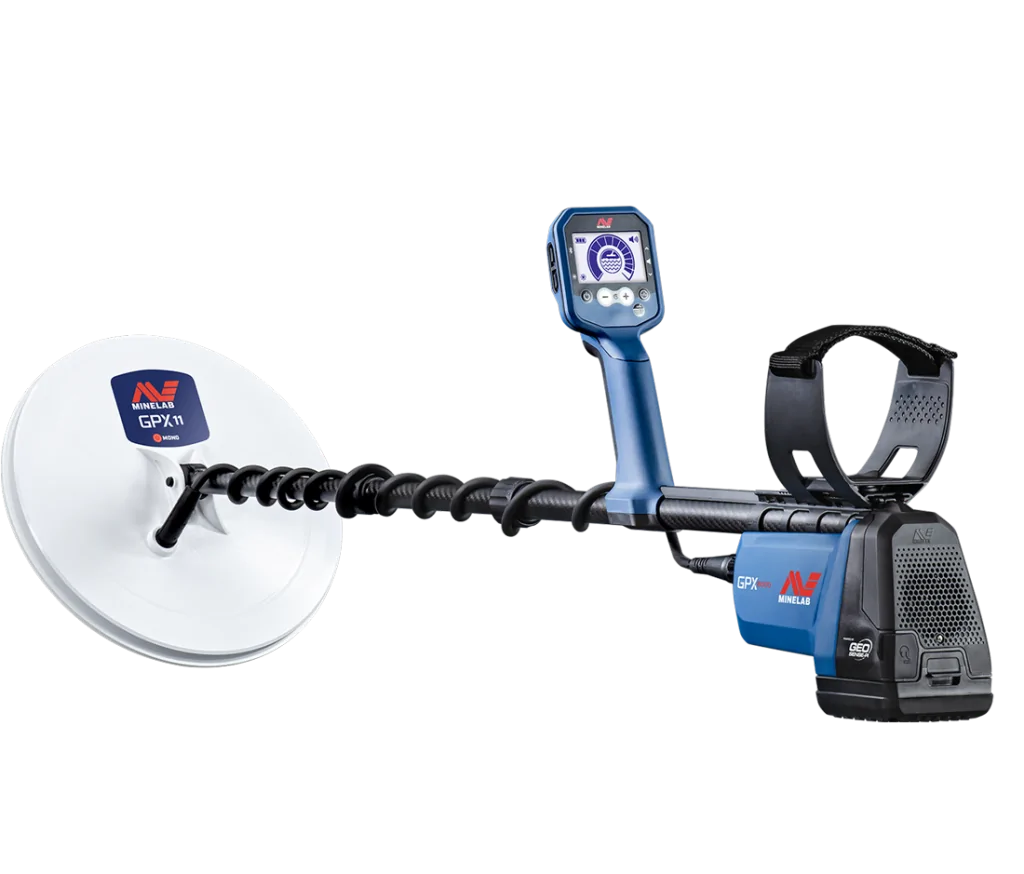
GPX 6000 illustrates a specialist prospecting comparison. Minelab documents GeoSense-PI and automatic ground balance. Choose this direction because the field task warrants it, then compare the actual coil configuration and learning needs. Explore the gold nugget detectors category for the relevant family of equipment.
Gold Stinger X6: compare functions separately
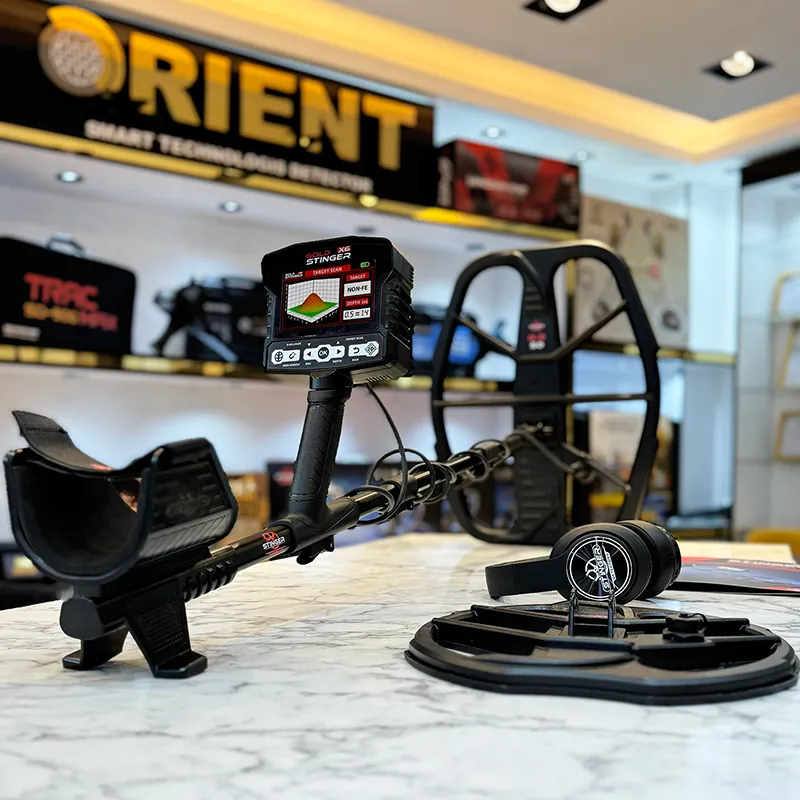
Gold Stinger X6 is relevant when its search and analysis workflow fits your project. The manufacturer describes GS30 and GS50 coil options and functions for localization, discrimination, depth estimation, and visual analysis.
Ask which functions you need and how you will check their output. Do not treat a visual indication as proof of object shape or a cavity, and do not infer long-range locating, PI, or 3D ground scanning from the number of systems. Test the actual documented configuration.
PulseDive: a different physical workflow
PulseDive is useful to compare when you need handheld underwater or pointer use. Nokta’s 2-in-1 documentation identifies a changeable scuba/pointer configuration. It is not simply a smaller substitute for every full-length search detector. Compare the working position and area you need to cover.
7. Test the Shortlist Against Your Search Brief
A relevant test compares the proposed configuration with the requirement you wrote at the beginning. Record the coil, mode, ground, and target arrangement. Include representative desirable targets, common unwanted metal, and empty positions rather than accepting one favorable pass.
- Establish the ordinary ground response using the documented setup.
- Check a representative target with controlled coil height and movement.
- Investigate how nearby metal affects interpretation if separation matters.
- Repeat from another direction and include blank locations.
- Try the assembled setup yourself and explain the response.
- Record whether the requirement is met, uncertain, or not demonstrated.
A test that changes soil, coil, target, and settings at once cannot isolate the cause of a difference. Keep comparisons controlled and allow uncertain results to remain uncertain. An air test can help you learn behavior but is not a replacement for evaluation in ground.
8. Finish with a Defensible Shortlist
Choosing the right metal detector should leave you with a brief you can explain: the primary task, essential capability, workable coil, water limits, and the remaining uncertainty. Two suitable options are enough for a useful final comparison.
Do not use brand reputation, model age, or a single specification as a substitute for that fit. Current ranges from Minelab, Nokta, and Stinger Detectors provide several directions, but the configuration and intended use still decide the shortlist.
Once suitability is clear, continue to the metal detector purchasing guide. It covers itemized quotes, supplier checks, warranty questions, and delivery inspection so you can buy the configuration you actually selected.
Frequently Asked Questions About Choosing the Right Metal Detector
What should I choose first: the target or the technology?
Start with the target and the sites you can search. Then compare technologies that can serve that task. A technology label without ground, target size, and configuration provides an incomplete basis for selection.
Can one detector handle jewelry and natural nuggets?
Some platforms support several activities, but suitability varies. Prioritize your regular search and compare relevant targets in representative ground. A ring demonstration does not establish small-nugget performance.
Is simultaneous multi-frequency always the best choice?
No universal category wins every task. It is useful to compare for mixed detecting and varied sites, but the exact controls, ground response, and target requirements still matter.
Does a waterproof detector automatically handle salt sand?
No. Waterproofing protects equipment within specified limits. Salt handling concerns its response to conductive ground. Evaluate both for the intended beach or underwater task.
Should I choose the largest coil available?
Choose a compatible coil you can control on the intended surface. Coverage, target size, obstacles, separation, and ground behavior matter together. Larger diameter alone does not establish better results.
Can target ID confirm gold?
No. It describes aspects of the measured response and can overlap other objects. Use it to guide investigation rather than as a material certificate.
When should I consider ground-imaging equipment?
When a defined survey task, suitable sensor, repeatable acquisition method, and trained interpretation justify it. An imaging display is not a guaranteed way to see gold or cavities.
What should I do after narrowing the options?
Request quotations for the exact configurations and review package, compatibility, supplier, and support details. Those transaction checks belong in the companion buying guide rather than changing the search brief.