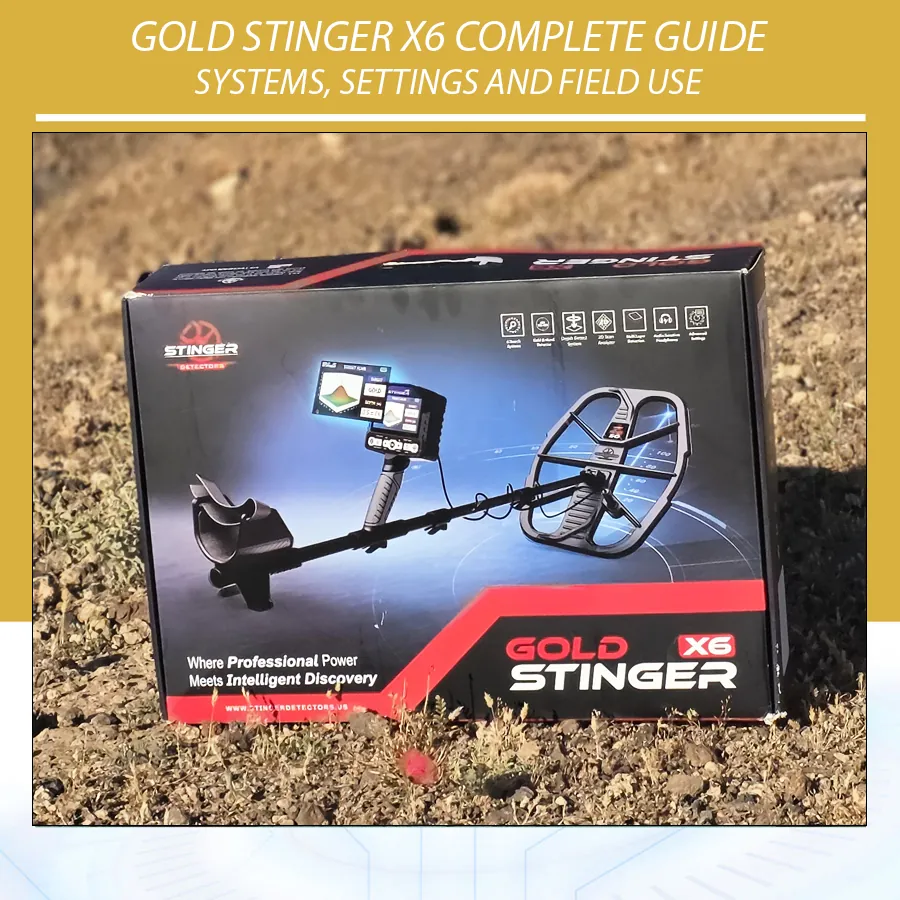
Gold Stinger X6 Complete Guide Systems, Settings and Field Use

Gold Stinger X6 Complete Guide: Systems, Settings and Field Use

The Gold Stinger X6 is a multi-system detector designed to give the operator several ways to search, classify, locate and evaluate underground responses. Its interface combines an initial ground-balance procedure with All Metals, Pin Pointer, Discrimination, Depth Detect, Cavity Test and Target Scan functions. It also includes two interchangeable search coils, adjustable sensitivity, Turbo power, […]
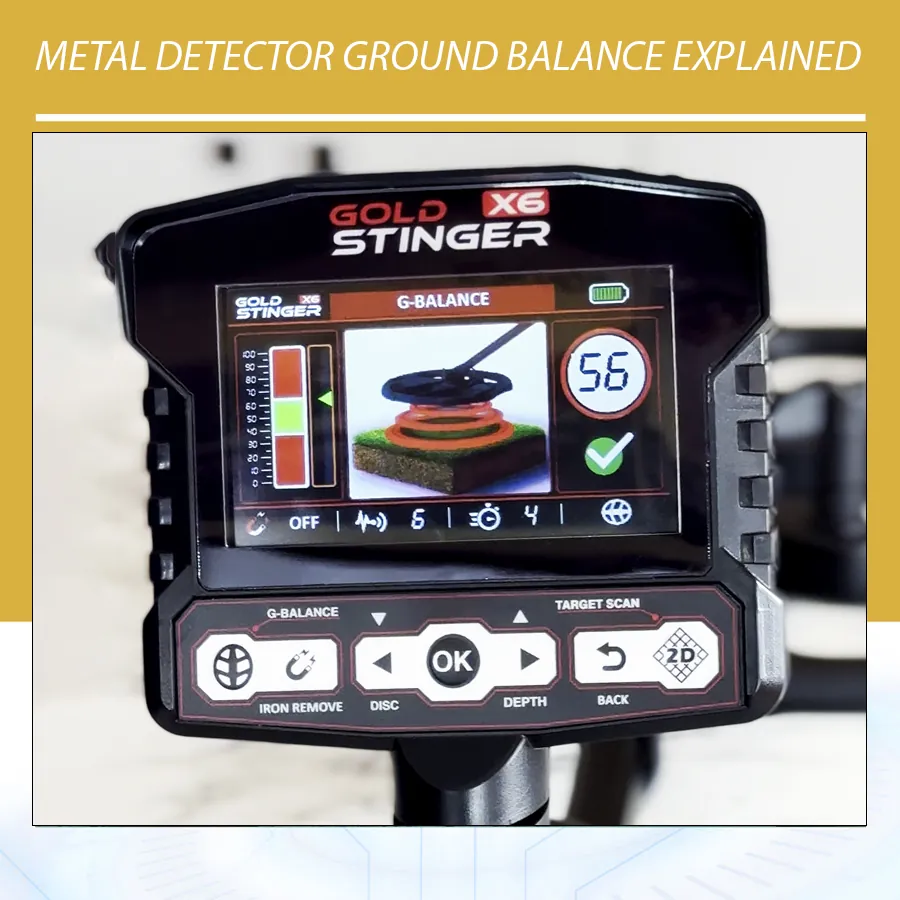
Metal Detector Ground Balance Explained

Metal Detector Ground Balance Explained: Why Soil Changes Your Signals

Metal detector ground balance is the process that helps a detector separate the response of the soil from the response of a metal target. Mineralized ground can contain iron oxides, salts, or other conductive and magnetic material. Without a correct balance, the detector may chatter, lose depth, misidentify targets, or respond every time the coil […]

Metal Detector Interference Explained

Metal Detector Interference Explained: How to Stop False Signals

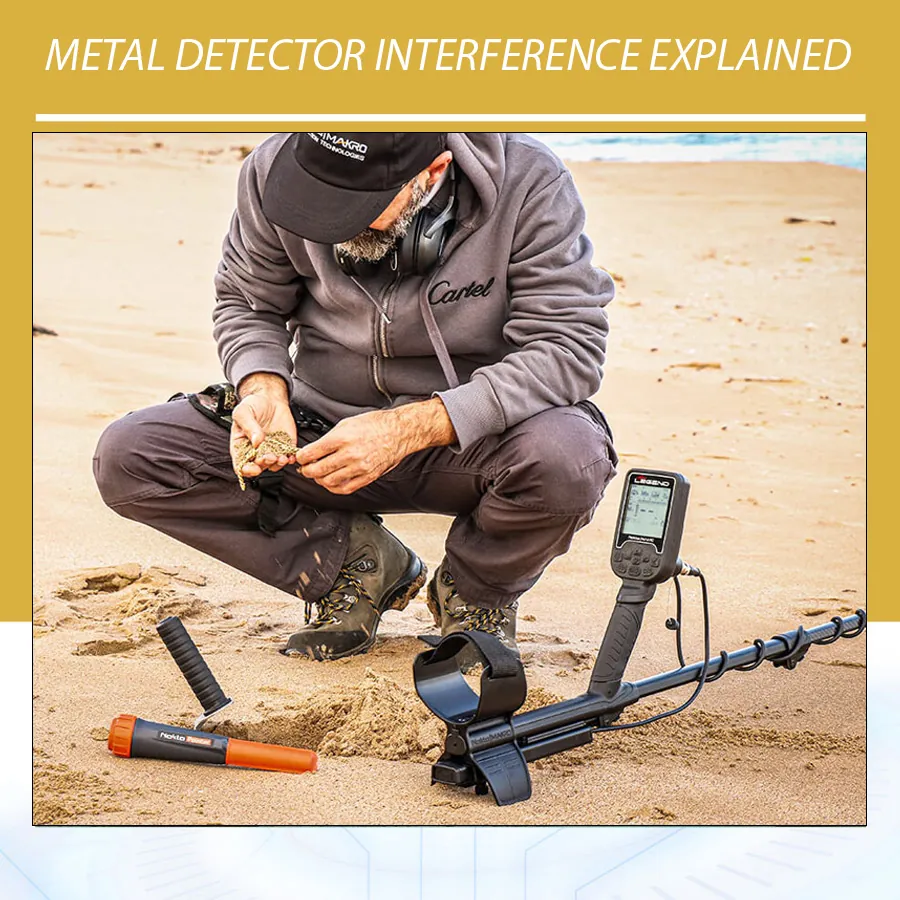
Metal detector interference is unwanted noise that makes a detector chirp, warble, or show unstable target IDs without a real target below the coil. It can come from power lines, wireless equipment, another detector, buried cables, a damaged coil cable, wet salt, or mineralized soil. Identifying the source matters because the solution for electrical noise […]

Metal Detector Sensitivity Explained

Metal Detector Sensitivity Explained: Why Maximum Is Not Always Best

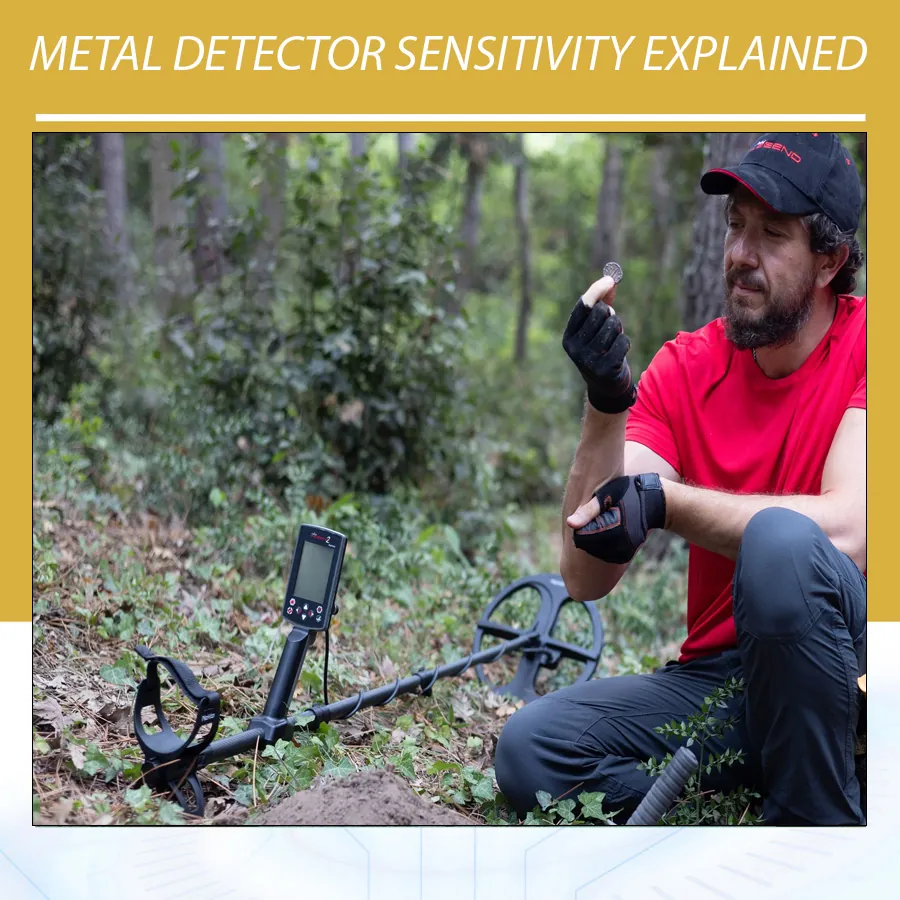
Metal detector sensitivity controls how strongly the machine responds to small changes in its search field. Increasing it can make faint signals easier to hear, but it also amplifies ground noise, electrical interference, wet-salt effects, and unstable responses. The best setting is usually the highest level that remains calm and repeatable for the site—not the […]

Metal Detector Frequency Explained

Metal Detector Frequency Explained: What kHz Really Changes

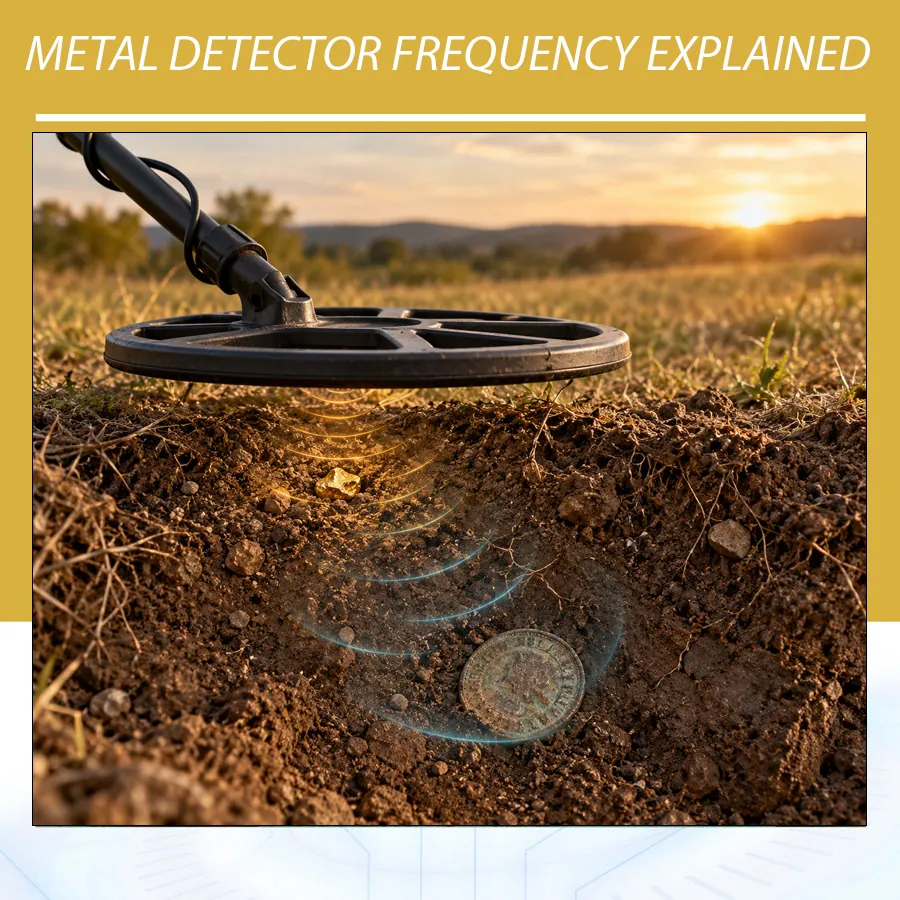
Metal detector frequency is the rate at which a detector’s search field cycles. It is usually expressed in kilohertz (kHz), but the number alone does not tell you how deep a detector will find every target. Coil size, target size, soil mineralization, operating mode, sweep technique, and the detector’s signal processing all matter. The useful […]

Metal Detector Depth Indicators Explained

Metal Detector Depth Indicators Explained

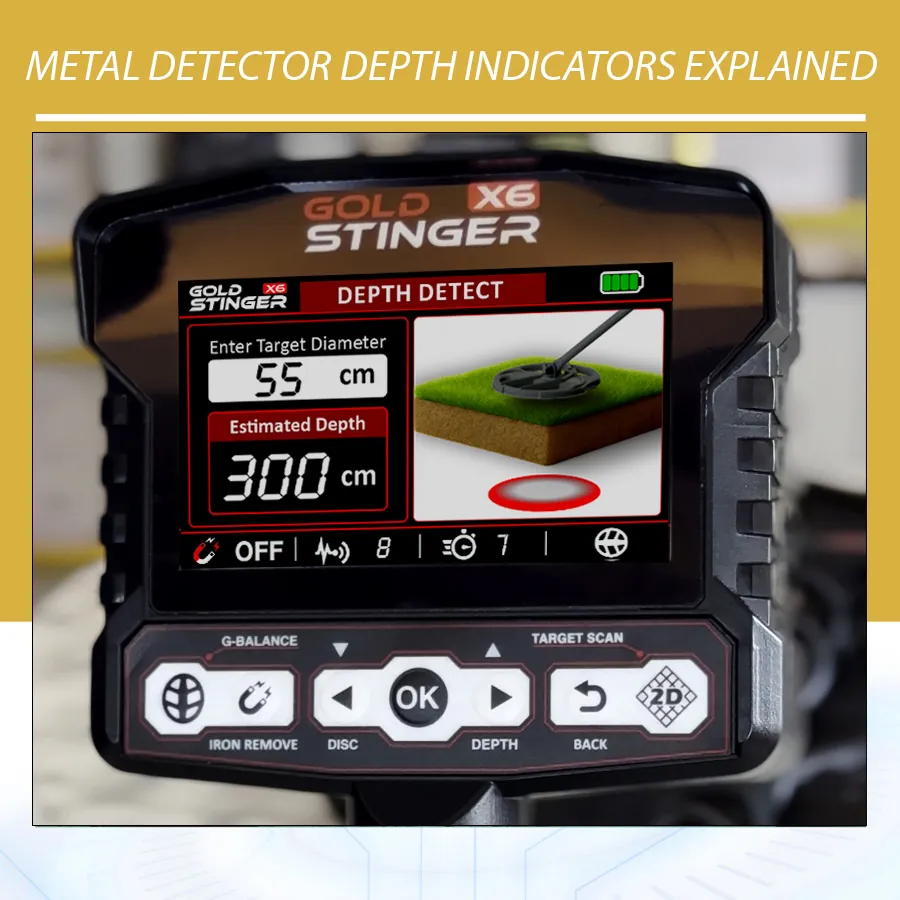
A metal detector depth indicator estimates how far a detected target may be below the search coil. It can help you plan a neat recovery, choose the right digging tool, and recognize when a target may be larger or smaller than expected. The reading is useful, but it is not a direct measurement of the […]

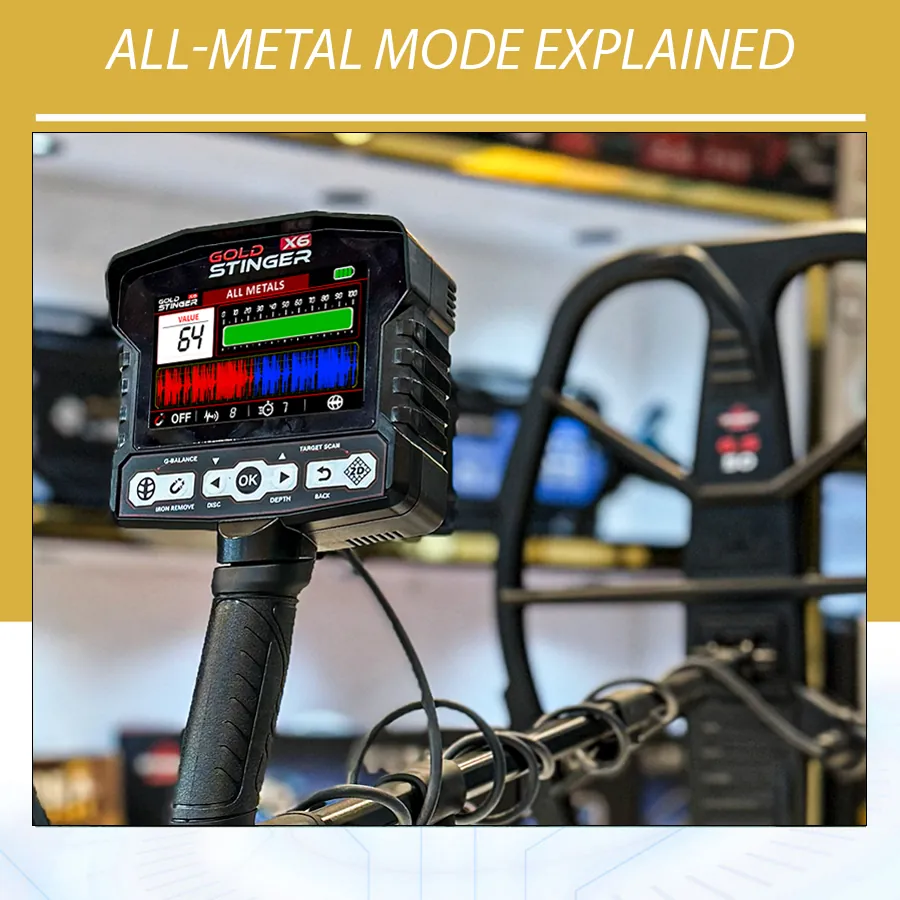
All-Metal Mode Explained

All-Metal Mode Explained

All-metal mode is a detector operating choice that lets the user hear a wider range of metal responses instead of silencing selected target categories. That sounds simple, but the label does not mean exactly the same thing on every detector. On one model it may be a true, threshold-based search mode built for maximum response […]

How to Build a Metal Detector Test Garden

How to Build a Metal Detector Test Garden

A metal detector test garden is a small, documented area where known objects are buried at measured positions so you can practise, compare settings, and observe how targets behave in real soil. Unlike an air test, it includes ground mineralisation, moisture, compaction, target orientation, and the small variations that make field detecting difficult. Unlike an unknown field […]

Ferrous vs Non-Ferrous Targets How Metal Detectors Classify Finds

Ferrous vs Non-Ferrous Targets: How Metal Detectors Classify Finds

Understanding ferrous vs non-ferrous targets is one of the first skills that makes metal detecting more productive. In simple material terms, ferrous objects contain iron as a significant component, while non-ferrous objects do not. In the field, however, a detector does not perform a laboratory analysis. It measures an electromagnetic response and places that response into an […]

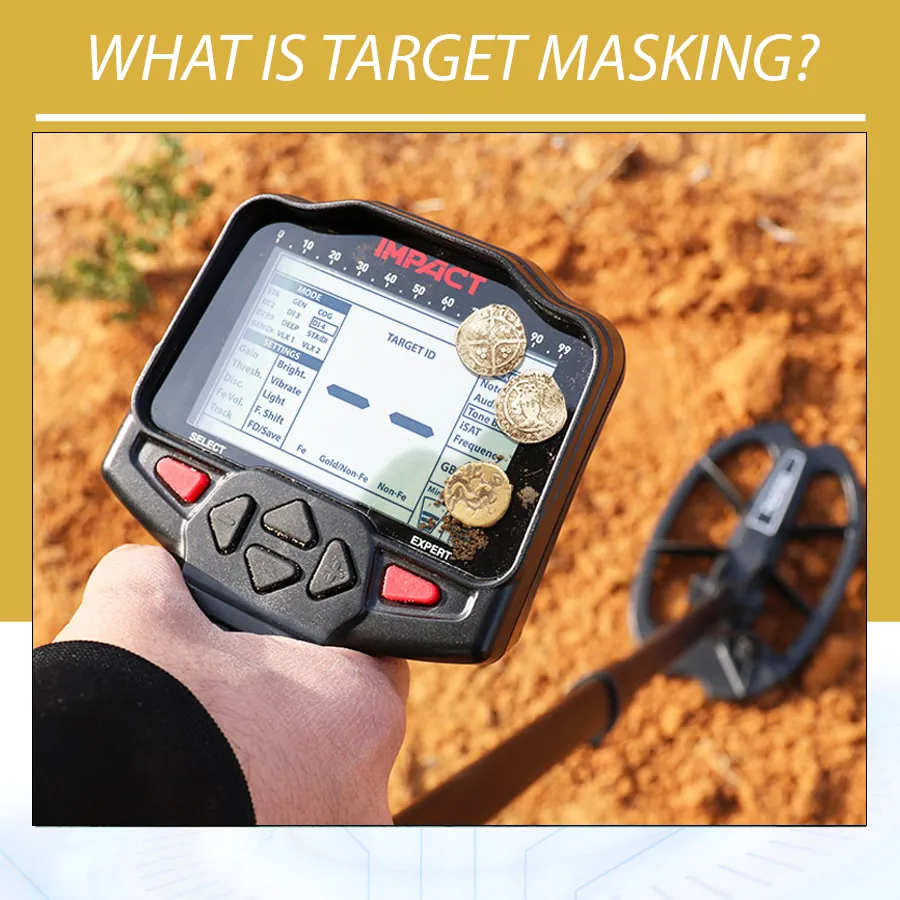
What Is Target Masking

What Is Target Masking?

Metal detector target masking happens when one response interferes with another target strongly enough that the second object is missed, misidentified, or heard only as a broken signal. The masking object is often iron, but it can also be aluminum trash, another accepted metal, mineralized soil, or a shallow object above a deeper one. Understanding […]

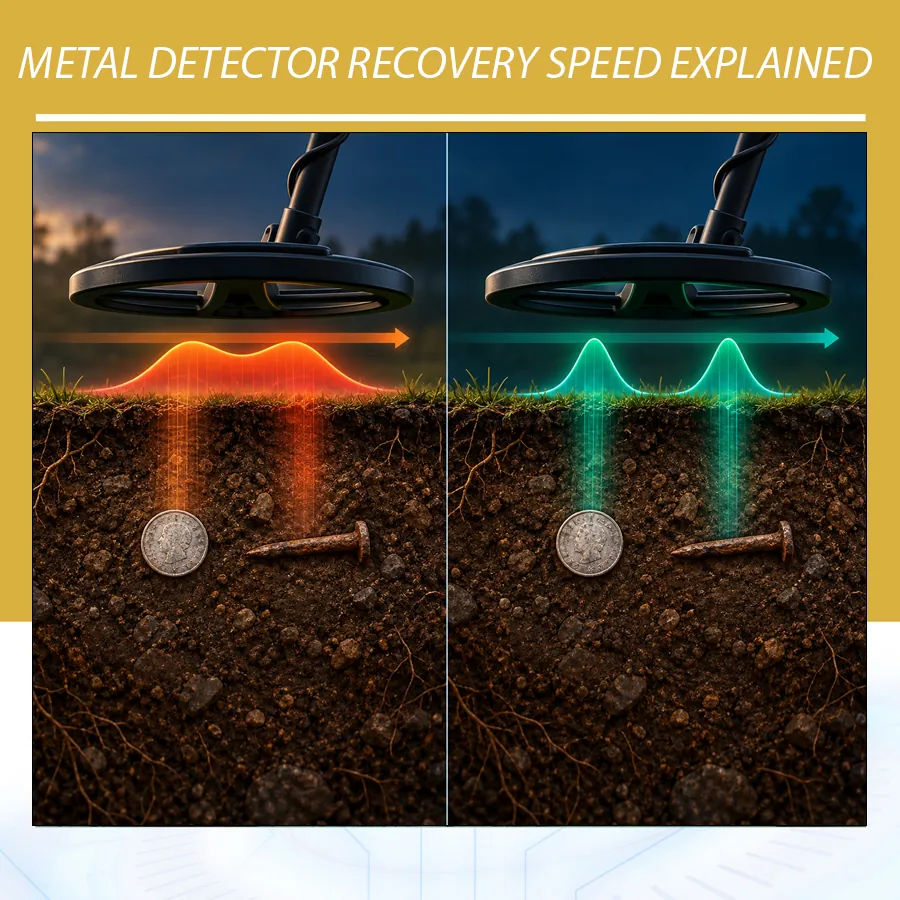
Metal Detector Recovery Speed Explained

Metal Detector Recovery Speed Explained

Metal detector recovery speed controls how quickly a detector can finish responding to one target and become ready to report the next. That short definition explains why the setting matters, but it does not tell you which value to use. Faster recovery can separate nearby objects more clearly in iron or modern trash. Slower recovery can […]

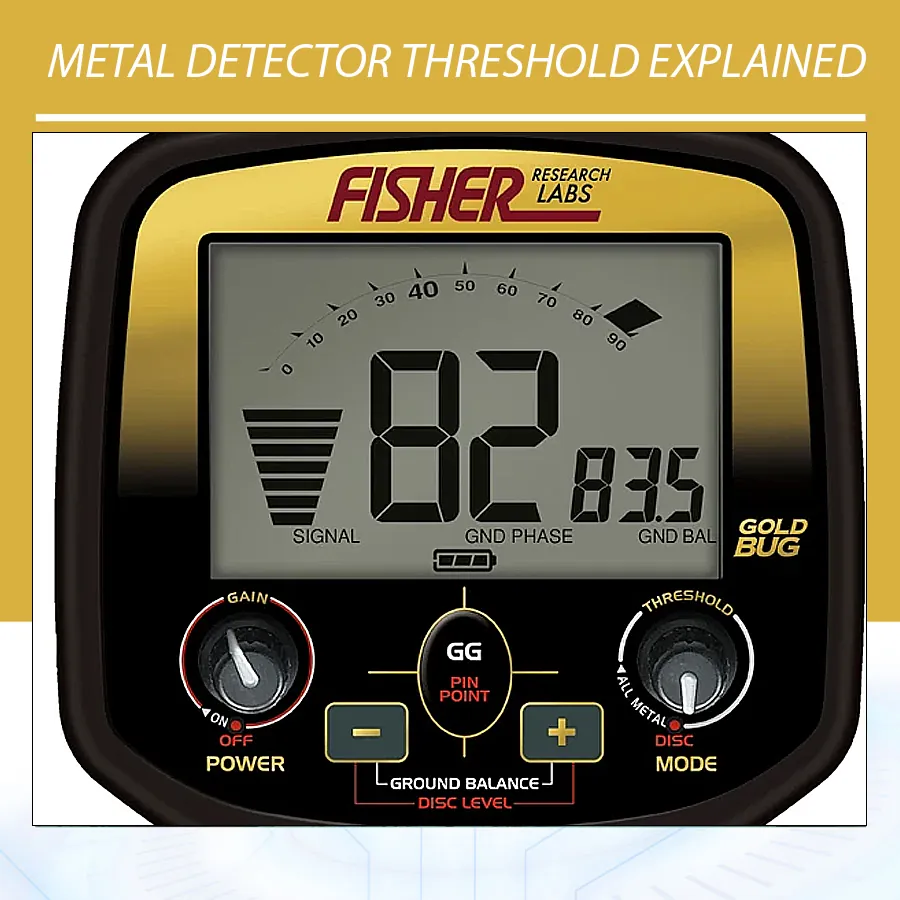
Metal Detector Threshold Explained

Metal Detector Threshold Explained

Metal Detector Threshold Explained: What the Background Hum Tells You A metal detector threshold is the quiet background tone that some detectors produce while you search. At first it can seem like an unnecessary hum. With practice, however, that baseline helps you notice small changes, recognize when the detector is becoming unstable, and understand when a rejected […]

Metal Detector Sweep Speed and Coil Height

Metal Detector Sweep Speed and Coil Height: Techniques That Affect Your Finds

Metal Detector Sweep Speed and Coil Height: Techniques That Affect Your Finds Metal detector sweep speed and coil height shape every signal you hear. A detector may have sophisticated target identification, ground handling, and recovery controls, but it can only analyze the ground that its coil passes over. Swing too quickly for the detector and conditions, […]

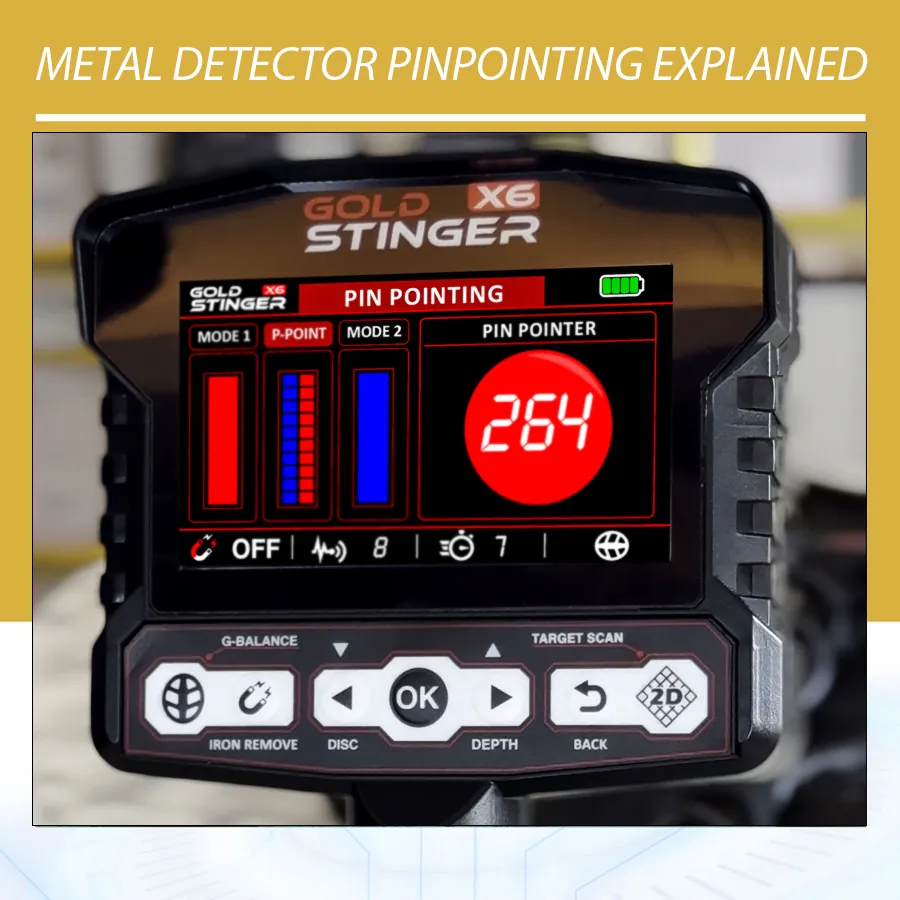
Metal Detector Pinpointing Explained

Metal Detector Pinpointing Explained

Metal Detector Pinpointing Explained: How to Locate a Target Accurately Metal detector pinpointing is the process of narrowing a detected response to the smallest practical area before recovery. Good pinpointing helps you dig a smaller opening, spend less time searching loose soil, and reduce the chance of striking a coin, ring, relic, cable, or other object […]

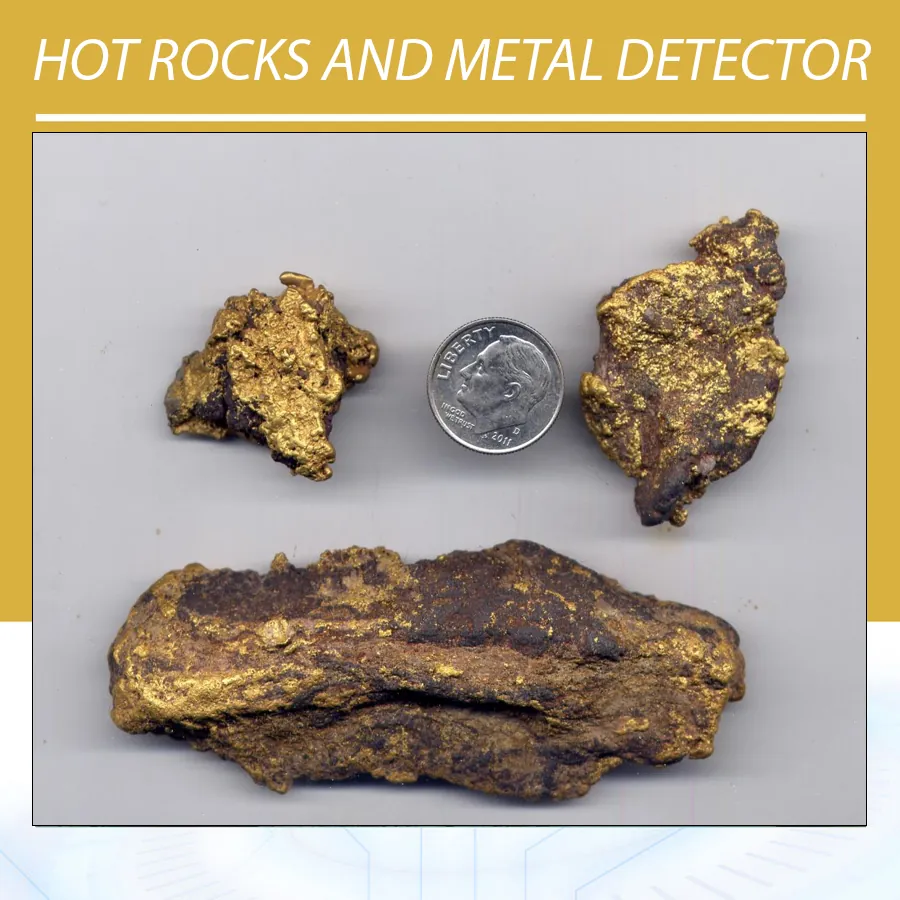
Hot Rocks and Metal Detector

Hot Rocks and Metal Detectors

Hot Rocks and Metal Detectors: Why Some Rocks Produce Signals Hot rocks in metal detecting are rocks that produce a noticeable response because their electromagnetic properties differ from the ground around them and the ground response your detector is compensating for. You may hear a sharp beep, an awkward warble, or a dip in the […]

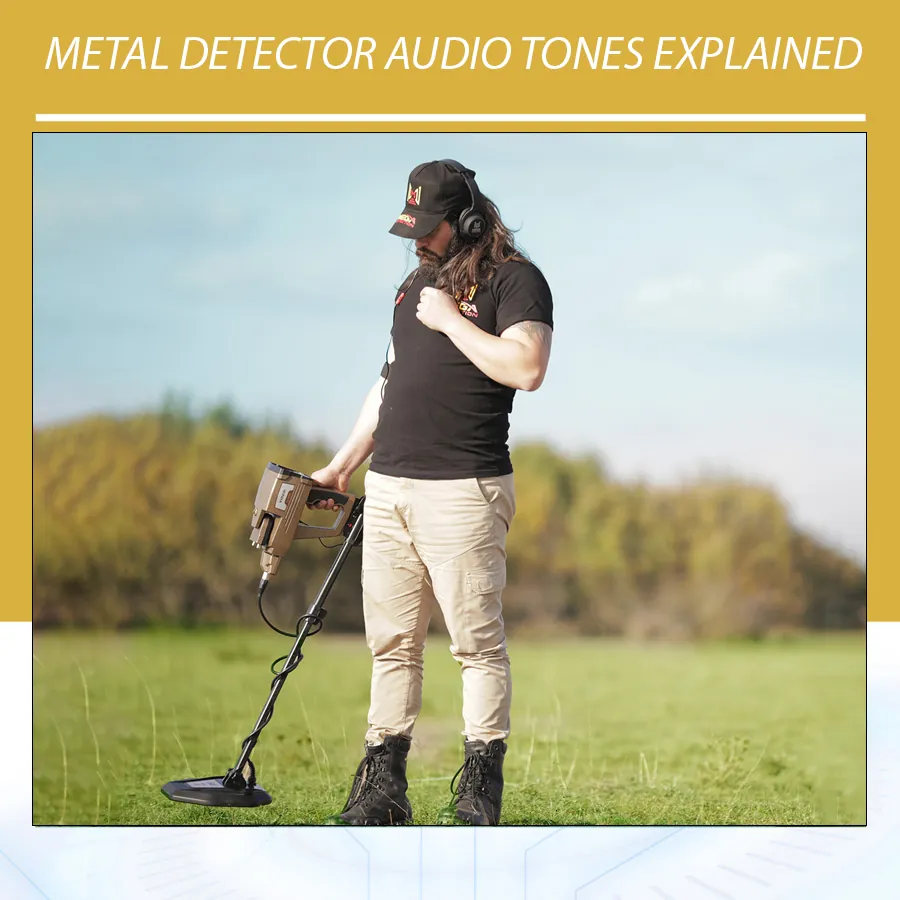
Metal Detector Audio Tones Explained

Metal Detector Audio Tones Explained

Metal Detector Audio Tones Explained: How to Understand Target Sounds Metal detector audio tones give you a running description of what the search coil is encountering. A low grunt, a clear bell, a faint rise in sound, or a broken chirp can help you decide where to investigate. The challenge is understanding which information your […]

What-types-of-metals-can-be-detected-by-metal-detector

What Types Of Metals Can Be Detected By Metal Detector

What Metals Can a Metal Detector Detect? A Complete Guide What metals can a metal detector detect? A conventional search-coil metal detector can respond to many metals, including iron, steel, gold, silver, copper, aluminium, brass, bronze, lead, platinum and titanium. Stainless steel is also detectable, although some grades and small shapes can be challenging. The more […]

MINELAB MANTICORE Review

Minelab MANTICORE Review

Minelab MANTICORE Review: Features, Settings and Buying Guide The Minelab MANTICORE is an advanced metal detector for people who want more information from difficult signals. Its appeal centres on simultaneous multi-frequency operation, a two-dimensional target display, and extensive control over audio and iron classification. These features are especially relevant when a desirable target may be close to […]


gold detectors