
Why a different coil changes the search
The coil transmits and receives the electromagnetic signals used by the detector. Its design affects how the detector interacts with targets and surrounding ground. Changing coils can alter coverage, sensitivity to particular targets, separation, stability, pinpointing behaviour and physical balance. These changes are connected, which is why one simple “bigger is better” rule does not work.
A coil’s effective response is not a solid cylinder with uniform sensitivity everywhere beneath it. Target size, orientation, depth and surrounding material change where a response becomes audible. Overlapping passes remain necessary with every size. A broad coil does not guarantee that all ground under its outline has been searched equally well.
The detector’s electronics and operating modes matter too. Two similarly sized coils on different platforms do not necessarily behave alike. Compare a coil within the system for which it is designed, and describe actual test conditions before making claims about depth or separation.
Confirm exact compatibility before comparing sizes
Check the detector model, generation, coil model number and any required software information against manufacturer documentation. A matching brand or similar connector is insufficient. Do not force a connection, modify wiring or buy an adapter on the assumption that mechanical fit establishes electrical compatibility.
For example, MANTICORE coils belong to the MANTICORE platform. Check the Minelab compatibility information rather than assuming a coil from another Minelab family can be substituted. When buying an aftermarket accessory, obtain explicit compatibility confirmation from its maker and check any implications for support or warranty.
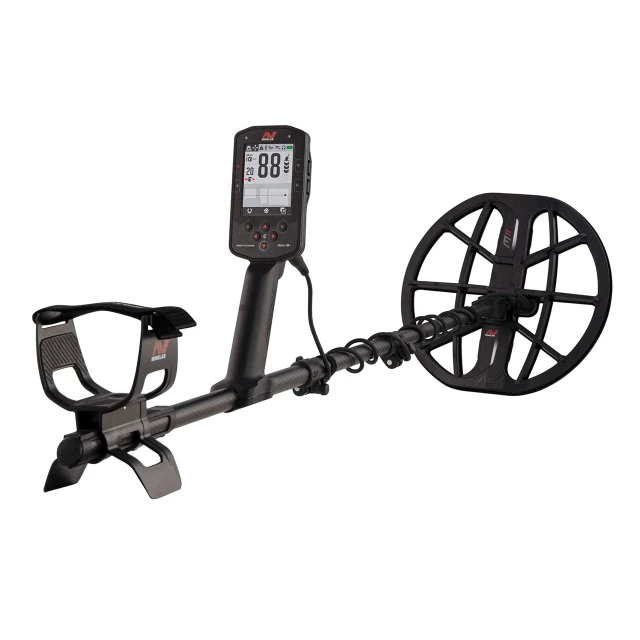
Also verify the complete fitting arrangement: bolt, washers, lower shaft, connector seal and coil cover where applicable. A coil that technically works but cannot be mounted correctly is not ready for field use. Identify whether those parts are included in the quotation or must be ordered separately.
| Compatibility check | Question to answer before purchase |
|---|---|
| Exact detector | Is the coil approved for this model and generation? |
| Coil identity | What is its full model or part number? |
| Connection | Does it use the specified electrical connection without modification? |
| Mounting hardware | Are the correct bolt, washers and shaft arrangement available? |
| Software | Does the maker specify any version requirement? |
| Protection | Which parts and connections are rated for the intended conditions? |
| Support | Who handles a defective coil or compatibility problem? |
Small coils: control, access and crowded ground
A smaller coil can be easier to place between rocks, roots or closely spaced pieces of rubbish. Its more confined search area can help isolate individual responses that overlap with a wider coil. This is especially relevant when a desired target lies close to unwanted metal, although no coil guarantees complete separation.
Small coils can also be useful for small targets, depending on the platform and design. They allow precise short sweeps and can reduce the amount of ground influencing a pass. However, a small coil does not automatically make a detector suitable for microscopic gold or eliminate mineral response.
The main tradeoff is coverage. Searching a large clean field thoroughly with a small coil requires more passes and usually more time. If you compensate by walking faster or leaving wider gaps, you lose the control that justified the choice. Use the smaller coil where its access or separation advantage matters most.
Medium coils: establish a useful baseline
The standard coil supplied with a detector is often a practical starting point for general use. Before replacing it, learn its response pattern, pinpointing behaviour and comfortable search pace. Without that reference, it is difficult to know whether an accessory improves performance or simply feels different.
A medium-sized coil can provide a reasonable compromise between coverage and manoeuvrability. It may remain your preferred choice for mixed sites even after you buy specialist options. Keep it in the comparison when testing smaller or larger alternatives; a two-way contest between extremes can overlook the most practical solution.
Use your normal coil to identify the exact limitation. If it cannot fit between stones, the problem is access. If it responds to several pieces of metal at once, the problem may involve target density. If it works comfortably and covers the ground well, an additional coil needs a clear purpose to justify its cost.
Large coils: coverage with practical tradeoffs
A larger coil can improve coverage in open areas and may provide a stronger response to some larger or deeper targets under suitable conditions. It can also encounter more ground and more objects during each pass. In highly variable soil or dense rubbish, that additional information may make interpretation harder rather than easier.
Physical control matters. A large coil that is difficult to hold level can introduce height changes, missed strips and fatigue. In stubble, rocks or dense vegetation, the operator may need to raise it, reducing the benefit expected from its size. Evaluate the coil while walking on representative terrain, not only while lifting it indoors.
There is no reliable universal conversion from coil diameter to percentage depth gain. Do not assume that doubling a dimension doubles useful depth. Compare the same target under stated ground conditions and record whether the additional response remains dependable enough to justify recovery.
| Coil size category | Often useful for | Main compromise |
|---|---|---|
| Small | Restricted access, close targets, controlled investigation | Slower coverage of large open areas |
| Medium | Mixed sites and learning the detector | Less specialized at either extreme |
| Large | Open coverage and some larger or deeper targets | More ground response, clutter and physical demand |
Round or elliptical?
An elliptical coil can fit into spaces that are awkward for a round coil with a similar overall length. The narrow dimension may help you work alongside rocks or through a restricted corridor. Its length can still provide useful coverage along a pass. The exact benefit depends on orientation, design and how you move it.
A round coil offers a different footprint and may be comfortable for open, regular coverage. Shape alone does not establish depth or superiority. Compare both dimensions, total weight and the way the coil responds to nearby targets. Two coils advertised with a single headline measurement may differ substantially in their actual footprint.
Try a simple access exercise. Place a known object in a permitted test area beside two harmless non-metallic obstacles. See whether each coil can pass over the object at a consistent height without striking the obstacles. A theoretical depth advantage has little value if the coil cannot reach the search position.
Double-D, concentric and monoloop designs
Double-D coils use overlapping winding arrangements, concentric coils use a different nested arrangement, and monoloop coils are associated with compatible pulse-induction platforms. These terms describe construction, not a universal ranking. You must still consider the detector, ground, operating mode and target.
Garrett’s search coil types explanation is a useful manufacturer introduction. Treat broad guidance about mineralization, coverage and pinpointing as a starting point for testing, not a promise that every coil of one design outperforms every alternative.
Do not transfer habits blindly between designs. Pinpointing response can change, and some detector functions or modes depend on the fitted coil. Read the model-specific instructions after changing equipment. A coil supported by one pulse-induction detector is not automatically suitable for another, even if both are described as monoloop-compatible systems.
Match the coil to ground and interference
In mineralized ground, the most useful coil is the one that allows you to recognize a target against a manageable background. Greater nominal sensitivity is not useful if the ground response masks the target. A coil that performs impressively over clean sand may require a different setup in mineralized soil.
Re-establish the detector’s ground and interference procedures after a coil change as its manual directs. Do not assume the previous sensitivity setting remains appropriate. Test the new coil on a clear patch, then on your known target. Adjust one control at a time so that you can identify the source of a difference.
For a closer explanation of that setup, see ground balance explained. If instability occurs when the coil is stationary, consider electrical interference and connections as well as soil. A different coil may change the behaviour, but it should not be used to conceal an unresolved equipment fault.
Examples from detectors on Orient’s website
MANTICORE: compare a specific accessory family
The MANTICORE provides a clear example of choosing within a documented coil family. Minelab’s MANTICORE coil guide discusses the M8, M9, M11 and M15. Use that family-specific information to shortlist a coil, then test its access, coverage and handling against your current setup.
Do not purchase solely because another user reports success with the largest or smallest option. Ask whether their sites resemble yours and whether the same targets matter. A coin hunter working through dense rubbish has a different reason to choose a coil from someone covering relatively open land.
Gold Stinger X6: GS30 and GS50
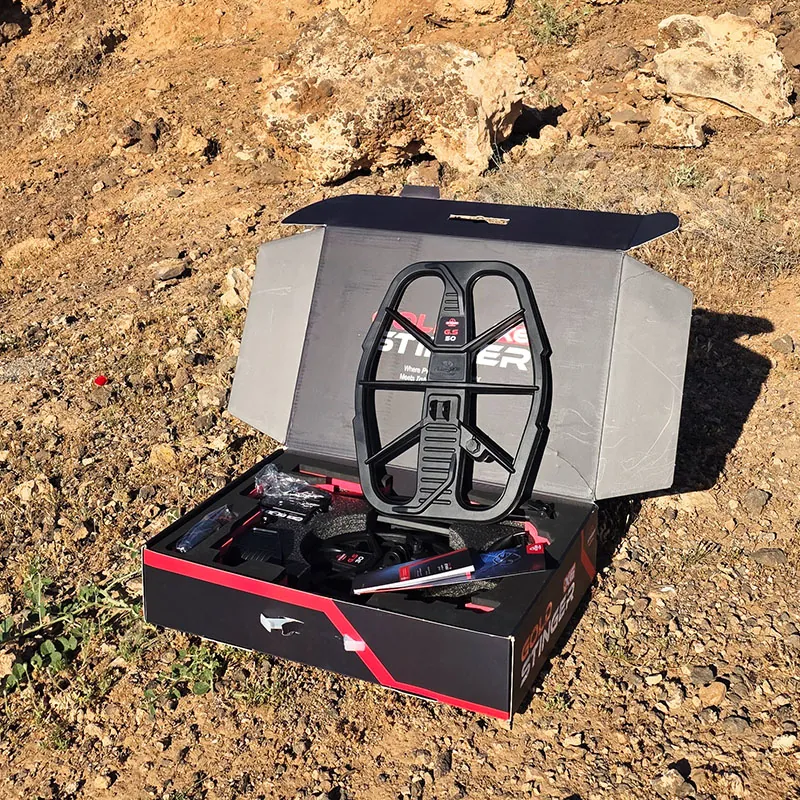
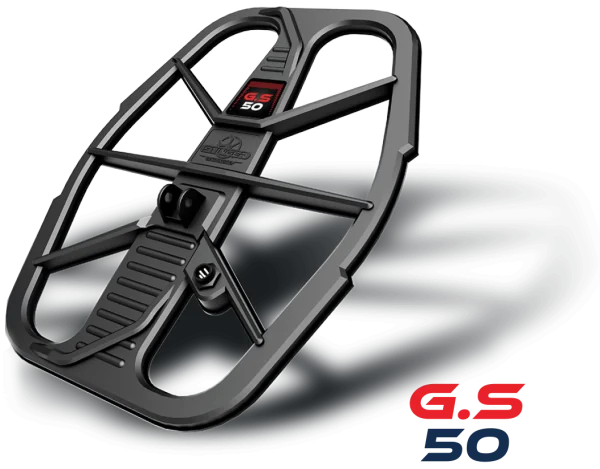
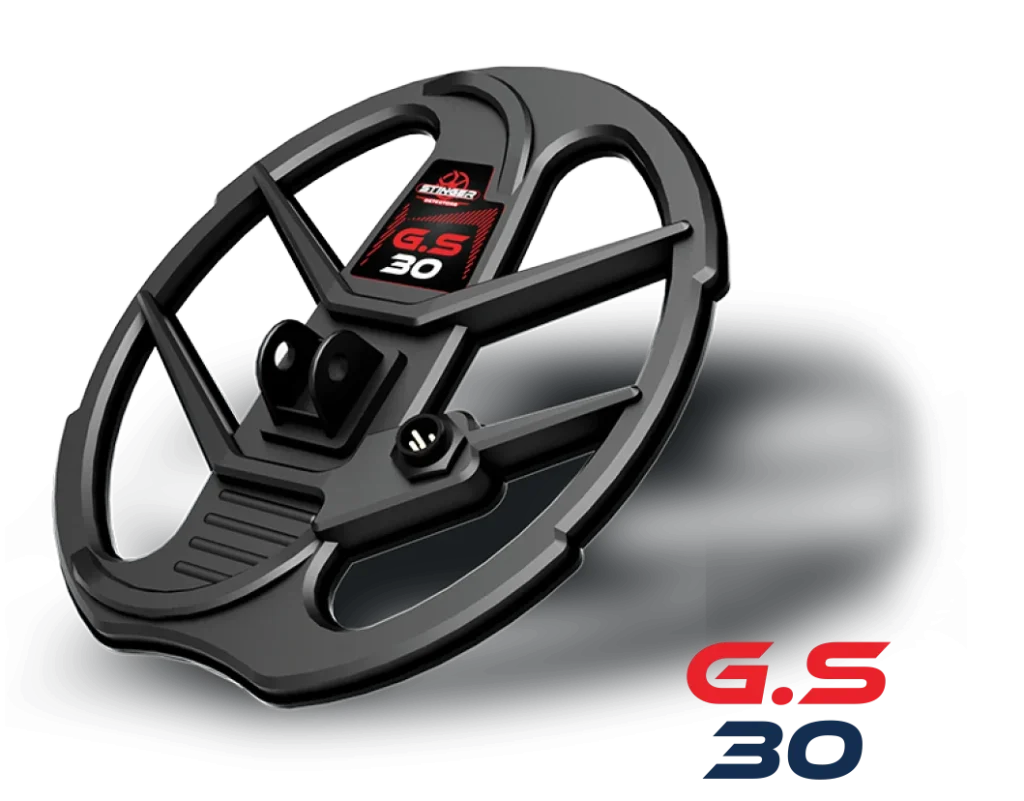
Orient lists the Gold Stinger X6, and the manufacturer’s accessory information identifies GS30 and GS50 coils. These provide a useful opportunity to compare the actual supplied options on the same control unit. Check the package contents rather than assuming every quotation includes identical accessories.
Compare both coils over the same known target and empty area after appropriate setup. Note how easily you maintain a level sweep and how much ground you cover. Treat any depth or classification display as an estimate to investigate, not as independent proof that one coil identified the buried material correctly.
GPX 6000: ground conditions influence the choice
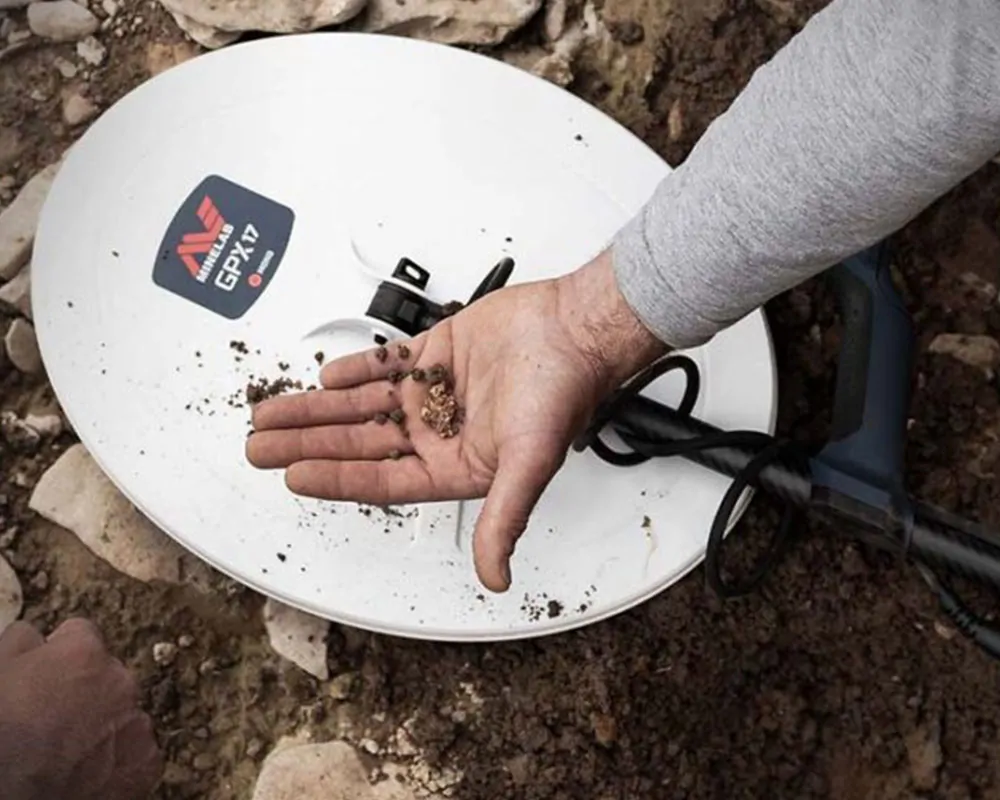
The GPX 6000 illustrates a prospecting platform where coil selection must consider both gold targets and ground behaviour. Minelab’s official product information describes compatible coil options. Confirm the exact package and suitability before assuming that a physically larger coil is the best choice for your goldfield.
For a small-gold comparison, use a secured representative sample rather than a large coin. Test whether the sample remains recognizable against the local ground and whether you can recover it efficiently. The useful result is a manageable field response, not simply a higher number or a more dramatic air demonstration.
How to compare two coils fairly
Create a short test route containing an isolated target, a target near unwanted metal, an empty control and a section of typical ground. Mark the route with non-metallic references. Write down the coil, mode, important settings and ground conditions. Use several passes from different directions instead of choosing the best result from one sweep.
First compare both coils at sensible stable settings for each. Identical sensitivity numbers are not always a fair requirement because the coils may interact differently with the ground. Then document any adjustment necessary to make the new coil usable. A result that depends on continual retuning may matter to your buying decision.
Measure more than detection. Record how long careful coverage takes, how accurately you can locate the target and how your arm feels afterwards. If the larger coil covers the route faster but makes target recovery much slower, the overall gain may be smaller than the coverage figure suggests.
| Test | What to keep controlled | What to observe |
|---|---|---|
| Isolated target | Same object, orientation and location | Repeatability and response strength |
| Target near rubbish | Fixed spacing and sweep directions | Whether responses can be distinguished |
| Empty control | Same ground without a test object | Background false-positive behaviour |
| Restricted access | Same obstacles and required height | Whether the coil reaches the target |
| Coverage route | Same boundaries and deliberate overlap | Time needed for complete searching |
| Handling | Practical shaft length and normal pace | Fatigue, coil lift and control |
Fit and care for the coil correctly
Switch off and follow the manufacturer’s connection sequence. Use the specified washers and mounting hardware, tighten appropriately and avoid forcing the coil into a shaft that does not fit. Leave enough cable freedom for ordinary movement while preventing loose loops from striking the shaft or coil.
Inspect beneath the cover when the manufacturer allows removal. Accumulated sand or mineralized dirt can interfere with clean operation, and trapped material can hide damage. Clean using the permitted method, dry connections appropriately and avoid chemicals or sealants unless the maker specifically approves them.
Water resistance applies to the rated components and their correctly assembled connections. Do not assume that a waterproof replacement coil changes the control box’s rating. Saltwater use may require particular cleaning and maintenance; follow the detector and accessory instructions instead of treating all coils as identical.
Three practical coil decisions
Coins among dense rubbish
Your current coil produces broad mixed responses over several objects. A smaller compatible coil lets you make shorter passes and approach from different angles. Test whether a known non-ferrous item becomes easier to distinguish. If it does, work the congested section slowly rather than increasing walking speed to compensate for the smaller footprint.
Large open ground with few signals
A larger compatible coil may reduce the number of passes needed to cover an area, provided you maintain overlap and stable height. Compare it on the targets you want rather than assuming coverage equals depth. If fatigue causes the coil to rise after a short period, the practical advantage may disappear.
Rocky ground with small targets
A compact coil that fits between obstacles may reach closer to the relevant ground than a broad coil held above the rocks. This is an access advantage as well as a possible sensitivity benefit. Search from more than one direction, and do not force the coil into cracks or scrape it against sharp stone.
Decide whether the additional coil earns its place
Review how often you encounter the condition that justifies the new coil. An occasional specialist task may justify renting, borrowing or requesting a demonstration before purchase. If the condition occurs on most outings, an accessory that saves time or improves control may become part of your regular setup.
Include required hardware, transport and storage in the total cost. Also consider how often you will actually change coils in the field. If a cumbersome swap means the spare never leaves your bag, it is not solving the intended problem. A second lower shaft may be convenient where approved, but it remains an extra expense to evaluate.
Choosing a metal detector coil becomes straightforward when you can state the reason in one sentence: better access between rocks, clearer investigation of close targets, or more efficient coverage of open ground. If the reason is simply “larger must be deeper,” return to a controlled comparison before buying.
Choosing a metal detector coil: what to ask the seller
Give the seller your exact detector model, current coil and the task you want to improve. Describe the ground and target density, not only the target name. “Coins in a park” leaves many possibilities; “coins among closely spaced nails where my current coil produces mixed responses” identifies a more useful selection problem.
Request the complete coil model number, compatibility confirmation, included hardware and relevant documentation. Ask whether you can compare it with your current coil on a representative exercise. If the seller quotes a depth improvement, ask which target, ground, settings and measurement produced that figure. A useful answer describes conditions rather than presenting the number as universal.
On arrival, check the delivered model before fitting it. Photograph any shipping damage and inspect the connector and mounting points. Perform a basic known-target and empty-ground exercise before travelling to a remote site. A short local check gives you time to resolve a wrong accessory or obvious fault while the purchase details are readily available.
Keep the original coil during the learning period if practical. It remains a comparison reference when the new setup behaves unexpectedly. If both coils suddenly become unstable in the same location, look at interference and ground conditions before blaming the new accessory. If only one exhibits a repeatable connection or movement-related problem, you have more specific evidence to discuss with support.
Frequently asked questions
Does a larger coil always detect deeper?
No. It can help with some targets and conditions, but target size, ground response, settings and operator control matter. A large coil held too high or used in dense clutter may offer little practical advantage.
Is a smaller coil better for small gold?
It can be useful on a suitable detector, especially where access and stable close sweeping matter. However, coil size alone does not establish the minimum gold size the complete system can detect in actual soil.
Can I use any coil from the same brand?
No. Confirm compatibility with the exact detector model and generation. Brand, shape and connector appearance are not enough. Follow the manufacturer or approved accessory maker’s compatibility documentation.
Is an elliptical coil better than a round one?
It depends on the task. An elliptical shape may fit restricted spaces more easily, while a round coil may suit other coverage and handling preferences. Compare actual dimensions, construction and performance on representative ground.
Should I rebalance after changing coils?
Follow the detector’s manual. Recheck the required ground and interference setup and establish stable settings with the new coil. Do not assume values suited to the previous coil remain appropriate.
Can a coil cure every false signal?
No. False or unstable responses can come from soil, interference, damaged connections, cable movement or technique. Identify the cause before purchasing an accessory as a general cure.
How much overlap should I use?
Use deliberate overlap and verify your coverage with known targets, following model guidance. There is no universal percentage that guarantees complete coverage for every target, depth and coil response pattern.
Which coil should I buy first?
Learn the supplied coil and identify its recurring limitation. Then choose an explicitly compatible option that addresses that limitation. The best first accessory is the one with a clear, frequently used purpose.
Resources and further reading
- Minelab: MANTICORE coil guide — compare the documented accessory family.
- Minelab: technical FAQ — check model and coil compatibility.
- Garrett: search coil types explained — manufacturer introduction to coil construction and tradeoffs.
- Minelab: GPX 6000 — prospecting platform and compatible coil reference.
- Stinger Detectors: Gold Stinger X6 accessories — GS30 and GS50 reference.
- Orient Detectors: ground balance explained — prepare a stable setup after equipment changes.