GR-4 DUAL Review:
Groundtech’s 3D Ground Scanner with Integrated Pulse Induction Detection
Groundtech describes the GR-4 DUAL as an advanced ground scanning detector designed to detect underground anomalies, perform 3D analysis, and evaluate results instantly. The device uses MFS-2 Dual Sensor Technology for 3D scanning and adds Pulse Induction Technology operating at 1 kHz for metal detection. According to Groundtech’s comparison table, the DUAL model can scan up to 15 meters with the 3D ground scanning system, while the detector system can reach up to 3 meters depending on soil, target size, and search conditions.
The GR-4 DUAL is built for serious treasure hunters, archaeological search users, and field teams that need more than a simple detector. It can be used for buried metals, magnetic objects, graves, rooms, cavities, tunnels, valuable metals, and challenging ground where standard detectors may struggle. The device includes modes for 3D Ground Scanning, Live Scanning, Pinpointer, Detector Fast Scanning, and Detector Advanced Scanning. It also works with Groundtech’s G-Portal Android and iOS app for 3D and 4D analysis.
The purpose of this GR-4 DUAL Review is to explain what the device does well, where it differs from the standard GR-4, and what buyers should realistically expect. The GR-4 DUAL is powerful because it combines two technologies, but it still depends on correct scanning technique, soil conditions, target size, and proper interpretation. It should be evaluated as a professional multi-function field system, not as a guaranteed underground camera.
What Is the Groundtech GR-4 DUAL?
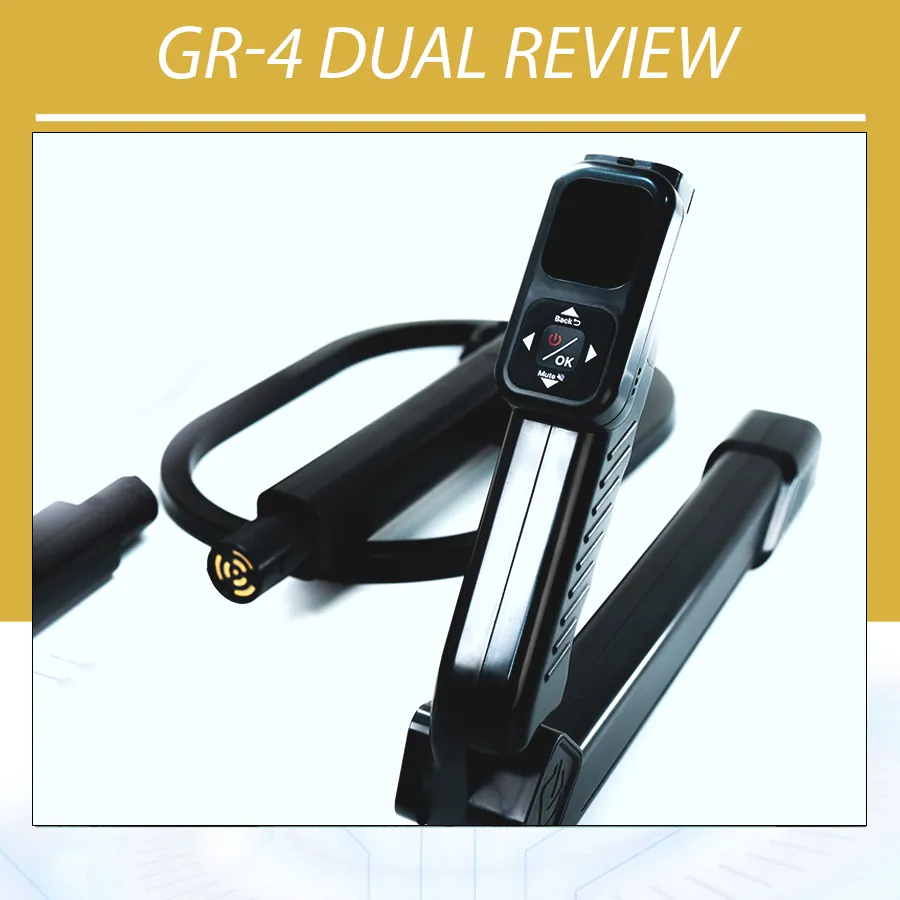
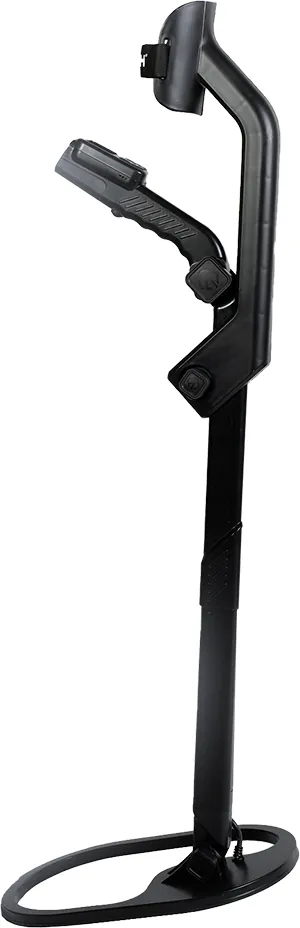
The Groundtech GR-4 DUAL is a 3D ground scanner and integrated pulse induction metal detector. The manufacturer positions it as a complete standalone solution for multi-purpose field work, deep searches, and challenging terrain. Its modular design allows the user to switch between the magnetic sensor module and the PI search coil, giving the operator both scan-based anomaly analysis and direct detector search capability.
This dual design is the main reason to choose the GR-4 DUAL over the standard GR-4. A pure scanner can help visualize underground anomalies, but it may not always provide the direct metal-detection workflow that many treasure hunters expect. A pulse induction detector can help detect metal targets more directly, especially in mineralized or saline soil. Combining both in one platform makes the GR-4 DUAL more versatile.
Groundtech states that the PI system performs well in areas where standard detectors struggle, including high mineral content soils, saline soils, and coastal regions. The company also says the PI detector can detect targets deep underground without being affected by mineral density or soil composition in the same way as many standard detectors. In practical review language, this means the DUAL model is designed for difficult ground, though no detector is completely immune to all ground effects.
GR-4 DUAL Review: Quick Verdict
The GR-4 DUAL is best suited for users who want one device for both 3D scanning and direct pulse induction metal detection. It is more capable than the standard GR-4 for buyers who need detector search modes, because it adds the PI coil and detector functions while keeping the 3D scanner platform.
Its strongest advantages are dual technology, MFS-2 dual sensor scanning, integrated PI detection, modular sensor-to-coil conversion, 3D and 4D app analysis, multilingual support, integrated color screen, long 3D scanning battery life, and dedicated detector modes. It can operate as a scanner for underground anomalies, then switch to detector mode for metal-focused investigation.
The main tradeoff is complexity. A device with two technologies demands more from the operator. Users must understand when to scan, when to use the PI detector, how to interpret graphics, how to confirm a target, and how soil affects both systems. The GR-4 DUAL is more complete, but it is also more demanding than a simple metal detector or a basic scanner.
Dual Technology: Why It Matters
The key idea behind the GR-4 DUAL is technology pairing. The MFS-2 dual sensor system helps locate and visualize underground anomalies, while the PI detector system helps detect metal targets more directly. These two systems answer related but different field questions.
A 3D scan is useful when the operator wants to study an area, identify anomaly shapes, look for cavities, compare magnetic and non-magnetic responses, and save data for later analysis. A pulse induction detector is useful when the operator wants a more immediate detection response from metal targets and better stability in difficult soils than many conventional detectors can provide.
In a real search, a user might first scan an area in 3D Ground Scanning mode. If the data shows a suspicious anomaly, the user can use Live Scanning or Pinpointer mode to narrow the zone. Then the PI detector coil can be attached for Detector Fast Scanning or Detector Advanced Scanning. This workflow is more flexible than relying on one detection principle.
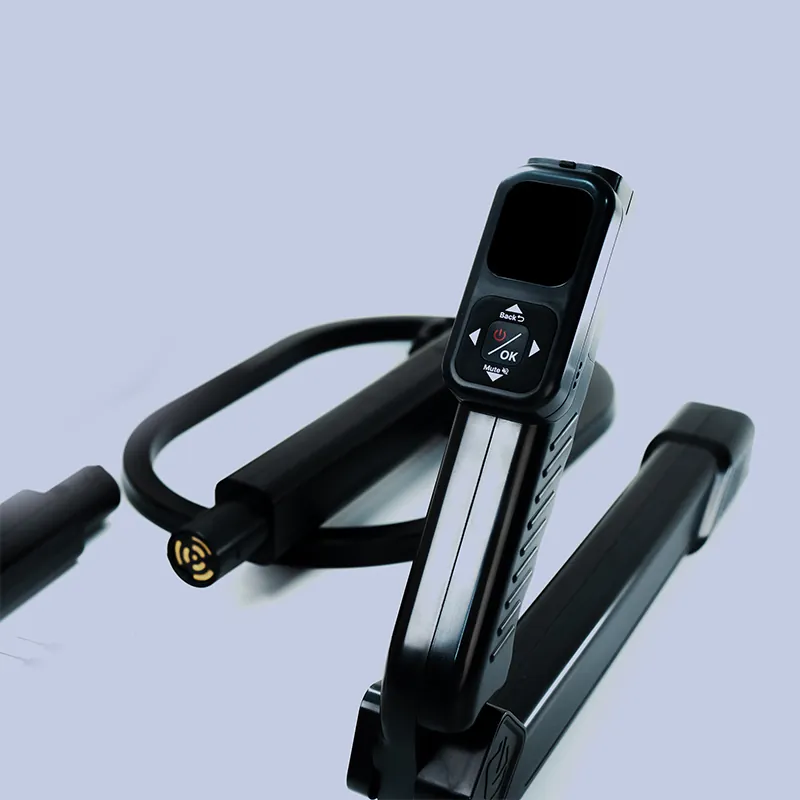
The modular design is important because Groundtech says the PI search coil can be mounted onto the section where the magnetic sensor is attached. That means the DUAL model does not force the user to carry two full devices. It creates a single platform with interchangeable scanning and detecting tools.
Specifications Table
| Specification | Groundtech GR-4 DUAL Details |
|---|---|
| Product name | Groundtech GR-4 DUAL |
| System type | 3D ground scanner and integrated pulse induction metal detector |
| Sensor technology | MFS-2 Dual Sensor Technology, gradiometer plus or minus 2000 microtesla |
| Detector technology | Pulse Induction Technology at 1 kHz frequency |
| Processor | 240 MHz CPU with 12-bit A/D converter |
| 3D scanning depth | Up to 15 meters depending on soil, target size, and scanning function |
| Detector system depth | Up to 3 meters depending on target and conditions |
| Scanning modes | 3D Ground Scanning, Live Scanning, Pinpointer, Detector Fast Scanning, Detector Advanced Scanning |
| Analysis app | G-Portal Android and iOS 3D/4D Analysis Program |
| Device languages | 11 languages |
| Mobile app languages | 25 languages |
| Battery | 3.7 V Li-ion rechargeable battery |
| Operating time | Approximately 10 hours for 3D scanning; approximately 6 hours for PI detector system |
| Wireless connection | Bluetooth 4.2 BLE |
| Operating temperature | 0°C to 70°C |
| Storage conditions | -20°C to 60°C |
| Charging | USB Type-C, 25 W charger adapter |
| Warranty | 2 years |
| Package content | Main unit, carrying bag, user manual, charging adapter, MFS-2 Dual Sensor, PiD35 detector search coil |
MFS-2 Dual Sensor Technology
Like the standard GR-4, the GR-4 DUAL uses Groundtech’s MFS-2 Dual Sensor Technology. The official comparison table describes it as a gradiometer system rated at plus or minus 2000 microtesla. This sensor system is used for 3D ground scanning, magnetic anomaly detection, and visual underground analysis.
Groundtech says the high-sensitivity MFS-2 dual sensor allows more sensitive and deeper scanning while minimizing error margin. Combined with the 240 MHz CPU and 12-bit A/D converter, the DUAL model is designed to provide more precise exploration and graphical feedback.
The practical value of MFS-2 is in the scan data. It helps the user identify variations in the ground that may indicate buried metals, magnetic objects, voids, rooms, graves, tunnels, or disturbed soil. The G-Portal app then turns that data into 3D or 4D visual analysis.
However, magnetic sensor data is not absolute identification. A strong anomaly can come from iron, mineralization, disturbed ground, or other underground changes. The DUAL model’s advantage is that it also offers PI detector modes, giving users another way to investigate metal-related responses.
Pulse Induction Detector System
The defining feature of the GR-4 DUAL is its integrated pulse induction detector system. Groundtech lists the detector technology as Pulse Induction Technology operating at 1 kHz. The DUAL package includes the PiD35 detector search coil, which is used for the detector modes.
Pulse induction detectors are valued because they can perform well in mineralized and saline ground where many standard detectors become unstable. Groundtech specifically highlights high mineral content soils, saline soils, and coastal regions as environments where the DUAL model’s PI technology provides an advantage.
The detector system is listed with up to 3 meters depth. This should be understood correctly. A large metal mass is easier to detect deeply than a small object. Soil, target orientation, target material, and interference all affect performance. The detector depth claim is separate from the 3D scanning depth claim. The DUAL model has up to 15 meters for 3D scanning and up to 3 meters for the detector system.
In field use, the PI detector system is most valuable after a scanner pass identifies a suspicious area or when the user wants direct metal detection in difficult soil. It gives the GR-4 DUAL a practical confirmation layer that the standard GR-4 does not have.
Scanning Modes Explained
3D Ground Scanning
3D Ground Scanning is the structured survey mode. The user scans an area and sends data to the device screen and G-Portal app for analysis. This mode is best for underground structures, cavities, buried metals, graves, rooms, tunnels, and anomaly mapping.
Live Scanning
Live Scanning gives fast graphical feedback without requiring a strict search pattern. It is useful for quickly checking an area and identifying zones worth a more controlled scan.
Pinpointer Function
The Pinpointer Function helps narrow the location of detected objects. It is most useful after a live or 3D scan points to a suspicious area.
Detector Fast Scanning
Detector Fast Scanning is one of the DUAL model’s added detector modes. It is used with the PI search coil for quicker metal-focused checking. This mode is practical when the user wants fast confirmation over a selected area.
Detector Advanced Scanning
Detector Advanced Scanning allows more detailed settings and deeper detector work. Groundtech states that this mode can distinguish between ferrous and non-ferrous metals and valuable or non-valuable metals. In practice, classification should be treated as guidance rather than perfect identification, especially at depth.
3D Ground Scanning Detector Workflow
Groundtech also describes a workflow where users detect soil and metals using the detector function and analyze results in 3D through the Groundtech Portal application. This is one of the most interesting DUAL capabilities because it blends detection and visualization.
G-Portal App and 3D/4D Analysis
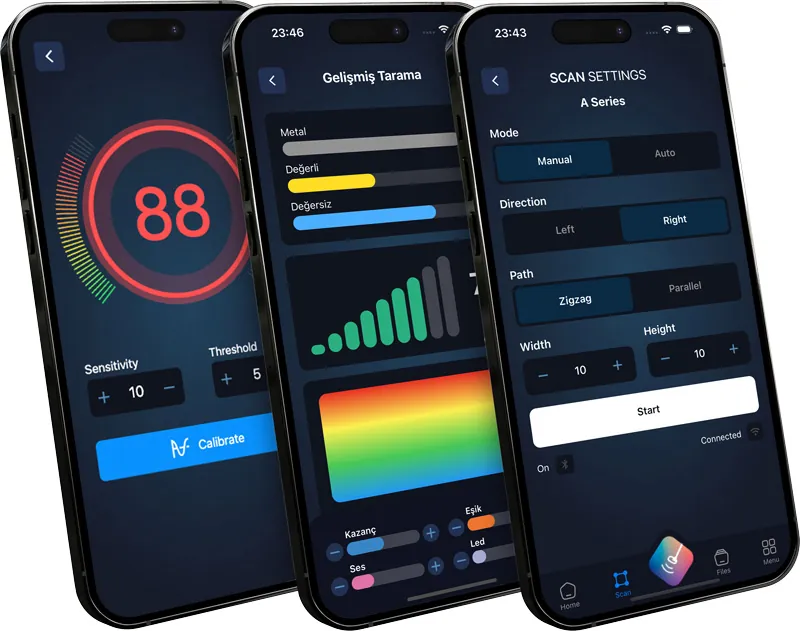
The GR-4 DUAL works with the G-Portal Android and iOS 3D/4D Analysis Program. Groundtech says users can save scan data, examine analysis in more detail, and generate reports. This is important because serious scanning often requires more than one field glance.
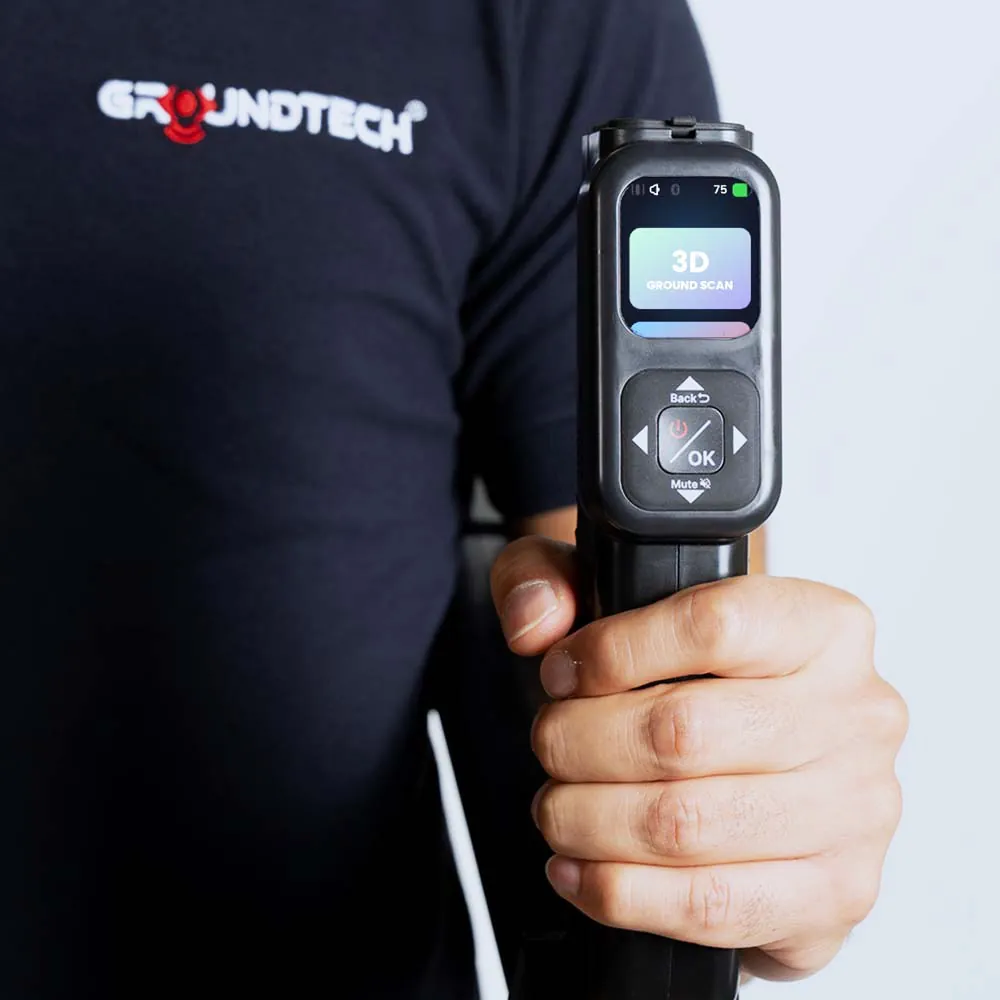
The integrated screen gives immediate access to modes, settings, and results. The app provides deeper analysis and record keeping. Users can view colored 3D graphics where metals, spaces, structures, and differences are represented through different colors. This makes the DUAL model easier to understand than raw sensor data alone.
Still, the app is not a substitute for verification. A scan result should be repeated, compared, and checked from multiple directions. The PI detector system can then provide a second technology layer. This is the correct way to use a hybrid device: scan, interpret, confirm, and document.
Depth Capability and Realistic Expectations
Groundtech lists two different depth categories for the GR-4 DUAL. The 3D scanning system can reach up to 15 meters, while the pulse induction detector system can reach up to 3 meters. Both numbers depend on soil structure, target size, and the selected scanning function.
This distinction is essential. The 15-meter figure applies to 3D scanning of underground anomalies. It is more relevant to larger objects, voids, graves, rooms, tunnels, and significant ground differences. The 3-meter detector figure applies to the PI metal detector system and depends heavily on metal size and ground conditions.
A small coin or tiny nugget will not behave like a large metal mass. A cavity in dry soil will not behave like a cavity in wet conductive ground. The DUAL model gives the user more tools, but physics still controls detection. A professional review must be clear on this point because unrealistic depth expectations are the main reason buyers become disappointed with advanced detectors.
Design and Package Content
The GR-4 DUAL keeps the compact and modular design of the GR-4 platform. Groundtech describes it as simple, compact, and accessible. The modular body allows the user to mount the PI search coil where the magnetic sensor is attached. This makes switching between ground scanning and detector search more practical.
The official package content includes the main unit, carrying bag, user manual, charging adapter, MFS-2 Dual Sensor, and PiD35 detector search coil. That package content explains the DUAL name clearly. The buyer gets both the scanner sensor and the detector coil.
Operating time is split by system. Groundtech lists approximately 10 hours for the 3D scanning system and approximately 6 hours for the pulse induction detector system. This is reasonable because PI detection uses more power. Users planning full-day field work should charge fully and manage time between scanning and detector modes.
GR-4 DUAL vs Standard GR-4
The GR-4 and GR-4 DUAL share the same general platform: MFS-2 Dual Sensor Technology, G-Portal app, Bluetooth 4.2 BLE, 11 device languages, 25 mobile app languages, 3.7 V Li-ion battery, Type-C charging, and 2-year warranty. Both are listed with up to 15 meters depth for the 3D scanning system.
The difference is the integrated PI detector. The standard GR-4 is a 3D ground scanner with 3D Ground Scanning, Live Scanning, and Pinpointer modes. The GR-4 DUAL adds Pulse Induction Technology, the PiD35 detector coil, Detector Fast Scanning, and Detector Advanced Scanning. It also has a PI detector operating time of approximately 6 hours.
Choose the standard GR-4 if you mainly need compact 3D scanning and visual anomaly analysis. Choose the GR-4 DUAL if you need 3D scanning plus direct metal detection in the same device. For many serious treasure hunters, the DUAL version is the more flexible choice because it reduces the need to carry a separate PI detector.
Best Use Cases
The GR-4 DUAL is suitable for serious treasure hunting, archaeological searches, buried metal detection, cavity detection, tunnel search, grave or room investigation, and difficult terrain where both visual scanning and direct metal detection are useful. It is especially helpful when the user needs to evaluate an area in stages.
For example, a user can begin with Live Scanning to identify suspicious zones, perform a 3D Ground Scan over the most promising area, review the result in G-Portal, and then switch to PI detector mode for direct metal confirmation. This multi-step workflow is stronger than relying on one signal type.
The DUAL model is also relevant in mineralized or saline ground. Groundtech specifically presents the PI detector system as valuable where standard detectors struggle. This makes it interesting for coastal regions, red soil, mineralized fields, and difficult gold or treasure areas.
Limitations and Buyer Cautions
The first limitation is that dual technology requires dual skill. A user must learn both 3D scanning and PI detecting. If the operator does not understand either system, the extra capability may create confusion instead of better results.
The second limitation is that visual graphics can be misread. Colored 3D results are helpful, but they are still interpretations of sensor data. A scan should be repeated and confirmed. The PI detector can help confirm metal, but it does not turn every scan anomaly into a treasure target.
The third limitation is conditional depth. Up to 15 meters and up to 3 meters are not guaranteed in every soil for every object. Users should test known targets and learn local soil behavior before making major excavation decisions.
The fourth limitation is price logic. The GR-4 DUAL costs more than the standard GR-4 because it includes the PI detector system and coil. That extra cost is justified only if the buyer will actually use both technologies.
Pros and Cons
| Pros | Cons |
|---|---|
| Combines 3D ground scanning and pulse induction metal detection | More complex than a single-purpose scanner or detector |
| MFS-2 Dual Sensor Technology supports 3D anomaly analysis | Depth claims depend on soil, object size, and scanning function |
| PI detector system is useful in mineralized and saline soils | Requires practice to interpret both graphics and detector responses |
| Includes PiD35 detector search coil in the package | PI detector operating time is shorter than 3D scanning time |
| G-Portal app provides 3D/4D analysis and report workflow | Visual results should be verified with repeated scans and field checks |
| Multilingual device and app support make it suitable for global users | Higher cost is worthwhile mainly for users who need both technologies |
Who Should Buy the GR-4 DUAL?
The GR-4 DUAL is best for serious users who want a multi-function detector for both underground imaging and metal detection. Professional treasure hunters, archaeological search teams, advanced hobbyists, and field researchers are the most logical buyers.
It is a strong choice for users who search different types of targets. If one site may contain buried metal and another may contain cavities or rooms, the DUAL model gives more flexibility. It is also useful when the user wants to confirm scanner results with a detector system.
It is less suitable for casual beginners who want only simple detecting. The DUAL model can be learned, but it deserves practice. Buyers should be willing to study the manual, test known targets, learn G-Portal, and compare scan results carefully.
Frequently Asked Questions
What is the focus keyword of this article?
The focus keyword is GR-4 DUAL Review, and this GR-4 DUAL Review is written specifically around the Groundtech GR-4 DUAL model.
What is the difference between GR-4 and GR-4 DUAL?
The GR-4 is a 3D ground scanner. The GR-4 DUAL adds an integrated pulse induction metal detector system, a PiD35 detector search coil, Detector Fast Scanning, and Detector Advanced Scanning.
How deep can the GR-4 DUAL detect?
Groundtech lists up to 15 meters for the 3D scanning system and up to 3 meters for the detector system. Real depth depends on soil structure, target size, and scanning function.
Is the GR-4 DUAL good for mineralized soil?
Groundtech states that the integrated PI detector system performs well in high mineral content soils, saline soils, and coastal regions where many standard detectors struggle.
Can the GR-4 DUAL work without a phone?
Yes. The device has an integrated color screen for modes, settings, and results. The G-Portal mobile app is used for deeper 3D and 4D analysis, saving scan data, and reports.
Is the GR-4 DUAL suitable for beginners?
It is accessible in design, but it is better for serious users. Beginners can learn it, but they must practice both 3D scanning and PI detector operation to get reliable results.
Final GR-4 DUAL Review Verdict
This GR-4 DUAL Review shows that the Groundtech GR-4 DUAL is a more complete field system than the standard GR-4. It keeps the compact 3D scanner platform and adds a 1 kHz pulse induction detector system with PiD35 search coil. That makes it useful for users who need both underground anomaly visualization and direct metal detection.
The DUAL model’s best qualities are flexibility, modular design, difficult-ground capability, G-Portal analysis, multilingual support, and the ability to move between scanning and detecting workflows. It is especially valuable when a search site requires more than one method: first locate the anomaly, then check it with PI detection.
The device is not perfect for everyone. It requires practice, realistic depth expectations, and careful interpretation. Users who only need a simple coin detector or a basic scanner may not use its full potential. But for serious treasure hunters, archaeology-focused users, and field teams that want a compact all-in-one scanning and PI detection platform, the GR-4 DUAL is a strong and practical choice.