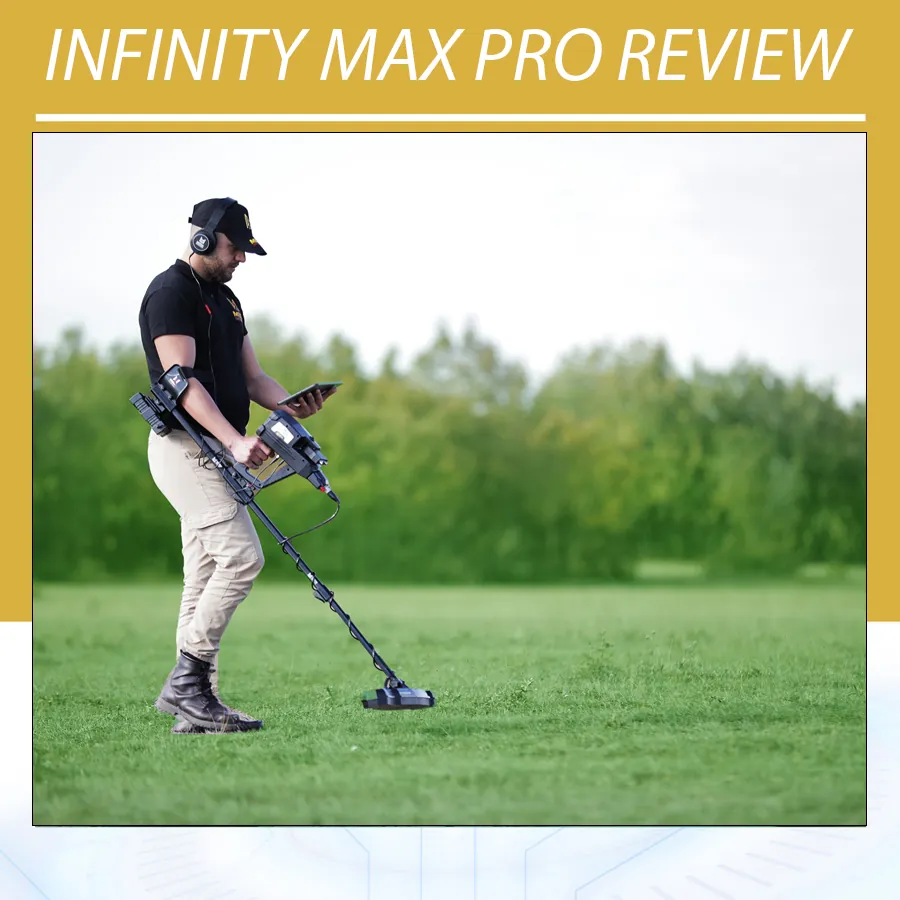
Infinity Max Pro Review:
A Professional 12-System Metal Detector for Treasure Hunters
Quick Verdict: Who Is the Infinity Max Pro For?
The Infinity Max Pro is best suited for serious and professional users who need a broad set of detection tools in one device. It is especially relevant for treasure hunters working across open fields, rocky land, suspected cavities, buried chambers, tunnels, old settlement areas, and mineralized ground.
If you are a beginner who only wants to find modern coins in parks or beaches, the Infinity Max Pro is probably far more advanced than you need. A simpler VLF or multi-frequency detector would be easier and cheaper. But if your work involves deep targets, underground voids, archaeological-style burials, gold targets, or multi-stage confirmation, this device starts to make sense. Its strength is not one feature; its strength is the ability to move from one search method to another without changing machines.
In short, the Infinity Max Pro is a professional detector for users who want flexibility, visual analysis, long-range exploration, and multiple confirmation paths. It rewards training, patience, and organized fieldwork. It is not a push-button shortcut.
Official Device Overview
According to the user manual, the Infinity Max Pro integrates 12 search systems for searching gold, metals, and ancient archaeological burials. MegaLocators also describes it as a multi-system detector that combines 3D ground scanning, long-range locating, pulse induction, and other detection technologies. Orient Detectors lists the device as a Mega Detection product with a 3000-meter front range, 50-meter listed depth on its product page, 12 search systems, German origin, and a 5-year warranty.
There is an important point about published depth and range claims. Depth and range depend on target size, target type, soil, mineralization, humidity, settings, and the system being used. Some official MegaLocators pages show a maximum depth table where LRL is listed up to 100 meters, while Orient Detectors lists 50 meters on the product page. The manual describes different ranges per system, including LRL settings up to 3000 meters, manual and control LRL depth ranges up to 50 meters, and Smart Detect for small targets around 3 meters or less. A professional buyer should read those numbers as system-specific maximum claims, not as one universal depth for every target.
Infinity Max Pro Specifications Table
| Specification | Infinity Max Pro Details |
|---|---|
| Brand | Mega Detection |
| Detector Type | Multi-system metal detector, 3D ground scanner, LRL detector, PI detector, geophysical detector |
| Search Systems | 12 systems: Ground Scan, Tunnel Scan, Geophysical, Auto LRL, Manual LRL, Control LRL, Ionic, Bionic, Live Stream, Pin Pointer, Pulse Induction, Smart Detect |
| Main Sensors and Tools | I.M.T.U sensor, V.S.T sensor, M.G.S 60 scanner, PS50 coil, PS36 coil, PS28 coil, long-range antennas, geophysical wedges |
| Display | 5-inch high-resolution TFT LCD screen, 1024 x 860 resolution, 16 million colors |
| Processor | ARM 64-bit, 1.4 GHz |
| Storage | 32 GB SD card storage |
| Battery | Removable lithium-ion battery, 21000 mAh |
| Connectivity | 2.4 GHz Wi-Fi for Multi Visual Analyzer connection |
| Languages | 12 languages: English, German, Spanish, French, Italian, Russian, Turkish, Chinese, Hebrew, Urdu, Arabic, Persian |
| Package Dimensions | 68 x 51 x 28 cm |
| Package Weight | 17 kg |
| Operating Temperature | 0°C to 40°C |
| Storage Temperature | -20°C to 60°C |
| Humidity | 5% to 75% |
| Official Listed Price | $12,900 on MegaLocators and Orient Detectors product listings at the time of research |
What Comes in the Package?
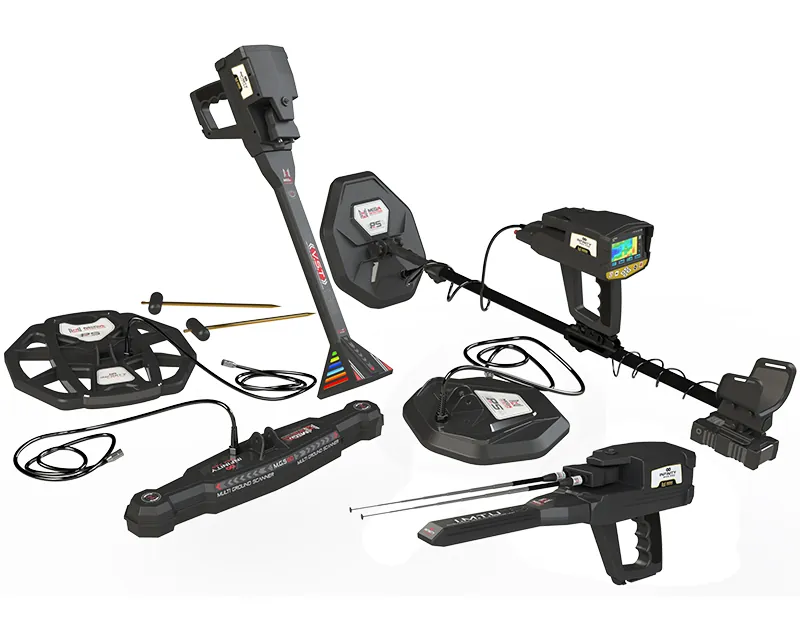
The Infinity Max Pro package is one of the reasons the device feels like a full detection workstation rather than a single detector. The user manual lists the main unit, I.M.T.U sensor, V.S.T sensor, M.G.S 60 scanner, connector bases for the M.G.S and coils, lithium-ion battery, shafts, armrest, two long-range antennas, headphones, PS50 detector coil, PS36 detector coil, PS28 detector coil, two geophysical wedges, wedge cable, charger, power adapter, spare parts, and accessories.
Each accessory has a role. The I.M.T.U is used with LRL, Ionic, and Bionic systems. The V.S.T sensor is used with Live Stream and Pin Pointer. The M.G.S 60 scanner handles Ground Scan and Tunnel Scan. The PS50 coil serves Pulse Induction, while the PS36 and PS28 coils are used in Smart Detect modes. The geophysical wedges are used for resistivity-based measurements in the Geophysical system.
This modular structure is both a strength and a responsibility. It gives the operator a wide range of tools, but it also means setup matters. The manual repeatedly emphasizes correct assembly and shows system-specific assembly instructions. Using the wrong probe or coil for a selected system is not a small mistake; it can affect the results and the device may display warning guidance.
The 12 Search Systems Explained
The heart of any infinity max pro review is the 12-system architecture. Instead of treating them as a marketing list, it is better to group them by use case: visual ground analysis, long-range locating, signal-field search, real-time confirmation, direct metal detection, and geophysical measurement.
1. Ground Scan System
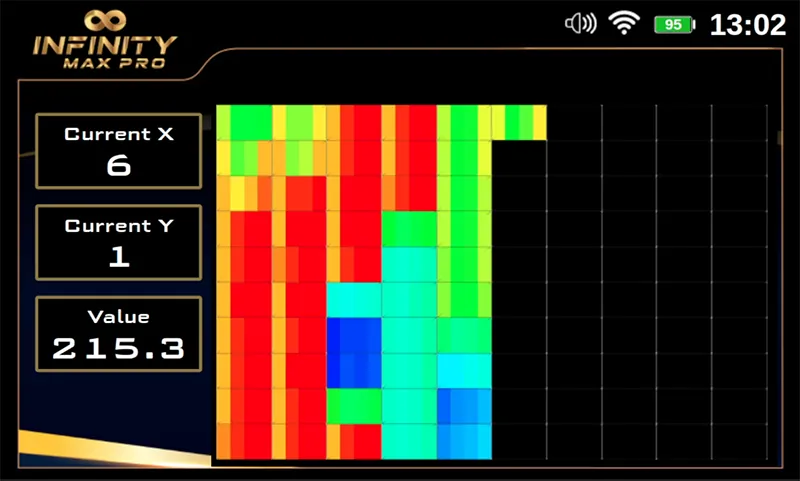
Ground Scan is one of the most important systems in the device. It uses the M.G.S 60 scanner to scan a defined ground area and create a 2D visualization on the device screen or a 3D visualization through the Multi Visual Analyzer app on an Android tablet. The manual describes this system as useful for burials, underground cavities, tunnels, basements, and metal targets.
The workflow is structured. The user chooses display mode, scan mode, path style, scan dimensions, and starting point. The manual recommends rectangular areas of at least 3 x 3 meters, with practical patterns such as 3 x 3, 6 x 6, or 9 x 9 meters, and a 30 cm distance between scan points. This is important because 3D scanning is only as good as the discipline of the scan. Random movement produces weak data; organized lines produce readable results.
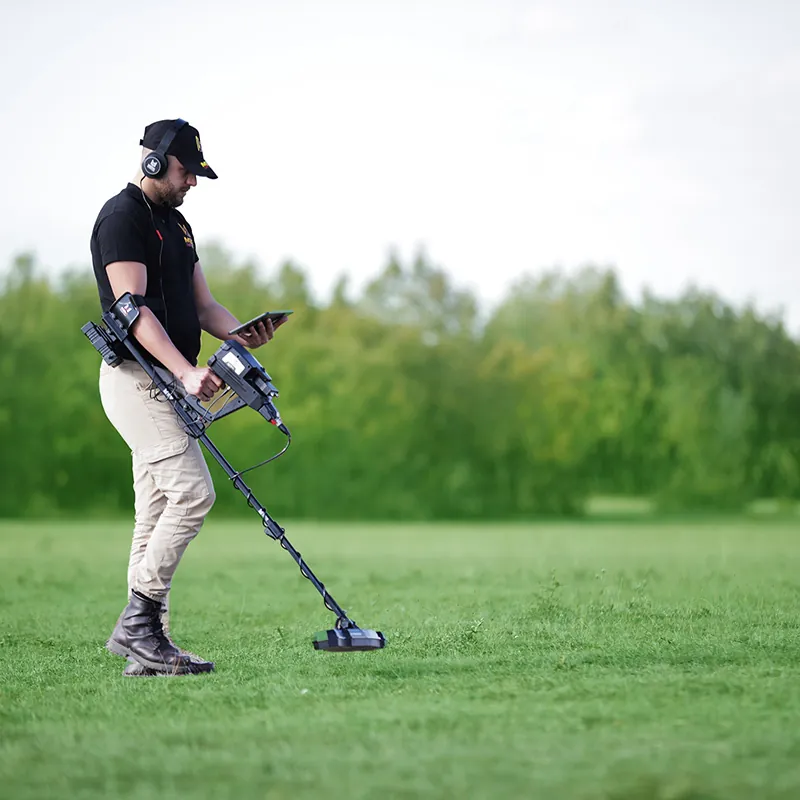
The color interpretation is also useful: red may indicate gold or large metal targets, green indicates natural ground, light blue indicates a small cavity, blue indicates larger voids such as tunnels, and yellow indicates a small metal object. In practice, these colors should be treated as indicators that need confirmation, not final proof by themselves.
2. Tunnel Scan System
Tunnel Scan is a specialized version of Ground Scan that focuses on underground cavities and structures. The manual states that it concentrates on tunnels, chambers, cellars, shelters, caves, graves, and similar spaces, while ignoring metal targets. This makes it particularly relevant for users investigating voids rather than metallic objects.
The settings are similar to Ground Scan: display on device or tablet, manual or automatic mode, one-direction or zigzag path, scan size, and starting point. The value of Tunnel Scan is its focus. If the operator is looking for cavities, a system designed to highlight voids can be more useful than a general metal detection mode.
3. Geophysical System
The Geophysical system uses ground resistivity measurements through wedges planted into the soil. According to the manual, it can be used for targets such as gold, bronze, silver, water, iron, cavity, and copper. The device pumps an electric current through the wedges, measures soil resistance, and displays a target probability report based on the measured values.
This is one of the more serious systems in the Infinity Max Pro because it provides a different kind of confirmation. Instead of relying only on electromagnetic or long-range responses, geophysical resistivity can help evaluate ground differences associated with cavities, water deposits, or certain target types. It requires careful setup and proper wedge placement, but for advanced users it adds another layer of analysis.
4. Auto Long Range Locator
Auto LRL is designed to scan a large area from a fixed point. The manual describes a search distance up to 3000 meters and depth settings from 0 to 100 meters in the Auto LRL interface. The user stands in one place and covers 180 degrees around the body by moving the device from center to right, back to center, then center to left.
The value of Auto LRL is speed. It can help reduce a large search field before more detailed scanning. However, like all long-range systems, it should be followed by confirmation using Ground Scan, Tunnel Scan, PI, Pin Pointer, or another appropriate method. It is a reconnaissance tool, not the final excavation decision.
5. Manual Long Range Locator
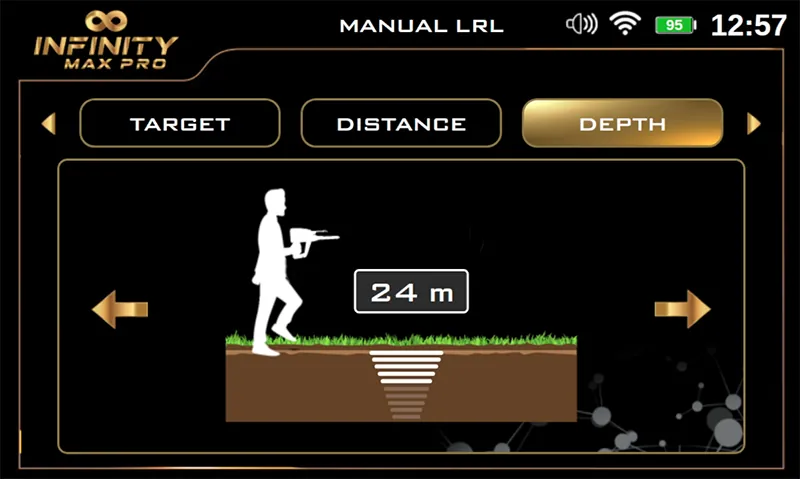
Manual LRL gives the operator more control. The user chooses a target type, distance, and maximum depth. The manual lists a distance range from 250 to 3000 meters and a depth range from 0 to 50 meters for this mode. It also uses antenna direction indicators, a compass, signal view, and an alignment tool to guide the operator.

This system is useful when the user has a specific target category in mind. If you are searching for gold, silver, copper, bronze, or other target programs, manual control lets you narrow the search profile. The tradeoff is that it requires more operator judgment than Auto LRL.
6. Control Long Range Locator
Control LRL is the most adjustable of the long-range systems. It lets the user set soil type, frequency, distance, and depth. The manual describes frequency adjustment from 250 Hz to 18000 Hz, while the official product page describes custom frequency values in MHz on its product content. Because different official pages may describe this detail differently, the safest practical takeaway is that Control LRL is built for custom frequency targeting rather than only preset programs.
This mode is best for experienced users. The ability to adjust frequency can be powerful, but it also introduces room for error. A user who does not understand the relationship between target, soil, distance, and frequency may get less reliable results than with a guided mode.
7. Ionic System
The Ionic system uses the I.M.T.U unit to detect ionic fields associated with long-buried metal targets. The manual explains that the system includes sensitivity and gain controls and uses sound and visual indicators to represent signal strength. The operator moves the device slowly and confirms signals by resetting and repeating the scan from another direction.
This system is most interesting for old buried targets rather than fresh surface objects. It should be treated as one component in a confirmation workflow. If an ionic signal repeats from multiple directions and aligns with another system, it becomes more meaningful.
8. Bionic System
The Bionic system is similar to Ionic in its working method, but it uses a sample object to guide the search. The user points the I.M.T.U head at a metallic object that represents the desired target type and presses the start button to set that target field. Then the device searches for similar signals in the surrounding area.
This can be useful when the operator is searching for a specific type of target. However, it depends heavily on correct setup, a suitable reference object, and careful interpretation. It is not a replacement for ground scanning or direct detection, but it can support a broader search strategy.
9. Live Stream System
Live Stream uses the V.S.T sensor to provide real-time visual feedback. The V.S.T probe has LED bars that change color according to target response: red for precious metal or large metal signals, green for natural ground, light blue for smaller cavities, blue for large voids such as tunnels, and yellow for small metal objects. The device screen and Multi Visual Analyzer app can show corresponding live signal changes.
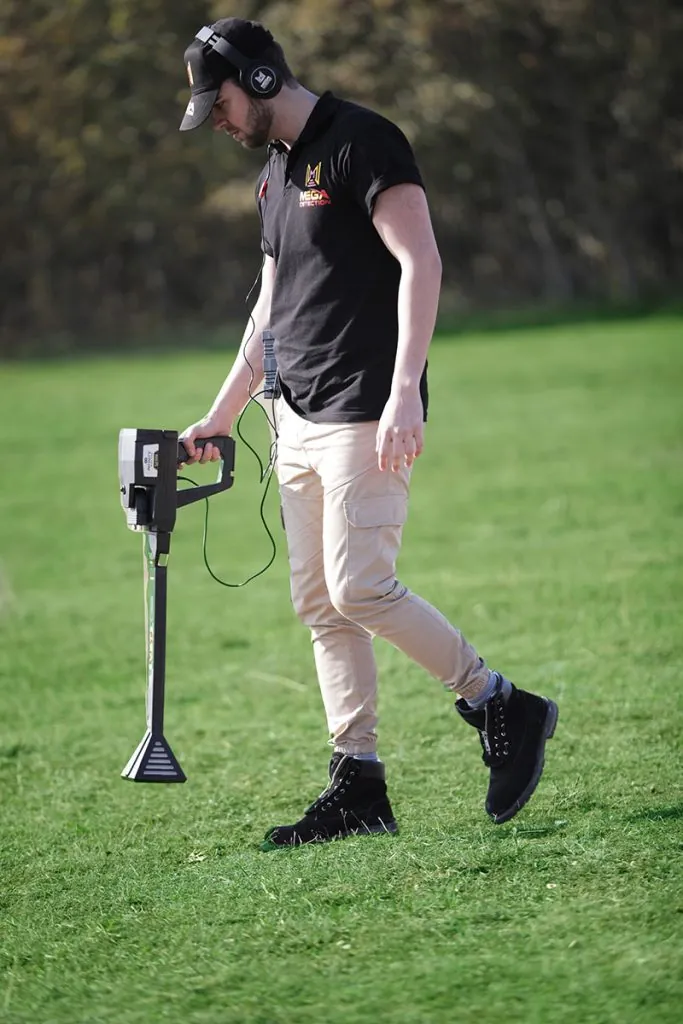
This system is useful for scanning a specific area after a broader detection pass. It gives immediate feedback without building a full scan grid. The manual emphasizes keeping the V.S.T sensor vertical, maintaining constant distance from the ground, and avoiding metal in shoes or on the body. Those details matter because Live Stream is sensitive to operator movement.
10. Pin Pointer System
The Pin Pointer system also uses the V.S.T sensor but focuses on precise target localization. It can indicate a metal target or cavity through sound, screen graphics, or tablet visualization. It includes sensitivity, calibration, and reset controls.
Pin Pointer is best understood as a confirmation and narrowing tool. Once a target area has been suggested by LRL, Ground Scan, Live Stream, or another system, Pin Pointer helps refine the location. For excavation planning, this can reduce unnecessary digging.
11. Pulse Induction System
Pulse Induction uses the PS50 Double D coil and is designed for ferrous and non-ferrous metal detection in different ground conditions. The manual describes ground balance, threshold, gain, and sound controls. Gain can be adjusted from 1 to 6, with higher gain increasing depth and sensitivity, while lower values may be better in highly mineralized ground.
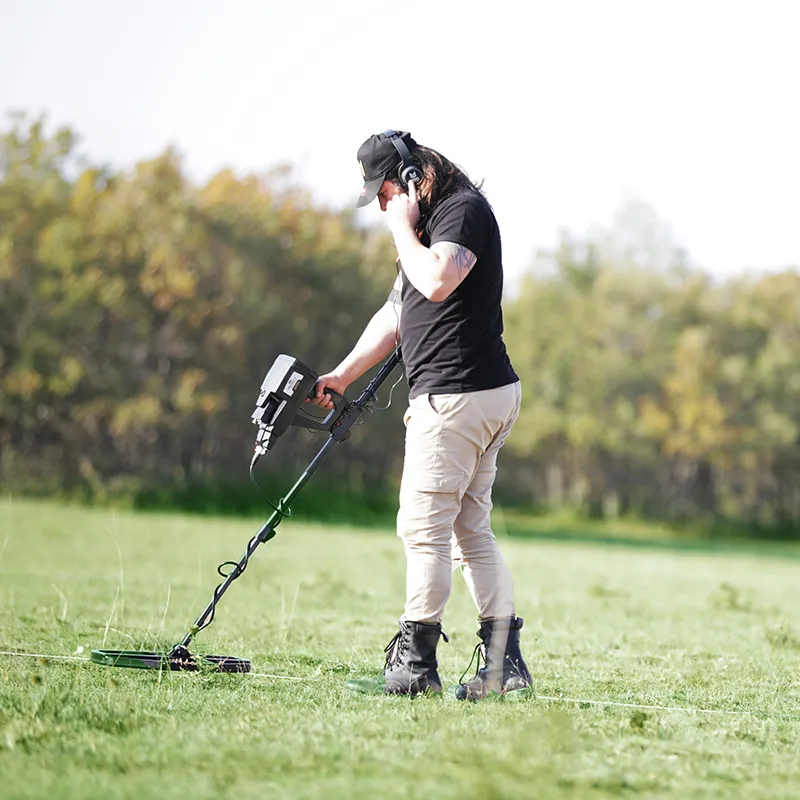
The screen shows a colored graph. When lines rise and turn red, the system indicates precious or non-ferrous targets such as gold. When lines drop and appear blue, it indicates ferrous or non-precious targets. The manual also explains that yellow and gray indicators represent non-ferrous and ferrous signal strength. This makes PI a practical system for metallic target confirmation, especially where soil conditions challenge conventional VLF detection.
12. Smart Detect System
Smart Detect is designed for natural gold nuggets, small relics, jewelry, coins, and other metal targets at small depths, roughly 3 meters or less according to the manual. It uses two coil modes: PS36 and PS28. PS36 is a 36 cm coil, while PS28 is a smaller 28 cm coil intended for smaller targets.
The system includes All Metals, Non Ferrous, and Ferrous detection modes. That makes it more familiar to users coming from traditional metal detectors. PS28 mode includes sensitivity, threshold, Target ID, and FE/NONFE indicators. This is the mode most likely to feel like a conventional detector within the larger Infinity Max Pro platform.
Multi Visual Analyzer: Why the Tablet Matters
The Multi Visual Analyzer app is a major part of the Infinity Max Pro experience. The manual explains that it connects through Wi-Fi to the device and displays Ground Scan and Live Stream results on an Android tablet or supported phone. For Ground Scan, it lets the user set width, height, step duration, start point, scan mode, and path. For analysis, it provides 3D visualization, wireframe mode, data display, grid view, reset, filter, depth values, soil type selection, and file review.
This matters because 3D data is easier to analyze on a larger screen than on the main control unit alone. The app helps the operator filter out normal ground, view depth information, change colors, and inspect scan files after the field pass is complete. For serious scanning, this is not a cosmetic feature; it is part of the workflow.
Performance in Real Field Use
The Infinity Max Pro is strongest when used in stages. A professional workflow might begin with Auto LRL or Manual LRL to identify a promising direction, then use Ground Scan to map the area, then Live Stream or Pin Pointer for closer inspection, then Pulse Induction or Smart Detect for metallic confirmation. If the target may be a cavity, Tunnel Scan and Geophysical can add more relevant information.
This multi-stage workflow is exactly why the device exists. A single detector can produce one kind of evidence. The Infinity Max Pro can produce different kinds of evidence from different technologies. When those findings agree, confidence increases. When they conflict, the user should slow down and rescan rather than rushing to dig.
In mineralized ground, the Pulse Induction system and proper ground balancing become important. In structured sites, Ground Scan and Tunnel Scan are more valuable. For broad open areas, LRL systems can save time. For shallow targets such as coins, jewelry, and small relics, Smart Detect is more practical than a large-scale scan.
Ease of Use and Learning Curve
Mega Detection has clearly designed the interface to make a complex device manageable. The manual describes guided assembly videos, warning screens if the wrong part is installed, a 5-inch color display, multiple language support, sound control, screen settings, reset options, security lock settings, and saved scan files. These features reduce friction.
Still, this is not a beginner-level detector. A new user can learn it, but should expect a training period. The device contains several different detection philosophies: LRL, 3D scan, resistivity, PI, electromagnetic Smart Detect, and V.S.T live sensing. Each has its own strengths and limitations. The operator must learn scan discipline, ground balance, sensitivity control, calibration, target interpretation, and when to confirm with another system.
Pros and Cons
| Pros | Cons |
|---|---|
| 12 search systems cover many detection scenarios | High learning curve for inexperienced users |
| Combines LRL, 3D scan, geophysical, PI, Smart Detect, Live Stream, and Pin Pointer | Professional price level |
| Includes multiple sensors, coils, antennas, and geophysical accessories | Requires careful assembly and correct probe selection |
| Multi Visual Analyzer app improves 3D analysis | Best results require organized scanning, not casual swinging |
| Useful for treasure, gold, cavities, tunnels, and metallic target confirmation | Depth and range expectations must be interpreted by system and target type |
| 12-language interface and large color screen | More equipment to carry than a simple detector |
Best Use Cases
Deep Treasure and Burial Search
The Infinity Max Pro is highly relevant for buried treasure and archaeological-style targets because it combines large-area search with 3D mapping and confirmation tools. Ground Scan, LRL, Geophysical, and PI can be used together to build confidence before excavation.
Underground Cavities, Tunnels, and Chambers
Tunnel Scan, Ground Scan, Live Stream, Pin Pointer, and Geophysical systems make the device suitable for detecting voids, caves, cellars, chambers, and similar underground structures. This is one of the strongest reasons to consider the device over a standard metal detector.
Gold and Metal Prospecting
For natural gold and metallic targets, Pulse Induction and Smart Detect are the most directly relevant systems. Smart Detect is better for smaller targets at shallower depths, while PI is better for stronger metallic detection in difficult ground.
Professional Multi-Site Fieldwork
Teams working across different sites benefit from the device’s flexibility. Instead of carrying separate machines for LRL, 3D scan, PI, and geophysical work, the Infinity Max Pro provides those functions in one ecosystem.
Comparison With Simpler Detectors
Compared with a standard VLF or SMF detector, the Infinity Max Pro is more expensive, more complex, and far more versatile. A device like The Legend, Gold Monster, or Garrett-style coin detector is easier for everyday coin and jewelry hunting. But it cannot provide 3D ground scans, resistivity measurements, long-range locating, or tunnel-focused visualization.
Compared with a dedicated 3D scanner or PI detector, the Infinity Max Pro offers broader tools, but a specialist machine may be simpler for one narrow task. Choose this device for multi-application work, not casual single-purpose searching.
Buying Advice
Buy the Infinity Max Pro if you need a professional multi-system detector and are willing to learn it properly. It is best for users who search for different target types and want several confirmation methods. It is especially attractive for treasure hunters who need long-range scanning, 3D visualization, cavity detection, and metallic target confirmation in one package.
Do not buy it only because it has the highest number of systems. If you only need a simple gold nugget detector or coin detector, a smaller device may be more practical. If you buy the Infinity Max Pro, plan time for training. Read the manual, practice on controlled targets, learn each sensor, and build a repeatable scan workflow.
FAQ
Is Infinity Max Pro good for gold?
Yes. It includes Pulse Induction, Smart Detect, LRL, Ionic, Bionic, and 3D systems that can support gold search scenarios. For small nuggets, Smart Detect and PI are the most direct systems. For larger or deeper gold targets, LRL and 3D confirmation may be useful.
How many systems does Infinity Max Pro have?
The device includes 12 search systems: Ground Scan, Tunnel Scan, Geophysical, Auto LRL, Manual LRL, Control LRL, Ionic, Bionic, Live Stream, Pin Pointer, Pulse Induction, and Smart Detect.
What is the maximum range?
The long-range systems are officially described with search distance settings up to 3000 meters. Practical performance depends on target type, environment, soil, and operator technique.
What is the maximum depth?
Official depth figures vary by system and source. Orient Detectors lists 50 meters, MegaLocators tables mention system-specific values including LRL up to 100 meters, and the manual describes different depth ranges by mode. Treat maximum depth as a system-specific claim, not a guarantee for every target.
Does it include a 3D scanner?
Yes. The Ground Scan and Tunnel Scan systems use the M.G.S 60 scanner and can show 2D results on the device or 3D visualization through the Multi Visual Analyzer app.
Is it suitable for beginners?
It can be learned by a committed beginner, but it is not a casual beginner detector. The device is best for serious users who are willing to practice and understand each system.
Final Verdict
The Infinity Max Pro is one of the most comprehensive metal detector platforms in the Mega Detection line. Its value comes from combining 12 search systems with multiple sensors and coils: M.G.S 60 for 3D ground scanning, I.M.T.U for long-range and field-based systems, V.S.T for Live Stream and Pin Pointer, PS50 for Pulse Induction, and PS36/PS28 for Smart Detect. This gives the user a complete toolkit for treasure hunting, gold detection, underground cavities, and metallic target confirmation.
The strongest argument for buying the Infinity Max Pro is flexibility. If your fieldwork requires more than one detection method, it can replace a collection of separate devices. The strongest argument against it is complexity. It demands training, careful scanning, and realistic expectations about depth and range. For a professional treasure hunter, that tradeoff can be worthwhile. For a casual user, it may be too much machine.
Overall, this infinity max pro review finds it to be a powerful, high-end detector for advanced users who need a multi-technology solution. It is best treated as a professional exploration system, not a simple detector.