
GPZ 8000 Review: Minelab’s Flagship Gold Detector for Serious Prospectors
What Is the GPZ 8000?
The GPZ 8000 is a premium Minelab gold prospecting detector designed for advanced performance in challenging ground. It uses GeoZVT technology, which Minelab describes as proven ZVT depth with advanced signal control for high performance in mineralized, conductive, and EMI-heavy ground. The detector is built to uncover gold in difficult conditions while maintaining control over different target sizes and soil types.
Unlike a standard coin detector, the GPZ 8000 is focused almost entirely on gold prospecting. Its search modes are built around ground difficulty and target response rather than park programs or beach coin settings. The official search modes are Difficult Deep, Difficult High Yield, Normal Deep, and Normal Extra Deep. That structure tells you immediately that this detector is about matching depth and ground behavior, not about casual all-purpose detecting.
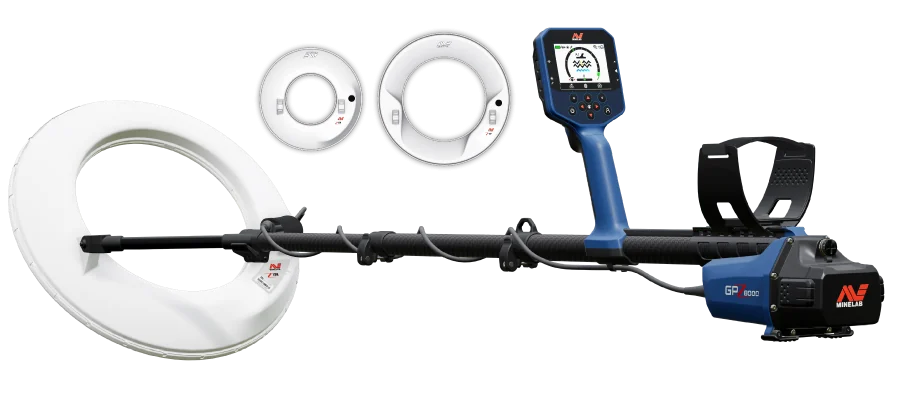
The GPZ 8000 also introduces Minelab’s Z-Set concentric toroidal coil range, including Z18, Z17, and Z13 coils. The coils are designed for different ground conditions, target sizes, and search styles. Minelab says the Z18 focuses on maximum depth and stability in highly mineralized ground, the Z17 is designed for high EMI and conductive soils, and the Z13 is suited to vegetation-heavy terrain with accurate detection of small to medium gold.

GPZ 8000 Review: Quick Verdict
The GPZ 8000 is best for experienced prospectors who need maximum goldfield performance and are willing to pay for a flagship detector. Its strongest advantages are depth potential, advanced ground handling, three Z-Set coil options in the full package, rich audio, low-latency wireless operation, a lighter 2.78 kg build, waterproof detector/coil/WM 14 rating to 1 meter for less than 30 minutes, and a professional field accessory set.
It is especially attractive for users who already understand Minelab gold detectors and want a top-tier machine for difficult ground. If you work highly mineralized goldfields, conductive soils, EMI-heavy locations, open ground, or areas where large and small gold can both appear, the GPZ 8000 gives you a serious toolset. It is also more adaptable than many single-coil machines because the Z13, Z17, and Z18 coils let the user tune the detector to terrain and target size.
The main downside is that the GPZ 8000 is not casual equipment. It is expensive, specialized, and best used by someone who understands prospecting technique. Beginners can learn it, but many new users would be better served by a lighter, simpler detector such as the GOLD MONSTER 2000 or another entry-level gold machine before moving to a flagship system.
Manufacturer Positioning and Design Purpose
Minelab positions the GPZ 8000 as its latest flagship gold prospecting detector. This matters because the detector is not trying to compete with entry-level machines on simplicity or price. It is designed to compete on performance in hard ground, adaptability, audio detail, and professional field endurance.
The official Minelab product page highlights maximum depth penetration, GeoZVT technology, Z-Set concentric toroidal coils, Echo Sonic Pro audio, wireless audio freedom, lighter swing, all-day battery life, hybrid shaft construction, and the Pro-Swing 125 harness. These features show that the detector is built not only around electronics but also around long search sessions. A detector that finds faint gold but exhausts the user after an hour is not truly practical in large goldfields.
The GPZ 8000 weighs 2.78 kg, which is not ultralight compared with compact VLF detectors, but it is presented as a lighter swing for its category. The included Pro-Swing 125 harness, GA10 guide arm, bungee cord, and hip-strut components are important. They are not decoration; they are part of making a powerful gold detector manageable during long days.
GPZ 8000 Specifications Table
| Specification | GPZ 8000 Details |
|---|---|
| Manufacturer | Minelab |
| Detector type | Flagship gold prospecting detector |
| Key technology | GeoZVT technology and Echo Sonic Pro audio |
| Search modes | Difficult Deep, Difficult High Yield, Normal Deep, Normal Extra Deep |
| Sensitivity | Manual 1-10, Auto, and Auto+ |
| Noise cancel | Auto and manual |
| Target tones | Continuous |
| Wireless audio | Low-latency wireless audio with WM 14 wireless audio module |
| Audio output | Wired 3.5 mm headphones or low-latency wireless audio |
| Display | Full color LCD with white backlight levels 1-3 |
| Flashlight | White flashlight levels 1-3 |
| Length | Extended 177 cm; collapsed 102 cm |
| Weight | 2.78 kg / 6.1 lbs |
| Waterproof rating | Detector, coil, and WM 14 waterproof to 1 m for less than 30 minutes |
| Operating temperature | -10°C to +50°C |
| Storage temperature | -20°C to +70°C |
| Battery | 7.2 V / 46 Wh removable lithium-ion battery pack; two batteries supplied |
| Warranty | 3 years control box and coil, coverage may vary by region |
GPZ 8000 GeoZVT Technology Explained
The heart of the GPZ 8000 is Minelab’s GeoZVT technology. Minelab describes it as proven ZVT depth with advanced signal control for high performance in mineralized, conductive, and EMI-heavy ground. ZVT, or Zero Voltage Transmission, became known through the GPZ series for delivering serious depth on gold targets while maintaining useful sensitivity. GeoZVT appears to refine that platform for the GPZ 8000 with better control over difficult ground.
In practical terms, GeoZVT matters because goldfields are rarely easy. Mineralized soil can create ground noise. Conductive soil can mask faint targets. EMI from power lines, nearby electronics, or environmental sources can make audio unstable. A detector that is sensitive but noisy may cause fatigue and missed targets. A detector that handles ground well but lacks sensitivity may also miss gold. The GPZ 8000 is designed to balance those competing demands.
This does not mean the detector removes the need for skill. GeoZVT gives the operator a stronger platform, but the user still needs to choose the correct mode, coil, sensitivity, and search strategy. In difficult ground, the best result often comes from slightly calmer settings and careful listening rather than simply pushing sensitivity to the maximum.

Z-Set Concentric Toroidal Coils
One of the biggest reasons the GPZ 8000 stands out is the Z-Set concentric toroidal coil family. Minelab lists Z18 18-inch, Z17 17-inch, and Z13 13-inch concentric toroidal coils as supplied accessories in the full specification package. The company also lists a GPZ 8000 Single Coil Pack with the Z18 coil.
The Z18 is designed for maximum depth and stability in highly mineralized ground. It is the coil to consider when covering wide open areas and searching for medium to large gold at depth. Its larger size helps cover ground and penetrate deeper layers, but like any larger coil, it may be less convenient in tight vegetation or rocky terrain.
The Z17 is designed for high EMI and conductive soils. This is important because not all difficult ground is the same. Some areas suffer more from electrical noise or conductive salts than classic mineralization. A coil that maintains stability in those conditions can make the difference between a usable search day and a frustrating one.
The Z13 is designed for vegetation-heavy terrain and small to medium gold. Its smaller size improves handling, reduces fatigue, and helps search tighter ground. It is also a practical option when a user wants better sensitivity to smaller targets without carrying the largest coil all day.
From a review perspective, the coil system makes the GPZ 8000 more adaptable than a detector locked to one search head. The detector’s real performance depends on matching the coil to the site. Open flats, noisy conductive ground, brushy gullies, and deep patch hunting are different jobs. The Z-Set system gives the operator options.
Search Modes and Ground Matching
The GPZ 8000 has four official search modes: Difficult Deep, Difficult High Yield, Normal Deep, and Normal Extra Deep. The names are simple, but they reveal the detector’s logic. The operator first considers whether the ground is difficult or normal, then chooses the style of gold response and depth priority.
Difficult Deep is likely the mode many users will consider when mineralized ground is challenging and deeper targets are expected. Difficult High Yield is for difficult ground where the operator wants stronger response to productive gold targets, especially where target size may vary. Normal Deep and Normal Extra Deep are for less difficult ground where the detector can push deeper without being limited as much by mineralization.
The value of these modes is that they help prevent a one-setting-fits-all approach. Goldfields change. A mode that works well in one patch may become too noisy in another. Experienced operators learn to test modes, listen for stability, and compare target response before committing to a setting.
The GPZ 8000 also offers manual sensitivity from 1 to 10, Auto, and Auto+. Auto and Auto+ are valuable when conditions change or when the user wants the detector to manage sensitivity more intelligently. Manual sensitivity gives experienced users direct control when they know how far they can push the machine.
Audio: Echo Sonic Pro and Target Definition
Minelab lists Echo Sonic Pro audio as a key technology for the GPZ 8000. The product page describes it as rich layered sound with enhanced stereo separation for clear target definition. In gold prospecting, audio is not a secondary feature. It is the main way many targets are found.
Gold signals can be faint, soft, broken, or barely different from the threshold. A detector with poor audio may technically detect a target but fail to communicate it clearly. Echo Sonic Pro is designed to help the operator hear subtle differences and separate target signals from surrounding noise.
The GPZ 8000 includes audiophile wired headphones and the WM 14 wireless audio module. Low-latency wireless audio is useful because delay can make precise coil control feel disconnected. Minelab emphasizes real-time wireless audio with consistent target detail, which matters when sweeping slowly over faint responses.
The detector uses continuous target tones and has volume control from 1 to 17. That continuous audio style is familiar to experienced prospectors because it helps detect subtle threshold changes. New users may need time to learn what faint gold sounds like compared with ground variation, hot rocks, or EMI.
Ergonomics and Long Prospecting Sessions
The GPZ 8000 is a serious detector, and Minelab has clearly considered field fatigue. At 2.78 kg, it is lighter than some users might expect from a flagship deep gold detector, but it is still a machine that benefits from harness support. The included Pro-Swing 125 harness transfers weight through the hips and helps reduce strain during long hunts.
The GA10 guide arm, bungee cord, hooks, hip-strut lengths, and sockets are also included. These accessories may look less exciting than coils or audio modules, but they matter. Proper detector balance can improve sweep consistency, reduce shoulder fatigue, and allow the user to keep working when faint signals require slow careful passes.
The hybrid shaft system combines carbon fiber and fiberglass. Minelab says it reduces vibration and reverberation from knocks and bumps, while the tear-drop shaft profile prevents unwanted rotation. The fiberglass lower shaft helps minimize detection noise. These design points are especially relevant for a detector listening for subtle signals. Mechanical noise and unstable alignment can make the operator’s job harder.
Battery Life and Field Power
Minelab describes the GPZ 8000 as having all-day battery life and includes two rechargeable lithium-ion battery packs. The official specifications list a supplied battery as a 7.2 V / 46 Wh lithium-ion removable pack. The box also includes a universal USB-C AC charger, USB-C charging cables, a USB-C DC car charger, and a crocodile clip adaptor.
This is a practical field package. Prospectors often work far from power outlets, so car charging and removable batteries matter. The ability to carry a second battery reduces downtime and supports long sessions in remote goldfields.
Battery planning still matters. Cold conditions, long days, high backlight use, flashlight use, and wireless audio can affect power management. Serious operators should charge both packs before leaving, rotate batteries intentionally, and avoid starting a remote search day with partial power.
Waterproofing and Environmental Use
The GPZ 8000 specifications state that the detector, coil, and WM 14 are waterproof to 1 meter for less than 30 minutes. That is useful protection for rain, shallow water, wet grass, and accidental exposure. It does not mean the detector should be treated as a diving machine or used carelessly in deep water.
The operating temperature range is -10°C to +50°C, and the storage range is -20°C to +70°C. These ranges support serious outdoor use in many climates. Gold prospectors often work in deserts, mountains, dry creek beds, and remote areas where temperature changes can be significant. The GPZ 8000 is designed for that kind of environment.
What Comes in the Box?
The full GPZ 8000 supplied accessory list is extensive. Minelab lists Z18, Z17, and Z13 concentric toroidal coils; two rechargeable lithium-ion battery packs; Pro-Swing 125 harness; three hip-strut lengths and sockets; bungee cord and hooks; screen protector kit; GA10 guide arm; audiophile wired headphones; WM 14 wireless audio module; universal USB-C AC charger; USB-C charging cables; USB-C DC car charger; and crocodile clip adaptor.
This package is important because flagship detector value is not only the control box. The coils, harness, audio module, spare battery, and charging options all contribute to real field usability. A buyer comparing the GPZ 8000 with cheaper detectors should compare the full package, not just the headline price.
Some markets also list a GPZ 8000 Single Coil Pack. Buyers should check exactly which package is being sold locally, because the difference between one coil and three coils is significant for field flexibility.
Gold Performance: Small, Medium, and Large Nuggets
Minelab’s FAQ describes the GPZ 8000 as providing superior performance on small to larger nuggets, even in highly mineralized or conductive soil types, while still providing good sensitivity to smaller and shallower targets. That balance is important because many detectors lean strongly toward one target class. Some are brilliant on tiny shallow gold but weaker on deep larger gold. Others are deep machines that miss fine small pieces.
The GPZ 8000 aims to cover a wide range. The Z13 coil supports small to medium gold in tighter terrain. The Z17 supports small to medium gold in conductive and EMI-heavy soils. The Z18 pushes wider coverage and deeper performance for medium to large gold in mineralized ground. Combined with the four search modes, this gives serious prospectors a flexible system.
Still, no detector is best at everything at once. A tiny specimen in dense trash, a deep multi-ounce nugget, and a faint target in conductive soil may each require different coil and mode choices. The GPZ 8000 gives the user advanced tools, but the user must still make intelligent field decisions.
Pros and Cons
| Pros | Cons |
|---|---|
| Flagship Minelab gold detector designed for difficult goldfields | High price places it beyond most casual hobby budgets |
| GeoZVT technology targets mineralized, conductive, and EMI-heavy ground | Best results require experience and careful setup |
| Z-Set coil range gives options for different terrain and gold sizes | Large coils may be tiring or awkward in dense vegetation |
| Echo Sonic Pro audio and low-latency wireless improve target clarity | Continuous audio style may take time for beginners to master |
| Includes professional harness, guide arm, batteries, chargers, and audio accessories | Package details can vary by market, especially single-coil packs |
| Waterproof to 1 meter for less than 30 minutes | Not intended as a deep-water detector |
Who Should Buy the GPZ 8000?
The GPZ 8000 is best for advanced prospectors, professional gold hunters, and serious users who search difficult ground often enough to justify a flagship detector. It makes sense for buyers who understand that detector performance depends on coil selection, mode choice, ground reading, and careful listening.
It is also suitable for users upgrading from older Minelab gold detectors who want deeper control, improved coil options, and a modern professional package. If you already know how to interpret faint gold signals and want more capability in mineralized or conductive soils, the GPZ 8000 is a logical premium upgrade.
It is less suitable for casual beginners. A new prospector with no experience may struggle to justify the price and may not immediately benefit from the full feature set. For learning basic gold detection, a simpler machine may be more efficient. The GPZ 8000 becomes valuable when the operator has the locations, patience, and skill to use it properly.
GPZ 8000 Compared with GPX 6000 and GOLD MONSTER 2000
The GPZ 8000 is positioned above the GPX 6000 and GOLD MONSTER 2000 in Minelab’s gold detector range. The GOLD MONSTER 2000 is a lighter, simpler, more accessible gold detector focused on ultra-fine gold and automatic operation. The GPX 6000 is a professional PI-style gold detector designed for serious prospecting with easier operation than some older professional machines. The GPZ 8000 is the flagship option for maximum depth, control, coil flexibility, and difficult ground performance.
Choosing between them depends on the user. A beginner or weekend prospector may get more practical value from the GOLD MONSTER 2000. A serious user wanting a professional but more direct gold detector may choose the GPX 6000. A skilled prospector who wants the highest Minelab flagship capability and multiple Z-Set coil options should consider the GPZ 8000.
Frequently Asked Questions
What is the focus of this GPZ 8000 Review?
This GPZ 8000 Review focuses on Minelab’s official product and technical information, including GeoZVT technology, Z-Set coils, search modes, audio, accessories, depth expectations, and ideal users.
Is the GPZ 8000 good for small gold?
Yes. Minelab says the GPZ 8000 provides strong performance on small to larger nuggets, even in highly mineralized or conductive soil. Coil choice matters, and the Z13 is the most practical coil for tighter terrain and small to medium gold.
Is the GPZ 8000 waterproof?
The detector, coil, and WM 14 wireless module are waterproof to 1 meter for less than 30 minutes according to Minelab specifications. It should not be treated as a deep submersible detector.
What coils come with the GPZ 8000?
Minelab’s full specification list includes Z18, Z17, and Z13 concentric toroidal coils. Some markets may offer a Single Coil Pack with the Z18 coil, so buyers should check the exact package before purchasing.
Is the GPZ 8000 suitable for beginners?
It can be learned by a beginner, but it is best suited to experienced prospectors. Its price and capability make most sense for users who already understand goldfield detecting and need flagship performance.
What makes the GPZ 8000 different from ordinary detectors?
The GPZ 8000 is built around GeoZVT technology, Z-Set concentric toroidal coils, ground-optimized search modes, Echo Sonic Pro audio, and professional field accessories. It is designed for gold prospecting in challenging ground rather than general hobby detecting.
Final GPZ 8000 Review Verdict
This GPZ 8000 Review shows a detector built for a specific kind of user: the serious gold prospector who wants Minelab’s most advanced flagship platform and is prepared to use it properly. The GPZ 8000 combines GeoZVT technology, Z-Set concentric toroidal coils, ground-optimized search modes, Echo Sonic Pro audio, wireless freedom, waterproof protection, and a professional field package.
Its greatest strengths are depth potential, difficult-ground control, and adaptability across different gold sizes and terrain types. The Z18, Z17, and Z13 coils give the detector a level of flexibility that matters in real goldfields. The audio system and continuous tones are designed for subtle target interpretation, which is central to serious prospecting.
The GPZ 8000 is not the most sensible choice for every buyer. It is expensive, advanced, and best used by someone who knows why they need it. But for skilled prospectors working demanding ground, it is one of the most serious gold detectors in Minelab’s lineup. If your goal is maximum goldfield performance and you can take advantage of its coil system, search modes, and audio detail, the GPZ 8000 deserves its flagship status.