Metal Detector Air Tests vs Ground Tests: What Depth Results Really Mean
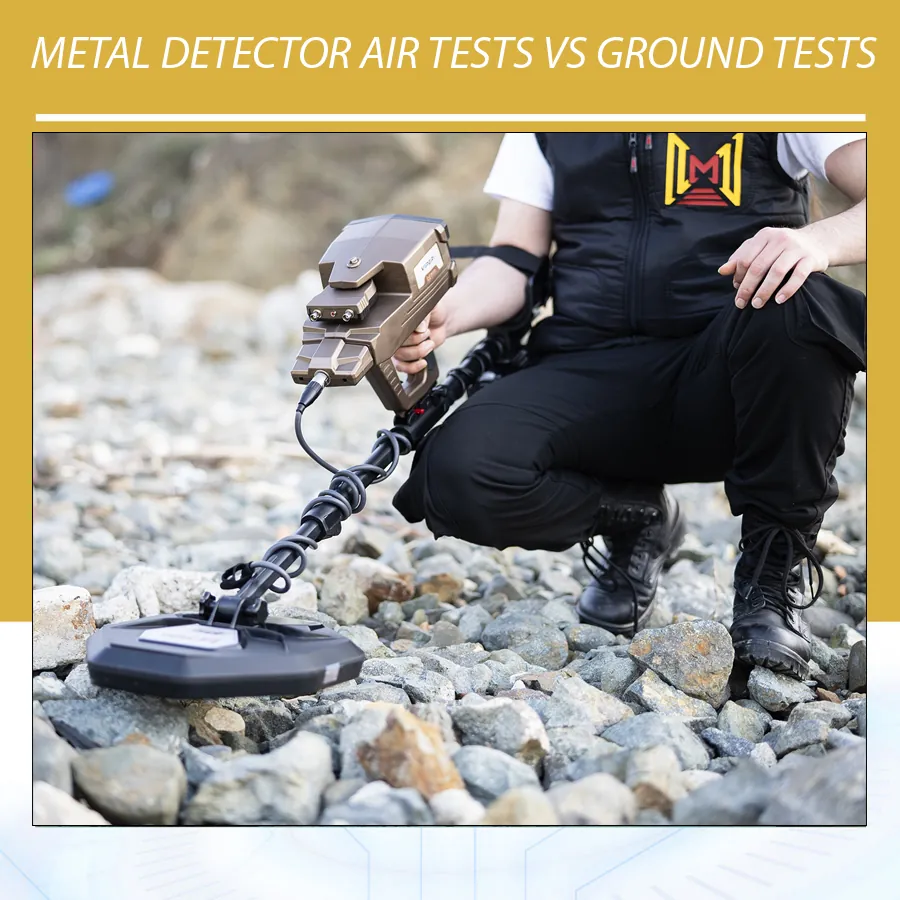
Metal detector air tests vs ground tests are often discussed as if they produce the same depth result. They do not. An air test can show how strongly a detector responds to a known object in a controlled environment. A ground test shows how that detector performs when soil minerals, moisture, target position and nearby objects affect the signal.
Both tests are useful when performed correctly. The mistake is treating an impressive air-test distance as a guaranteed field depth. This guide explains what each test measures, why the results differ and how to report depth honestly.
What is metal detector air tests?
An air test is performed by moving a known metal object toward the search coil without burying it. The detector, coil, settings, object and distance can be controlled and repeated. Keep the coil away from floors, tables, wiring, phones and other metal because nearby material can affect the result.
Air tests are excellent for checking whether a detector is operating, comparing coils on the same detector and learning the approximate audio or Target ID of known objects. International Mine Action Standards also describe in-air testing as a controlled way to separate variables, while warning that an air result does not directly indicate buried-ground performance.

What is a ground test?
A ground test measures a target after it has been buried or located naturally in soil. The test includes the effects of mineralisation, salt, moisture, compaction, ground balance, target orientation, depth and nearby metal. A carefully prepared test garden is more realistic than an air test, but it still represents only that soil and those targets.
A field target is harder to standardise. You may not know its exact size, shape, orientation or depth, and the surrounding soil may change within a few metres. Record the conditions whenever you make a depth claim.
Air tests vs ground tests: the key differences
| Test | Best for | What it cannot prove |
|---|---|---|
| Air test | Equipment checks, controlled comparisons and target-response practice | Guaranteed depth in soil |
| Ground test | Realistic depth, stability and ground-balance evaluation | Universal performance in every location |
| Natural field target | Practical detecting decisions | Exact target identity or a repeatable laboratory measurement |
Why air-test depth is usually greater
Soil creates its own electromagnetic response
Minerals in red clay, black sand and other soils can respond to the detector’s field. Wet salt sand can also behave as a conductive load. This ground response competes with a small metal target and may reduce depth or make the signal unstable. Minelab explains that mineralised soil can mask small targets and that benign ground generally permits deeper detection.
Ground balance trades noise for usable depth
Ground balance reduces the detector’s response to changing soil. A detector that is perfectly quiet in air may need a lower sensitivity or a specialised ground mode in the field. The best setting is the one that produces a repeatable target response without excessive ground noise.
Buried objects change over time
A newly buried coin and an old naturally buried coin are not identical test subjects. Soil can settle around an object, moisture can change its response and corrosion can alter the contact between the object and surrounding ground. These effects are often called the halo effect, but the size and reliability of any halo should not be assumed.
Depth is affected by the target itself
Large targets are normally easier to detect deeply than small targets. A flat coin can respond differently from a coin on edge. A thin chain, tiny nugget or narrow nail may be difficult even when a larger object made from similar metal is detected at greater depth. Minelab lists target size, shape, orientation, composition and ground mineralisation among the main depth factors.
Examples from detectors available at Orient Detectors
Garrett ACE 400i
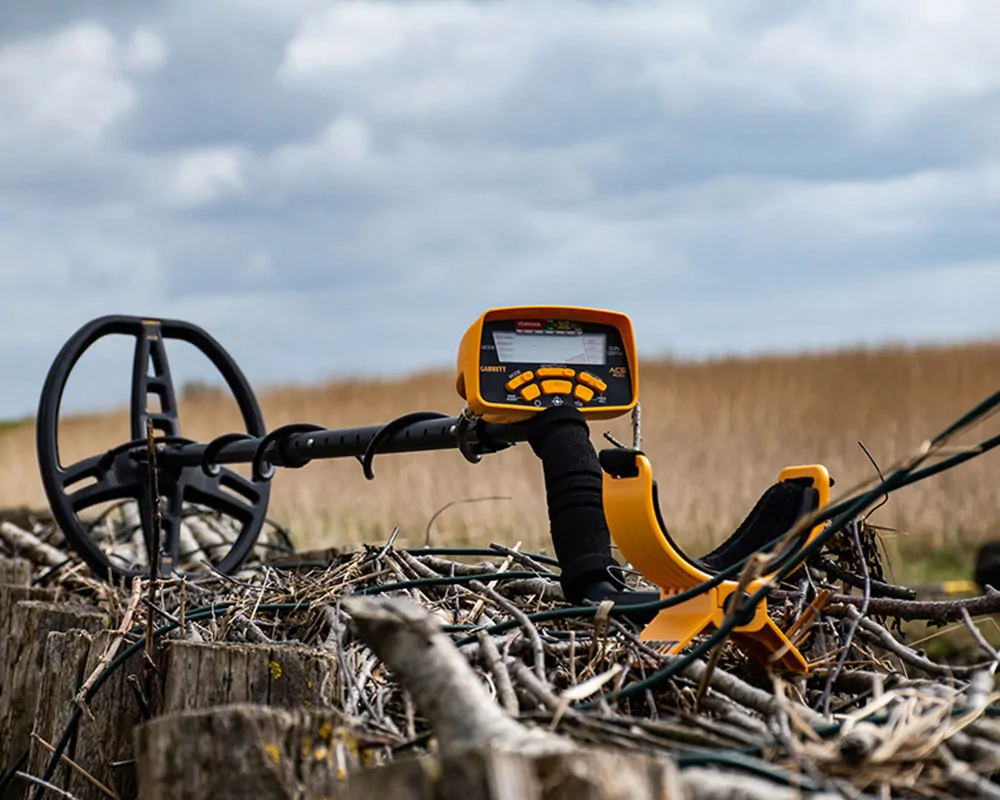
The Garrett ACE 400i has a 0–99 Digital Target ID scale. An air test can help you learn the approximate response of a coin or ring, but a buried object may read differently because soil and nearby trash alter the signal. Report the test object, coil, sensitivity, discrimination and soil when sharing depth results.
Minelab Equinox
The Minelab Equinox uses a different Target ID scale and multiple search modes for conditions such as parks, fields and beaches. A clean air test does not reproduce the effect of wet salt or mineralised soil. A ground test should include the selected mode and a documented ground-balance procedure.

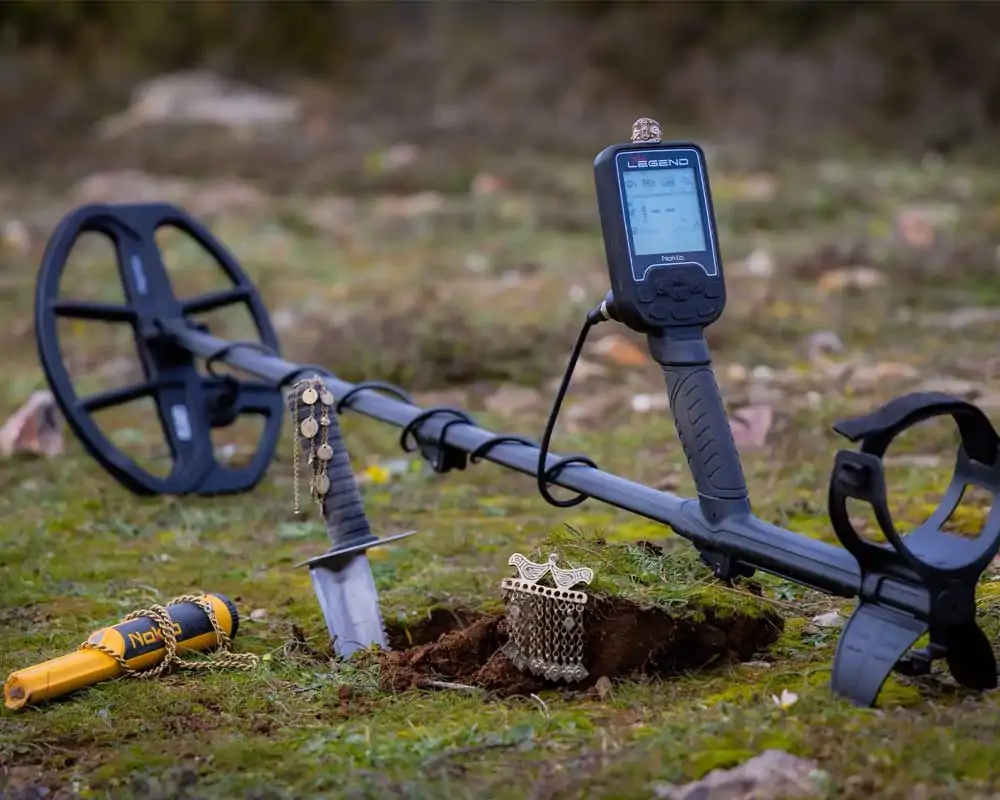
Nokta The Legend 2
The Legend 2 offers simultaneous multi-frequency operation, single-frequency choices and a 99-point ID scale. Compare air and ground tests only when the frequency, coil, recovery speed, sensitivity and discrimination are held constant. Its smaller coil can also change separation and apparent depth in iron-cluttered ground.
Minelab MANTICORE
The Minelab MANTICORE displays a two-dimensional target map using apparent conductivity and ferrous properties. In an air test, the plot may look clean and stable. In ground, a deep or adjacent target can smear or move on the map. The change is information about the conditions, not evidence that the detector is malfunctioning.

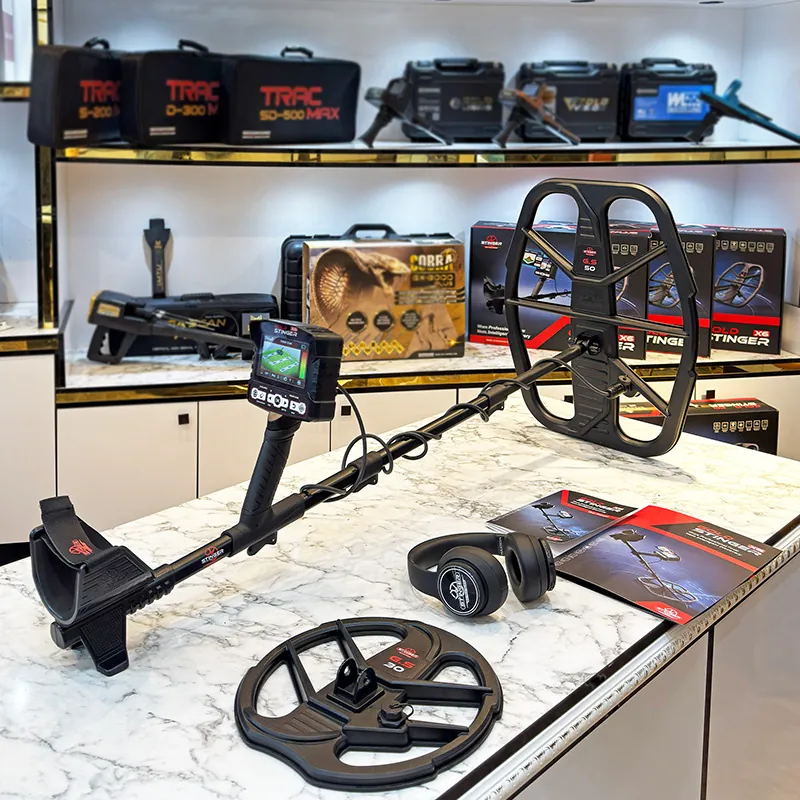
Gold Stinger X6
The Gold Stinger X6 combines multiple detection systems. Results from an All Metals scan should be described separately from results in a filtered or specialised system. Different systems may use different audio and display behaviour, so do not present one mode’s air-test distance as the guaranteed depth of every mode.
How to perform a useful air test
- Remove watches, rings, belts and other metal from the test area.
- Choose a non-metallic table or hold the detector away from buildings and wiring.
- Use a fresh battery and note the exact coil and software version.
- Set sensitivity and discrimination to documented values and record them.
- Move the target across the centre of the coil at a consistent speed and angle.
- Record the first audible response and the point where the response is no longer repeatable.
- Repeat each object at least three times and report a range instead of one spectacular distance.
How to perform a meaningful ground test
- Select clean ground and check it for existing metal before burying test pieces.
- Measure depth from the centre of the target to the surface, not from the hole edge.
- Test targets flat, on edge and at more than one sweep direction.
- Ground balance according to the detector manual before each soil comparison.
- Keep a record of soil type, moisture, coil, mode, sensitivity and recovery settings.
- Define detection as a repeatable signal, not a one-way chirp or unstable threshold change.
- Recheck the test after the soil settles if you want a longer-term comparison.
How to report depth without overclaiming
Instead of writing “this detector finds coins at 2 metres,” describe the actual test: “A 20-gram coin produced a repeatable response at 28 centimetres in dry, low-mineral soil using the supplied coil and the settings listed below.” Include whether the result came from air, a test garden or a natural target.
A responsible depth report includes:
- Detector model, coil and operating mode
- Target material, mass, dimensions and orientation
- Measured depth and how it was measured
- Soil, moisture, salt and mineralisation conditions
- Sensitivity, ground balance, discrimination and recovery settings
- Whether the response was repeatable from multiple directions
Common testing mistakes
- Holding a target against the coil, which exaggerates the result.
- Testing indoors near reinforced concrete, wiring or metal furniture.
- Comparing different coils, frequencies or modes without saying so.
- Using a large test object to imply performance on tiny gold.
- Calling a faint one-way sound a confirmed detection.
- Comparing a freshly buried test garden with a naturally buried historical target.
Frequently asked questions
Are air tests useless?
No. They are useful for controlled comparisons, equipment checks and learning target responses. They simply do not reproduce soil.
Should an air test always be deeper than a ground test?
Usually, but not as an absolute rule. Ground composition, target position and test setup can produce unusual results. Repeat the test and check for nearby metal or interference.
What is the most realistic depth test?
A natural target in the type of ground where you intend to search is realistic but difficult to measure. A documented test garden in representative soil is easier to repeat.
Does a larger coil guarantee more depth?
No. A larger coil may improve coverage and depth on suitable targets, but mineralised ground, separation, sensitivity and target size can limit the benefit.
Why does a deep target lose its Target ID?
The signal becomes weaker relative to ground noise. The detector may still produce an audio response while the numerical ID becomes unstable or disappears.
Use both tests for better decisions
Air tests answer a controlled equipment question: how does this detector respond to this target away from soil? Ground tests answer a practical question: how does the complete system perform in this type of earth? Use both, document the conditions and describe the result as a test observation rather than a universal depth promise.
For more guidance, read Orient’s ground balance guide and coil guide. For independent technical context, see Minelab’s detection-depth factors and International Mine Action Standards air-test guidance.