Best Metal Detectors for Ancient Coins and Relics
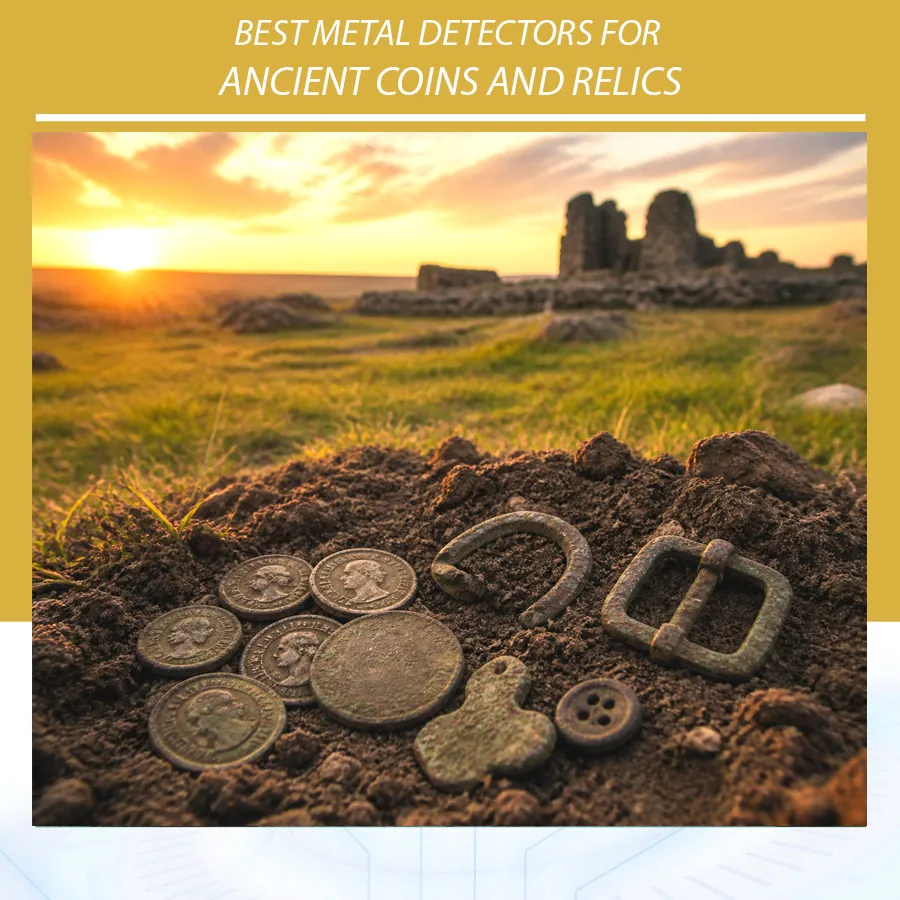
Searching for ancient coins and relics is different from ordinary treasure hunting. A modern ring lost on a beach is usually a simple target. An ancient bronze coin, a thin hammered silver coin, a small copper token, a military button, a buckle, a dagger fitting, or a broken artifact can be much harder to identify. Old sites often contain iron nails, pottery fragments, charcoal, coke, mineralized soil, aluminum trash, and many overlapping signals. That is why choosing the right metal detectors for ancient coins and relics matters so much.
This guide compares coin and relic hunting detectors available through Orient Detectors. It focuses on devices that make practical sense for old fields, historic routes, abandoned house sites, battle areas, farms, ruins, orchards, riverbanks, and mixed terrain. The article covers The Legend 2, Minelab Manticore, Garrett Vortex, Minelab Equinox, Minelab Vanquish, CTX 3030, Gold Stinger X6, Nokta Magnetar 9000, and 3D or multi-system options for deeper site investigation. It is written for buyers comparing metal detectors for ancient coins and relics before choosing a serious field tool.
The best detector is not always the deepest detector. For ancient coins and relics, target separation, discrimination, stable target ID, recovery speed, coil choice, ergonomics, and responsible detecting are often more important than raw depth. A detector that can hear a small non-ferrous coin beside an iron nail may find more history than a deeper machine that blends the two signals together.
What Makes Coin and Relic Hunting Different?
Ancient coins and relics create a special detection problem because they vary widely in size, shape, metal composition, corrosion, and orientation. A thick bronze coin may respond differently from a thin silver coin. A bent copper coin can sound unstable. A broken relic may read like trash. A small lead seal, button, buckle, or decorative fitting may appear in a lower conductivity range than a beginner expects.
The site itself is often more complicated than the target. Old settlements and historical fields may contain layers of iron fragments, nails, horseshoes, farm tools, wire, old cans, and modern trash. In these locations, a detector needs more than power. It needs separation and recovery speed. Minelab explains the difference between target separation and discrimination: separation helps the detector distinguish close targets, while discrimination helps reject certain target types. For coins and relics, both matter, but separation can be the difference between hearing a good target and missing it under iron.
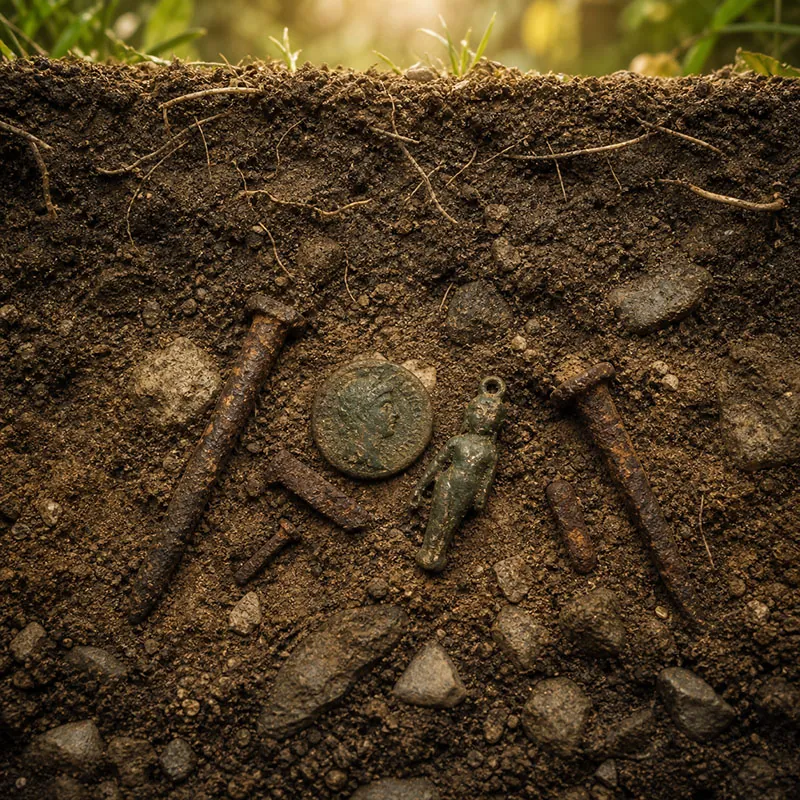
This is why the best metal detectors for ancient coins and relics usually include simultaneous multi-frequency or well-developed VLF technology, adjustable recovery speed, multiple search modes, accurate target ID, good audio tones, ground balance, and coil options. Waterproofing, wireless headphones, weight, and battery life also matter because coin and relic hunting often means long walking days.
Quick Picks: Best Metal Detectors for Ancient Coins and Relics
| Best For | Recommended Device | Why It Fits Coins and Relics | User Level |
|---|---|---|---|
| Best overall coin and relic detector | The Legend 2 | SMF, Relic mode, 99 target IDs, FerroCheck, recovery speed, waterproof design | Beginner to advanced |
| Premium target analysis | Minelab Manticore | Multi-IQ+ style performance, 2D target information, advanced ID and separation | Advanced / professional |
| Upgradeable modern detector | Garrett Vortex | Transformable series, target ID scales, ferrous vs non-ferrous information, all-terrain use | Beginner to serious hobbyist |
| Reliable all-purpose detecting | Minelab Equinox | Multi-IQ, Field and Park modes, strong coin/relic versatility | Intermediate / advanced |
| Budget-friendly multi-frequency choice | Minelab Vanquish | Multi-IQ, Coin and Relic modes, simple controls, economical price | Beginner |
| High-end coin identification | CTX 3030 | Strong discrimination, ground handling, advanced coin hunting reputation | Advanced / expert |
| Flexible multi-system searching | Gold Stinger X6 | Multiple search systems, discrimination, dual coils and adjustable sensitivity | Serious hobbyist |
This quick list is only a starting point. The right metal detectors for ancient coins and relics depend on whether your main challenge is iron trash, mineralized soil, target depth, tiny bronze coins, wet ground, or long days of walking open fields.
Key Features Buyers Should Prioritize
1. Target Separation
Target separation is critical in old places. A good relic may sit centimeters away from a rusty nail. If the detector blends the signals, the user may never hear the valuable target. Fast recovery speed, smaller coils, good audio, and advanced processing improve separation. For ancient coin and relic sites, target separation is often more important than maximum depth.
2. Discrimination and Target ID
Discrimination helps reduce obvious iron and trash. Target ID helps the user decide whether a signal is worth digging. However, older coins and relics do not always read like modern coins. A corroded bronze coin, thin silver coin, or lead artifact may appear in a surprising range. The best metal detectors for ancient coins and relics give information without forcing the user to reject too much.
3. Multi-Frequency Performance
Simultaneous multi-frequency is useful because historic sites contain targets of many sizes and conductivities. Low frequencies can help with larger or higher-conductive targets; higher frequencies can improve response to small, thin, or low-conductive objects. Multi-frequency detectors such as The Legend 2, Manticore, Equinox, and Vanquish are strong choices because they are not limited to a single target type. For that reason, many of the best metal detectors for ancient coins and relics now use multi-frequency platforms.
4. Search Modes for Field, Park, Relic, and Beach
Modes matter because a clean farm field is not the same as an iron-filled ruin or a wet riverbank. Field modes often help with coins and artifacts in agricultural ground. Relic modes may keep more low-conductive and irregular targets. Park modes can help in modern trash. Beach or salt modes help around conductive wet sand or shorelines.
5. Coil Options
For coin and relic hunting, one coil is rarely perfect for every site. A smaller coil improves separation in nail beds and rubble. An 11-inch coil provides balanced depth and coverage for fields. Larger coils can cover open land faster and reach larger relics deeper, but they may struggle in dense iron. Buyers should think about their sites before choosing a detector package.
6. Ergonomics and Long-Hunt Comfort
Ancient coin and relic hunting often involves walking for hours. A heavy detector may perform well but become tiring. The Legend 2, for example, is promoted by Nokta as lighter and more ergonomic, while modern detectors often include wireless audio and collapsible shafts. Comfort affects results because a tired operator swings less consistently.
1. The Legend 2: Best Overall Choice for Ancient Coins and Relics
The Legend 2 is one of the strongest recommendations for buyers who want one detector for coins, relics, jewelry, beaches, and occasional goldfields. Orient Detectors describes it as Nokta’s flagship multi-frequency detector, engineered for precision and adaptability across parks, fields, beaches, relic sites, and goldfields. The official Nokta page highlights simultaneous multi-frequency, an expanded 99 Target ID scale, improved audio clarity, 7 tone options, Relic mode, FerroCheck, adjustable recovery speed, automatic/manual/tracking ground balance, and IP68 waterproofing up to 5 meters.
For ancient coins and relics, these features are highly relevant. The 99-point ID scale gives finer information than simpler detectors. FerroCheck helps evaluate iron contamination. Recovery speed helps separate good targets from nearby trash. Relic mode is important because old artifacts do not always behave like modern coins. Waterproofing also helps in wet fields, riverbanks, and shallow water. This is why The Legend 2 appears so often in discussions about metal detectors for ancient coins and relics.
The Legend 2 is especially attractive because it can serve both beginners and experienced detectorists. A new user can start with Field or Park mode and learn tones gradually. A more advanced user can adjust recovery speed, tones, ground balance, frequencies, and discrimination. Among metal detectors for ancient coins and relics, it offers one of the best balances of price, performance, modern features, and field flexibility.
2. Minelab Manticore: Best Premium Detector for Target Analysis
Minelab Manticore is a premium choice for detectorists who want advanced target information. Orient Detectors lists Manticore as a Minelab detector powered by Multi-IQ+ technology with 2D Target Identification. For coin and relic hunters, this type of target analysis is valuable because old sites often include complex iron, mixed metals, and deep non-ferrous signals that are not obvious on a simple numeric ID scale.
Manticore is best for users who already understand target ID, tones, iron behavior, and site strategy. It can help advanced detectorists make more informed dig decisions in trashy areas, but it still requires patience. In ancient fields, a perfect ID is not always possible because corrosion and orientation can distort the response. The advantage of a premium detector is that it gives more clues: tone quality, trace behavior, ferrous information, and consistency from different sweep directions.
If the buyer wants one of the most capable metal detectors for ancient coins and relics and has the budget for a higher-end platform, Manticore deserves serious consideration. It is especially useful for experienced users searching high-value old sites where target interpretation matters as much as depth.
3. Garrett Vortex: Best Upgradeable Choice for Coins and Relics
Garrett Vortex is an interesting choice because Orient Detectors describes the Vortex series as the world’s first fully transformable detector series designed for beginners and professionals. The page highlights relic hunting in archaeological sites, coin shooting for ancient or modern coins made of gold, bronze or silver, multiple target ID scales, and ferrous versus non-ferrous discrimination.
For ancient coins and relics, the ability to separate ferrous and non-ferrous information is important. Old sites are rarely clean. A detector that helps identify iron while still allowing the user to investigate questionable signals can save time without making the operator over-discriminate. Vortex also fits buyers who want a detector that can grow with their skills instead of being replaced quickly.
Garrett Vortex is a good choice for buyers who want a modern coin and relic detector with clear display information and room to upgrade. It is not only a beginner machine; it can suit serious hobbyists who want flexibility across fields, parks, saltwater beaches, and older sites. Buyers comparing metal detectors for ancient coins and relics should consider Vortex when upgrade path and display clarity matter.
4. Minelab Equinox: Best Proven All-Purpose Detector for Fields
Minelab Equinox remains relevant because it is a proven multi-purpose detector. Orient Detectors describes it as a modern metal detector with Multi-IQ technology and modes for different conditions. The product page notes Field mode for different metals in old fields, including ancient coins, swords, daggers, and other historic objects. It also includes Park mode for small targets, Gold mode, target ID, and discrimination.
Equinox is a strong choice for buyers who want an established platform for mixed sites. It works well when the user searches old fields one day, parks another day, and maybe beaches or gold areas later. For ancient coins, Field modes are especially useful because they are designed for agricultural and historic ground rather than only modern parks.
When comparing metal detectors for ancient coins and relics, Equinox should be seen as a balanced all-purpose machine rather than the newest premium option. It is still a practical choice for users who value Multi-IQ, stable target ID, and wide application.
5. Minelab Vanquish: Best Beginner Detector for Coins and Relics
Minelab Vanquish is a practical choice for beginners who want multi-frequency performance without a complex control panel. Orient Detectors describes Vanquish as a high-performance, economical detector using Multi-IQ technology. It includes modes such as Coin, Relic, Jewelry, and All Metal, plus target ID from -9 to 40 and discrimination segments for ferrous and non-ferrous targets.
For new coin and relic hunters, Vanquish offers a simple learning path. Coin mode helps beginners understand modern and old coin responses. Relic mode opens the detector to a wider range of old metal objects. All Metal mode can be useful when learning a historic site before applying discrimination. The key advantage is that the buyer gets simultaneous multi-frequency at a lower price than many advanced machines.
Vanquish is best for beginners, casual hobbyists, and buyers who want a budget-friendly detector for fields, parks, and old routes. It is not the most adjustable detector in this guide, but it may be the easiest entry point into reliable coin and relic hunting. For entry-level buyers, it keeps metal detectors for ancient coins and relics accessible without removing the advantage of multi-frequency technology.
6. CTX 3030: Best for Advanced Coin Identification
CTX 3030 has long been respected by coin hunters. Orient Detectors has published earlier content describing it as one of the strongest coin-finding machines, with good ground balancing and powerful discrimination. It is especially known for advanced target information and the ability to help experienced users focus on coin-type signals in difficult sites.
For ancient coins and relics, CTX 3030 can be useful when the user wants refined discrimination and strong target analysis. It is not necessarily the lightest or newest platform, but many experienced detectorists value the way it reports targets and handles complex soil. In old fields where silver, copper, bronze, and iron are mixed together, its advanced information can help reduce unnecessary digging.
CTX 3030 is best for advanced users who are comfortable with a heavier detector and want detailed control. Beginners may find it expensive and complex, while serious coin hunters may appreciate its analysis tools.
7. Gold Stinger X6: Best Multi-System Option for Mixed Treasure Sites
Gold Stinger X6 is not a classic coin-only detector, but it deserves attention for buyers who search mixed sites where coins, relics, gold, cavities, and deeper targets may all be possible. Orient Detectors describes it as a professional new-generation detector with six search systems, sensitivity control, turbo power, iron remove, and two coils: GS50 for depth and wide coverage, GS30 for precision and smaller targets.
For ancient coins and relics, the GS30 coil can be useful for smaller targets and tighter areas, while GS50 may help cover open ground. The device is more flexible than a simple coin detector, so it fits users who do not want to limit themselves to one type of search.
Gold Stinger X6 is best for serious hobbyists and buyers who want a broader tool for treasure hunting rather than a pure coin shooting machine. It may be more than a casual coin hunter needs, but it can fit users working larger private lands, old farms, and mixed historical sites. In this broader sense, it can complement traditional metal detectors for ancient coins and relics when the same site may also contain deeper treasure targets.
8. Nokta Magnetar 9000: For Deep Relic and Professional Search Scenarios
Nokta Magnetar 9000 is not the first recommendation for small ancient coins in trashy fields. It is a professional pulse induction detector that makes more sense when the search involves deeper metal objects, larger relics, mineralized ground, or professional field work. Orient Detectors lists it among professional metal detectors, and Nokta positions Magnetar as a powerful PI system for difficult ground.
For coin and relic hunters, PI technology can be valuable in mineralized soil or when the target is larger and deeper. However, PI detectors often provide less refined target ID than modern VLF or multi-frequency coin detectors. This means Magnetar 9000 is better for deep relic work and challenging ground than for selectively picking coins out of iron trash.
Buyers should choose Magnetar 9000 when the site calls for power and difficult-ground handling, not when the main goal is discriminating small bronze coins among nails. It belongs in the professional relic category rather than the everyday coin hunting category.
How to Choose by Site Type
Site type should guide the final choice more than brand loyalty. The best metal detectors for ancient coins and relics for open farmland may not be the same as the best detector for nail-heavy ruins or wet riverbank deposits.
Old Agricultural Fields
Old fields often contain coins, buckles, buttons, pottery, lead, iron tools, and scattered modern trash. The best choices are The Legend 2, Manticore, Equinox, Garrett Vortex, and Vanquish. Use Field or Relic modes, moderate recovery speed, and an 11-inch coil for coverage. If the field becomes iron-dense, consider a smaller coil.
Iron-Infested House Sites and Ruins
Old house sites can be full of nails and broken iron. In these places, separation matters more than raw depth. The Legend 2 with recovery speed adjustment and FerroCheck, Manticore with advanced target analysis, and Garrett Vortex with ferrous/non-ferrous target information are strong choices. A smaller coil can reveal non-ferrous targets hiding between iron.
Battlefields and Military Relic Sites
Military relic sites may include buttons, bullets, buckles, fragments, shell pieces, lead, brass, copper, and iron. Depending on laws and permissions, these sites can be sensitive and should be approached responsibly. A multi-frequency detector is usually a good starting point. For deeper larger relics, a PI or multi-system detector may help, but target ID will be less selective.
Riverbanks, Wet Soil, and Beaches
Coins and relics can appear near rivers, old crossings, and shorelines. Conductive wet ground and salt can create noise, so waterproofing and multi-frequency performance become important. The Legend 2, Equinox, Manticore, Vanquish, and Garrett Vortex are all relevant depending on budget and experience.
Deep Historical Sites
If the search involves buried rooms, cavities, old caches, or large deep objects, a normal coin detector may not be enough. Consider 3D and multi-system tools such as Gold Vision, Mega Scan Pro, or Infinity Max Pro. These are not replacements for coin detectors, but they can help investigate larger underground anomalies.
Best Settings Strategy for Ancient Coins and Relics
Start with a field or relic mode when searching old ground. Avoid rejecting too many low and mid-conductive signals because relics can appear across a wide range. Use discrimination carefully. Iron rejection can reduce fatigue, but aggressive filtering may hide good targets next to iron. If the site is important, dig more uncertain signals at first to learn how local targets respond. Even the best metal detectors for ancient coins and relics need careful settings to avoid masking useful signals.
Use recovery speed based on trash density. In clean open ground, a slower recovery speed can help depth and signal strength. In iron-heavy ground, faster recovery helps separate targets. Do not assume one setting works everywhere. Old sites change from one side of a field to another.
Ground balance when the detector allows it. Mineralized soil and old burned areas can change audio stability. Noise cancel or frequency shift can help when electrical interference is present. Keep sensitivity at the highest stable level rather than the maximum available number. A quiet detector at moderate sensitivity often finds more than a noisy detector at maximum.
Responsible Detecting for Ancient Finds
Ancient coins and relics are not only “targets.” They may be historical objects with cultural, legal, and landowner responsibilities. Always obtain permission before detecting. Follow local laws. Avoid protected archaeological sites unless you have proper authorization. Record important finds accurately, including location, depth, and context when appropriate.
The National Council for Metal Detecting Code of Conduct emphasizes respecting land, reporting unusual historical finds, and understanding treasure and antiquities responsibilities. The Portable Antiquities Scheme is also a useful heritage reference for responsible finds reporting in England and Wales. Rules vary by country, so international buyers should check local regulations before searching for ancient objects.
Common Mistakes Buyers Make
Buying Only for Depth
Depth matters, but a deep detector that cannot separate targets in iron may miss ancient coins. Separation, audio clarity, and target ID are just as important. This is the main reason buyers should compare metal detectors for ancient coins and relics by site performance rather than maximum depth alone.
Rejecting Too Much
Old relics can have strange conductivity. If discrimination is too aggressive, the detector may silence valuable objects. Learn the site before applying heavy rejection.
Using the Wrong Coil
A large coil may be excellent in open fields but poor in nail beds. A smaller coil can find targets that a larger coil masks. Coil choice should match the site.
Ignoring Iron Audio
Iron audio and ferrous information can reveal the character of a site. Silence can be comfortable, but hearing some iron helps experienced users understand target masking and site history.
Skipping Research
The best detector cannot replace good research. Old maps, settlement routes, field names, water sources, historic roads, and landowner knowledge often matter more than random searching.
FAQ: Metal Detectors for Ancient Coins and Relics
What is the best metal detector for ancient coins?
The Legend 2, Minelab Manticore, Equinox, Garrett Vortex, Vanquish, and CTX 3030 are all strong options depending on budget and experience. For most buyers, The Legend 2 offers one of the best balances of performance, features, and price. A short list of metal detectors for ancient coins and relics should always include at least one strong multi-frequency option.
What is the best detector for relic hunting in iron?
Choose a detector with strong target separation, recovery speed adjustment, good audio, and coil options. The Legend 2, Manticore, and Garrett Vortex are good choices for iron-contaminated historical sites.
Is multi-frequency better for ancient coins?
Multi-frequency is often helpful because ancient coins vary in metal, size, thickness, and conductivity. It is not always mandatory, but it provides versatility across changing soil and target types.
Should I dig low target IDs?
In ancient sites, yes, at least until you understand the location. Small bronze, lead, thin gold, and unusual relics may not read like modern high-conductive coins.
Are PI detectors good for relics?
PI detectors can be useful for deeper larger relics and mineralized ground, but they are usually less selective for small coins in trashy sites. Use PI when depth and ground handling matter more than fine discrimination.
Do I need a 3D scanner for coins?
Usually no. A 3D scanner is more relevant for large buried objects, cavities, rooms, caches, and anomalies. For individual ancient coins, a good VLF or multi-frequency detector is normally the better tool.
Final Verdict
The best metal detectors for ancient coins and relics are the machines that combine target separation, stable ID, flexible modes, practical depth, and comfortable field use. The Legend 2 is the best overall recommendation for many buyers because it combines simultaneous multi-frequency, Relic mode, 99 Target IDs, FerroCheck, recovery speed, waterproofing, and strong value. Minelab Manticore is the premium choice for advanced target analysis. Garrett Vortex is a strong upgradeable option for modern coin and relic hunting. Equinox remains a proven all-purpose detector for fields and mixed terrain. Vanquish is the practical beginner choice.
For advanced coin specialists, CTX 3030 remains relevant. For mixed treasure sites, Gold Stinger X6 offers broader search flexibility. For deep relics and severe soil, Magnetar 9000 or other PI systems may help. For buried rooms, caches, and large anomalies, consider 3D scanners or multi-system devices such as Gold Vision, Mega Scan Pro, or Infinity Max Pro.
Choose by site, not by hype. If your sites are full of iron, prioritize separation. If you search open fields, prioritize stable multi-frequency performance and coil coverage. If you search deep relics, consider PI or multi-system tools. If you are new, choose a detector you can understand and use consistently. A well-chosen detector, good research, careful settings, and responsible digging will always beat a powerful machine used without context. In the end, the best metal detectors for ancient coins and relics are the ones that help you interpret real historical ground accurately.
Suggested Links
- The Legend 2 metal detector for coins and relics
- Minelab Manticore for advanced target ID
- Garrett Vortex coin and relic detector
- Minelab Equinox metal detector
- Minelab Vanquish beginner metal detector
- Gold Stinger X6 multi-system detector
- metal detectors category
- electromagnetic system detectors
- best metal detectors for relic hunting
- find coins with metal detectors
Suggested External Links
- Nokta The Legend 2 official page for Relic mode, target ID, frequency and waterproof specifications.
- Minelab guide to target separation and discrimination for understanding iron-heavy sites.
- Minelab FAQ for detector target ID and discrimination concepts.
- NCMD Code of Conduct for responsible detecting principles.
- Portable Antiquities Scheme for responsible finds reporting guidance where applicable.
Resources
- Orient Detectors: The Legend 2
- Orient Detectors: Garrett Vortex
- Orient Detectors: Minelab Equinox
- Orient Detectors: Minelab Vanquish
- Orient Detectors: Minelab Manticore
- Orient Detectors: Gold Stinger X6
- Orient Detectors: Nokta Magnetar 9000
- Nokta: The Legend 2 Official Specifications
- Minelab: Target Separation vs Target Discrimination
- NCMD Code of Conduct
- Portable Antiquities Scheme