Minelab MANTICORE Review: Features, Settings and Buying Guide
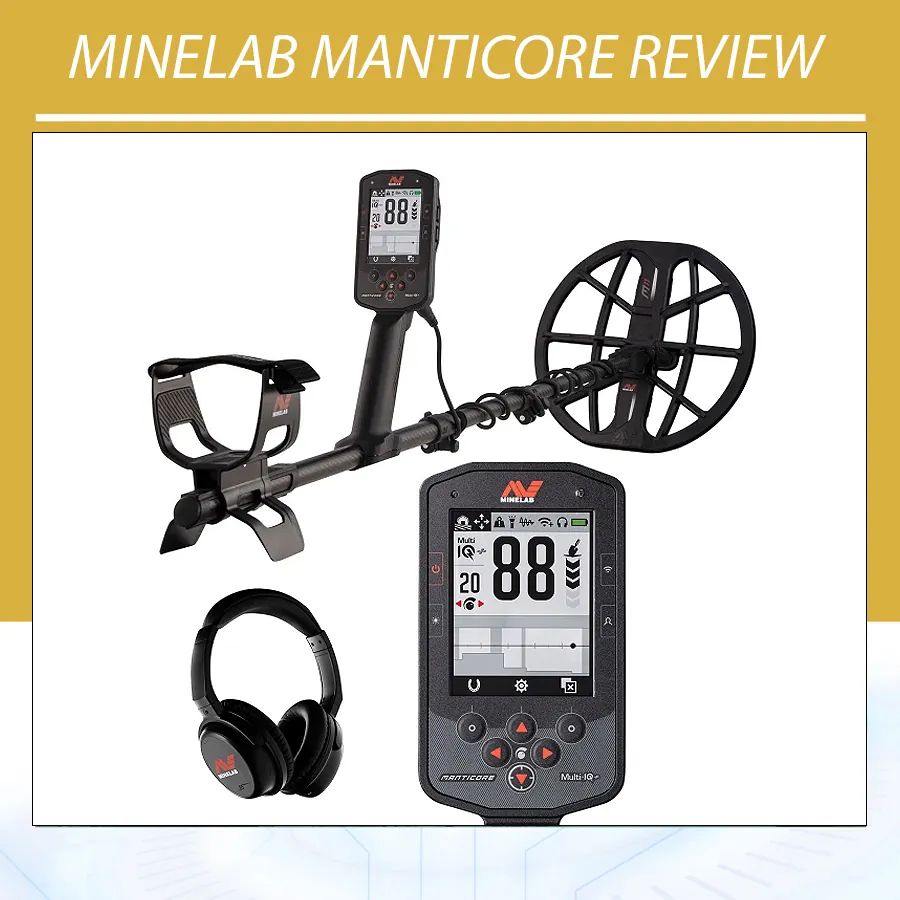
The Minelab MANTICORE is an advanced metal detector for people who want more information from difficult signals. Its appeal centres on simultaneous multi-frequency operation, a two-dimensional target display, and extensive control over audio and iron classification. These features are especially relevant when a desirable target may be close to unwanted metal.
This MANTICORE review examines the manufacturer’s documented capabilities and explains their practical implications for coins, jewellery, relics, beaches, and occasional prospecting. It is a documentation-based review, with illustrative examples and buying advice, rather than an independent field test. No recovery rates or measured detection depths are claimed.
Our assessment is that the detector’s strongest attraction is the combination of information and control. Buyers who enjoy investigating uncertain responses have plenty to work with. Buyers who prefer a very simple display should consider whether they will use the additional adjustments often enough to justify the investment.
MANTICORE specifications at a glance
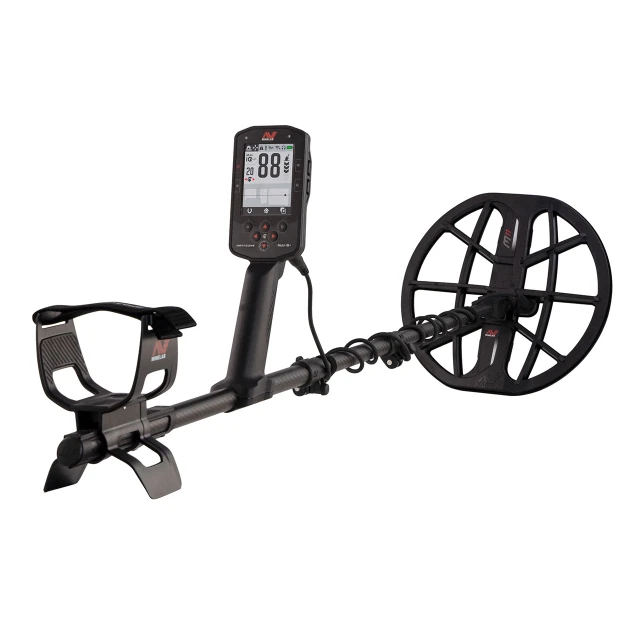
The following summary uses Minelab’s official technical specifications. Package contents and software-dependent details should be checked against the unit being purchased.
| Feature | Manufacturer specification |
|---|---|
| Detection technology | Multi-IQ+ simultaneous multi-frequency |
| Single-frequency choices | 5, 10, 15, 20 and 40 kHz |
| Target identification | 0–99 conductive IDs with ferrous indication |
| Sensitivity | 1–35 |
| Standard coil | M11 11-inch round Double-D |
| Weight | 1.3 kg |
| Length | 63 cm collapsed; 144 cm extended |
| Waterproof rating | IP68, to 5 metres / 16 feet |
| Display | Full-colour LCD |
| Audio options | Speaker, wired 3.5 mm headphones, low-latency wireless |
| Standard wireless headphones | ML105 |
| Listed warranty | Three years for control box and coil, subject to terms |
What Multi-IQ+ means for the buyer
Minelab describes Multi-IQ+ as its high-power simultaneous multi-frequency platform. Its product marketing claims up to 50% more power than the EQUINOX series. That is a manufacturer power comparison, not a promise of 50% more depth or 50% more finds. See the official MANTICORE product overview for the original claim.
For a buyer, the useful question is how the detector handles the mix of targets and ground encountered regularly. A search area may contain thin jewellery, larger coins, irregular scrap, and iron. Evaluate the quality of repeatable responses across representative objects rather than treating one impressive demonstration as proof of universal superiority.
The availability of single frequencies offers another way to investigate a problem, but changing frequency can also change behaviour. It should be a deliberate comparison. Record what improves, what becomes less stable, and whether a previously detectable test object remains recognisable.
Multi-frequency and single-frequency operation differ
Minelab’s MANTICORE FAQ explains that Ferrous Limits are disabled in single-frequency operation. Ferrous objects are then represented differently, with IDs in the 1–19 range and a red indication. A frequency change therefore affects more than sensitivity to particular targets.
For learning, use a known configuration for several sessions before experimenting. If a signal looks different after switching frequency, first consider the changed identification behaviour. Do not conclude that the object itself has become easier to identify merely because the number looks more familiar.
Understanding the MANTICORE 2D ID Map
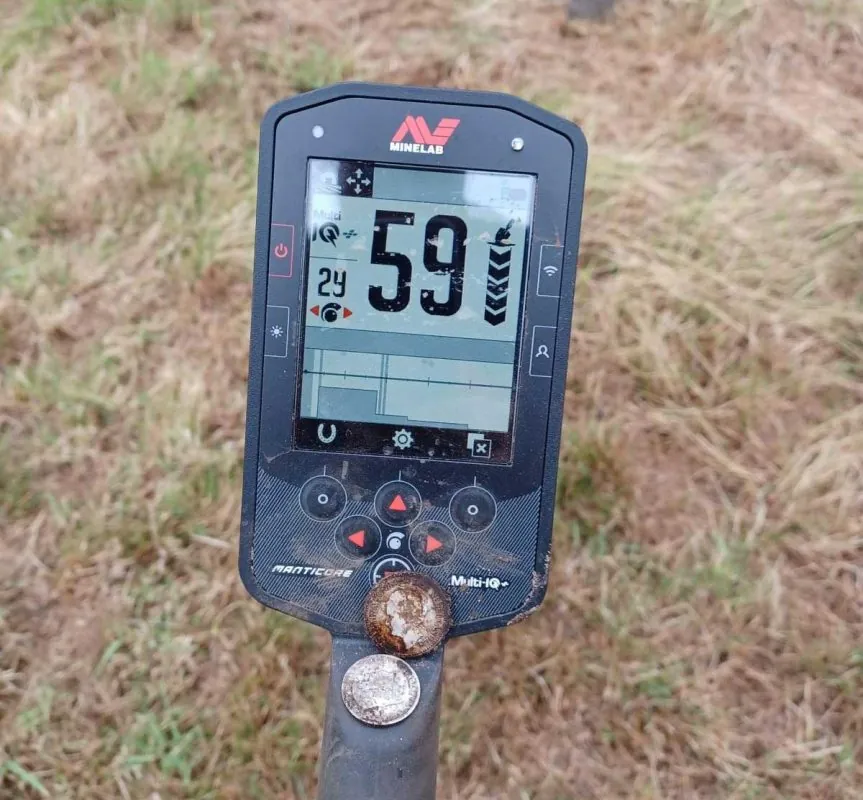
The 2D map is a display of conductive and ferrous response properties. It is not a ground-scanning image, a picture of a buried object, or a direct measurement of metal purity. Its purpose is to provide another source of information alongside audio and numerical identification.
Minelab’s 2D ID Map guide describes Target Trace and the relationship between the displayed response and identification controls. Treat those traces as evidence to interpret. They do not remove the overlap between desirable objects and unwanted metal.
Example: an isolated coin
Imagine a coin placed in a clean test area. Sweep consistently and observe how the trace, sound, and ID behave. Then change the coin’s orientation while keeping the settings constant. This demonstrates why a useful response pattern belongs to a particular setup, rather than being a permanent fingerprint of that coin.
The valuable lesson is repeatability. If a response returns at the same location under similar passes, it deserves attention. A single attractive trace is much less useful when it cannot be reproduced. Keep your own notes rather than relying exclusively on someone else’s screenshots.
Example: a coin beside a nail
Now place a nail near the coin in a controlled exercise. Compare different sweep directions without moving the objects. You are investigating whether the detector presents a recognisable second response, not asking it to draw a literal picture of both objects.
This exercise helps explain why an uncertain signal can merit recovery at an old site. An imperfect trace does not automatically mean rubbish. Equally, an occasional non-ferrous indication does not establish that a good target is present. The decision should reflect the full response and the site context.
Ferrous Limits, discrimination and iron audio
These controls address related but different questions. Ferrous Limits influence classification as ferrous or non-ferrous. Discrimination determines which ID ranges are accepted or rejected. Ferrous audio settings affect how iron-classified responses are heard. Confusing them makes systematic adjustment difficult.
The manufacturer’s indexed instruction manual describes upper limits as relevant to common iron responses and lower limits as relevant to some flat iron, including bottle caps. Tightening classification can reduce unwanted iron responses but may involve compromises in separation or certain weak-target responses. The current MANTICORE manual library is the reference for detailed adjustment procedures.
Why bottle-cap rejection needs testing
Suppose bottle caps are consuming most of your search time. Compare a representative cap with several objects you want to keep detecting. A change is useful only if it improves the unwanted response while preserving acceptable responses on those desired targets.
Do not tune the detector solely against one cap and assume every cap behaves identically. Differences in shape and condition can matter. The same principle applies to other recurring trash: test several examples and remain alert to overlapping signals.
For further background, Orient’s metal detector discrimination guide explains why rejected ranges can also contain desirable objects. Settings help prioritise recovery; they cannot guarantee a search free of unwanted finds.
Search modes: choosing a sensible starting point
The published mode families are All-Terrain, Beach, and Goldfield. The named profiles include five All-Terrain choices, four Beach choices, and Goldfield General. Treat a profile as a starting configuration suited to a type of task, then assess its behaviour at the actual location.
| Mode family | Listed profiles | Question to assess on site |
|---|---|---|
| All-Terrain | General, Fast, Low Conductors, High Conductors, Trash Reject | Is the chosen setup suitable for the target mix and amount of nearby metal? |
| Beach | General, Deep, Low Conductors, Surf & Seawater | Does the response remain usable across the actual sand and water conditions? |
| Goldfield | General | Can the operator distinguish a repeatable small-target response from ground noise? |
All-Terrain use
For an unfamiliar land site, start with a suitable preset and listen before making extensive changes. Decide whether the main difficulty is electrical chatter, ground response, dense metal, or confusing identification. Each problem suggests a different investigation.
A park with repeated aluminium waste calls for a different recovery strategy from a historic site where small, irregular objects may be interesting. The detector cannot decide what is valuable to you. Set the search objective first, then evaluate the response categories against it.
Beach use
A beach session may move between dry sand, wet sand, and water. Reassess the setup when conditions change rather than assuming the first settings remain suitable everywhere. The profile name alone does not demonstrate that every response is a target.
If instability increases near the waterline, compare behaviour over adjacent areas and revisit the recommended setup procedure. Avoid changing sensitivity, classification, and audio together. A single controlled change is easier to evaluate and reverse when it does not help.
Goldfield use
The Goldfield option makes prospecting part of the feature set, but it does not establish equivalent performance to every specialist gold detector. A buyer primarily interested in natural gold should ask for a demonstration using representative ground and target sizes.
Judge whether faint responses are understandable over time. A dramatic signal from a large demonstration target says little about a tiny target in difficult ground. The value of this mode depends on how closely the demonstrated conditions resemble your intended search.
Recovery Speed: separation versus depth
Minelab gives MANTICORE a Recovery Speed range of 0–8. The manufacturer describes faster settings as useful for closely spaced targets and slower settings as potentially useful for deep isolated targets. This is a tradeoff to investigate rather than a reason to select one extreme permanently.
Consider two training exercises: a single object in relatively clean ground and two nearby objects with different responses. Use the same sweep pattern and compare settings. Look for changes in signal duration, clarity, and the ability to recognise separate responses.
At a busy site, a more distinct response may be worth more than the greatest isolated-target reach. At a quiet site, you may have room to investigate weaker signals more slowly. Avoid interpreting a recovery setting as a universal measure of detector quality.
Also keep your own movement consistent. A setting comparison is difficult to interpret when one pass is slow and carefully centred while the next is rushed. The useful result is the response you can reproduce with a sustainable search technique.
Sensitivity, Noise Cancel and ground response
Maximum sensitivity is not automatically the most productive setup. A detector that produces excessive chatter can make a faint target harder to recognise. A practical aim is enough sensitivity to retain useful responses while keeping the background understandable.
Separate the possible causes
Noise Cancel addresses interference; ground balance addresses the influence of soil. Neither should be treated as a substitute for investigating actual nearby metal. First observe when the unwanted sound happens: while stationary, during movement, over a particular patch, or near equipment.
Run the applicable manufacturer procedure under suitable conditions, then repeat the observation. If the noise changes, note what changed with it. This builds a useful diagnosis instead of accumulating unrelated adjustments until the detector happens to sound quieter.
Preserve a reference response
Use a known target in an appropriate test area to check that a quieter setup still produces a useful signal. Silence alone is not proof of improvement. The comparison should include both the background and the target you care about.
For instance, if reduced sensitivity makes the background manageable while the reference response remains clear, the setting may be practical for that location. If the reference disappears, consider another adjustment or a different test area before deciding the problem is solved.
Audio: an important part of the MANTICORE review
The visual display attracts attention, but a detector is also an audio instrument. MANTICORE offers several tone arrangements and adjustable ferrous volume. The useful question is whether the chosen presentation makes differences easier for you to hear consistently.
More tones are not automatically better for every listener. Start with a layout you can recognise, then expand it when you have a reason. Compare known targets using comfortable volume, including weak responses that are easy to overlook during a noisy demonstration.
Listen to repeatability and the length of the response as well as pitch. A familiar tone can still come from an unwanted object. Use audio to guide investigation, then consult the trace and ID rather than spending the entire session staring at the display.
Minelab supplies ML105 wireless headphones in the standard specification. Underwater audio needs separate attention: do not assume included wireless headphones share the detector’s waterproof rating. Confirm an appropriate waterproof accessory and follow the connection guidance before submerged use.
Coils, balance and everyday handling
The standard M11 coil is a practical starting point for learning the detector. Before buying additional coils, identify a specific problem: access around obstacles, target crowding, weight at the end of the shaft, or coverage over open ground.
A different coil can change the working experience, but it should be evaluated against that problem. Covering more ground on an unobstructed field is not the same requirement as navigating between rocks or isolating responses in concentrated rubbish.
Handle the MANTICORE at a comfortable shaft length with the coil close to the ground. Avoid overextending the shaft simply to increase sweep width. The most useful coverage is the area you can scan evenly without tiring or lifting the coil at the ends of each pass.
Check balance with the exact coil and accessories being considered. A published weight cannot fully describe wrist load, repeated turning, or control on a slope. A short handling session can answer questions that a specification table cannot.
Battery, waterproofing and care
Minelab’s FAQ gives typical battery life as approximately ten hours. It also permits compatible external USB power in specified conditions and explicitly excludes underwater use while connected to a power bank. Treat runtime as a planning estimate rather than a guaranteed duration for every configuration.
Before a long outing, establish your own working runtime and charging routine. Check the detector and headphones separately. A charged detector is not enough if your preferred audio accessory is nearly empty when the session begins.
The five-metre waterproof specification applies within the manufacturer’s operating requirements. It does not remove the need for correct accessories, intact connections, and appropriate care. Read the water-use instructions before the first submerged session rather than discovering them afterward.
After use, follow the prescribed cleaning procedure and inspect areas where dirt can collect. Persistent new noise should prompt a basic equipment check as well as a settings check. Do not assume every change in performance requires more aggressive electronic adjustment.
Software updates and the Stabiliser feature
Minelab’s official software update page documents a Stabiliser setting for All-Terrain modes, Goldfield refinements, additional shortcut options, and underwater headphone volume support. This makes software version relevant when comparing older reviews or settings videos with a current detector.
The Stabiliser is described as an aid for iron-related instability. Evaluate it on the problem you actually have and compare wanted-target responses before and after adjustment. A cleaner presentation is useful when it preserves the information needed for your search.
Use Minelab’s update instructions and the correct utility for the detector or headphones. Keep a record of useful personal settings before making changes. When comparing performance reports, ask which software version was used rather than assuming every MANTICORE has identical defaults.
How much depth should you expect?
No single depth figure can represent every target and environment. Size, orientation, surrounding ground, nearby metal, and interference all affect whether a response is detectable and recognisable. Numerical identification may become uncertain even when audio still suggests something worth investigating.
Distinguish three claims: detecting some response, identifying its likely category, and correctly estimating depth. A demonstration may establish only the first. Ask which claim is being made and what independent information supports it.
The detector’s depth indicator is a guide, not a tape measure. A large object can produce a misleading impression if the user interprets its signal as coming from a smaller object. Verify real depths through appropriate measurements when reporting a test.
Likewise, an air test is useful for a controlled comparison but does not reproduce buried-ground conditions. Avoid converting an air distance into a guaranteed field depth. A stronger buying demonstration uses representative soil, known targets, and repeatable passes.
A practical first-session setup
- Check assembly and power. Ensure the coil and shaft are secure and the detector and headphones are ready.
- Choose a relevant preset. Start with the search environment and intended targets.
- Check background behaviour. Observe unwanted responses before altering multiple controls.
- Use the recommended noise and ground procedures. Follow the instructions for the chosen mode and location.
- Confirm a known target response. Establish something repeatable against which to judge changes.
- Change one setting at a time. Record whether the wanted response and background improve.
- Keep the first session focused. Learn consistent sweep technique and a small number of response patterns.
The purpose of this routine is to build a dependable starting point. Once you can reproduce a response and explain your settings, advanced adjustments become easier to evaluate. Copying a long settings list without that reference makes troubleshooting much harder.
Keep a simple MANTICORE field-test log
A small notebook can make settings experiments much more useful. Record the location, ground conditions, coil, mode, software version, and adjustment being tested. Then describe the response before recovery: its repeatability, approximate ID range, audio quality, and whether different directions produced different results.
After recovery, add the actual object and any nearby material that could explain the response. The aim is to connect an observation with an outcome. Over time, that record becomes more useful than remembering only the signals that matched your expectations.
For example, a test entry might say that a brief response repeated from one direction but became mixed from another. If recovery reveals two nearby objects, you have a plausible explanation to explore in later practice. If only one object is found, avoid inventing a second target to preserve the original interpretation.
When comparing two detectors, use the same undisturbed target before recovery, explain each configuration, and allow appropriate adjustment for the location. A fair comparison does not require identical sensitivity numbers because those numbers are not a universal scale. It requires clear conditions and a stated question, such as whether each detector provides a repeatable, recognisable response.
Do not judge an upgrade solely by how many objects were recovered on different days. Search area, time, target distribution, and recovery choices may differ. A controlled exercise helps isolate equipment behaviour from those other influences.
Strengths and limitations
| Potential strength | Practical limitation |
|---|---|
| Combined numerical, visual and audio information | More information still requires interpretation and practice. |
| Adjustable iron classification | Reducing unwanted iron responses can involve tradeoffs. |
| Several search environments covered | Settings must still suit the actual ground and targets. |
| Portable, collapsible construction | Comfort depends on coil choice, adjustment and technique. |
| Waterproof detector body | Accessories and external power have separate requirements. |
The strongest case for MANTICORE is the ability to investigate uncertainty. Its limitations are the familiar limits of target classification combined with the effort needed to understand more controls. A beginner can start with presets, but advanced features deliver more value when the operator learns what each change accomplishes.
Who should consider the MANTICORE?
It is particularly interesting for a detectorist who revisits challenging sites, wants richer target information, and enjoys learning audio and identification behaviour. Such a buyer has a clear reason to use the map, iron controls, and recovery adjustments.
A casual user searching occasionally for straightforward shallow targets may prefer fewer controls. A specialist prospecting buyer should compare performance in representative goldfield conditions before assuming a versatile detector is the best choice for that task.
When considering an upgrade, name the problem your present detector leaves unresolved. Is it crowded targets, uncomfortable handling, limited information, or water-use requirements? A purchase is easier to assess when it addresses an identifiable problem rather than a general expectation of more finds.
Price, package and a useful demonstration
Use the MANTICORE product listing at Orient Detectors for current availability and a package quotation. Confirm the supplied coil, headphones, charging accessories, warranty arrangements, and any training or support included. Regional offers can differ, so compare complete packages.
Ask for a demonstration that includes an isolated target, unwanted iron, and closely spaced objects. Request explanations of settings and repeat the observations yourself. A useful demonstration should make the operating decisions understandable, including situations where identification remains uncertain.
Finally, handle the detector for long enough to assess the controls and balance. The value of a premium instrument depends partly on whether you enjoy using it. Comfort and understandable feedback can matter more during a full session than an impressive short demonstration.
Frequently asked questions
Does MANTICORE show what is buried underground?
The 2D map represents response characteristics, not a photograph. It helps compare conductivity and ferrous behaviour alongside audio and Target ID. Recovery or other independent evidence is needed to confirm the identity of an unknown object.
Does more power guarantee greater depth?
No fixed percentage follows from the manufacturer’s power claim. Useful detection depends on the target, soil, interference, coil, settings, and operator technique. Compare repeatable responses under relevant conditions rather than translating power directly into depth.
Can it distinguish gold from aluminium?
Those materials can produce overlapping responses depending on the objects involved. A classification system can help prioritise signals, but it cannot guarantee that every gold item is accepted while every aluminium item is rejected. Test representative examples.
Should Recovery Speed always be high?
No. Faster recovery can help with nearby targets, while slower settings can benefit some isolated responses. Match the adjustment to the site and compare what happens to wanted targets. The best setting is the one that serves the actual task.
Why does a good-looking Target ID still produce rubbish?
Different objects can share similar response properties. A stable signal suggests consistency, not monetary or historical value. Use recovered examples to improve your judgement, and remember that some unwanted digs are part of learning a location.
Is MANTICORE suitable for beach detecting?
Its listed Beach profiles and waterproof detector specification make beaches an intended application. Choose suitable settings and audio accessories for dry sand, wet sand, or submerged use, and follow the manufacturer’s care and connection requirements.
Do I need every advanced setting immediately?
No. Begin with a suitable preset and learn repeatable responses. Add a new adjustment when you can state the problem it is intended to solve. This makes progress easier to recognise and unsuccessful changes easier to reverse.
Final verdict on the Minelab MANTICORE
MANTICORE offers an appealing combination of target information, adjustable classification, and practical portability. Its strongest audience is the detectorist who wants to investigate difficult responses and is prepared to learn the relationship between sound, trace, and settings.
Choose it on the basis of relevant demonstrations, comfortable handling, and a clear need for its controls. Used thoughtfully, those controls can support better recovery decisions. They work best alongside consistent technique and realistic expectations about what a detector can establish before a target is recovered.