
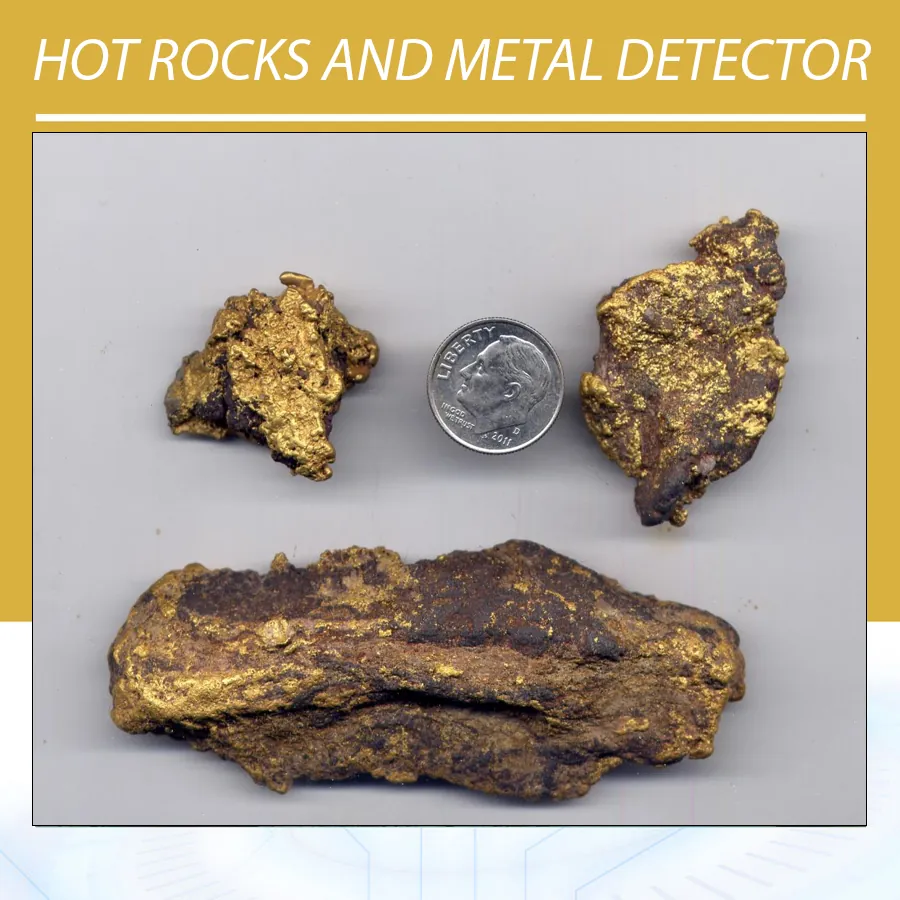
Hot Rocks and Metal Detectors: Why Some Rocks Produce Signals
Hot rocks in metal detecting are rocks that produce a noticeable response because their electromagnetic properties differ from the ground around them and the ground response your detector is compensating for. You may hear a sharp beep, an awkward warble, or a dip in the background threshold, even when no separate metal object is visible.
The name does not mean the rock is physically hot. It describes a detecting problem: an individual rock stands out from its surroundings strongly enough to attract attention. Understanding that distinction helps you investigate signals without assuming every noisy stone contains gold or dismissing every rocky target as worthless.
This guide explains the concept, shows how detector settings affect the response, and provides practical checks using examples from devices listed by Orient Detectors. The exercises are suggested training methods, not reported field tests. No single sound, screen number, or magnet test can establish a rock’s gold content.
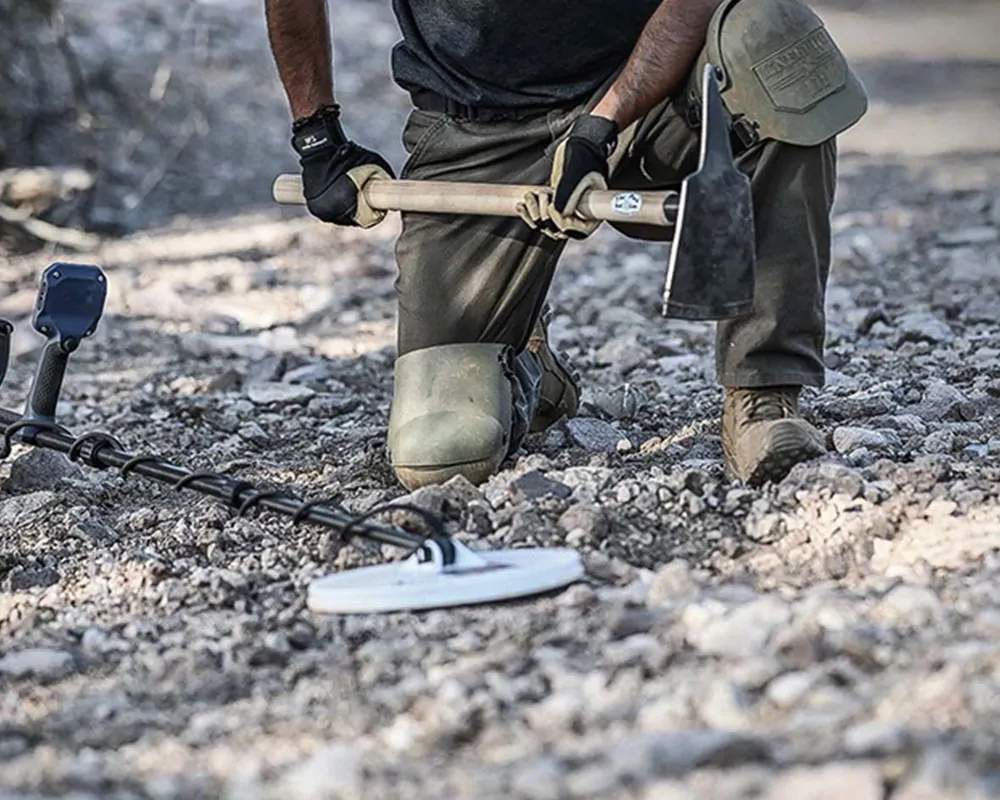
What makes a rock a hot rock?
A detector does not examine a rock as a geologist would. Its coil transmits an electromagnetic field, receives a response, and processes that response according to the detector’s design and settings. Metal targets are part of this picture, but soil and rock minerals can also affect the measurement.
Ground balance helps reduce the relatively broad response from the local ground. A rock with a different response can remain audible after that compensation. Imagine adjusting a camera for a uniformly lit room, then pointing it at a bright window. The window stands out relative to the selected exposure. Similarly, the contrast between a rock and the balanced ground matters.
This is why a stone can be troublesome at one location or setting and less noticeable at another. “Hot rock” is a practical detecting description, not a precise mineral name. It does not identify one chemical composition, one rock color, or one guaranteed position on a detector’s Target ID scale.
Magnetic minerals are different from pieces of metal
Iron-bearing minerals can contribute to ground response without being an iron nail or another manufactured metal object. The detector is responding to electromagnetic behavior, rather than announcing that an item contains a recoverable piece of metallic iron. Confusing these two ideas leads to many mistaken conclusions about noisy stones.
A magnet may help describe a sample, but it is not a complete identification method. Attraction indicates a magnetic component; it does not prove the sample is a meteorite or that it contains gold. A lack of obvious attraction does not guarantee the rock will be silent under a sensitive detector.
Salt is a separate source of ground response
Conductive ground can also be troublesome, especially where moisture and dissolved salts are involved. That does not make every noisy wet patch a collection of hot rocks. A localized stone, a broader mineralized patch, and conductive wet ground can require different responses from the operator.
Minelab distinguishes mineralized or variable ground from conductive ground in its GPX 6000 instruction manual. For the user, the important question is whether the disturbance follows one object, covers an area, or changes with environmental conditions.
Positive and negative hot rocks: relative descriptions
You will often encounter the terms “positive hot rock,” “negative hot rock,” and “cold rock.” These describe behavior relative to a detector’s ground-balance reference. They are not descriptions of temperature, electrical charge, or a universal division of rocks into valuable and worthless categories.
Garrett’s Goldmaster 24k manual describes negative hot rocks as falling below that detector’s current ground-balance point. They can produce a null beneath the coil followed by a returning sound. Positive rocks fall above the balance point and can sound much more like targets. These explanations belong to that operating context, not every detector and audio mode.
| Term | Practical meaning | What it does not prove |
|---|---|---|
| Hot rock | A rock produces a response that stands out against the compensated ground. | That the rock contains gold or a separate metal object. |
| Positive hot rock | A response described as positive relative to the relevant ground-balance reference. | That every detector will show a positive screen number or identical tone. |
| Negative hot rock or cold rock | A response on the other side of that reference; some systems give threshold dips or unusual trailing sounds. | That the rock is cold, harmless to detection, or always easy to reject. |
| Mineralized ground | The surrounding soil itself contributes an electromagnetic response. | That a localized metal target cannot also be present. |
Use these terms to communicate observations, but record the detector and settings with them. “A brief threshold dip on my current prospecting mode” is more useful than “all black rocks are negative.” Color alone cannot establish the response, and audio terminology differs between manufacturers.
How hot rocks can sound and appear on the screen
A troublesome stone can produce a compact beep, a broad response, an irregular sound, or a change in the threshold. Some responses repeat neatly. Others depend strongly on approach direction or coil height. Those characteristics are useful observations, but none provides a reliable laboratory identification.
Listen for where the response begins and ends. Does the strongest point sit directly over the rock? Does the sound occur mainly as the coil leaves it? Does a wider sweep reveal similar disturbances nearby? Keep the coil level so that an accidental rise at the end of the swing does not become part of your interpretation.
Target ID is also a clue rather than a verdict. Minelab’s EQUINOX nugget-detecting guidance discusses hot rocks producing different IDs, including positive values. A rule such as “reject everything below zero and all rocks disappear” is therefore unreliable, even before considering differences between models.
When comparing signals, use the same sweep direction, speed, height, and settings. Otherwise, you may be comparing your technique instead of the targets. A consistent procedure helps you notice real changes and prevents a persuasive single beep from outweighing the rest of the evidence.
Hot rock, metal target, or another source of noise?
| Observation | Possible explanation | Useful next check |
|---|---|---|
| Response follows a loose stone | The stone, something attached to it, or material within it is contributing. | Test the stone on checked ground and rescan its original position. |
| Broad noise across many passes | Changing ground, conductive soil, or several targets. | Compare nearby ground and review the recommended balance procedure. |
| Noise continues with coil held still | Interference or equipment-related noise may be involved. | Check the detector’s noise-cancel guidance and nearby interference sources. |
| Sound appears when coil strikes a rock | Impact, movement, or material trapped near the coil may contribute. | Repeat without contact and inspect the coil and cover as instructed. |
| Small repeatable response remains after moving stone | Another target or a localized ground feature remains. | Investigate that position independently rather than blaming the removed stone. |
More than one explanation can be true. A hot rock can sit above a nail, beside a small nugget, or among other noisy stones. Identifying one contributor does not automatically explain the complete signal. For wider troubleshooting, see Orient Detectors’ guide to why a metal detector keeps beeping.
A practical seven-step check for a suspicious rock
1. Establish the response before changing anything
Make several controlled passes and note the location, sound, and any displayed identification. Approach from a second direction. Do not immediately increase discrimination or sensitivity. First establish what the detector is actually doing so later changes can be compared with something meaningful.
2. Check the surrounding ground
Sweep beyond the suspected object. A small isolated response and a broad area of similar noise require different investigation. If you rebalance, use an appropriate patch checked for targets and follow the procedure for your model. Repeatedly balancing directly over an unexplained signal can make its interpretation more difficult.
3. Move only a loose, accessible stone
Where permitted, place a loose stone on nearby ground already checked for signals. Keep your digging tool, phone, and other metal possessions outside the coil’s detection area. Avoid testing it on a vehicle, metal table, or reinforcement-containing surface that introduces an obvious second source.
4. Compare the stone and its original position
Rescan both places with the original settings. If the response follows the stone, that localizes a contributor; it does not identify the material. If a signal remains in the original spot, investigate it separately. If neither response repeats, document the uncertainty instead of inventing an explanation.
5. Turn the stone and repeat consistently
Changing orientation may alter the response. Keep coil height reasonably consistent, because a higher face on an irregular rock can simply bring material closer to the coil. A stronger response from one side is an observation worth recording, not proof that gold occupies that side.
6. Compare with a known test target
Use a recoverable metal sample appropriate to your search objective. Test it separately on the same checked ground. If you change settings to quiet the stone, return to the sample afterward. The comparison reveals whether a quieter detector has also made your representative target harder to hear.
7. Keep unresolved samples separate
Label an interesting sample and record its location if collecting is permitted. Further mineral identification may require qualified examination. Crushing, heating, or chemical treatment is not needed for this initial detector check. Preserving the sample also preserves the context that helps someone assess it later.
Settings that can help with hot rocks in metal detecting
Ground balance: match the reference to the site
Ground balance is the first concept to understand, but the controls differ. Some detectors use fixed compensation, some offer a manual value, and others provide automatic or tracking systems. Do not copy a number from another user and assume it represents the same ground or even the same scale.
Orient’s metal detector ground balance guide introduces these differences. In practice, establish a repeatable routine: choose suitable ground, perform the manufacturer’s procedure, check ordinary sweep stability, and then assess suspicious signals. Recheck after moving into noticeably different terrain.
Sensitivity: seek useful information
A high setting that produces constant distractions may make the search harder to interpret. Reduce sensitivity in small steps when appropriate, then compare the suspect rock, surrounding ground, and test target. Record what changes. The objective is a usable contrast between the desired target and background, not simply a silent machine.
A quieter response does not prove the rock has been correctly identified. Both unwanted responses and weak targets can change when sensitivity changes. Avoid treating the adjustment as a chemical test or reporting a fixed depth penalty without a controlled measurement.
Tracking: useful automation with a specific purpose
Tracking updates ground compensation as conditions change. That can help across variable ground, but a signal check and a ground-learning operation are different tasks. Consult the manual before using accelerated tracking or a balancing button over a potential target. An automatically managed detector still benefits from deliberate operator technique.
Discrimination and rejection controls
Rejecting an ID range or activating a special cancellation setting may reduce an unwanted response. It can also remove information you wanted to hear. Test changes with representative targets rather than assuming a control named “iron” or “hot rock” can distinguish every geological sample from every piece of gold.
Coil choice and movement
Choose a compatible coil suited to the detector and terrain. A coil that is difficult to keep level between stones makes comparisons less consistent. Before purchasing a different coil, improve sweep control and inspect the current setup. A carefully repeated pass can resolve an apparent mystery that faster, less controlled sweeps keep reproducing.
Examples from detectors on the Orient Detectors website
The following examples illustrate different approaches. They are not a ranking based on comparative field testing, and their settings should not be transferred between models. Manufacturer documentation provides the operating details; Orient product pages provide the relevant catalog links.
Minelab GPX 6000: ground handling on a PI gold detector
The Minelab GPX 6000 uses GeoSense-PI technology. Its automatic ground tracking and Quick-Trak function are useful examples of a detector adapting to ground response rather than asking the operator to identify every stone individually.
Minelab’s official FAQ explains that Normal ground type can respond to hot rocks and recommends Difficult when those responses cannot be balanced out. Pulse induction therefore does not mean immunity to hot rocks. The same FAQ distinguishes the GPX 14 Double-D coil’s interference and conductive-ground functions from ferrous discrimination.
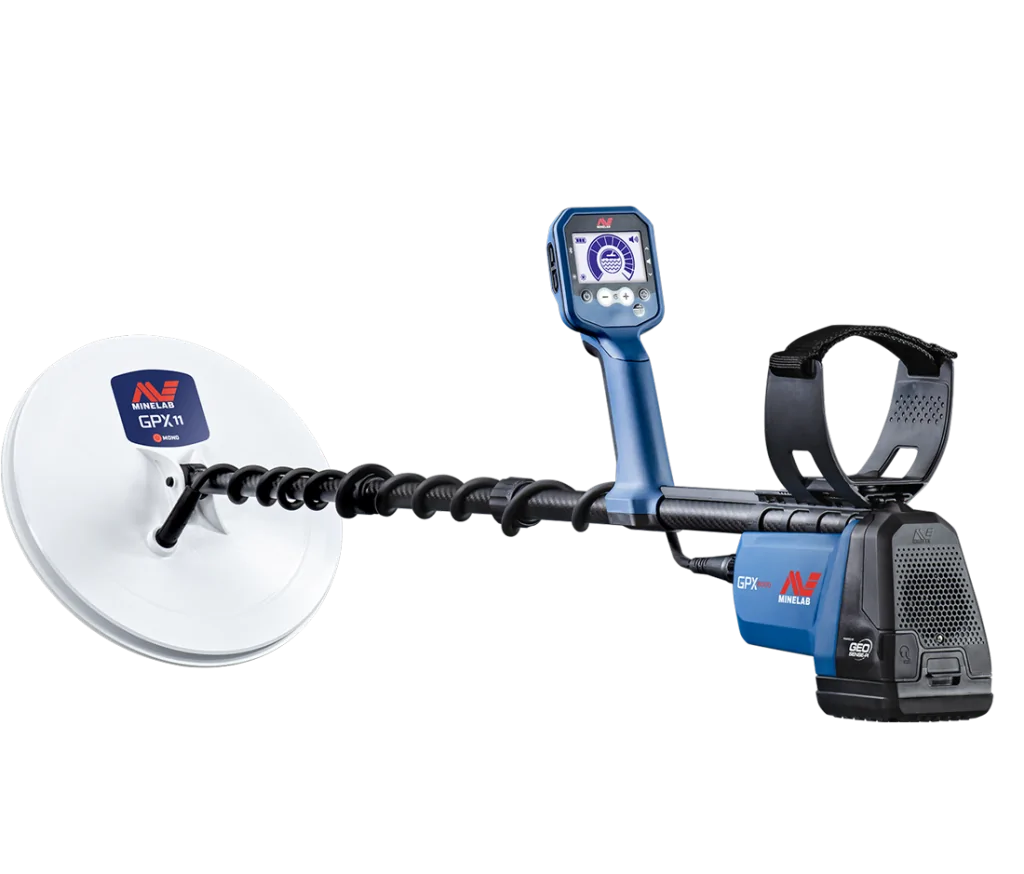
Imagine crossing from relatively quiet ground into a patch containing many noisy stones. A useful training comparison is to document stability and a known target response before and after the appropriate ground-type adjustment. Judge whether the target is easier to recognize in the overall listening environment, rather than assuming the most aggressive setting must always be preferable.
Garrett Goldmaster 24k: a dedicated VLF example
The Garrett Goldmaster 24k is a useful example of a high-frequency gold detector with dedicated ground controls. Garrett’s official product information lists 48 kHz operation, XGB tracking, TracLock, adjustable SAT, and Iron Cancel.
SAT concerns how the threshold recovers; it should not be confused with a universal rock-identification feature. For a learner, this detector illustrates why several controls can influence the same listening problem. Change one at a time and use the manual to understand what each adjustment is intended to do.
A sensible exercise is to compare one troublesome stone and one known target under two documented configurations. Write down whether the stone becomes quieter and whether the target remains distinct. This is more informative than turning several controls together and concluding that the last button solved everything.
| Detector | Relevant approach | Practical lesson |
|---|---|---|
| Minelab GPX 6000 | PI prospecting system with ground tracking and selectable ground type. | Advanced ground management still requires checking changing site conditions. |
| Garrett Goldmaster 24k | High-frequency VLF prospecting system with tracking and threshold-related controls. | Learn the purpose and trade-offs of each control before combining adjustments. |
VLF versus PI: which handles hot rocks better?
There is no responsible answer that ignores the particular detector, coil, ground, target, and settings. “VLF” and “PI” describe broad operating approaches. They do not specify exactly how every product compensates for difficult ground or presents the remaining response to the user.
A better buying question is: can this detector maintain usable performance in the ground where I search, on the target sizes I want to recover? Request a demonstration that includes local troublesome samples and representative metal targets. A silent sweep over one rock is incomplete evidence if no useful target is tested afterward.
Also consider the type of searching you actually do. A dedicated nugget detector and a general-purpose coin detector may prioritize different information. Compare controls, learning requirements, coil options, and realistic local conditions. Avoid paying for a claim that one technology “ignores all rocks” or identifies gold inside stone with certainty.
Three exercises that build reliable interpretation
Exercise one: create a small reference collection
Collect a few permitted samples that behave differently, and label them A, B, and C without guessing their composition. Add a known metal target in a clearly marked nonmetallic holder. Record the coil, mode, ground condition, sensitivity, and balance procedure used during the comparison.
Repeat on a later visit. If a sample changes behavior, check the setup before changing its label. The lesson is that “this stone gave a signal under these conditions” is an accurate record. “This type of stone always gives a gold signal” is an unsupported generalization.
Exercise two: compare separate and nearby responses
On checked ground, compare a rock alone and a known target alone. Then place them near each other without burying or losing either item. Sweep from more than one direction. Keep all samples retrievable and use spacing that lets you recognize which object you are approaching.
This exercise illustrates why a noisy stone and a useful target should not be treated as mutually exclusive possibilities. If responses become difficult to separate, change only one factor, such as spacing or approach direction. Record the effect rather than presenting the result as a universal depth test.
Exercise three: compare stability after one adjustment
Choose a permitted adjustment recommended for your detector. Compare the same short stretch of ground before and afterward, including a known target. Note the number of distracting responses and how confidently you can relocate the sample. Restore the original setting to confirm that the observed difference is repeatable.
The result might favor the quieter setting, the original setting, or neither. All three outcomes are useful. A test is valuable because it informs the next decision, not because it confirms what you expected the detector to do.
Keep a field note that helps on the next visit
A useful note does not need to be complicated. Record the sample label, general location, whether the ground was wet or dry, and the detector configuration. Describe the signal in ordinary words: short beep, broad rise, threshold dip, or inconsistent response. Include whether it repeated from two directions and whether it followed the loose stone.
Then record the adjustment and its effect on a known target. For example: “Sample B became less distracting after the recommended ground adjustment; the reference target still repeated from both directions.” That statement describes an observation without pretending to identify a mineral or measure gold content.
Photographs can help document the sample and test layout. Keep them alongside the notes instead of relying on memory of one impressive sound. Over several outings, this small record becomes a practical guide to your detector and local conditions, while reminding you which conclusions remain uncertain.
Common mistakes worth avoiding
- Calling every noisy rock gold-bearing: a detector response alone does not establish mineral content.
- Calling every rock response worthless: a stone can coexist with, carry, or contain a separate source of response.
- Balancing repeatedly over an unexplained target: use the model’s recommended checking procedure and suitable reference ground.
- Rejecting a universal ID range: rock responses and useful target responses can overlap.
- Changing several controls at once: you lose the ability to explain which adjustment helped.
- Testing beside metal equipment: tools, vehicles, and other nearby objects can contaminate the comparison.
- Assuming quiet means maximum performance: confirm that representative targets remain detectable.
Conclusion: investigate the response, not the nickname
Understanding hot rocks in metal detecting starts with recognizing the relationship between the sample, the surrounding ground, and the detector’s compensation. A sound is evidence of a response, not proof of gold, a meteorite, or a particular mineral.
Use controlled sweeps, separate the stone from its original position when appropriate, follow the correct ground-balance procedure, and check useful targets after adjustments. These habits produce better decisions than memorizing one supposedly perfect sound. When comparing detectors at Orient Detectors, focus on how their documented ground controls fit your actual search conditions.
Frequently asked questions
1. Why does my metal detector beep at rocks?
A rock can differ electromagnetically from the ground your detector has balanced to. Attached metal, material inside the rock, or another nearby target can also contribute. Establish whether the response follows the rock before deciding what caused it.
2. Are hot rocks physically hot?
No. The term describes detector behavior. A rock’s temperature is not what the expression means, and “cold rock” similarly refers to a response category used in some detecting discussions.
3. Do hot rocks contain gold?
Some specimens may contain gold, but being a hot rock does not establish that. A detector cannot determine gold content or purity from the fact that a stone produces a signal. Further identification requires appropriate evidence.
4. Can a hot rock give a positive Target ID?
Yes, depending on the detector, sample, ground, and settings. Do not confuse positive or negative hot-rock terminology with a guaranteed positive or negative number on every detector’s display.
5. Will a magnet identify every hot rock?
No. A magnet provides information about magnetic attraction, not a complete detector-response or mineral identification test. It cannot establish whether gold is present, and not every troublesome sample will react identically.
6. Can ground balance eliminate all hot rocks?
No. A balance suitable for surrounding ground may leave some stones audible. A detector may offer additional ground settings or adjustments, but each should be checked against useful target responses and the manufacturer’s instructions.
7. Are PI detectors unaffected by hot rocks?
No. The GPX 6000 manufacturer guidance explicitly discusses managing them. Performance depends on the complete detector system and conditions, not simply whether the operating technology is described as pulse induction.
8. Should I use maximum discrimination to silence rocks?
Not automatically. Rejection can suppress information from useful targets as well. Test any change with representative samples and understand what the selected control actually rejects on your particular detector.
9. If the signal follows the stone, can I stop checking the ground?
Rescan the original position. Moving the stone localizes one possible contributor but does not rule out another object beneath or beside it. Treat any remaining response as a separate observation.
10. What is the best first adjustment when rocks become noisy?
First confirm controlled coil movement and whether the disturbance is localized. Then follow your detector’s ground-setting and balancing instructions. There is no universal numerical setting that is correct for every model and site.
Resources
- Minelab GPX 6000 instruction manual — ground categories and model-specific operating procedures.
- Minelab official frequently asked questions — GPX 6000 ground types, hot rocks, and Double-D coil functions.
- Garrett Goldmaster 24k instruction manual — positive and negative hot rocks in that detector’s operating context.
- Garrett Goldmaster 24k product information — official technology and control overview.
- Minelab: Nugget Detecting with the EQUINOX — prospecting discussion including hot-rock IDs.
- Orient Detectors: Metal Detector Ground Balance Guide — related educational reading.