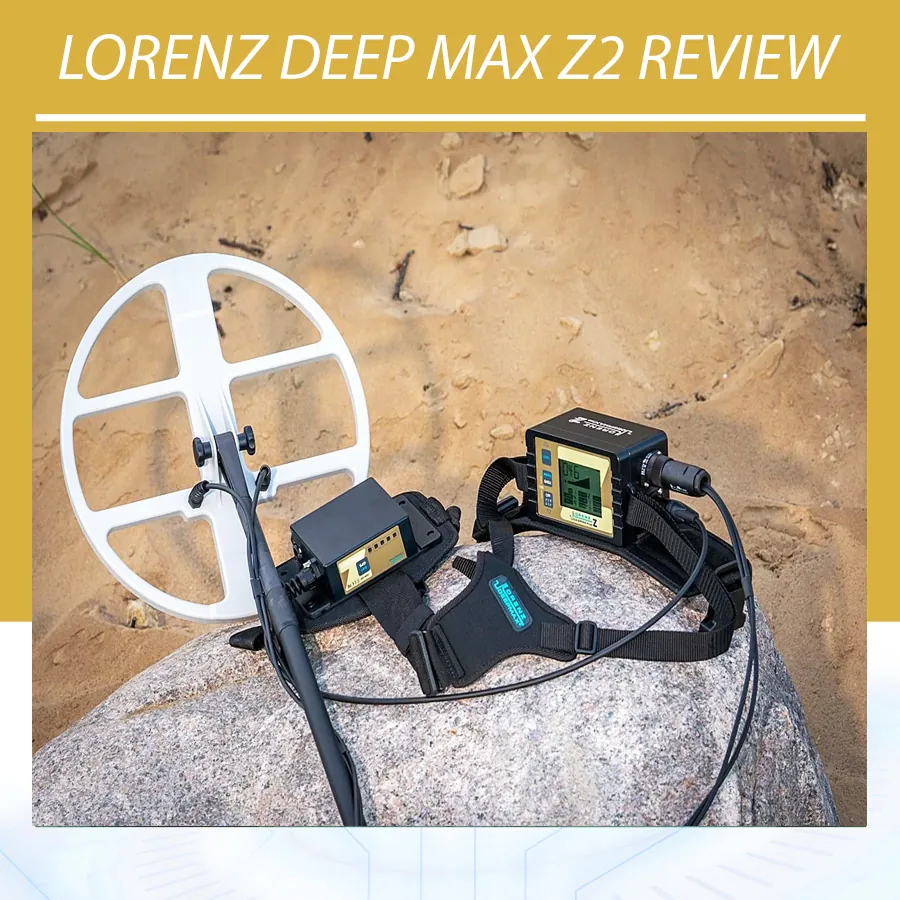
LORENZ DEEP MAX Z2 Review:
Professional Deep Metal Detection with Pulse GBS Technology
This LORENZ DEEP MAX Z2 Review takes a close, practical look at one of the most respected professional deep-seeking metal detectors made in Germany. The LORENZ DEEPMAX Z2 is not a casual hobby detector designed mainly for parks and shallow coin hunting. It is a specialist pulse metal detector built for demanding search work, large-area scanning, mineralized ground, saltwater conditions, deeper targets, and professional field use where stability matters as much as raw depth.
The Z2 belongs to the LORENZ DEEP MAX family, a series known for high-power pulse induction style performance and serious accessory support. According to Lorenz Detecting Systems, the Z2 is based on a non-motion Pulse Ground Balancing System, often shortened to Pulse GBS. In simple terms, the detector sends strong magnetic pulses through the search coil, reads the delayed response from conductive objects, and uses ground balancing to reduce the effect of difficult soil. That design gives the LORENZ DEEP MAX Z2 its reputation as a deep-search detector for large metal objects, non-ferrous targets, and professional applications where ordinary VLF machines may struggle.
At the same time, this is not a machine for everyone. A detector like the LORENZ DEEP MAX Z2 rewards careful setup, correct coil choice, patient search technique, and realistic expectations. It can be very powerful with large frame coils, but it is not a magic device that finds every target at maximum depth in every soil. Its performance depends on target size, target conductivity, coil type, soil conditions, search speed, interference, and operator skill. The purpose of this LORENZ DEEP MAX Z2 Review is to explain where the device is genuinely strong, where it requires experience, and what kind of buyer should consider it.
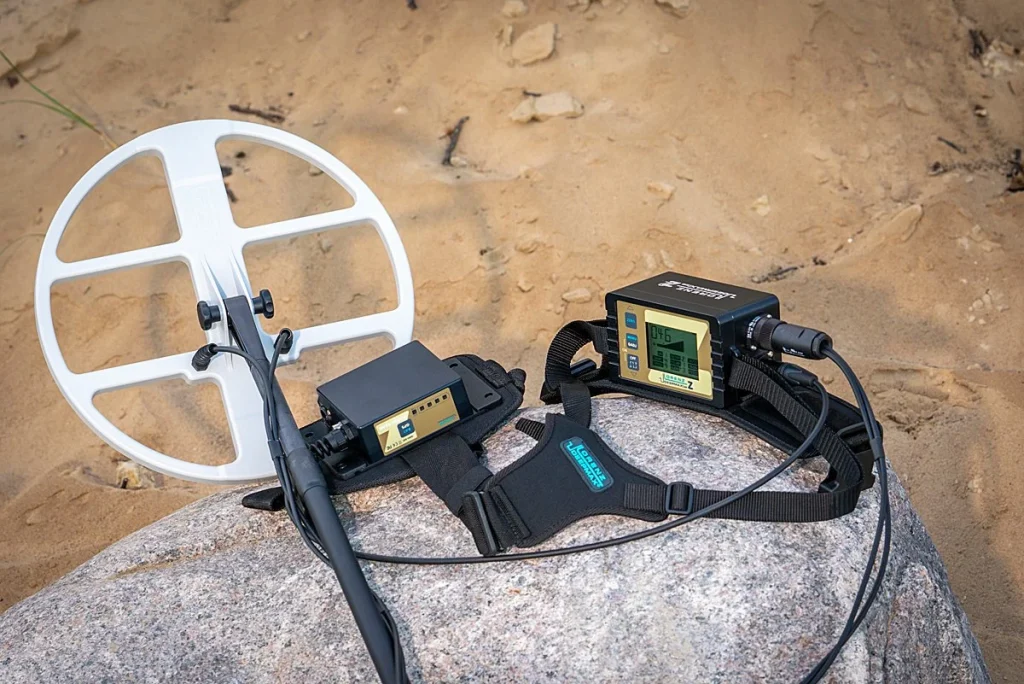
What Is the LORENZ DEEP MAX Z2?
The LORENZ DEEP MAX Z2 is a professional pulse metal detector from Lorenz Detecting Systems GmbH & Co. KG in Germany. Lorenz describes the Z2 as a compact, rugged, and highly stable detector built with advanced power pulse technology, multi-channel data logging, and improved detection range for natural gold and other non-ferrous metal objects.
The detector is designed to work with both small and large coils. Small coils are more suitable for smaller targets, tighter search spaces, pinpointing, and objects such as coins or gold nuggets. Large frame coils are used when the user wants maximum depth on large objects such as caches, boxes, pipes, drums, relics, buried containers, or other sizeable conductive targets. This coil flexibility is one of the biggest reasons the Z2 is treated as a professional platform rather than a single-purpose detector.
The Z2 is also unusual because it combines classic deep pulse detection with visual analysis tools. The detector provides an audio response, an intensity bar graph, time delay readings, and ferrous/non-ferrous indication when compatible Double D coils are used. It also includes a built-in multi-channel data logger function. With additional hardware and software, users can generate 2D and 3D surface maps from scan data. This makes the detector interesting for users who want more than a simple beep-and-dig workflow.
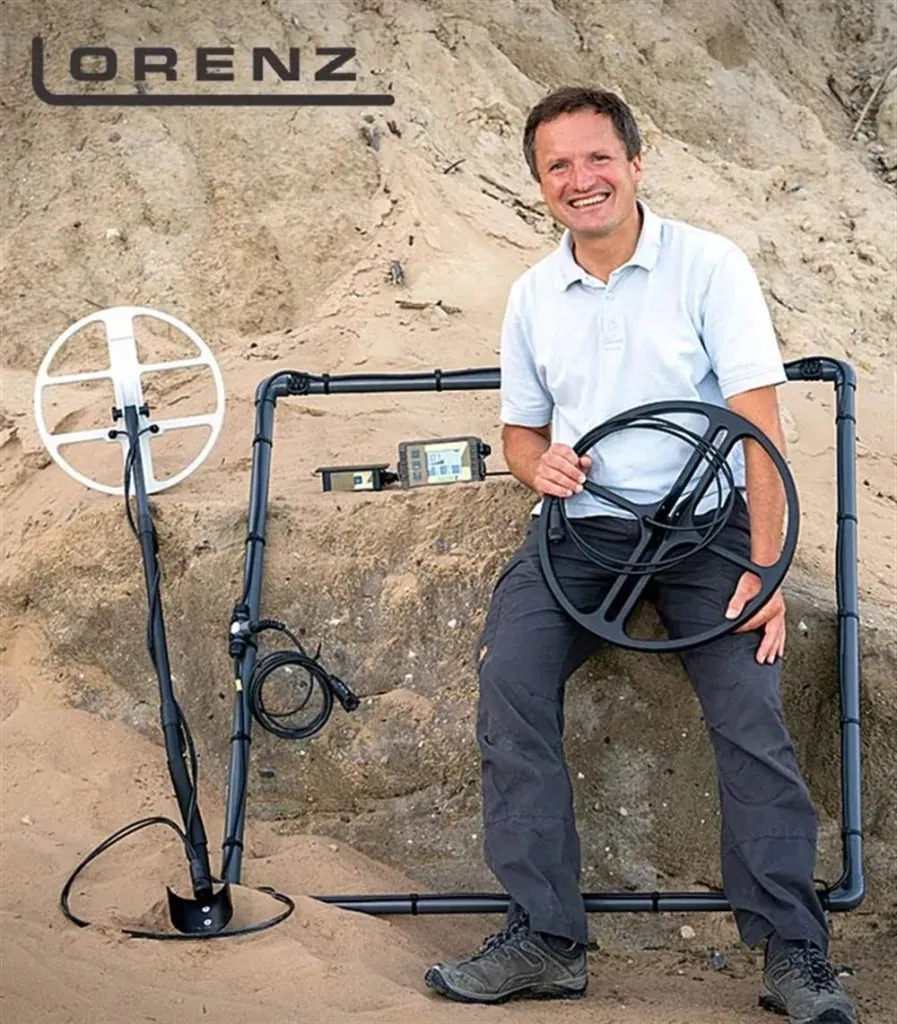
LORENZ DEEP MAX Z2 Review: Quick Verdict
the LORENZ DEEP MAX Z2 is best understood as a serious deep search instrument for experienced users, field teams, survey-style searching, and professional treasure or utility detection work. Its strongest advantages are depth on larger targets, stability in difficult ground, coil flexibility, German build quality, and the ability to create mapped data when paired with the correct data logger accessories.
For the right buyer, the Z2 can be a very capable tool. It is especially attractive if you search large areas, need a detector that handles mineralized soil better than many VLF detectors, or want to use frame coils for deeper work. It is also useful when you need a rugged control box, simple field controls, and a detector that can work with different coil designs without constant complicated adjustment.
For the wrong buyer, it may feel expensive, specialized, and slower to master than a standard hobby detector. If your main goal is shallow coin hunting in public parks, modern target ID numbers, lightweight casual use, or waterproof recreational beach detecting, the Z2 is more machine than you need. It shines when the search problem is depth, large targets, mineralized ground, wide-area coverage, or professional-level detection rather than everyday hobby convenience.
Manufacturer Background and Build Quality
Lorenz Detecting Systems is based in Hannover, Germany, and the company emphasizes German design and manufacturing. The official product information for the Z2 highlights a compact and rugged electronics design, a control housing machined from anodized aluminium, updated controllers, analog-to-digital converters, and renewed transmitting and receiving circuitry.
From a reviewers perspective, this matters because deep pulse detectors are often used in difficult environments. They may be carried across rocky ground, dry fields, salt flats, desert terrain, construction locations, farmland, or historic sites. A control unit that feels robust and stable is more than a luxury; it affects confidence in the field. The Z2 mechanical design suggests that Lorenz built it for professional handling rather than light recreational use.
The electronics unit is also described as water and dust protected. That does not mean the whole detector should be treated like a diving detector, but it does support field use in changing weather and dusty locations. The coils are described by Lorenz as waterproof, which is important for wet ground, shallow water edges, and saltwater-adjacent work. For users who detect in harsh conditions, the combination of rugged control housing and waterproof coils is a meaningful advantage.
How Pulse GBS Works in the LORENZ DEEP MAX Z2
The technical heart of this LORENZ DEEP MAX Z2 Review is Pulse GBS, or Pulse Ground Balancing System. Unlike a motion VLF detector that usually requires continuous coil movement and often reacts strongly to mineralized soil, the LORENZ DEEP MAX Z2 uses short, powerful magnetic pulses. These pulses generate eddy currents inside conductive metal objects. After each transmit pulse switches off, the same coil receives the delayed response from the target.
This delayed response is important because different metals and different target sizes decay differently. Lorenz uses this behavior for visual time delay readings and metal analysis. The detector can show a conductivity or time delay value between 000 and 099, helping the operator interpret the possible target type. With compatible Double D coils, the Z2 can also provide ferrous and non-ferrous indication.
The advantage of this system is not only depth. It is also stability. Lorenz explains that Pulse GBS is especially useful when searching at depth and that the detector can work effectively in difficult soils where magnetic iron oxides are present. The system is also described as being only slightly affected by saltwater, most ground types, or temperature changes. That is exactly the kind of performance professional users look for when ordinary detectors become unstable.
However, no pulse system can remove every challenge. Large coils increase detection depth on large objects but reduce sensitivity to very small pieces. Small coils improve sensitivity to smaller targets but do not match the maximum depth of a large frame coil. the LORENZ DEEPMAX Z2 gives the user a strong platform, but the correct coil and settings still decide much of the field result.
Specifications Table
| Specification | LORENZ DEEPMAX Z2 Details |
|---|---|
| Official model name | LORENZ DEEPMAX Z2 |
| Manufacturer | Lorenz Detecting Systems GmbH & Co. KG, Germany |
| Detection principle | Non-motion Pulse Ground Balancing System |
| Pulse rate | Approx. 1270 pulses/second with small coils and 600 pulses/second with large coils |
| Audio response | 0-4000 Hz voltage-controlled oscillator with loudspeaker or headphones |
| Ground balance | Preset, two-step automatic, and manual ground balancing options |
| Metal analysis | Visual time delay/conductivity reading from 000 to 099; ferrous/non-ferrous indication with Double D coils |
| Data logger | Built-in multi-channel data logger with optional GPS-supported mapping workflow |
| Internal data storage | Internal flash memory, up to 99 fields, max. 100 m field length |
| Measurement rate | 12 measurements per second |
| Power supply | Internal rechargeable 12 V 2.4 Ah NiMH cells |
| Operating time | Approximately 3 to 8 hours depending on temperature, coil, and settings |
| Charger | 100-240 VAC / 50-60 Hz wide-range charger |
| Operating temperature | -5°C to +50°C |
| Control box weight | Approx. 1380 g for the electronics control box |
| Standard kit coils | 1 m x 1 m frame coil and 35 cm DD coil in the standard detecting kit |
Standard Equipment and Accessories
The basic LORENZ DEEP MAX Z2 electronics package includes the Z2 electronics control box, adjustable shoulder and belt strap, fast charger, stereo headphones with adapter cable, and English instruction manual. This basic package is useful for buyers who already know exactly which coils they need or who are building a custom professional kit.
The standard detecting kit adds a 1 m x 1 m frame coil with carrying straps, a carrying bag for the frame coil, a 35 cm DD coil, and a three-rod telescopic S pole. This is the package most buyers will associate with the Z2 because it gives both deep-frame capability and a more conventional handheld coil option.
The 1 m x 1 m frame coil is the serious deep-search tool. It is not designed for tiny coins, small nails, or casual target separation. It is designed to cover ground and reach larger objects at depth. The 35 cm DD coil is more practical for smaller targets, better target localization, and ferrous/non-ferrous indication. A professional user may need both because the best coil for finding a deep cache is not the same as the best coil for checking a smaller response.
Lorenz also lists several additional coil options, including 26 cm, 26 cm DD, 26 cm differential, 35 cm, 35 cm DD, 44 cm, 1 m x 1 m frame, 1 m x 1 m double frame, and universal cable coils with 4 m, 8 m, or 12 m perimeter options. This accessory range is one of the strongest arguments for the Z2. It allows the detector to be adapted to search area, target size, and depth requirement rather than forcing one coil to do every job.
Search Coil Performance and Practical Depth
Depth is often the most misunderstood part of any metal detector review, and the LORENZ DEEPMAX Z2 is no exception. The detector is capable of impressive depth on large metal objects, especially with large frame coils, but depth is never a single fixed number. Coil size, target size, metal type, target shape, soil conditions, interference, and settings all matter.
Lorenz explains the relationship clearly: small search coils can produce very good detection depth on small objects, while large search coils provide the highest possible detection depth on bigger objects. When coil diameter increases, sensitivity to bigger objects rises, but sensitivity to small objects decreases. This is why a very large frame coil may ignore tiny pieces that a smaller coil would detect easily.
For large-area treasure hunting, utility detection, industrial searching, or deep relic work, this tradeoff is acceptable. The user is not trying to detect every surface-level fragment. The goal is to reduce noise from small unwanted metal and focus on larger, deeper targets. With frame coils, the Z2 can be effective for covering ground while maintaining strong response on sizeable conductive objects.
For natural gold, the choice becomes more nuanced. Lorenz states that the Z2 has improved sensitivity to gold and small low-conductive metal pieces. That is valuable, but a large frame coil is still not the ideal tool for every small nugget. If the goal is small natural gold, a smaller coil such as a DD option will usually make more sense. If the goal is larger gold-bearing objects, buried metal, or deep non-ferrous targets, the frame coils become more attractive.
Ground Balance and Stability in Difficult Soil
One of the strongest reasons to consider the Z2 is its behavior in difficult ground. Mineralization can reduce depth, create false signals, and make target interpretation frustrating. Lorenz designed the Pulse GBS system specifically to cancel ground effects while preserving stable target response. The Z2 gives the operator three ground balancing facilities: preset, two-step automatic, and manual.
This matters in real field conditions. In mild soil, many detectors can perform well. In mineralized ground, salty areas, changing temperature, or locations with ground noise, the difference between an average detector and a professional detector becomes clear. A stable threshold, predictable audio, and repeatable signal behavior allow the operator to work longer and make better decisions.
the LORENZ DEEP MAX Z2 is also designed with EMI reduction in mind. The official product information mentions differential electromagnetic noise cancellation and new coil designs that help in areas with interference from power lines. The function page also refers to frequency and filter functions, low frequency interference elimination, and new differential inputs with coil designs for interference reduction.
In practical review terms, this does not mean the Z2 will be silent in every noisy location. No deep high-power detector can promise that. But it does show that Lorenz has treated electrical interference as a core design problem rather than an afterthought. For professional users who work near infrastructure, farms, fences, power lines, or mixed urban-rural areas, this is a major benefit.
Metal Identification and Target Analysis
the LORENZ DEEP MAX Z2 is not a modern visual target ID detector in the same way as a consumer multi-frequency VLF machine. It does not aim to show a coin-style ID number for every shallow target. Instead, it uses time delay and conductivity information to help classify the probable response of a metal object. The LC display can show a reading between 000 and 099, and the operator can compare the reading with audio response, signal strength, and search context.
With a compatible Double D coil, the detector can also provide ferrous/non-ferrous indication. This can be helpful in separating iron-like responses from non-ferrous targets such as gold, silver, copper, brass, bronze, or aluminum. Lorenz states that the improved ferrous/non-ferrous analysis works more stably on difficult soils in combination with 26 cm or 35 cm Double D search coils.
Deep detectors do not remove the need for judgment. A large iron object, a mixed-metal target, a corroded object, unusual soil, or overlapping targets can complicate interpretation. The Z2 gives the user more information than a simple audio-only pulse detector, but it still requires experience. The best users will combine display data, audio behavior, pinpointing, coil selection, and repeated passes from different directions.
Data Logger and Mapping Capability
A major part of this LORENZ DEEP MAX Z2 Review is the data logger function. Lorenz describes the Z2 as having an easy-to-use multi-channel data logger that can work with additional hardware and software to generate 2D and 3D surface maps from scans. The manual specifications refer to internal flash memory, 99 maximum fields, maximum field length of 100 m, and a measurement rate of 12 measurements per second.
This feature is valuable because many deep-search projects are not solved by a single signal. A field team may want to map a search area, compare signal patterns, document anomalies, or return to a location later with clearer context. Mapping can also help when targets are large, irregular, or related to underground structures such as cavities, trenches, pipes, or buried installations.
However, the data logger workflow requires additional equipment. Lorenz states that to generate colour maps with the built-in data logger, the user needs a computer with installed software, Surfer scientific mapping software from Golden Software, Lorenz Scripter software, a Z2 USB data transfer cable, and the Z2 Battery + GPS Module. This means buyers should not assume that buying the basic detector alone gives a complete mapping setup.
For professional users, this is acceptable because mapping is a more advanced workflow. For casual users, it may be too much. If you want only fast audio detection, the data logger may be unnecessary. If you want survey-style documentation and visual analysis, it becomes one of the Z2’s most important advantages.
Battery Life and Field Power
The Z2 uses internal rechargeable 12 V 2.4 Ah NiMH cells. The manual lists operating time between approximately 3 and 8 hours depending on temperature, coil, and settings. That is a realistic range rather than an exaggerated single number. Large coils, high-power settings, cold weather, and long search days can reduce field time.
The included charger supports 100-240 VAC and 50-60 Hz, which is helpful for international users. Lorenz also lists an additional Battery + GPS module that can be connected to double battery capacity. For serious field work, that optional power module should be considered part of the practical kit, especially if the user also wants GPS-supported data logging.
Battery planning is important with a detector like this. Professional search sites are often far from convenient charging points. A user who expects full-day operation should plan charging cycles, backup power, and accessories before going into the field. The Z2 gives flexibility, but only if the kit is prepared properly.
Ease of Use: Simple Controls, Professional Thinking
Lorenz emphasizes that the Z2 has simple operation with a specially developed LC display and a reduced number of controls. This is a genuine advantage. Many advanced detectors become difficult because they bury important settings under too many menus. The Z2 keeps the interface focused while still displaying signal strength, time delay reading, ferrous/non-ferrous icons, battery condition, and mode settings.
That said, simple controls do not mean beginner-level interpretation. A new user can learn the controls, but understanding target behavior takes time. Pulse audio response, frame coil movement, ground balance, delay settings, sensitivity, EMI filtering, and time delay readings all need practice. The Z2 is easy to operate compared with many professional instruments, but it is still a professional tool.
The best learning method is to test known targets before serious field use. A user should bury or place different objects, try different coils, change ground balance options, listen to audio response, and study how the display behaves. This practice will make real field signals much easier to understand.
Best Uses for the LORENZ DEEP MAX Z2
the LORENZ DEEP MAX Z2 is best suited for professional treasure hunting, deep relic detection, large object search, mineralized ground work, saltwater-adjacent detection, utility-style metal location, and survey-style scanning. It is also suitable for serious gold searching when the operator uses the right coil and understands the limits of pulse detection on very small targets.
With large frame coils, the Z2 is especially useful for large buried targets. That may include buried containers, metallic boxes, large relics, old tools, drums, pipes, and other sizeable conductive objects. The ability to cover large areas efficiently is one of the detector’s main strengths.
With smaller coils, the Z2 becomes more precise. The 35 cm DD coil in the standard kit is important because it supports more practical target localization and metal analysis. Users who want to investigate mixed sites will likely spend time switching between frame coils and smaller coils depending on the search phase.
Who Should Buy the LORENZ DEEP MAX Z2?
The ideal buyer for the LORENZ DEEP MAX Z2 is an experienced detectorist, professional search operator, serious treasure hunter, research team, industrial user, or advanced prospector who needs depth and stability more than lightweight convenience. This buyer understands that deep detection is a process, not a single button result.
The Z2 is also a strong option for users who search in difficult soil. Mineralized ground and salt conditions can reduce the usefulness of many detectors. The Z2’s Pulse GBS design, ground balance options, and coil flexibility make it more suitable for such environments.
It is less suitable for casual beginners. If you are buying your first detector for weekend parks, modern coins, beaches, and simple target ID, a lighter VLF or multi-frequency detector will be easier and cheaper. The Z2 becomes logical when your targets, ground, and search depth justify professional equipment.
Pros and Cons
| Pros | Cons |
|---|---|
| Excellent professional depth potential on large targets with frame coils | Specialized detector, not ideal for casual beginners |
| Pulse GBS system performs well in mineralized soil and salt conditions | Maximum performance depends heavily on correct coil choice and operator skill |
| Wide coil and accessory ecosystem for different search tasks | Data mapping requires extra hardware and software |
| Rugged German-built electronics with aluminium control housing | Large frame coils are not suitable for tiny targets or tight spaces |
| Time delay reading and ferrous/non-ferrous indication add useful target context | Target analysis is helpful but not absolute identification |
| Built-in data logger supports advanced survey-style workflows | Price and accessory cost place it in the professional category |
LORENZ DEEP MAX Z2 Compared with Standard Metal Detectors
Compared with a standard VLF metal detector, the Z2 is deeper on large objects and more stable in many difficult ground conditions. It is also more flexible for professional coil configurations. A VLF detector may give faster modern target ID, better small-target separation in trashy sites, and easier casual use. The Z2 is stronger when the search target is deeper, larger, or located in soil that reduces ordinary detector performance.
Compared with a typical pulse induction gold detector, the Z2 stands out for its frame coil support, static response, Pulse GBS ground balancing, data logger option, and professional search coil range. It is less of a lightweight nugget detector and more of a deep search platform. That distinction matters. If your main target is tiny gold in rough mountain terrain, another PI gold detector may be easier to carry. If your goal includes deeper buried metal and systematic survey work, the Z2 becomes more compelling.
Frequently Asked Questions
Is the LORENZ DEEP MAX Z2 good for gold?
Yes, the LORENZ DEEP MAX Z2 can be used for gold, especially non-ferrous targets and larger gold-related targets. Lorenz states that the Z2 has improved detection range for natural gold and small low-conductive metal pieces. For very small nuggets, coil choice is critical, and a smaller coil will usually be more suitable than a large frame coil.
Does the LORENZ DEEP MAX Z2 detect deep targets?
The Z2 is designed for deep detection, especially on large targets with large frame coils. Actual depth depends on target size, shape, metal type, coil size, soil, settings, and interference. It should be evaluated as a professional deep-search system rather than a detector with one fixed depth number.
Can beginners use the LORENZ DEEP MAX Z2?
A beginner can learn it, but the Z2 is better suited to serious and professional users. The controls are relatively simple, but interpreting pulse signals, choosing coils, setting ground balance, and using the data logger require practice.
Does the LORENZ DEEP MAX Z2 have 3D scanning?
The Z2 has a built-in multi-channel data logger. With additional hardware and software, users can generate 2D and 3D surface maps from scan data. The basic detector alone should not be confused with a complete mapping package unless the required accessories and software are included.
Which coil is best for the LORENZ DEEP MAX Z2?
There is no single best coil. A large frame coil is best for deep large targets and wide-area searching. A smaller DD coil is better for smaller targets, pinpointing, and ferrous/non-ferrous analysis. Professional users often need more than one coil.
Is the LORENZ DEEP MAX Z2 affected by mineralized soil?
The Z2 is designed to handle difficult soil better than many standard detectors. Its Pulse GBS system, ground balance options, and interference reduction tools help maintain stability in mineralized ground, saltwater conditions, and changing field environments.
Final LORENZ DEEP MAX Z2 Review Verdict
This LORENZ DEEPMAX Z2 Review shows a detector built for serious work. The LORENZ DEEPMAX Z2 is not simply a high-priced hobby detector; it is a professional pulse ground balancing platform with deep-search coils, rugged construction, improved non-ferrous sensitivity, target analysis tools, and optional data mapping capability. It is strongest when the user needs depth, stability, large-area search efficiency, and flexible coil configurations.
The Z2 is not the best choice for every buyer. Casual users may find it too specialized, and beginners may need time to understand its full value. But for experienced detectorists, professional search teams, serious treasure hunters, and users working in difficult soil, the LORENZ DEEPMAX Z2 remains one of the most capable deep pulse detectors available.
If your search work involves large targets, mineralized ground, deeper detection, salt conditions, or survey-style mapping, the LORENZ DEEPMAX Z2 deserves serious consideration. If your search work is mainly shallow coins, simple park hunting, or lightweight recreational detecting, a simpler detector will be more practical. The Z2 is at its best when used by someone who understands its purpose: professional deep detection with serious control over coil choice, ground conditions, and target interpretation.