
A groundwater detector is a field instrument used to look for signs of water-bearing ground before a well is drilled. The Water Line V2-7500 from Geoground is a dedicated device of this kind, built around a single Underground Water Detection System and classified by its manufacturer as a long-range system. Independent science does not validate long-range detection, so its readings should be treated as a manufacturer-stated indication to be checked, not as proof of water. Proven groundwater methods are hydrogeological survey, electrical resistivity measurement, seismic and electromagnetic surveys, and test drilling.
This guide explains what the Water Line is and is not, how it fits into a realistic groundwater project, which questions to ask before buying, and how it compares with the resistivity-based water detectors in our catalog. Orient Detectors ships from Istanbul worldwide and our team answers equipment questions over WhatsApp.
What is the Water Line groundwater detector?
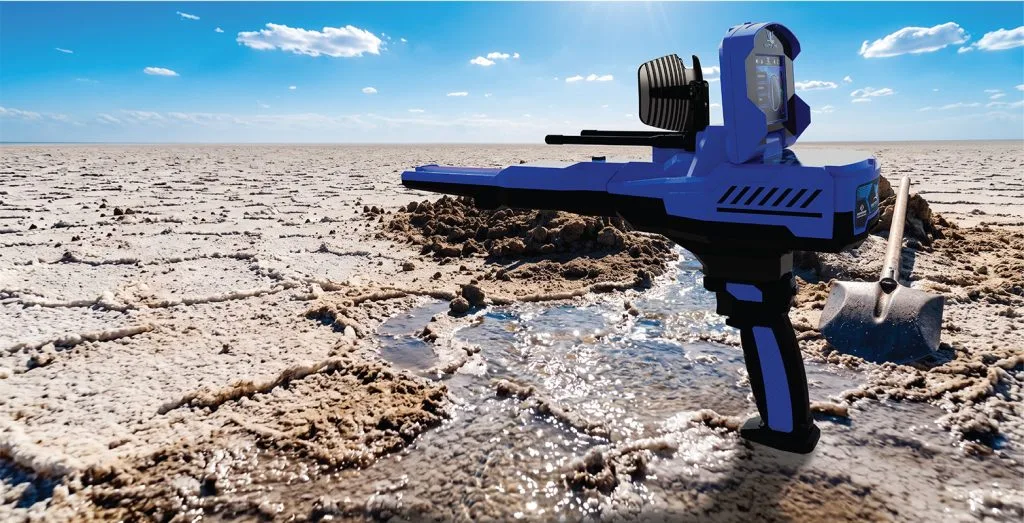
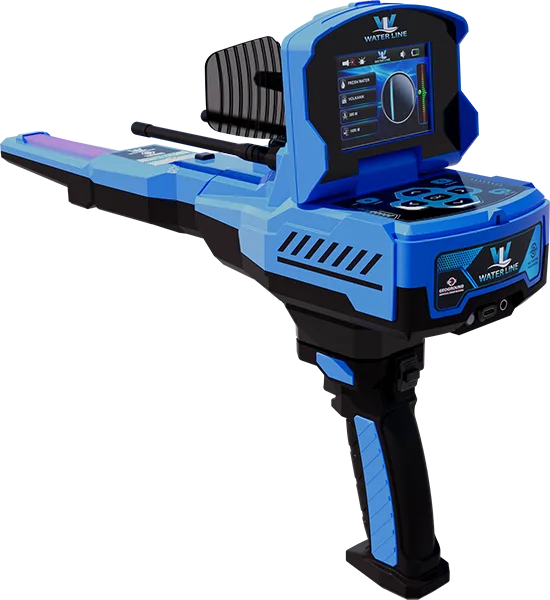
The Water Line V2-7500 is a Geoground device with one operating system, the Underground Water Detection System, intended for investigating potential groundwater locations such as aquifers and underground streams across varied terrain, including dry ground. The manufacturer’s page describes it as a purpose-built water exploration platform rather than a multi-purpose metal detector.
The package listed for the device includes a main unit, a handle unit, a Signal Booster Dish, a GEO Matrix Sensor, signal antennas, a charger and a user manual. Confirm the exact configuration, components and training in your quotation, because bundles change.
| Item | Product information |
|---|---|
| Brand | Geoground |
| Model | Water Line V2-7500 |
| Category | Underground water finder, long-range system (manufacturer classification) |
| Operating systems | One: Underground Water Detection System |
| Stated purpose | Investigation of potential groundwater locations in varied soil and terrain |
| Depth and range figures | Request the written specification; treat any figure as manufacturer-stated |
| Data recording | No GPS log, export or 3D app is listed; ask before assuming one |
What a groundwater detector can and cannot tell you
Groundwater sits in the pore spaces and fractures of soil, sediment and rock. An aquifer is a body of such material that can yield usable quantities of water. Finding water is therefore three separate questions:
- Where is a zone worth investigating? This is where a field detector or geophysical survey is used.
- How much water will a well there produce? Only drilling and a pumping test answer this.
- Is the water suitable for drinking or irrigation? Only laboratory analysis of a sample answers this.
No handheld instrument of any type answers questions two or three. An indication on the Water Line, or on any other device, does not certify a yield, a depth or water quality. Treat it as a reason to look closer, never as a reason to drill on its own.
Long-range systems versus proven geophysics
Honesty matters more than sales talk here. The Water Line belongs to the family of long-range locators. Manufacturers of such devices describe them as receiving signals from a distant target; there is no independent scientific validation that this works, and claims of detecting water from hundreds of meters away or at great depth should be regarded as manufacturer-stated specifications. We explain the background in how long-range detectors work.
By contrast, electrical resistivity is an established geophysical method. Electrodes inject a current into the ground and measure the voltage drop; water-saturated layers conduct well and show low resistivity, while dry rock and voids show high resistivity. Hydrogeologists have used vertical electrical sounding for decades to site wells. Devices in our catalog that use this principle:
| Device | Method | Manufacturer-stated depth | Output |
|---|---|---|---|
| Geoground Water Line V2-7500 | Long-range Underground Water Detection System | Request written specification | Device indication |
| OKM GeoSeeker Mini | Geoelectrical resistivity measurement | Up to 100 m | 2D resistivity diagram with water and cavity symbols |
| OKM GeoSeeker | Geoelectrical resistivity, four electrodes, Wi-Fi to tablet | 5 to 250 m depth range selectable | 3D resistivity graphic on bundled Android tablet |
Even resistivity results are interpretations of ground conductivity, not pictures of water. Clay layers also conduct well, and saline water conducts better than fresh water, so a geologist should read the data alongside local knowledge.
Who should consider a dedicated water detector?
- Landowners planning a well. Start with existing well records, neighbors’ well depths and any geological map of the area. A detector survey can help choose between candidate spots, but budget for a driller’s assessment.
- Farmers and irrigation projects. Define the water requirement first (area, crop, irrigation method). A source that cannot meet the demand is not useful, however promising the indication.
- Drilling and exploration teams. Decide how field observations will be recorded and passed to the person who makes the drilling decision. A marked location, session notes and the device settings are more useful than “the site looks promising.”
Owning a detector and commissioning a groundwater assessment are different things. If you are new to field equipment, include practical training in your quotation and ask who will interpret the findings.
How to run a groundwater survey session
- Define the objective: which part of the land, and which decision the session should support.
- Gather site records: existing wells, their depths and yields, geological maps, previous surveys, access and permissions.
- Check the kit: components, charge state and connections according to the manual.
- Follow the operating sequence you were trained on, keeping the procedure identical at each point.
- Record every observation with a location reference: marked stakes, a sketch map or a separate GPS. Do not assume the device logs positions.
- Repeat the measurement at each candidate point from a second direction or on a second pass. A result that does not repeat is noise.
- Mark candidate zones and hand the notes to a hydrogeologist or experienced driller for the next stage.
- Verify before drilling: a resistivity survey or a test borehole, then a pumping test and a water-quality analysis.
Keep one record per location: date, operator, device configuration, route, observations and open questions. Separate what you observed from what still needs checking, and never assign a water volume to a point that has not been drilled.
Questions to ask before you buy a groundwater detector
- Depth and range: what exactly does each figure describe, under which conditions, and how would the seller demonstrate it? Keep stated figures separate from verified site measurements.
- Demonstration: ask to watch the full sequence (assembly, settings, operating position, how a response is shown), then repeat it yourself.
- Verification: ask how the manufacturer suggests confirming an indication before drilling.
- Recording: is there any GPS, export or software? If digital records matter to you, see them working before ordering.
- Power and environment: battery type, operating time, charger, temperature and moisture limits.
- Support: warranty duration and coverage, service route, training scope and language of the manual.
- Price and package: request a current quotation stating the model, components, delivery country, shipping, insurance and import charges. Training, geological assessment, drilling and water testing are separate services.
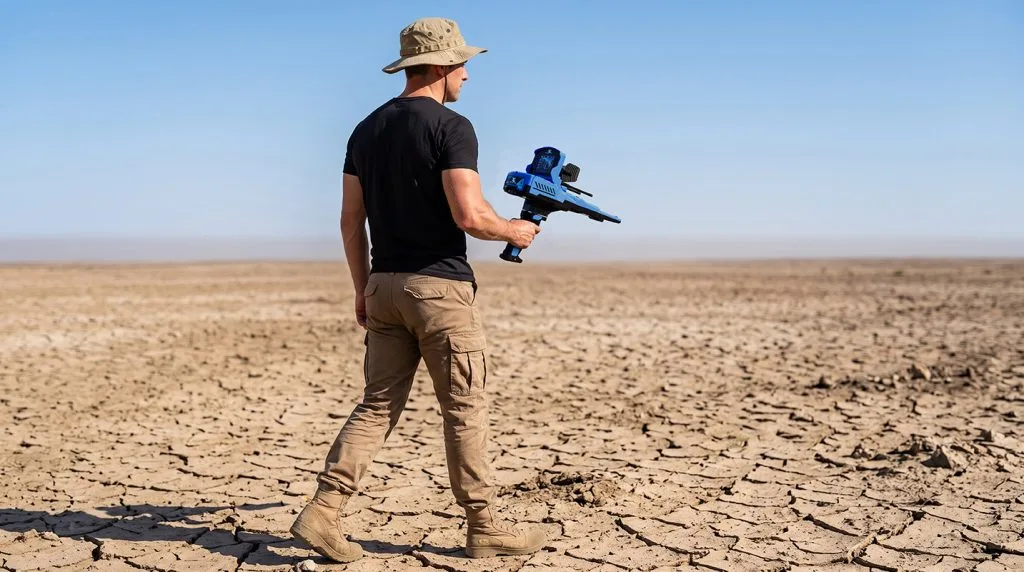
Dry regions deserve one extra note. Dry surface ground does not mean there is no groundwater, and a wet surface does not guarantee an aquifer. Regional geology decides, which is another reason to combine any detector survey with professional interpretation.
Frequently asked questions
Does a groundwater detector guarantee a productive well?
No. No detector can. Yield is only known after drilling and a pumping test. A detector indication is a candidate location, not a result.
Is the Water Line scientifically proven?
It is a long-range type device, and long-range detection has no independent scientific validation. Treat its indications as manufacturer-stated and confirm them with resistivity surveying, geological assessment or a test borehole before investing in a well.
What depth can the Water Line reach?
Ask for the written specification for the V2-7500 and treat the figure as manufacturer-stated. Depth to a candidate zone, the water level in a finished well and the final drilling depth are three different numbers.
Can it tell fresh water from salt water, or if water is safe to drink?
No field detector certifies water quality. Resistivity instruments can hint at salinity because salt water conducts better, but only a laboratory analysis of a pumped sample confirms drinking-water or irrigation suitability.
Is the Water Line also a gold or metal detector?
No. It has one system dedicated to water exploration. For metals, cavities or treasure you need a different category of device; see our guide to devices for detecting voids and caves.
Can a beginner use it right after purchase?
Only after practical training on the actual unit. Repeat the operating sequence under supervision before working independently, and plan for a specialist to interpret the findings.
Conclusion
A groundwater detector such as the Water Line V2-7500 can give a groundwater project a structured starting point, provided you treat its indications as manufacturer-stated and verify them with proven methods: resistivity surveying, hydrogeological interpretation and a test borehole, followed by a pumping test and water analysis. If you want a resistivity-based instrument instead, the OKM GeoSeeker range uses established physics. Tell us about your land, your water requirement and your budget over WhatsApp and we will explain honestly which option fits.
Not sure which detector fits you? Contact us on WhatsApp.