Best Gold Detectors for Desert Prospecting
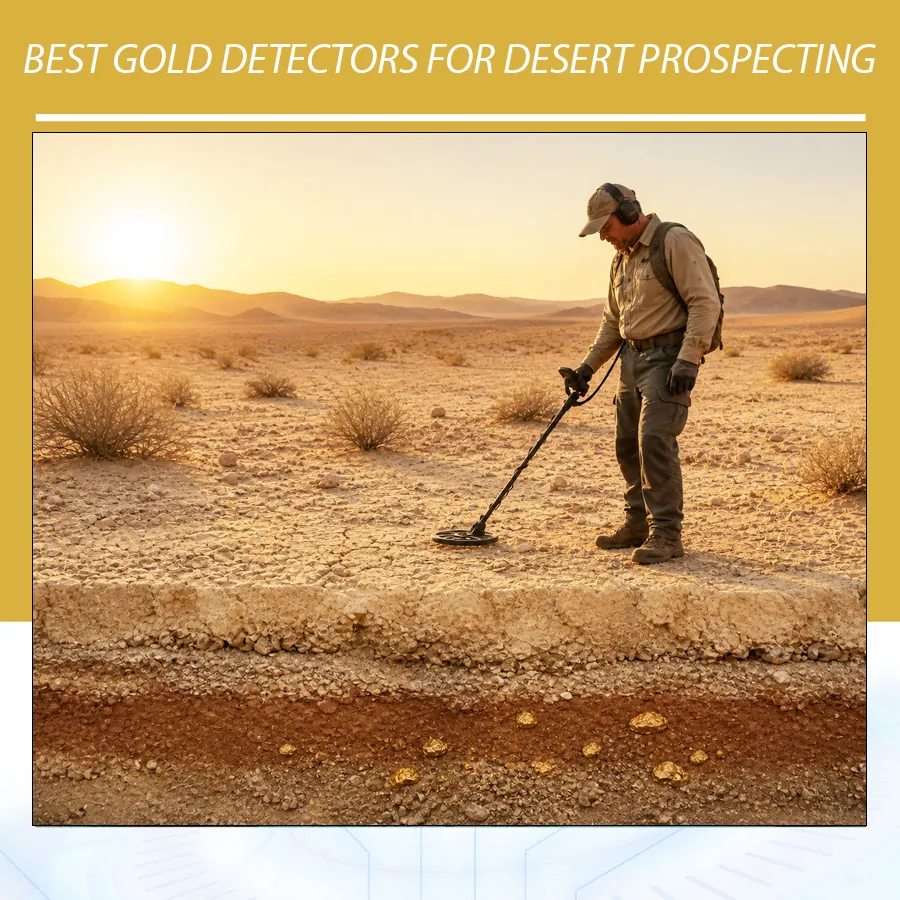
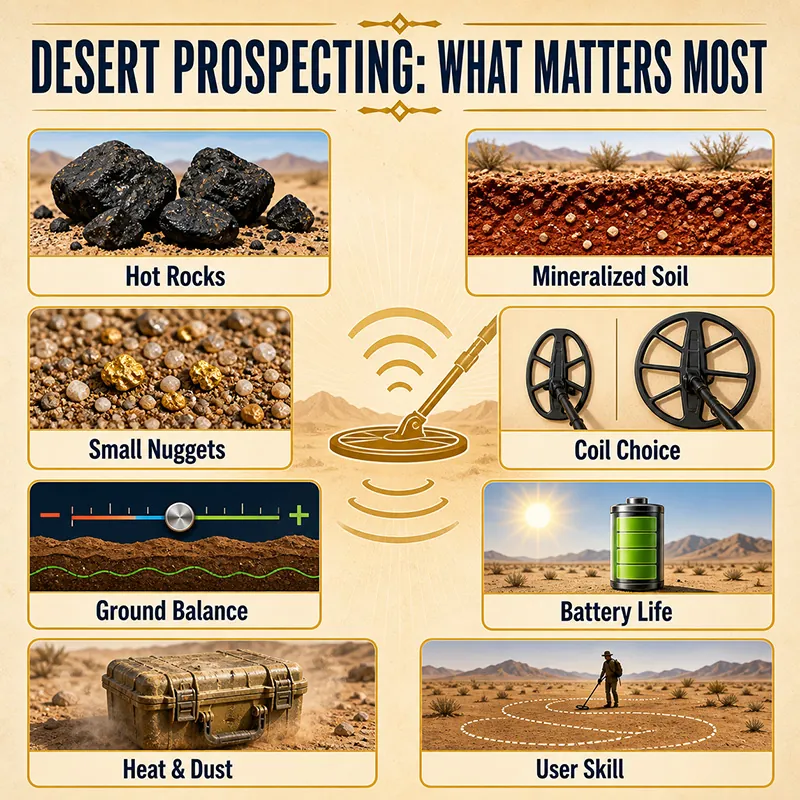
Desert prospecting looks simple from a distance: wide open land, dry washes, exposed bedrock, old mining routes, and miles of ground where gold may have moved with ancient water channels. In reality, desert detecting is one of the hardest tests for any gold detector. Heat, dust, hot rocks, highly mineralized soil, salt flats, electrical noise, fatigue, and long walking days all affect performance. That is why choosing the right gold detectors for desert prospecting is not only about depth. It is about stability, target sensitivity, ground handling, coil choice, battery life, ergonomics, and the user’s ability to interpret faint signals in difficult terrain.
A beginner may ask, “Which detector goes deepest in the desert?” A better question is: “Which detector can stay stable in my desert soil, hear the size of gold I am searching for, and remain practical for the way I prospect?” Small natural nuggets require sensitivity. Larger deep gold requires power and coil coverage. Salt flats and black sand require ground handling. Rocky gullies require a coil that can fit into tight spaces. Long open flats require coverage and comfort. The best machine changes with the target, the soil, and the operator.
This guide compares gold detectors for desert prospecting available through Orient Detectors. It focuses on practical choices such as Gold Stinger X6, Nokta Magnetar 9000, Gold Monster 2000, GPZ 8000, GPX 6000, Garrett Axiom, The Legend 2, and advanced multi-system or 3D options for larger desert targets. The goal is to help buyers choose a detector that fits real desert conditions instead of chasing simple marketing claims.
Why Desert Prospecting Needs a Different Detector Strategy
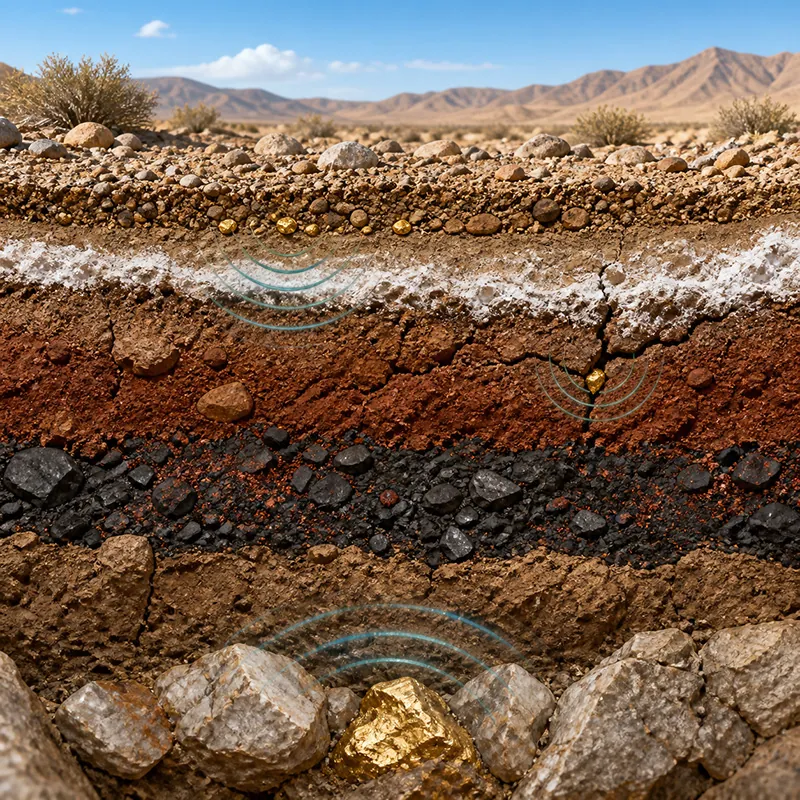
Desert goldfields are rarely uniform. A single search area may include red clay, dry sand, basalt, caliche, quartz float, black sand, salt crust, ironstone, old camp trash, and modern surface metal. The ground can be quiet for ten meters, then suddenly become noisy. A detector that performs well in a mild park or farm field may behave very differently in desert mineralization.
Minelab’s education materials explain that mineralized soils can create erratic signals, distortion, chatter, and reduced depth. That problem is central to desert prospecting. Hot rocks may sound like targets. Salt can create unstable responses. Fine gold can be weak. A detector must ignore enough ground noise to remain usable without silencing the small targets the operator wants.
This is why the best gold detectors for desert prospecting are not always the same devices recommended for coins, beach jewelry, or general relic hunting. Desert gold hunting rewards detectors with strong ground balance, clear audio, practical coil options, and technology suited to mineralized ground.
What Makes a Gold Detector Good in the Desert?
Stable Ground Balance
Ground balance is the detector’s ability to handle the natural signal of the soil. In desert goldfields, ground balance is not optional. Automatic ground balance helps beginners adapt quickly. Manual or advanced ground balance helps experienced users fine-tune difficult sites. Tracking ground balance can be useful when soil changes often, but in some situations users may prefer to lock settings after balancing.
Technology Matched to the Ground
VLF detectors can be excellent for small gold, especially when using higher frequencies. Multi-frequency machines can provide versatility across mixed ground. Pulse induction detectors are often preferred in harsh mineralized goldfields because they can handle difficult ground better than many standard VLF detectors. GPZ/ZVT-style detectors represent another professional category focused on serious goldfield work.
Coil Options for Terrain
Desert ground changes quickly. A small coil can work between rocks, brush, and bedrock cracks. A larger coil can cover open flats and improve response on larger deeper targets. Double-D coils often help in mineralized ground, while some PI coil styles may offer deeper performance under the right conditions. The best coil is not automatically the biggest one; it is the coil that matches the terrain and target size.
Good Audio and Target Clarity
Desert gold signals can be subtle. A detector with clear audio helps the operator separate weak repeatable signals from random ground noise. Visual target ID is helpful, but many gold targets, especially at depth or in mineralized soil, may not provide stable ID. Audio discipline remains essential.
Heat, Dust, Weight, and Battery Life
Desert prospecting is physical work. A detector that feels manageable in a showroom may become tiring after several hours in heat. Weight distribution, shaft stability, screen readability, headphone options, battery runtime, charging method, and dust resistance all matter. The best gold detectors for desert prospecting must be practical tools, not just powerful electronics.
Quick Comparison: Best Gold Detectors for Desert Prospecting
| Device | Best Desert Use | Technology / Strength | Best Buyer Type |
|---|---|---|---|
| Gold Stinger X6 | Mixed desert targets, gold, metals, cavities, and visual target support | Six search systems, depth detection, 2D target scan, GS50 and GS30 coils | Intermediate to professional users who want versatility |
| Nokta Magnetar 9000 | Mineralized desert goldfields, hot rocks, larger and micro gold targets | Pulse induction, dual-receiver coil system, deep and sensitive coils | Serious prospectors in challenging ground |
| Gold Monster 2000 | Small gold, shallow nuggets, dry washes, bedrock cracks | Gold-focused simultaneous multi-frequency from 12 to 76 kHz | Beginners and fine-gold hunters |
| GPZ 8000 | Professional desert goldfields and deeper nugget hunting | GeoZVT-style goldfield platform, Z-Set coils, advanced ground modes | Experienced prospectors seeking flagship performance |
| Garrett Axiom | Hot rocks, mineralized soil, salt and serious gold prospecting | Pulse induction category with advanced ground handling | Advanced users who need PI stability |
| GPX 6000 | Desert nugget fields and difficult ground | Professional PI gold detector category | Prospectors focused on goldfield performance |
| The Legend 2 | Mixed targets, mineralization awareness, coins, relics, occasional gold | Multi-frequency platform, mineralization indicator, deep modes | Users who want one versatile detector |
1. Gold Stinger X6: Best Multi-System Desert Choice
Gold Stinger X6 is one of the most versatile gold detectors for desert prospecting on Orient Detectors because it is not limited to one search style. The device is presented with six systems: All Metals Mode, Discrimination System, Pin Pointer Mode, Depth Detection System, 2D Target Scan, and Cavity & Void Detection. For desert users, this flexibility matters because not every site is only a small-nugget field. Some users search for natural gold, while others investigate old trade routes, buried caches, ancient camps, cavities, and mixed metal targets.
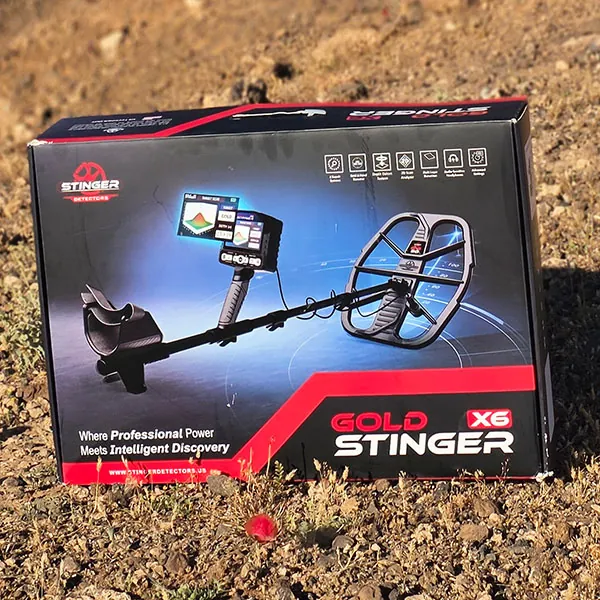
The two-coil setup is particularly useful. The GS50 coil is designed for greater depth and wider coverage, making it more suitable for open flats, broad survey areas, and larger targets. The GS30 coil is more practical for smaller targets, tighter spaces, and controlled searching around rocks or uneven ground. This lets the user adapt the detector to the site rather than forcing one coil to do everything.
Gold Stinger X6 also includes features that matter in harsh ground: advanced ground balance, sensitivity control, Iron Remove, Turbo Power, and smart metal identification. In the desert, where hot rocks and iron trash can waste time, discrimination and iron handling can help the operator decide which signals deserve attention. The Depth Detection System and 2D Target Scan also make sense for buyers who want more information before digging.
Best for: prospectors who want a multi-purpose desert detector for gold, metals, depth estimates, target scanning, and possible cavity/void investigation.
2. Nokta Magnetar 9000: Best PI Option for Harsh Desert Soil
Nokta Magnetar 9000 is a strong example of a detector built for difficult gold prospecting environments. Orient Detectors presents it as a pulse induction detector designed for mineralized soil, hot rocks, wet saltwater sand, micro-nuggets, and larger deep gold targets. That description fits many desert prospecting challenges.
Pulse induction is often preferred in mineralized goldfields because it can remain more stable where many VLF machines become noisy. Desert users working over red soil, black sand, basalt, ironstone, or salt-affected ground often need that stability. A detector that reaches theoretical depth but chatters constantly may be less useful than a detector that gives quieter, more repeatable signals.
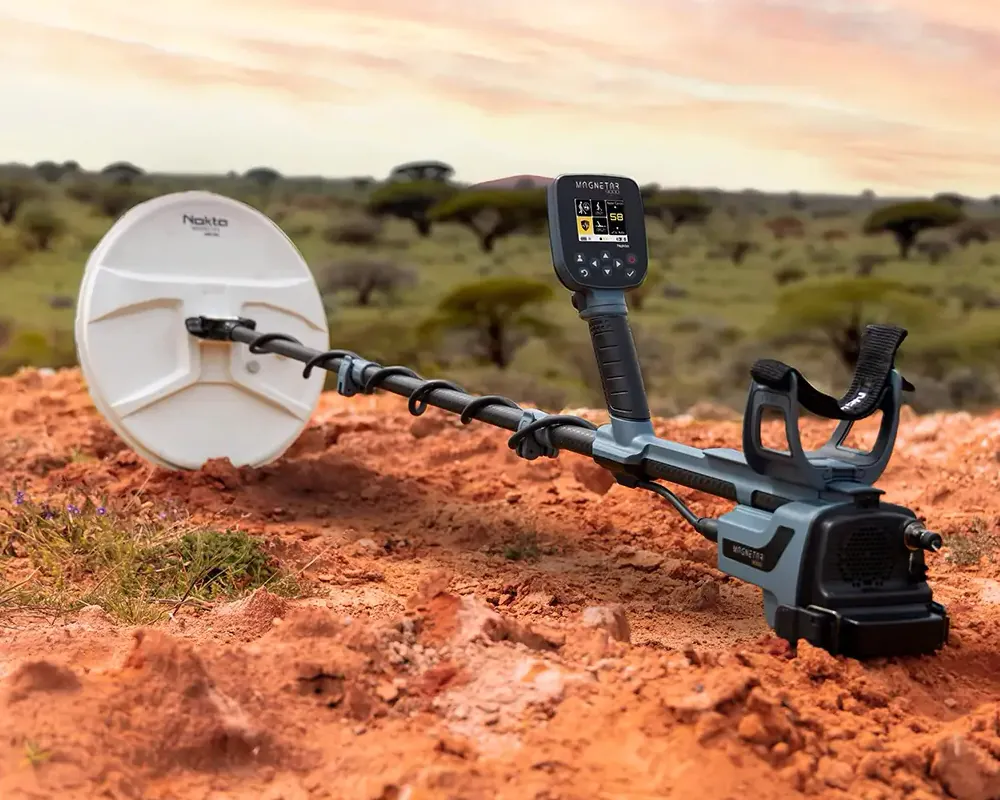
The Magnetar 9000 includes two Dual-Receiver Coil options in Orient Detectors’ product information: MG37 DRC 14.5 x 13 inches for deeper seeking, and MG29 DRC 11 x 8 inches for higher sensitivity. This split is exactly what desert buyers should look for. Open flats and larger targets may benefit from a larger coil. Smaller nuggets and tighter terrain may benefit from a more sensitive coil.
Best for: serious desert prospectors who expect mineralized ground, hot rocks, and a mix of small and larger gold targets.
3. Gold Monster 2000: Best Beginner Detector for Fine Desert Gold
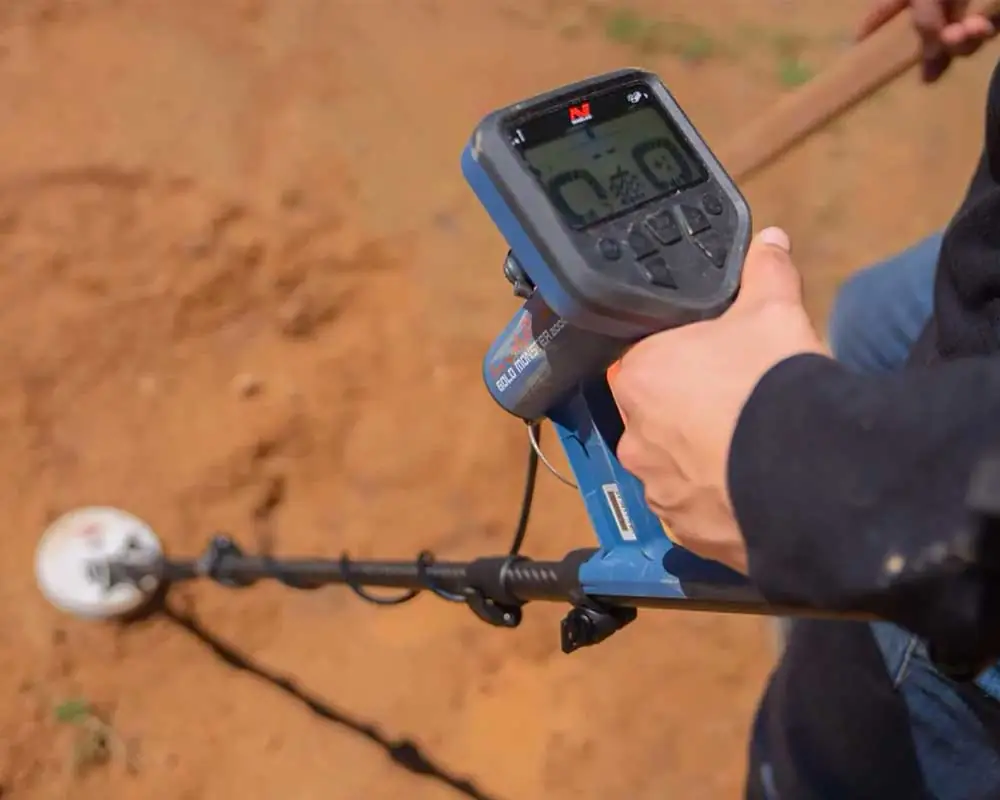
Gold Monster 2000 is not the detector to buy if the only goal is maximum depth on large targets. Its strength is different: simple, stable, fine-gold prospecting. Minelab’s technical specifications list Multi-Au technology, 12 to 76 kHz simultaneous multi-frequency, Normal, Benign, and Difficult search modes, automatic noise cancel, manual and automatic sensitivity, 0-99 Target ID, 25 discrimination segments, a 5-level depth indicator, and a 5-inch round Double-D coil.
Those features make Gold Monster 2000 one of the practical gold detectors for desert prospecting for beginners and small-gold hunters. The 5-inch coil can work around rocks, shallow washes, exposed bedrock, and narrow spaces where large coils are awkward. Automatic ground balance and simplified controls reduce the learning curve, which is valuable for users new to desert prospecting.
Fine gold is easy to miss. Small desert nuggets may sit near bedrock, in cracks, under shallow gravel, or in old dry stream channels. A detector that is sensitive to small gold and easy to keep stable can be more productive for a beginner than a complex professional machine used incorrectly. Gold Monster 2000 is best understood as a focused fine-gold tool, not a deep cache detector.
Best for: beginners, travelers, and users focused on small gold nuggets in dry washes, rocky ground, and shallow desert goldfields.
4. GPZ 8000: Best Flagship Choice for Professional Desert Goldfields
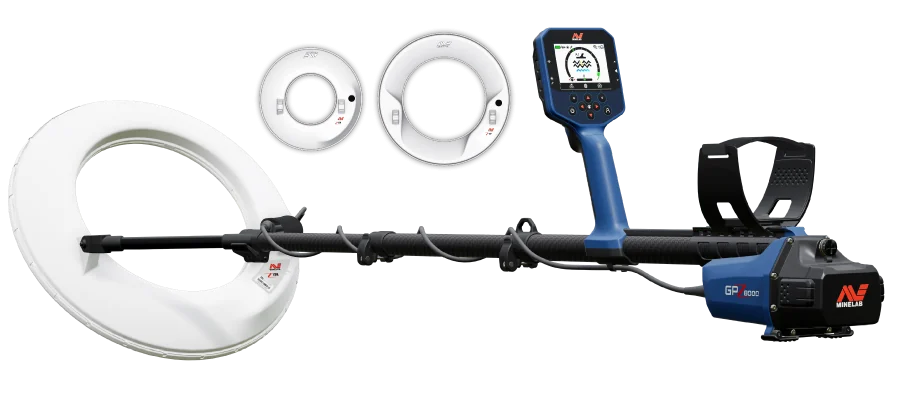
GPZ 8000 belongs in the professional class. Orient Detectors’ GPZ 8000 review presents it as a flagship gold detector using GeoZVT technology, Z-Set concentric toroidal coils, and advanced ground modes such as Difficult Deep, Difficult High Yield, Normal Deep, and Normal Extra Deep. These are the kinds of features experienced prospectors value when searching large goldfields and difficult ground.
In desert prospecting, the challenge is often not only hearing gold, but choosing the right mode and coil for the soil. The review describes coil options such as Z18, Z17, and Z13 for different target and ground conditions. A larger coil concept supports deep open-ground search, while smaller coils can improve control and sensitivity in rough terrain, vegetation, EMI, or tighter ground.
GPZ 8000 is not a beginner shortcut. It rewards users who understand mineralization, EMI, coil control, faint signals, and mode selection. For experienced operators, it can be one of the most capable gold detectors for desert prospecting when the goal is serious goldfield performance rather than casual detecting.
Best for: experienced prospectors searching serious desert goldfields, deeper nuggets, and difficult ground where advanced technology and skill are both required.
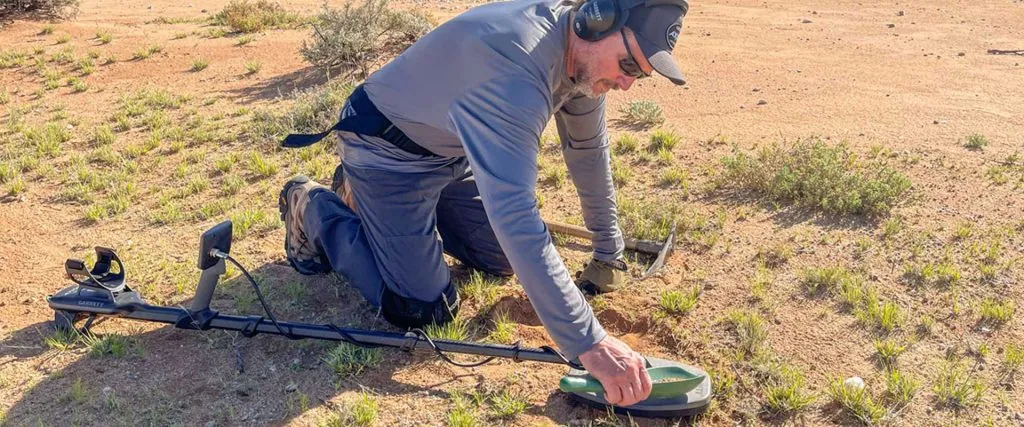
5. Garrett Axiom: Professional PI Stability for Difficult Ground
Garrett Axiom fits the professional pulse induction category. Garrett describes Axiom as built for gold prospecting in extreme mineralized soils, hot rocks, and challenging terrain. That makes it relevant for desert prospectors who need a detector that can handle ground noise while still responding to gold targets.
Axiom is especially relevant when a user wants a premium PI detector but also values ergonomics and modern field design. In deserts, fatigue matters. A heavy or poorly balanced detector can reduce effective search time, and reduced search time reduces finds. A professional detector must be powerful and usable.
Best for: advanced users who want PI performance for mineralized desert goldfields and hot-rock areas.
6. GPX 6000: Proven Professional Desert Nugget Platform
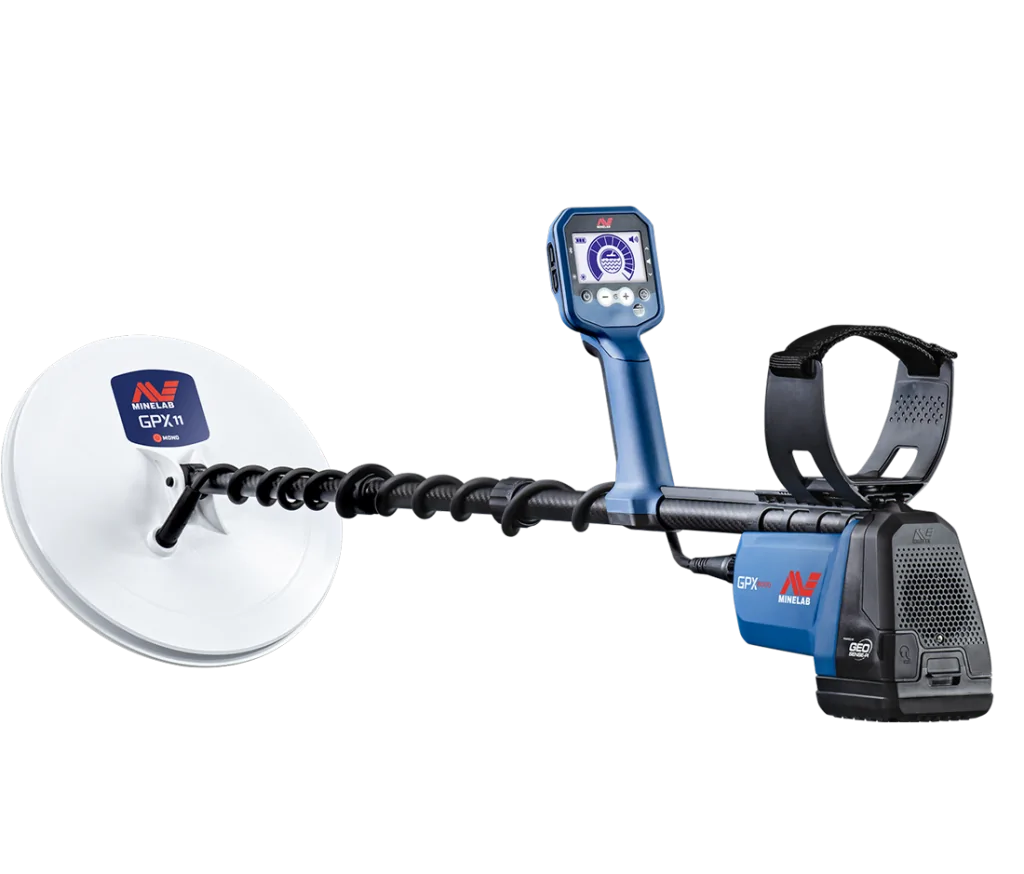
GPX 6000 remains one of the well-known professional choices for desert nugget hunting. It belongs in the category of detectors designed to simplify some of the work of pulse induction prospecting while maintaining strong goldfield capability. Desert users often choose GPX-style machines because they can handle mineralized soil better than many VLF detectors.
For users who walk large desert areas, GPX 6000 can make sense when paired with the right coil and field technique. Like other professional gold detectors, it still requires patience, careful sweep control, and attention to weak signals. It is not a magic depth machine; it is a specialist tool for serious nugget hunting.
Best for: prospectors who want proven professional performance across remote desert goldfields.
7. The Legend 2: Best Versatile Detector for Mixed Desert Targets
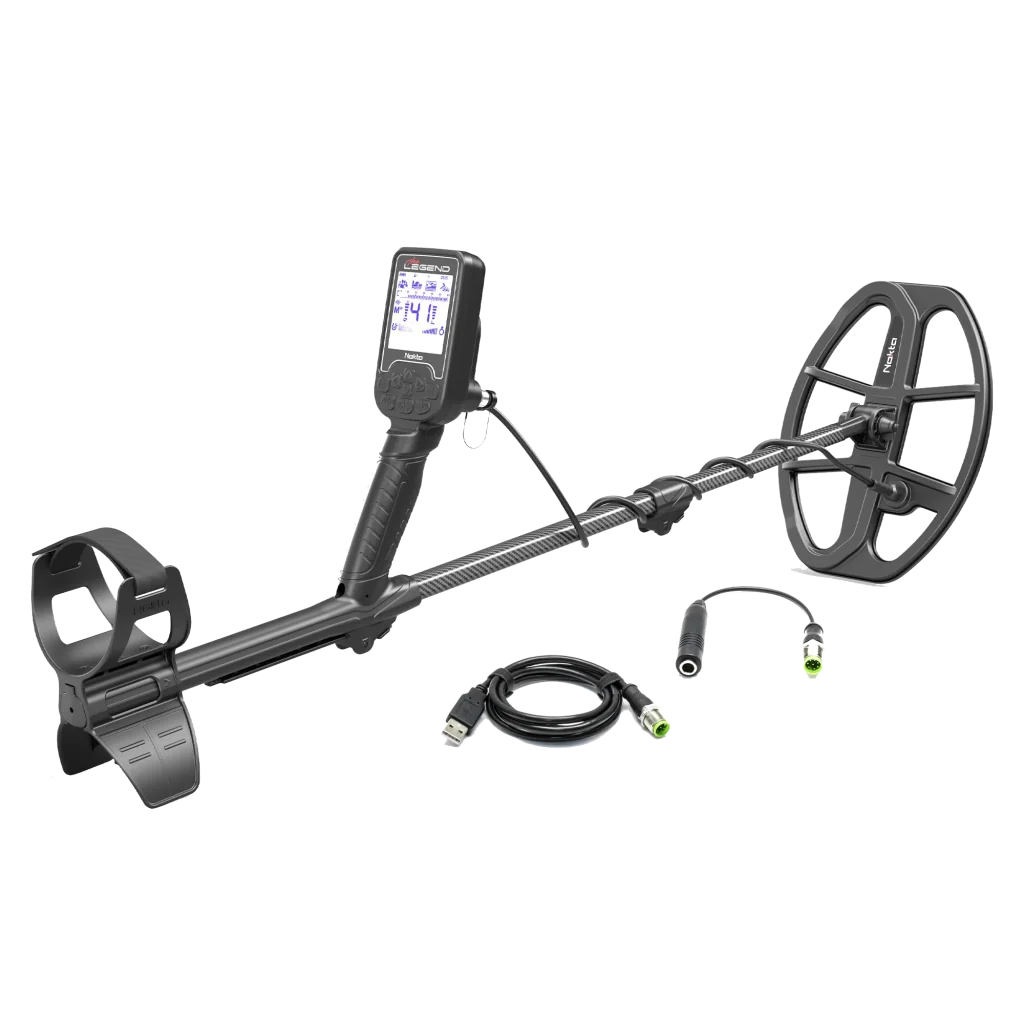
The Legend 2 is not a dedicated high-end desert gold machine in the same way as a PI or GPZ-style detector, but it can still be useful for mixed desert detecting. Nokta highlights features such as simultaneous multi-frequency operation, mineralization indicator, deep target identification, Beast mode, and flexible search modes. These features are relevant when the user searches not only gold nuggets, but also coins, relics, old camp targets, jewelry, and general metals.
The mineralization indicator is especially useful for learning. Desert beginners often underestimate how much the ground itself affects performance. A detector that helps the user understand iron particle and salt mineralization can teach better decision-making. Deep modes may help with larger targets, but users should remember that target ID can become unstable at fringe depth.
Best for: users who want one flexible detector for mixed desert targets, old sites, occasional gold, coins, and relics.
How to Choose by Desert Terrain
Dry Washes and Bedrock Cracks
Dry washes can collect small gold where water once slowed down. Bedrock cracks may hold fine nuggets or small pieces. For this terrain, sensitivity and coil control are more important than huge coil coverage. Gold Monster 2000 and smaller-coil setups on other detectors are practical choices.
Open Desert Flats
Open flats require coverage. If the gold is expected to be larger or deeper, a larger coil or professional PI/GPZ-style detector may be more efficient. Magnetar 9000, GPZ 8000, GPX 6000, Garrett Axiom, and the larger GS50 coil on Gold Stinger X6 fit this type of work better than tiny-coil-only setups.
Hot-Rock Fields
Hot rocks can imitate target signals and exhaust the operator. Pulse induction detectors and advanced ground modes are often helpful here. Magnetar 9000, Axiom, GPX 6000, and GPZ 8000 are more relevant than basic VLF detectors when hot rocks dominate the site.
Salt Flats and Conductive Desert Ground
Salt can make detectors unstable. Users should look for detectors with salt handling, suitable ground modes, or PI technology. If using a VLF or multi-frequency machine, conservative settings may be needed. Maximum sensitivity is rarely the right answer in salt-affected desert ground.
Old Desert Camps and Trade Routes
Old camps often contain iron, bullets, cans, relics, coins, and non-ferrous trash. Discrimination and target ID become more important. Gold Stinger X6, The Legend 2, Manticore, and similar multi-purpose detectors can be more comfortable than pure nugget machines when the target range is broad.
Best Setup Tips for Desert Prospecting
Start Quiet, Then Increase Sensitivity
Do not start with maximum sensitivity. Begin with a stable setup, ground balance carefully, then increase sensitivity only if the detector remains calm. A noisy detector may hide weak gold signals.
Use the Right Coil for the Day
If you are searching tight rocky ground, choose control and sensitivity. If you are covering wide open desert, use a coil that gives better coverage. Changing coils is not inconvenience; it is strategy.
Rescan from Multiple Directions
Small gold and deep targets can respond differently depending on direction. If a signal is faint, check it from several angles. Real targets usually have repeatable character, even if they are subtle.
Pay Attention to Hot Rocks
When hot rocks are common, test a few and learn how they sound. Some hot rocks give sharp responses that fade after moving or checking from another angle. Others may require detector adjustments. Learn the site before digging every noise.
Work Slowly Around Bedrock
Gold may sit in cracks, ledges, and traps. Slow coil movement and overlapping sweeps matter more than speed. A small coil and patience can outperform a deeper coil used too quickly.
Protect Batteries and Electronics
Heat affects batteries and screens. Keep spare power protected from direct sun. Clean dust from connectors. Use headphones that let you hear faint signals clearly without exposing the detector to unnecessary stress.
Beginner, Intermediate, and Professional Recommendations
Best Beginner Path
For beginners, the best gold detectors for desert prospecting are stable and understandable. Gold Monster 2000 is a practical first choice for small natural gold because it reduces setup complexity. The Legend 2 can also suit beginners who want a more general-purpose detector for mixed targets, though it requires more learning.
Best Intermediate Path
Intermediate users often want more control and more search styles. Gold Stinger X6 is attractive because it can handle all metals, discrimination, pinpointer work, depth detection, 2D target scan, and cavity/void detection. It is a good fit for users who search more than one type of desert target.
Best Professional Path
Professional desert prospectors should look closely at PI and flagship goldfield platforms. Magnetar 9000, GPZ 8000, GPX 6000, and Garrett Axiom are more relevant when the ground is difficult and the targets justify a serious detector investment. These devices require skill, but they offer the type of stability and performance experienced users need.
Common Mistakes When Buying a Desert Gold Detector
Buying Only for Maximum Depth
Depth is important, but desert success depends on the type of gold, mineralization, coil choice, and stability. A detector that is deep but noisy may find less gold than a quieter machine.
Ignoring Small Gold
Many desert areas contain small nuggets, not only large deep pieces. A detector with strong fine-gold sensitivity can be more productive than a machine designed only for large targets.
Using the Wrong Coil
A large coil in rocky cracks is frustrating. A tiny coil on a huge open flat is slow. Coil choice should match terrain and target size.
Expecting Stable Target ID at Depth
Deep or tiny gold may not provide clean target ID. Audio repeatability and careful confirmation often matter more than screen numbers.
Underestimating Heat and Fatigue
The desert punishes heavy gear, poor balance, short battery life, and low screen visibility. Practical comfort matters because more search time means more chances to find gold.
FAQ: Gold Detectors for Desert Prospecting
What is the best gold detector for desert prospecting?
The best choice depends on your target and ground. Gold Monster 2000 is practical for beginners and small gold. Gold Stinger X6 is versatile for mixed desert targets. Magnetar 9000, GPZ 8000, GPX 6000, and Garrett Axiom are better for serious mineralized goldfields.
Are pulse induction detectors better in the desert?
Often, yes, especially in mineralized soil, hot-rock fields, and difficult ground. PI detectors can remain more stable where many VLF detectors lose depth or become noisy. However, VLF and multi-frequency detectors can still be excellent for small gold and mixed targets.
Is a high-frequency detector good for desert gold?
High-frequency and gold-focused multi-frequency detectors are useful for small gold. They may not be the deepest option for large targets, but they can be very productive in shallow nugget areas and bedrock cracks.
Which coil is best for desert prospecting?
Small coils are better for tight ground and small gold. Larger coils cover more area and can improve depth on larger targets. Double-D coils can help in mineralized soil. Choose the coil for the terrain, not only for the maximum depth claim.
Can one detector handle gold, coins, relics, and deep targets?
Some multi-purpose devices can cover several tasks, but no detector is perfect for everything. Gold Stinger X6 and The Legend 2 are good examples of versatile choices, while GPZ 8000, GPX 6000, Magnetar 9000, and Axiom are more specialized for goldfield performance.
How can I reduce false signals from hot rocks?
Use proper ground balance, select the right ground mode, reduce sensitivity if needed, learn the sound of local hot rocks, and confirm targets from multiple directions. In very difficult ground, PI or advanced professional gold detectors may be better.
Final Verdict
The best gold detectors for desert prospecting are not defined by one depth number. They are defined by how well they handle real desert conditions: mineralized soil, hot rocks, salt, heat, dust, small gold, larger targets, long search days, and operator fatigue. A good desert detector must be stable enough to hear weak gold and practical enough to use for hours.
For new prospectors focused on fine gold, gold detectors like Gold Monster 2000 is a strong and understandable starting point. For users who want one flexible gold detector for gold, metals, target scan, depth estimation, and void/cavity support, Gold Stinger X6 is a strong multi-system choice. For serious goldfield work in mineralized ground, Nokta Magnetar 9000, GPZ 8000, GPX 6000, and Garrett Axiom deserve professional attention. For mixed desert sites with coins, relics, jewelry, and occasional gold, The Legend 2 can be a practical versatile option.
Choose by terrain and target. Dry washes, bedrock cracks, open flats, hot-rock fields, salt flats, and old desert camps all require different priorities. Match the technology, coil, settings, and search style to the ground under your feet. That is how desert prospecting becomes more productive: not by buying the loudest claim, but by choosing a detector that stays stable, interpretable, and useful in real gold country.
Suggested Links
Suggested External Links
Resources
- Minelab: Detecting in Mineralized Soils
- Minelab: How Deep Can a Metal Detector Detect?
- Minelab: Search Coil Guide
- Minelab: GOLD MONSTER 2000 Specifications
- Garrett: Axiom
- Nokta: The Legend
- Orient Detectors: Gold Stinger X6
- Orient Detectors: Nokta Magnetar 9000
- Orient Detectors: Gold Monster 2000 Review
- Orient Detectors: GPZ 8000 Review