Best Gold Detectors for Mineralized Soil: Complete Buyer Guide
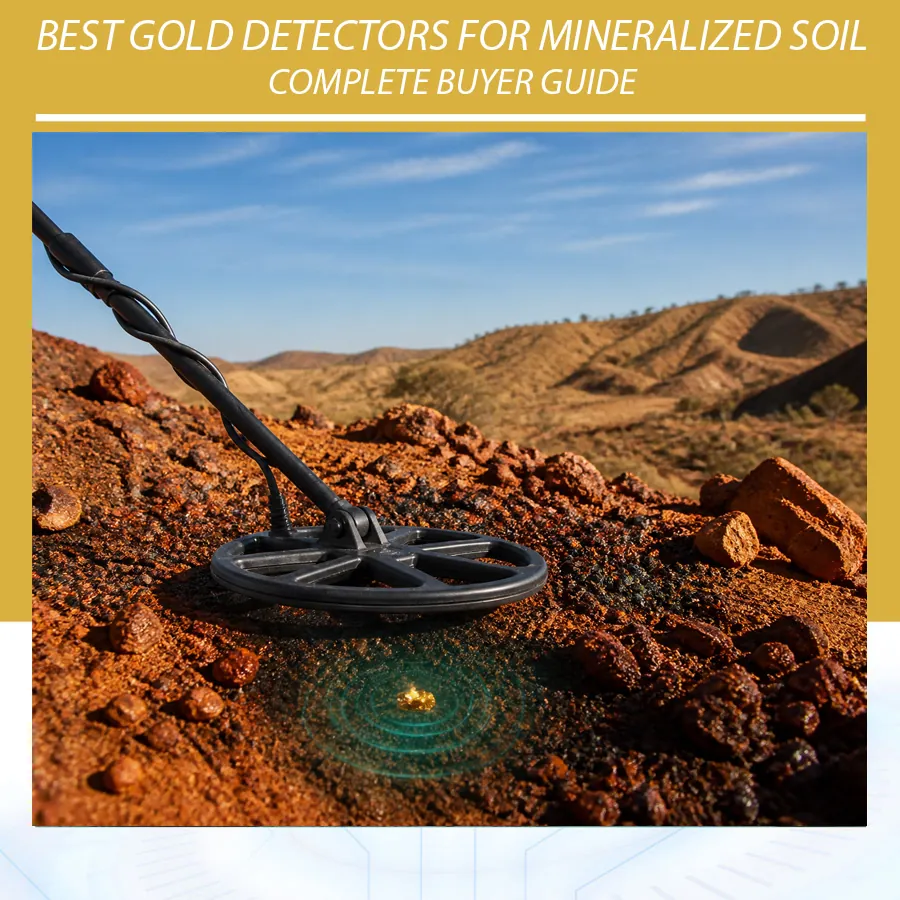
Finding gold is already difficult. Finding gold in mineralized soil is a different level of challenge. Red clay, black sand, ironstone, basalt, salty ground, volcanic soil, hot rocks, and conductive wet ground can all make a detector unstable. The machine may chatter, produce false signals, lose depth, misread targets, or make small nuggets sound like background noise. That is why choosing the right gold detectors for mineralized soil matters more than choosing the most expensive detector or the deepest number on a product page.
This buyer guide explains how mineralized ground affects detection, which technologies handle it best, and which devices available through Orient Detectors make the most sense for different prospectors. The article uses devices from the Orient Detectors website only, including Minelab GPZ 8000, GPX 6000, Garrett Axiom, Nokta Magnetar 9000, Gold Monster 2000, Garrett Gold Master 24K, Gold Stinger X6, Gold Monster 1000, Gold Kruzer, The Legend 2, Garrett Vortex, Minelab Manticore, and related models listed on the site.
The goal is not to tell every buyer to purchase the flagship model. A beginner searching shallow flakes in moderate soil does not need the same device as a professional working highly mineralized goldfields. The best gold detectors for mineralized soil are the devices that stay stable, identify targets clearly, and match your real terrain.
What Is Mineralized Soil and Why Does It Matter?
Mineralized soil contains natural minerals that react to a detector’s electromagnetic field. In goldfields, this often means iron-rich ground, magnetic black sand, red clay, basaltic rocks, or hot rocks. In other areas it may include salt, wet conductive soil, alkali flats, or mixed mineral layers. These ground signals compete with the signal from gold. When the ground response becomes stronger than the target response, the detector struggles to separate real gold from background noise.
Minelab explains that mineralized soil can create excessive ground noise, signal distortion, and reduced detection depth. In practical terms, this means the detector may become noisy while sweeping, target ID may become unstable, and small gold may disappear into the ground response. Ground balance, coil choice, search mode, sensitivity settings, and detector technology become critical in these conditions.
This is why ordinary coin detectors may feel disappointing in goldfields. A coin detector can perform well in parks, beaches, and farms, but gold prospecting in mineralized soil asks for better ground handling. If you are buying specifically for goldfields, you should prioritize gold detectors for mineralized soil rather than general-purpose machines that only mention gold as one of many possible targets.

Quick Picks: Best Gold Detectors for Mineralized Soil
| Best For | Recommended Device | Why It Fits Mineralized Soil | User Level |
|---|---|---|---|
| Flagship professional goldfields | Minelab GPZ 8000 | GeoZVT technology, ground type selection, advanced control for conductive and mineralized soils | Expert / professional |
| Professional PI gold prospecting | GPX 6000 | GeoSense-PI, Normal/Difficult/Severe ground types, DD and mono coil options | Serious / professional |
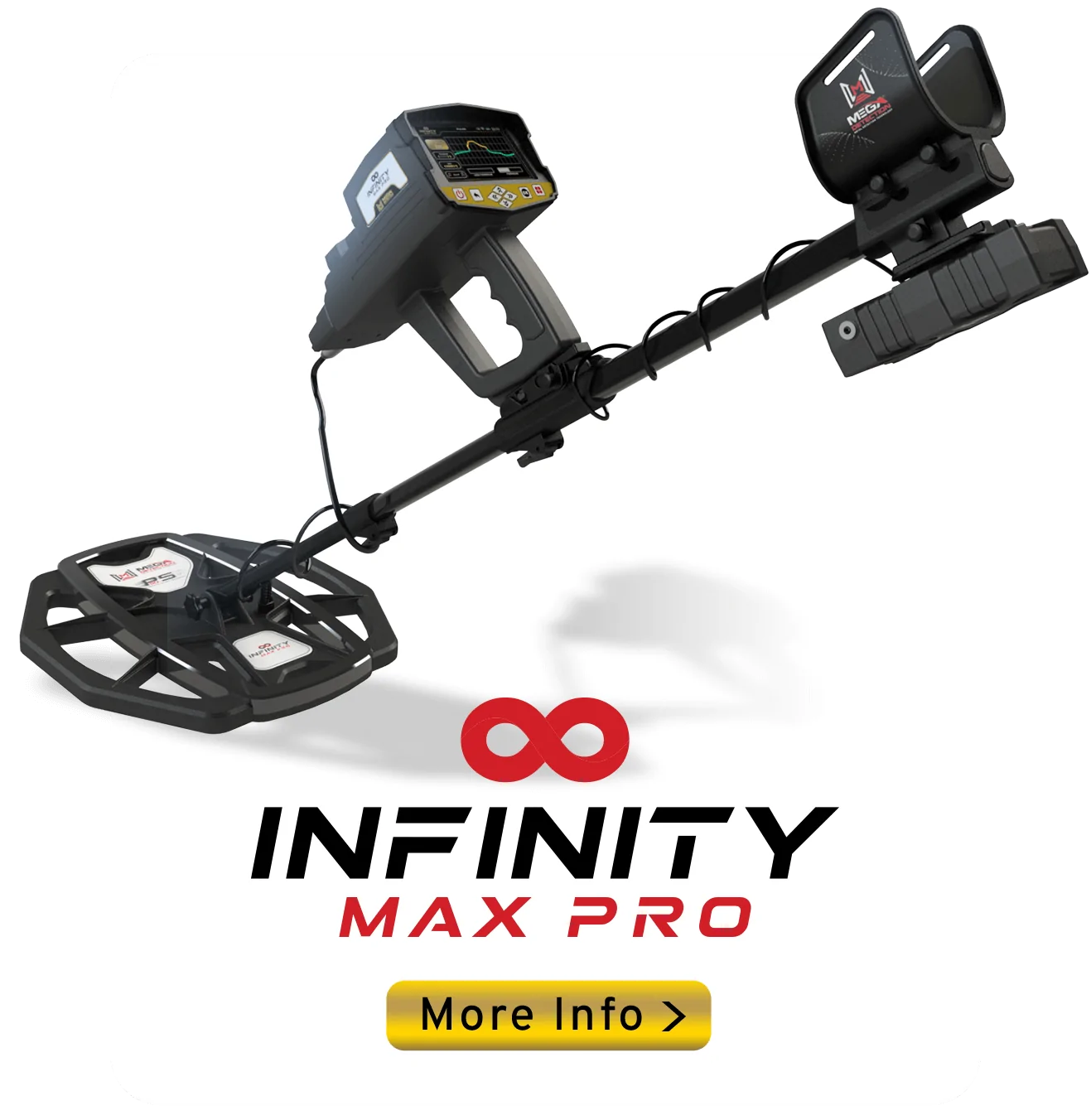
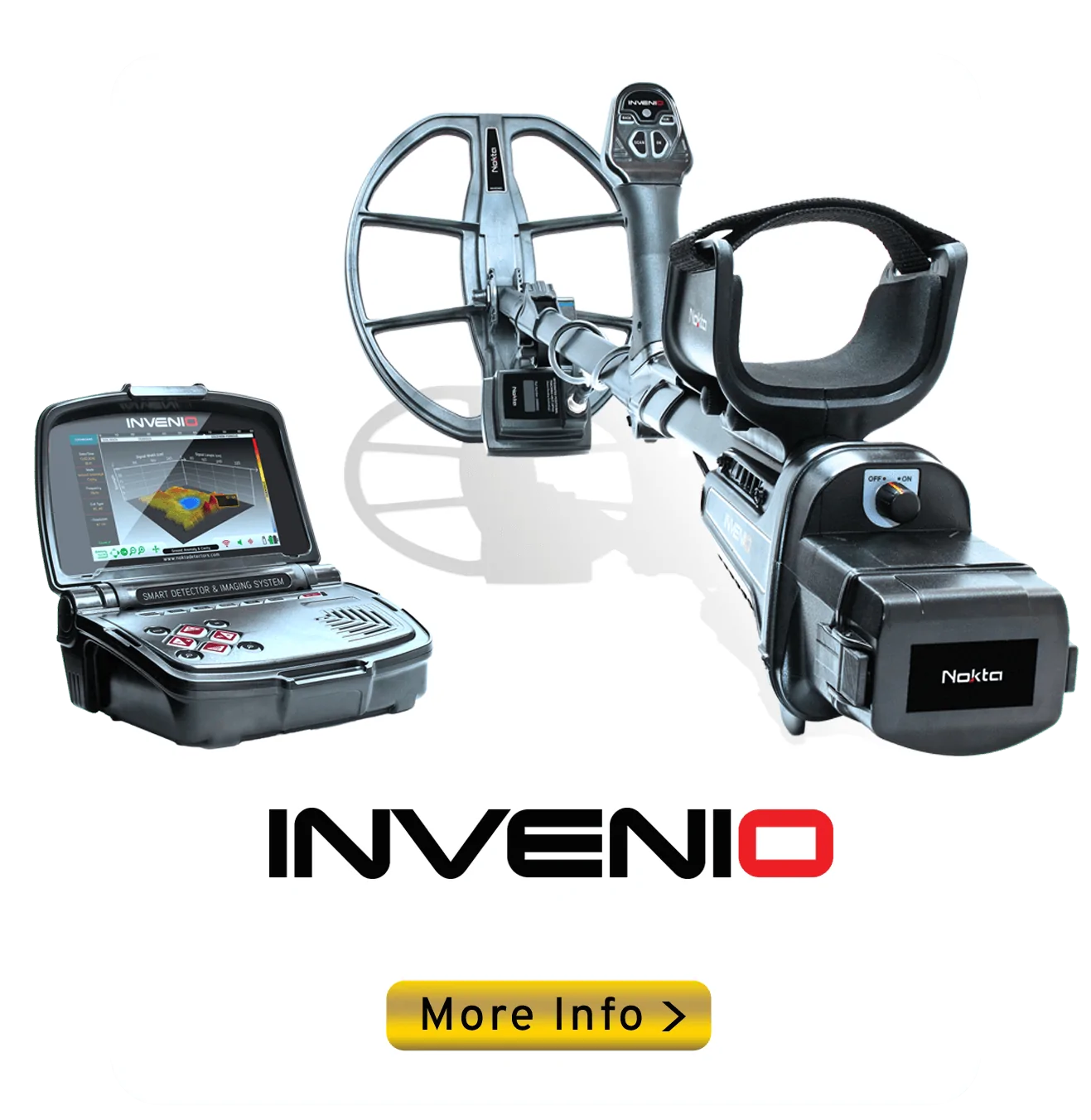
| Harsh goldfield soil and micro nuggets | Nokta Magnetar 9000 | Advanced pulse induction and dual-receiver coil concept for deep gold and small gold in harsh mineralized ground | Intermediate / professional |
| Balanced professional PI option | Garrett Axiom | Ultra Pulse technology, Terra-Scan ground balance, modes for fine, large, normal and salt conditions | Serious / professional |
| Fine gold with easier operation | Gold Monster 2000 | Multi-Au hybrid SMF-PI concept, Echo Wave audio, gold chance indicator for mineralized ground | Beginner / intermediate |
| High-frequency VLF gold hunting | Garrett Gold Master 24K | 48 kHz frequency, XGB ground balance, hot rock and iron reduction tools | Beginner / intermediate |
| Multi-system field flexibility | Gold Stinger X6 | All Metals, discrimination, sensitivity control, turbo power and dual coil options | Beginner / serious hobbyist |
How Mineralization Changes the Buying Decision
In mild ground, many detectors can perform acceptably. In mineralized ground, weak machines reveal their limits quickly. The threshold becomes noisy. Sensitivity must be reduced. Target signals sound broken. Hot rocks produce convincing false targets. Depth drops because the detector spends too much of its processing power reacting to the ground instead of the target. This is why the best gold detectors for mineralized soil usually share several traits: strong ground balance, stable audio, good coil options, search modes for difficult soil, and enough sensitivity to hear small gold after ground noise is controlled.
Ground balance is the first major feature to check. Minelab’s educational resources describe manual, automatic and tracking ground balance as ways to compensate for mineralization. In the field, tracking or automatic ground balance can help new users stay stable, while manual control gives experienced operators more precision.
Technology also matters. VLF detectors can be excellent for small gold because higher frequencies are sensitive to tiny targets. But VLF detectors can struggle when mineralization becomes very strong. Pulse induction detectors usually handle mineralized ground better and reach deeper on larger gold, but they can be more expensive and sometimes less informative for target ID. Advanced technologies such as Minelab’s GeoSense-PI, GeoZVT, Multi-IQ style multi-frequency, and hybrid gold-focused systems exist because goldfields rarely behave like clean test beds.
VLF vs Pulse Induction vs Advanced Gold Technologies
VLF Detectors
VLF detectors transmit continuous electromagnetic signals and measure the target response. They can be extremely sensitive to small shallow gold, especially when operating at higher frequencies. Devices like Garrett Gold Master 24K, Gold Kruzer, Gold Monster 1000, and Gold Monster 2000 belong in the buyer conversation because small gold is often the first realistic target for new prospectors. The limitation is that high sensitivity can also increase noise in mineralized ground. A good VLF gold detector needs accurate ground balance and hot rock control.
Pulse Induction Detectors
Pulse induction detectors send powerful pulses into the ground and analyze the decay response. They are often preferred in mineralized goldfields because they can ignore much of the ground response better than conventional VLF machines. Garrett Axiom, GPX 6000, Nokta Magnetar 9000, Garrett ATX, and Pulse Nova are examples from Orient Detectors that belong in the PI or depth-oriented professional discussion. PI machines are often better for difficult ground, deeper nuggets, and serious goldfields, but they require budget and practice.
Advanced Gold Platforms
Some flagship gold detectors go beyond a simple VLF-versus-PI comparison. Minelab GPZ 8000 uses GeoZVT technology and selectable ground types to work in challenging ground conditions. GPX 6000 uses GeoSense-PI and offers ground type choices such as Normal, Difficult and Severe on the official specifications. Gold Monster 2000 is described on Orient Detectors as using a Multi-Au technology approach that combines VLF sensitivity with a pulse-induction-style soil handling engine. These devices are designed because mineralized soil requires more than raw sensitivity.
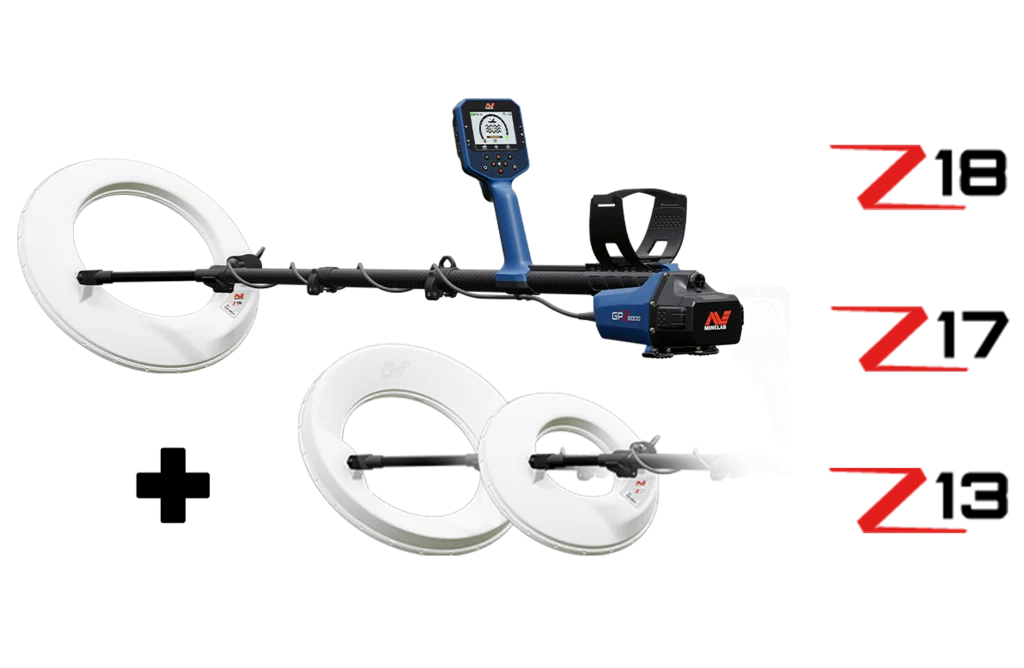
1. Minelab GPZ 8000: Best Premium Choice for Mineralized Goldfields
The Minelab GPZ 8000 is the premium option for experienced prospectors who want maximum goldfield performance. Orient Detectors describes it as Minelab’s latest flagship gold detector, engineered for challenging ground conditions with GeoZVT technology, Echo Sonic Pro audio, Z-Set concentric toroidal coils and selectable ground types. For buyers comparing gold detectors for mineralized soil, GPZ 8000 sits at the top because it is built for depth, control and demanding soil rather than casual park detecting.
The value of GPZ 8000 is not just “more depth.” In mineralized soil, depth is only useful when the detector remains stable enough to hear a target. Ground type selection, coil options and advanced audio help experienced users adapt to hot rocks and iron-rich ground.
GPZ 8000 is best for serious gold prospectors, professional users, and buyers who already understand goldfield technique. It is not the most efficient choice for someone who is still learning basic swing speed, threshold, and ground balance. But for users who want a flagship machine for mineralized, conductive or EMI-heavy soils, it is one of the strongest devices available through Orient Detectors.
2. GPX 6000: Best Professional PI Detector with Easier Operation
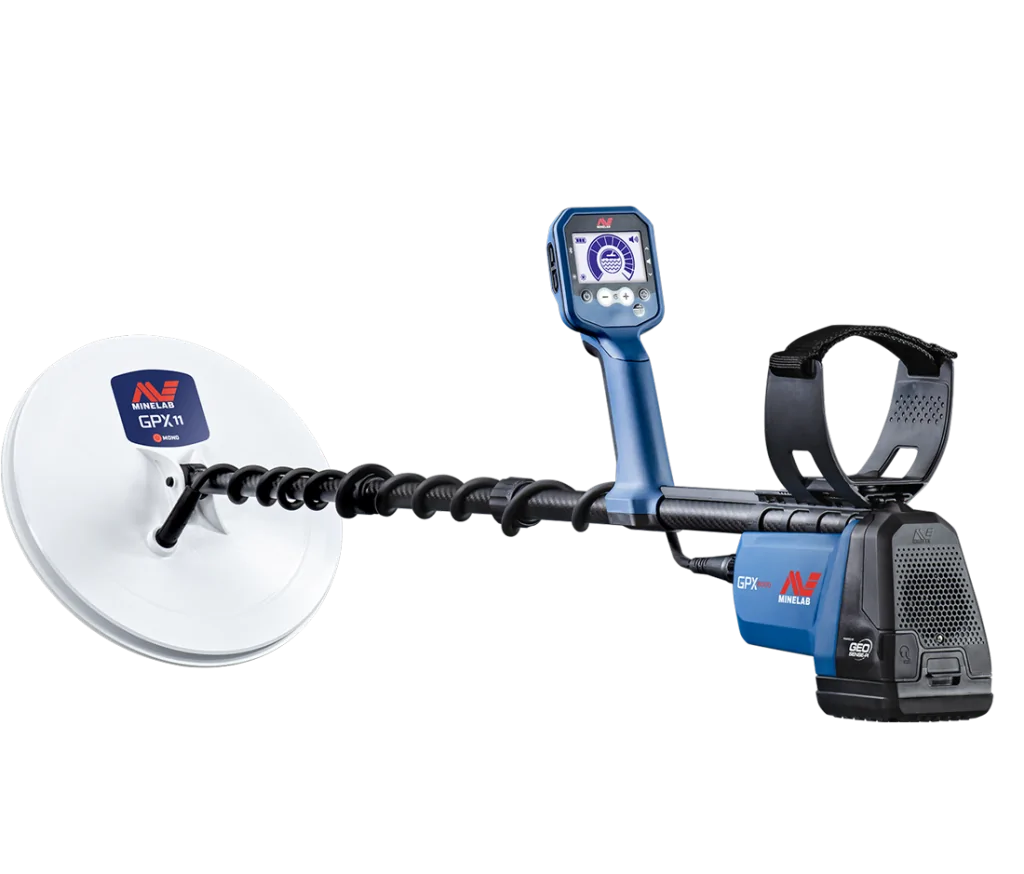
The GPX 6000 is a professional gold detector designed for natural gold prospecting. Orient Detectors highlights GeoSense-PI technology, small nugget sensitivity, user-friendly design, Normal and Difficult modes, plus manual, auto and Quick-Trak ground balance options. Minelab’s official technical specifications also list GPX 6000 as a pulse induction detector with ground type settings including Normal, Difficult and Severe, plus DD modes such as EMI Cancel and Conductive Ground Cancel.
For many prospectors, GPX 6000 is one of the most practical gold detectors for mineralized soil because it brings professional PI performance without becoming as complex as some older high-end systems. The user can work in difficult ground, use automatic functions where appropriate, and still benefit from serious depth and sensitivity. It is especially attractive for users upgrading from VLF detectors after realizing that their local goldfields are too noisy or too mineralized for stable operation.
GPX 6000 is suitable for natural gold nuggets, small gold, and professional field work. In mild soil, Normal type can provide stronger depth. In tougher ground, Difficult or Severe settings can quiet the detector so the operator can hear real targets.
3. Nokta Magnetar 9000: Best New PI Choice for Harsh Soil and Mixed Gold Sizes
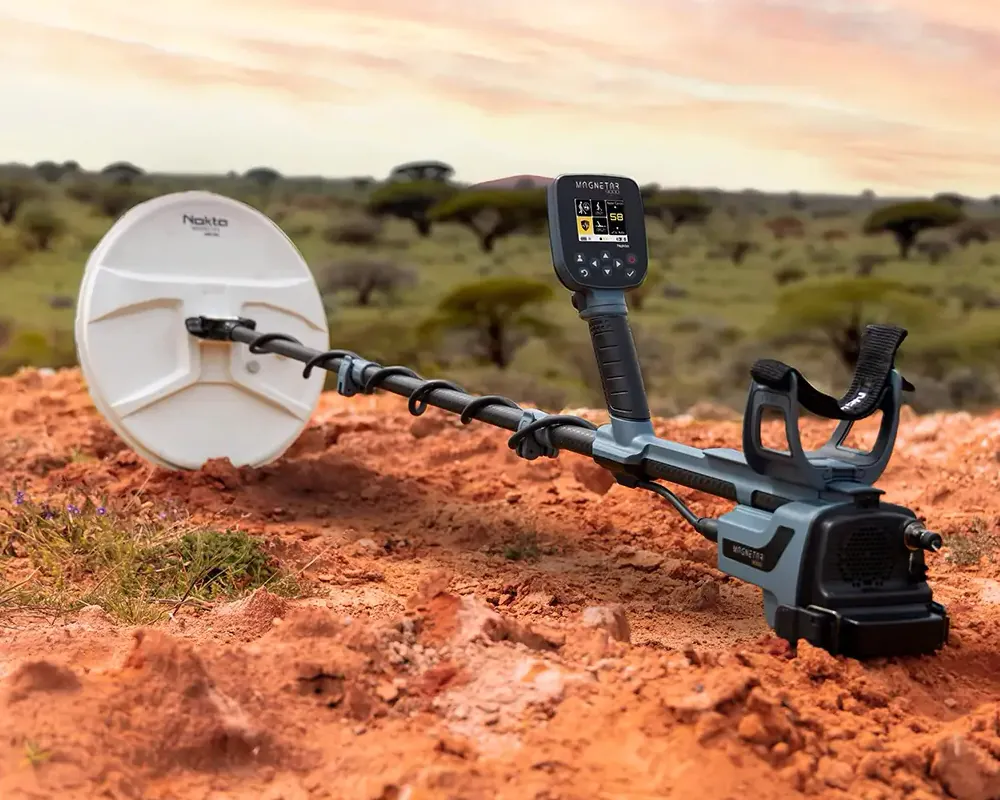
Nokta Magnetar 9000 is one of the newest and most interesting devices on the Orient Detectors catalog. The official Nokta Magnetar website presents it as an advanced pulse induction detector built for deep gold and micro nuggets in harsh mineralized ground, using dual-receiver coil technology and menus for both easy and expert operation. Orient Detectors lists Magnetar 9000 among its available devices and highlights it as a modern professional detector.
Magnetar 9000 is important because many buyers want one gold detector that can respond to both small gold and deeper targets. Its positioning directly addresses that problem by focusing on deep gold, micro nuggets and harsh goldfield soil.
For buyers comparing gold detectors for mineralized soil, Magnetar 9000 is a strong candidate if they want modern PI performance, waterproof durability, and a balance between easy operation and advanced control. It is especially suitable for users who expect changing terrain and want a new-generation machine rather than an older platform.
4. Garrett Axiom: Best Balanced PI Detector for Difficult Ground
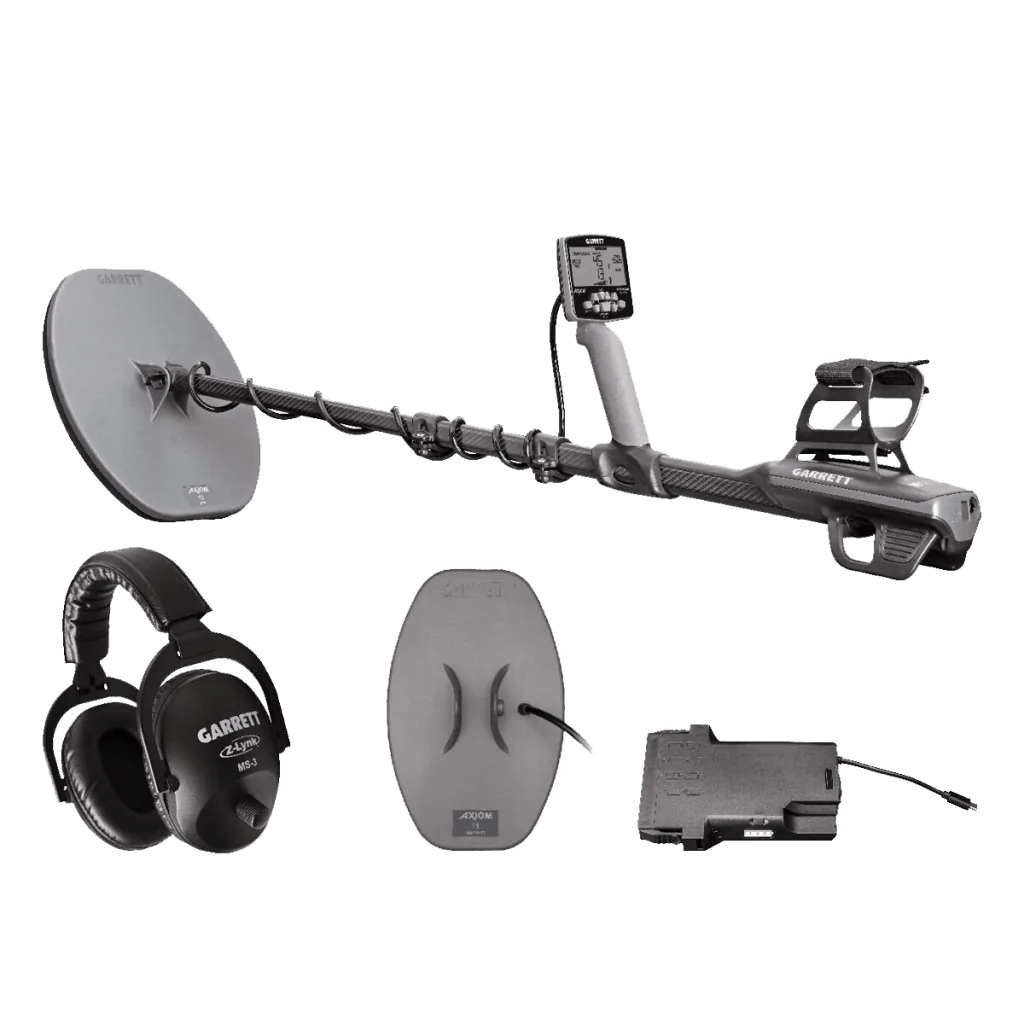
The Garrett Axiom is described by Orient Detectors as a natural gold detector using Ultra Pulse technology. The page highlights sensitivity for small and large gold nuggets, ground balance features, different detection modes, and suitability for saline and highly mineralized soils. Its Terra-Scan system is described as dual-channel ground balancing covering conditions from magnetic mineralized soils to saltwater soil.
Garrett Axiom is a practical professional option for users who want a PI detector with clear mode choices. Fine mode emphasizes small low-conductivity targets but may react more to minerals and salt. Large mode can reduce susceptibility to hot rocks and highly mineralized ground while maintaining strong detection of larger targets. Normal mode balances target sizes, and Salt mode helps in wet salt or high-salt environments. This mode structure makes Axiom easy to explain and useful in real goldfields.
Among gold detectors for mineralized soil, Garrett Axiom fits users who want a serious machine for natural gold without necessarily choosing the most expensive flagship. It is suitable for goldfields, dry mineralized regions, salt-affected ground, and prospectors who need stable operation with enough control to adapt.
5. Gold Monster 2000: Best Easier Gold Detector for Fine Gold in Mineralized Ground
The Gold Monster 2000 is a strong choice for buyers who want gold-specific performance without the complexity and price of the highest professional PI machines. Orient Detectors describes it as tracking ultra-fine gold with sharper precision in mineralized ground using Minelab’s Multi-Au technology, combining VLF sensitivity with a pulse-induction-style soil handling engine. It also includes Echo Wave audio and a Gold Chance Indicator to help distinguish gold signals from hot rocks, iron trash and interference.
This combination makes Gold Monster 2000 especially appealing for beginners and intermediate prospectors working mineralized soil. It is not meant to replace GPZ 8000 or GPX 6000 in professional depth hunting, but it can be a practical tool for smaller gold and learning goldfield behavior.
If your main targets are small nuggets, flakes, and fine gold rather than large deep nuggets, Gold Monster 2000 deserves a high place on your shortlist. It is one of the more accessible gold detectors for mineralized soil because it focuses on gold, not general treasure hunting, and it is designed to reduce confusion from hot rocks and ground noise.
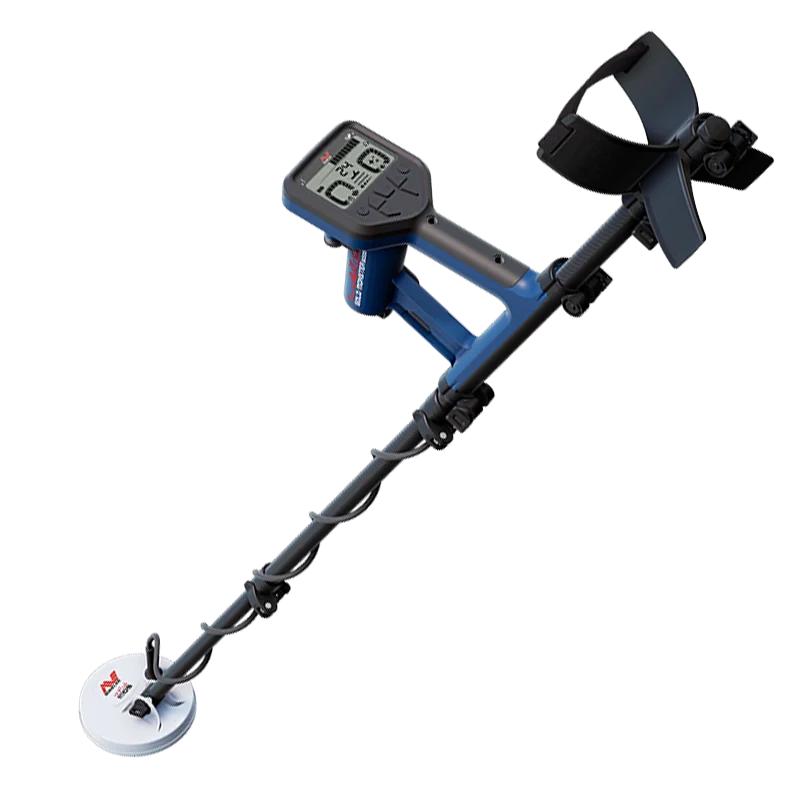
6. Garrett Gold Master 24K: Best High-Frequency VLF Option
Garrett Gold Master 24K is a high-frequency VLF detector designed for natural gold prospecting. Orient Detectors describes it as operating at 48 kHz, giving high sensitivity to small gold nuggets at different depths. It also includes XGB auto tracking ground balance, threshold adjustment, iron and hot rock elimination, frequency shift, and sensitivity control.
For mineralized soil, the most important features here are XGB ground balance and hot rock handling. High frequency is excellent for small gold, but it can become noisy if ground balance is poor. A detector that tracks changing ground and helps reduce hot rock response gives the operator a better chance of hearing real gold. This is why Garrett Gold Master 24K remains relevant even as PI machines dominate many difficult goldfields.
Garrett Gold Master 24K is best for users who want an affordable, gold-focused detector with strong small-target sensitivity. It is not the ideal choice for every severe soil condition, and it will not match the depth of top PI or ZVT-style systems on larger deep nuggets. But as a high-frequency VLF machine, it is a smart option for small gold prospecting and careful work in moderately mineralized terrain.
7. Gold Stinger X6: Best Multi-System Detector for Flexible Field Use
Gold Stinger X6 is a different type of recommendation. It is not a pure goldfield PI detector, but it is a practical multi-system device for users who want gold, metals, depth, discrimination, and cavity/void-related tools in one platform. Orient Detectors describes it as a new-generation professional metal detector with six search systems, sensitivity control, turbo power, iron remove, and dual coils: GS50 for depth and wide coverage, GS30 for precision and smaller targets.
In mineralized ground, flexibility matters. A user may need to reduce sensitivity, switch modes, use a different coil, or separate iron from valuable responses. Gold Stinger X6 gives serious hobbyists a broader toolset than a basic detector.
As part of a guide to gold detectors for mineralized soil, Gold Stinger X6 is best described as a flexible field detector rather than the top choice for extreme goldfields. It can be a strong option for buyers who want one device for several tasks and do not want a specialized gold-only PI detector.

8. Gold Monster 1000 and Gold Kruzer: Practical Entry-Level Goldfield Options
Gold Monster 1000 and Gold Kruzer are useful for buyers who want a lower-cost entry into gold prospecting. The Gold Ore and Nuggets Detectors category on Orient Detectors lists both devices, along with higher-end options like Garrett Axiom and GPX 6000. These entry-level choices can help beginners learn goldfield signals before investing in a professional PI detector.
The buyer should keep expectations realistic. Entry-level VLF gold detectors can perform well on small shallow targets in moderate conditions, but highly mineralized ground may reduce depth and stability. The operator may need to use smaller coils, ground balance often, reduce sensitivity, and dig repeatable signals carefully. They are good learning tools, but not magic shortcuts for severe mineralization.
If budget is the main limitation, starting with Gold Monster 1000 or Gold Kruzer is more sensible than buying a general coin detector that is not tuned for gold. But if your local soil is extremely mineralized, consider saving for Gold Monster 2000, Garrett Axiom, Magnetar 9000, or GPX 6000.
9. The Legend 2, Garrett Vortex and Manticore: Multi-Purpose Detectors for Mixed Terrain
Not every buyer searches only for gold. Some prospectors want one detector for coins, relics, jewelry, beaches, and occasional goldfield trips. In this category, The Legend 2, Garrett Vortex, and Minelab Manticore may be relevant. They are not the first choice for severe goldfield mineralization, but multi-frequency technology and modern ground handling can make them useful in mixed environments.
Minelab’s overview of detector technologies explains that multi-frequency systems can transmit multiple frequencies and improve reliability in tough conditions such as mineralized ground or wet sand. That is valuable for mixed detecting, but if natural gold is the main target, a gold-focused detector is usually better.
The key is honesty about your main use. If 80 percent of your time will be spent in goldfields, choose one of the dedicated gold detectors for mineralized soil. If you divide time between farms, parks, old sites, beaches, and occasional gold areas, a multi-purpose detector may provide better overall value.
How to Choose the Right Detector for Your Soil
For Mild to Moderate Mineralization
For mild to moderate mineralized ground, a gold-focused VLF detector can be enough. Gold Monster 2000, Garrett Gold Master 24K, Gold Monster 1000, and Gold Kruzer are logical choices. Use proper ground balance, start with stable sensitivity, and choose coil size based on target size and ground noise. If the detector becomes unstable, lower sensitivity before assuming the site has no gold.
For Hot Rocks and Iron-Rich Ground
Hot rocks can sound like targets because their mineral content reacts strongly. In these conditions, look for hot rock elimination, ground tracking, difficult ground modes, or PI technology. Garrett Gold Master 24K includes hot rock and iron reduction tools. Gold Monster 2000 is designed to help distinguish weak gold from hot rocks and interference. Garrett Axiom and GPX 6000 provide stronger professional options when hot rocks are severe.
For Severe Mineralization
When the ground is extremely noisy, PI or advanced flagship technologies usually make more sense. GPX 6000, Garrett Axiom, Nokta Magnetar 9000, Garrett ATX, and GPZ 8000 are the stronger candidates. Severe soil may force you to use quieter settings that sacrifice some theoretical depth, but a quieter detector often finds more gold because the operator can identify repeatable targets.
For Salt or Conductive Soil
Salt creates a different type of mineralization. Wet salt ground can make many detectors unstable. Garrett Axiom includes Salt mode, while GPX 6000 official specs include Conductive Ground Cancel in DD modes. Multi-frequency detectors can also help in wet sand or mixed conductive conditions. If your gold search includes salt lakes, beaches or alkali flats, do not ignore salt handling.
Buying Mistakes to Avoid
Buying by Maximum Depth Only
Depth is relative to target size, ground mineralization, coil size, and operator skill. Minelab’s FAQ notes that detection depth depends on target size, orientation, metal content, ground minerals, conductivity, noise and other factors. A device with a strong maximum depth claim may still perform poorly if it cannot handle your soil. For mineralized ground, stability can matter more than headline depth.
Choosing a Coin Detector for Serious Goldfields
General metal detectors can find gold, but serious goldfields require gold-focused performance. If your main target is natural gold, choose a detector designed for gold. This is especially important in mineralized soil where small gold signals are easily masked.
Running Sensitivity Too High
Many new users think maximum sensitivity equals maximum depth. In mineralized ground, excessive sensitivity can make the detector noisy and reduce real-world performance. A stable detector at medium sensitivity often outperforms an unstable detector at maximum sensitivity.
Ignoring Coil Choice
Coil choice changes ground handling. Smaller coils see less ground at once and can help in noisy soil or trashy areas. DD coils often handle mineralized ground better than concentric coils. Larger coils may reach deeper on bigger targets but can become harder to control in bad ground. Match the coil to the soil, not only to the target.
Field Tips for Mineralized Soil
First, ground balance on clean ground away from metal. If the detector supports tracking, use it when ground changes rapidly. If the detector becomes unstable, reduce sensitivity to the highest stable level. Second, listen for repeatable signals rather than chasing every chirp. Mineralized ground produces random noise; gold tends to repeat when the coil crosses from consistent angles.
Fourth, swing slowly. Fast sweeping can make faint gold signals disappear in mineralized soil. Fifth, keep coil height consistent. Lifting and dropping the coil changes the ground signal and can create false responses. Sixth, revisit productive areas with different coils or settings. A patch that seemed empty with one setup may respond better with another coil or ground mode.
FAQ: Gold Detectors for Mineralized Soil
What is the best gold detector for mineralized soil?
For professional users, GPZ 8000 and GPX 6000 are among the strongest choices from Orient Detectors. Garrett Axiom and Nokta Magnetar 9000 are also excellent PI options. For easier operation and fine gold, Gold Monster 2000 is a strong mid-level choice.
Is pulse induction better than VLF in mineralized soil?
Usually, yes, especially in severe mineralization. PI detectors tend to handle ground noise better and can reach deeper on larger nuggets. VLF detectors can still be excellent for small shallow gold in mild to moderate ground.
Can Gold Monster 2000 work in mineralized ground?
Yes. Orient Detectors describes Gold Monster 2000 as designed for ultra-fine gold in mineralized ground, with Multi-Au technology, Echo Wave audio, and a Gold Chance Indicator to help separate gold from hot rocks and trash.
Which detector is best for hot rocks?
Garrett Axiom, GPX 6000, Nokta Magnetar 9000, and GPZ 8000 are strong choices for difficult hot rock conditions. Garrett Gold Master 24K and Gold Monster 2000 also include features that help reduce confusion from hot rocks for VLF-style gold hunting.
Should beginners buy a GPZ 8000?
Only if they have the budget, training support, and serious field plans. Many beginners will learn faster with Gold Monster 2000, Garrett Gold Master 24K, Gold Monster 1000, or Gold Kruzer before moving to a flagship detector.
Final Verdict
The best gold detectors for mineralized soil are the machines that stay stable when the ground tries to imitate a target. For experts and professional prospectors, Minelab GPZ 8000 is the premium flagship choice. GPX 6000 is a superb professional PI option with easier operation and strong difficult-ground handling. Garrett Axiom is an excellent balanced PI detector with practical modes for fine gold, large targets and salt conditions. Nokta Magnetar 9000 is a compelling new PI device built for harsh mineralized ground, deep gold and micro nuggets.
For buyers who want easier operation and fine gold performance, Gold Monster 2000 is one of the most attractive choices. Garrett Gold Master 24K remains a strong high-frequency VLF option for small gold and controlled ground tracking. Gold Stinger X6 is a practical multi-system detector for users who want flexibility across gold, metals and underground targets, while Gold Monster 1000 and Gold Kruzer remain useful entry points for beginners.
Do not buy by depth claims alone. Mineralized soil changes everything. Choose by soil severity, target size, experience level, coil needs, and the type of gold you expect to find. A stable detector that you understand will always beat a powerful detector used incorrectly. For serious goldfield work, select from proven gold detectors for mineralized soil, confirm current availability on Orient Detectors, and invest time in learning ground balance, coil control and signal interpretation.