How to Choose a Metal Detector for Your Soil Type
Introduction: Soil Is Not Just Background
Most beginners choose a metal detector by looking at depth, price, brand, or the promise of finding gold. Those things matter, but they are not enough. The ground under your coil can change everything. The same detector that runs smoothly in mild farm soil may become noisy in red clay, unstable on wet salt sand, or difficult to control in hot rocks. That is why understanding your metal detector soil type is one of the smartest steps you can take before buying a detector.
Soil affects depth, target identification, stability, sensitivity, and how often you dig false signals. A coin in mild soil may produce a clear target ID. The same coin in mineralized clay may sound weaker and show unstable numbers. A small gold nugget in quiet ground may be easy to hear, while in black sand it can disappear into ground noise. Your metal detector soil type decides whether you need simple automatic settings, manual ground balance, multi-frequency technology, pulse induction, a smaller coil, or a specialized gold detector.
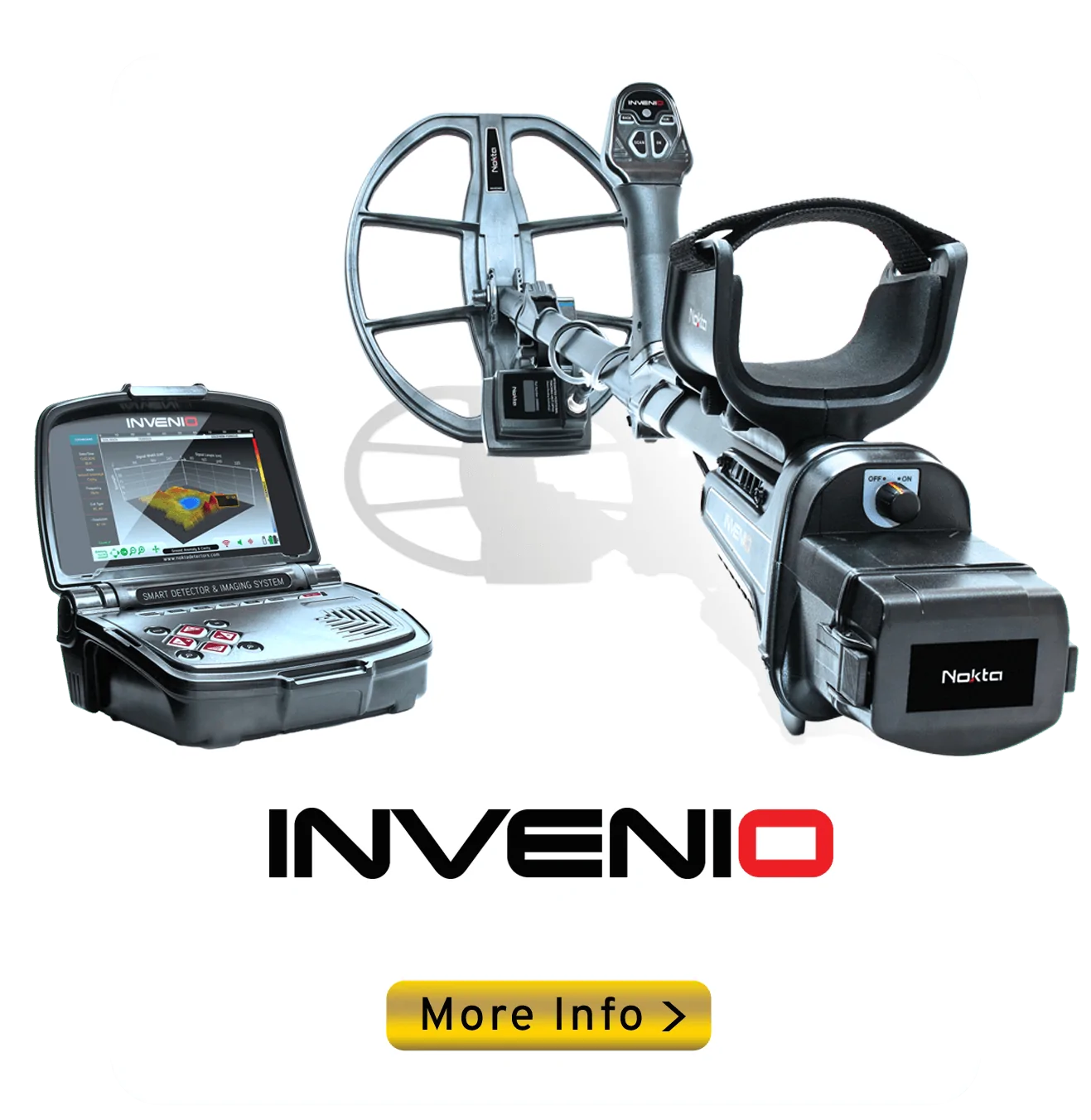
This guide explains how to choose a metal detector according to your soil type. It covers mild inland soil, red clay, black sand, salty wet beach sand, desert ground, volcanic soil, hot rocks, and heavily mineralized goldfields. It also connects each soil condition to practical detector examples available through Orient Detectors, including Gold Stinger X6, Gold Monster 2000, Garrett Axiom, GPX 6000, GPZ 8000, The Legend 2, Minelab Manticore, Gold Vision, Phoenix, Infinity Max Pro, and OKM eXp 7000.
Quick Answer: Match the Detector to the Ground First
If your soil is mild and your targets are coins, jewelry, and relics, a good VLF or simultaneous multi-frequency detector can be enough. If your soil is wet salt beach sand, choose a detector with a proper beach mode or multi-frequency operation designed to handle conductive salt. If your ground is red clay, black sand, volcanic soil, or mineralized desert, look for excellent ground balance, stable audio, suitable coils, and possibly pulse induction technology. If your goal is deep treasure, cavities, or buried structures, a 3D ground scanner or multi-system detector may be more suitable than a simple coin detector.
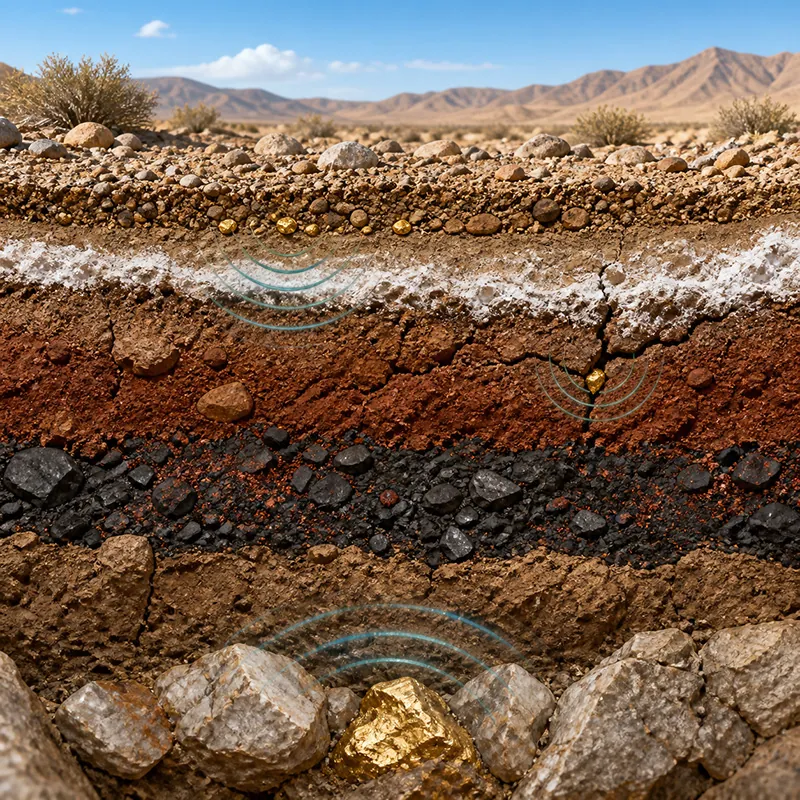
The rule is simple: your metal detector soil type should guide the technology. Do not buy a detector only because it is advertised as deep. Buy it because it can stay stable in your ground, separate real targets from soil noise, and give you usable information in the places where you actually search.
Why Soil Type Changes Metal Detector Performance
A metal detector transmits an electromagnetic field into the ground and listens for changes caused by metal objects. The problem is that soil is not neutral. Minerals, salts, moisture, iron oxides, basalt, magnetite, and other natural materials can also respond to the detector’s field. When the ground itself creates a strong response, the detector must separate that response from the signal of the target.
According to manufacturer guidance from Minelab and Garrett, mineralized ground can cause chatter, false signals, reduced depth, unstable target ID, and weaker target response. Garrett explains that red clay, black sand, and salt-rich environments are common examples of mineralized soil. Minelab notes that minerals can distort signals and make real targets harder to identify. This is why the best detector for one metal detector soil type may not be the best detector for another.
Soil also affects coil choice. A large coil reads more ground at once, which can be useful in mild soil but troublesome in noisy ground. A smaller coil reads less ground and may run smoother in mineralized areas. Ground balance, frequency, recovery speed, threshold, discrimination, and sensitivity all become more important when soil is difficult.
Main Soil Types and What They Mean
| Soil Type | Common Challenge | Best Detector Direction | Useful Devices From Orient Detectors |
|---|---|---|---|
| Mild inland soil | Usually stable, moderate trash | VLF or multi-frequency detector | The Legend 2, Minelab Manticore, Garrett Vortex, Gold Stinger X6 |
| Red clay / iron-rich soil | False signals, unstable ID, reduced depth | Strong ground balance, DD coil, PI for severe ground | Garrett Axiom, GPX 6000, GPZ 8000, Gold Monster 2000 |
| Black sand | Magnetite and heavy minerals can mask gold | Gold-focused detector or PI detector | Gold Monster 2000, Garrett Axiom, GPX 6000 |
| Wet salt beach sand | Salt behaves like a conductive target | Beach mode, simultaneous multi-frequency, salt balance | The Legend 2, Minelab Manticore, Equinox-class detectors |
| Dry desert soil | Hot rocks, mineral pockets, wide search areas | Gold detector, stable ground balance, coil options | Gold Stinger X6, Gold Monster 2000, Garrett Axiom, GPX 6000 |
| Volcanic or basaltic ground | Strong mineral response and hot rocks | PI detector or advanced gold detector | Garrett Axiom, GPX 6000, GPZ 8000 |
| Mixed treasure sites | Different targets, cavities, old iron, variable soil | Multi-system detector or 3D scanner | Gold Stinger X6, Gold Vision, Phoenix, Infinity Max Pro, OKM eXp 7000 |
Mild Inland Soil: The Easiest Starting Point
Mild soil is the easiest metal detector soil type for beginners. It usually has low to moderate mineral content, stable audio, and more predictable target ID. Parks, fields, dry farmland, old house sites, and some inland areas can fall into this category. In this ground, the detector does not have to fight the soil as much, so coins, jewelry, and relics can produce cleaner responses.
For mild soil, a beginner does not always need a specialized gold detector or pulse induction machine. A good VLF detector or simultaneous multi-frequency detector can work well. Multi-frequency detectors are especially useful when the user wants one machine for coins, jewelry, relics, and occasional gold-related targets. In this soil, discrimination and target ID tend to be more useful than in highly mineralized areas.
Good choices for this metal detector soil type include The Legend 2, Minelab Manticore, Garrett Vortex-style detectors, and flexible systems such as Gold Stinger X6 when the user wants more than standard coin hunting. If your ground is mild and your main targets are coins and jewelry, prioritize target separation, waterproofing if needed, comfort, coil options, and clear audio.
Red Clay and Iron-Rich Soil
Red clay is one of the most common difficult soil types for detectorists. Its color often comes from iron oxides, and those iron-rich minerals can create a strong ground response. In this metal detector soil type, a beginner may hear constant chatter, unstable tones, or target IDs that jump around. Depth can also suffer because the detector spends energy responding to the ground itself.
If you hunt in red clay, ground balance becomes essential. Automatic ground balance may be enough in moderate soil, but manual or tracking ground balance can be useful when conditions change quickly. DD coils often perform better than concentric coils in mineralized ground because their detection field can help reduce ground noise. Sensitivity should be set to the highest stable level, not simply the highest number.
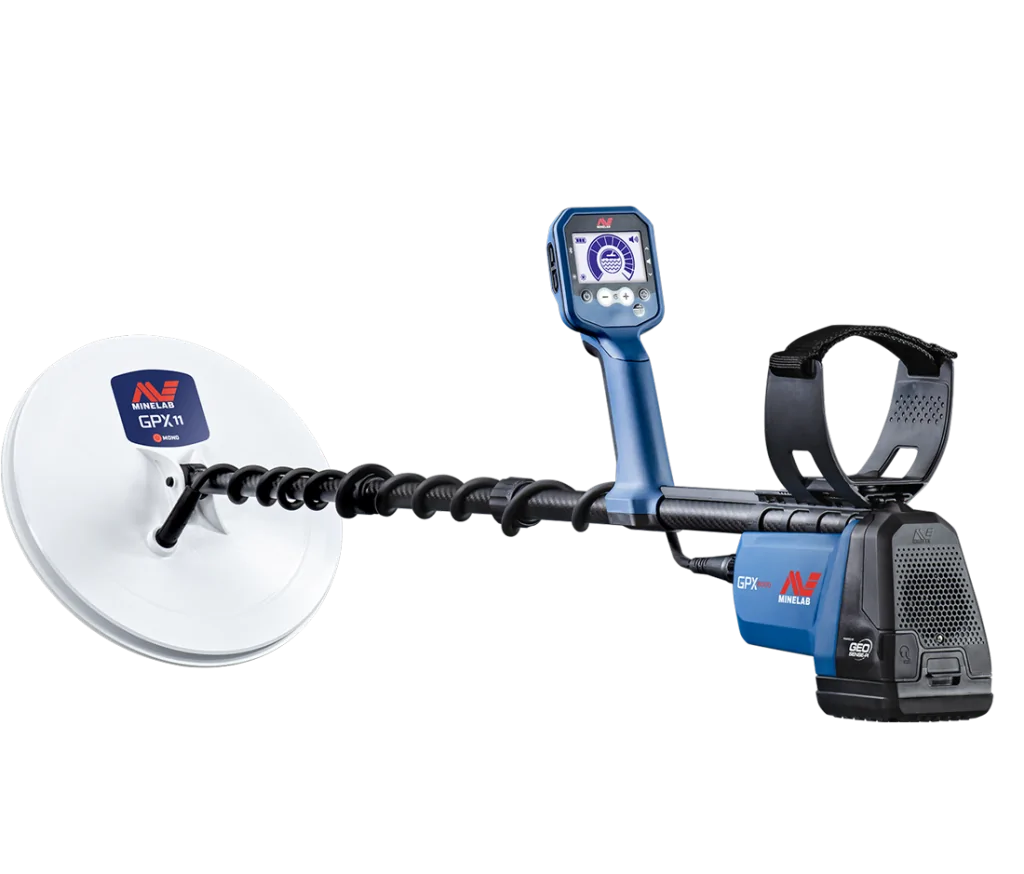
For gold prospecting in red clay, consider gold-focused or PI detectors. Garrett Axiom is a strong example because Garrett positions it for difficult mineralized conditions. GPX 6000 and GPZ 8000 are also relevant for serious goldfield work. For a more beginner-friendly gold direction, Gold Monster 2000 can be a practical choice when the ground is not too severe and the target is small natural gold.
Black Sand and Gold-Bearing Mineralized Ground
Black sand is important in gold prospecting because it is often associated with heavy minerals such as magnetite. It can occur in rivers, dry washes, old placer areas, and certain desert or volcanic environments. Black sand does not guarantee gold, but it often tells you that heavy material has concentrated in the area. For a detector, however, black sand can be difficult because it may produce a strong mineral signal.
This metal detector soil type is especially challenging when the target is a small gold nugget. Tiny gold signals are weak. Mineralized ground signals can be strong. If the detector is unstable, the user may lower sensitivity too much and miss small gold. If sensitivity is too high, the machine may chatter constantly and make real signals hard to recognize.
Gold Monster 2000 is a useful beginner-focused option for small gold, while Garrett Axiom and GPX 6000 are stronger choices for serious mineralized goldfields. If the user wants a broader detector for gold plus mixed targets, Gold Stinger X6 offers multiple systems, GS50 and GS30 coils, ground balance, depth detection, and 2D target scan. The key is to test the detector in actual black sand, not only in clean soil.
Wet Salt Sand and Beaches
Wet beach sand is a very different metal detector soil type. The problem is not just iron mineralization; it is conductive salt. Saltwater and wet salt sand can respond like a broad target under the coil, causing false signals and instability. A detector that works well on dry inland soil may struggle badly near the waterline.
For beaches, choose a detector with a real beach mode, salt compensation, or simultaneous multi-frequency operation. Minelab’s FAQ explains that beach modes are designed for conductive salt signals, and that wet sand or submerged coil use may require different settings than dry beach sand. This is why a general single-frequency detector may not be ideal if your main metal detector soil type is wet coastal sand.
For coins, jewelry, and beach hunting, The Legend 2 and Minelab Manticore are practical examples because simultaneous multi-frequency technology can help stabilize wet salt conditions. If the beach also contains black sand, you may need to reduce sensitivity, ground balance carefully, and use beach-specific modes. For deep gold or serious mineralized coastal ground, PI detectors may help, but they often provide less discrimination, so you may dig more trash.

Dry Desert Soil and Hot Rocks
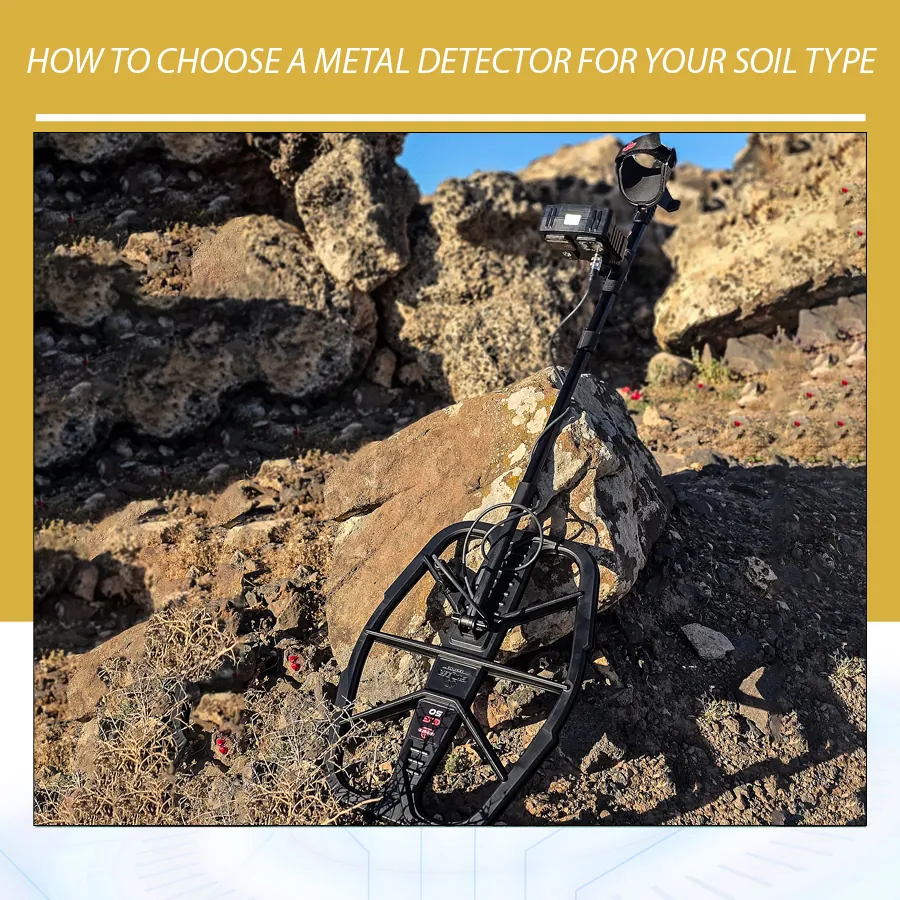
Desert detecting is often associated with gold prospecting, but desert soil can vary widely. Some desert ground is mild and dry. Other areas contain hot rocks, ironstone, basalt, salt flats, and mineral pockets. This makes dry desert one of the most unpredictable metal detector soil type categories.
Hot rocks are rocks that respond to the detector because of their mineral content. They can sound like targets, especially to beginners. In desert goldfields, hot rocks can waste time and reduce confidence. A good detector for desert soil should offer stable ground balance, useful audio, and coil options. The user must also learn to check signals from multiple directions and compare target response to ground response.
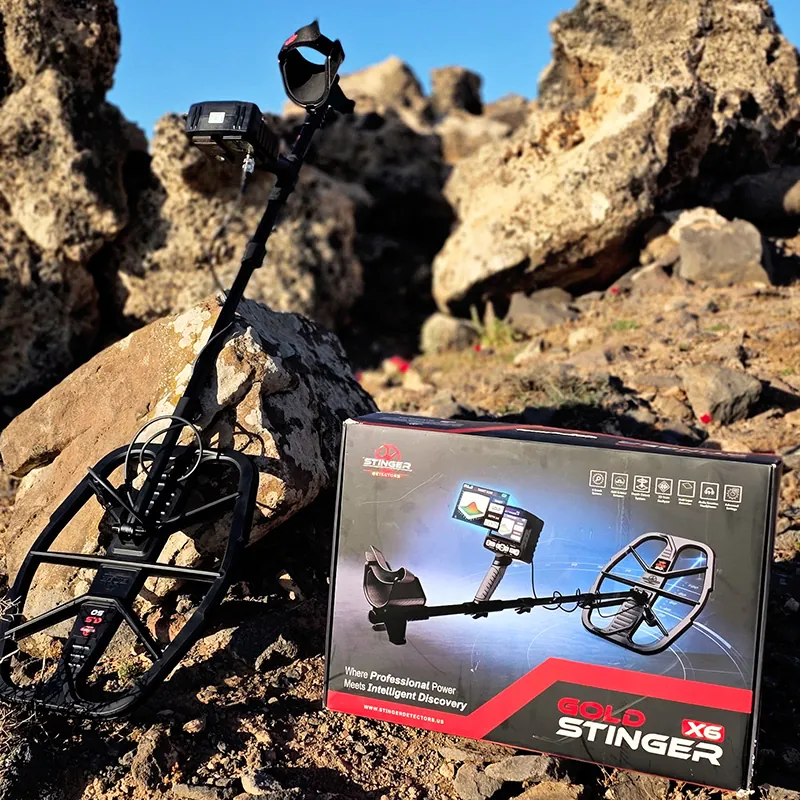
Gold Stinger X6 can be useful in desert conditions because it provides more than one workflow: all-metal search, discrimination, pinpointing, depth detection, 2D scan, and cavity/void detection. For small nuggets, Gold Monster 2000 is more focused. For highly mineralized desert goldfields, Garrett Axiom, GPX 6000, and GPZ 8000 are stronger professional choices. Your desert metal detector soil type should decide whether you need flexibility, small-gold sensitivity, or mineralized-ground power.
Volcanic Soil, Basalt, and Severe Mineralization
Volcanic ground can be extremely difficult. Basalt, iron-rich rocks, and strong mineralization can make many VLF detectors unstable. Target ID may become unreliable, and depth can drop quickly. In this metal detector soil type, beginners often blame the detector, but the real issue is that the ground response is overwhelming the target response.
Pulse induction detectors are often better for severe mineralization because they can ignore difficult ground more effectively than many VLF detectors. Garrett’s mineralization guidance notes that PI detectors can outperform VLF models in highly mineralized soil. Minelab’s FAQ also explains that ground type settings can affect depth and stability in mineralized conditions.
If your ground contains basalt, ironstone, volcanic rock, or strong hot rocks, consider Garrett Axiom, GPX 6000, or GPZ 8000. If you are a beginner, do not jump into severe ground without practice. Learn the detector on milder soil first, then move into harder locations with a clear method.
Highly Mineralized Goldfields
Goldfields often have the most demanding metal detector soil type. Gold may occur with iron minerals, black sand, quartz, hot rocks, and variable ground. The target may be tiny, irregular, and low conductive. That combination is why gold prospecting detectors are different from ordinary coin detectors.
For small gold, high sensitivity and stable ground balance matter. For deeper or larger gold, coil size and detector technology matter. For highly mineralized ground, PI or advanced gold technologies may provide better stability and depth. However, no detector removes the need for slow coil control, overlapping sweeps, and careful listening.
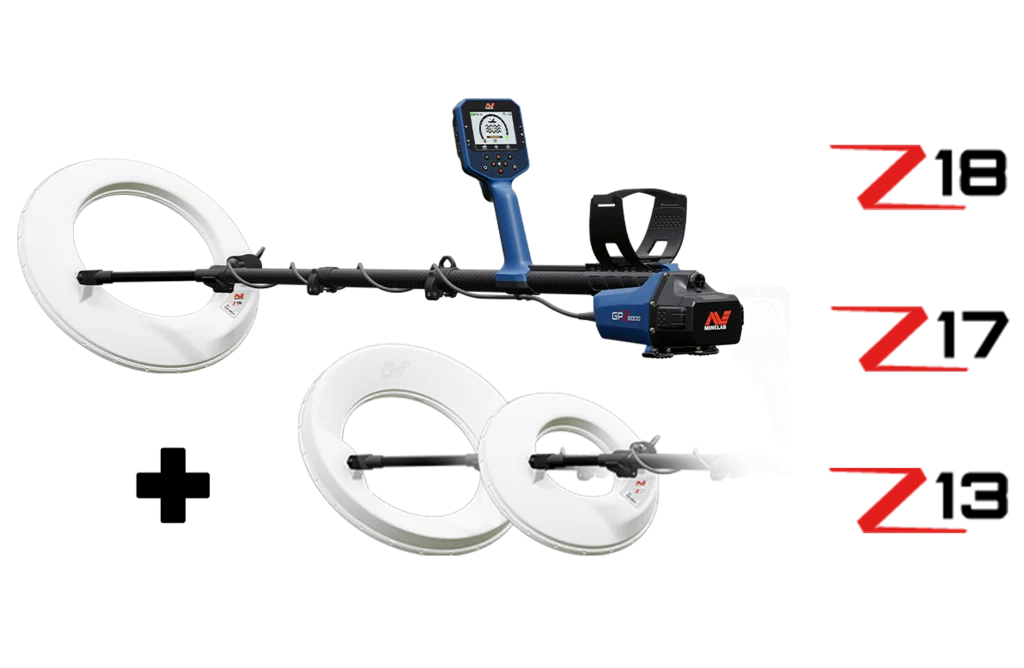
Beginners targeting natural gold should compare Gold Monster 2000, Gold Stinger X6, Garrett Axiom, GPX 6000, and GPZ 8000 according to budget and ground difficulty. A person searching mild gold-bearing ground may start with Gold Monster 2000. A user who wants broader capabilities may choose Gold Stinger X6. A serious prospector in mineralized goldfields may move toward Garrett Axiom or GPX 6000. A buyer looking for maximum professional depth on larger nuggets may consider GPZ-class devices.
Trashy Soil, Iron Sites, and Old Settlements
Not every problem is mineralization. Some sites are difficult because they contain nails, foil, rusty iron, and modern trash. This is a different metal detector soil type problem because the challenge is target separation rather than ground balance. Ground balance helps with soil minerals, but it does not magically separate a coin from a nail.
For trashy sites, choose a detector with fast recovery speed, good discrimination, target ID, and a suitable coil. Smaller coils often help because they see fewer targets at once. Multi-frequency detectors can be useful for identifying coins and jewelry among trash. The Legend 2 and Minelab Manticore are practical examples for mixed sites, while Gold Stinger X6 can help users who also want depth and multi-system functions.
If your site is both mineralized and trashy, settings become a compromise. Reduce sensitivity until stable, use a smaller coil, test targets from more than one angle, and dig uncertain signals until you understand the site.
Deep Treasure Sites and Cavity Search
Some buyers are not only looking for coins or nuggets. They want deep buried targets, caches, relic groups, cavities, tunnels, or underground structures. In that case, the metal detector soil type still matters, but the detector category changes. A standard coin detector is not the best tool for every deep treasure scenario.
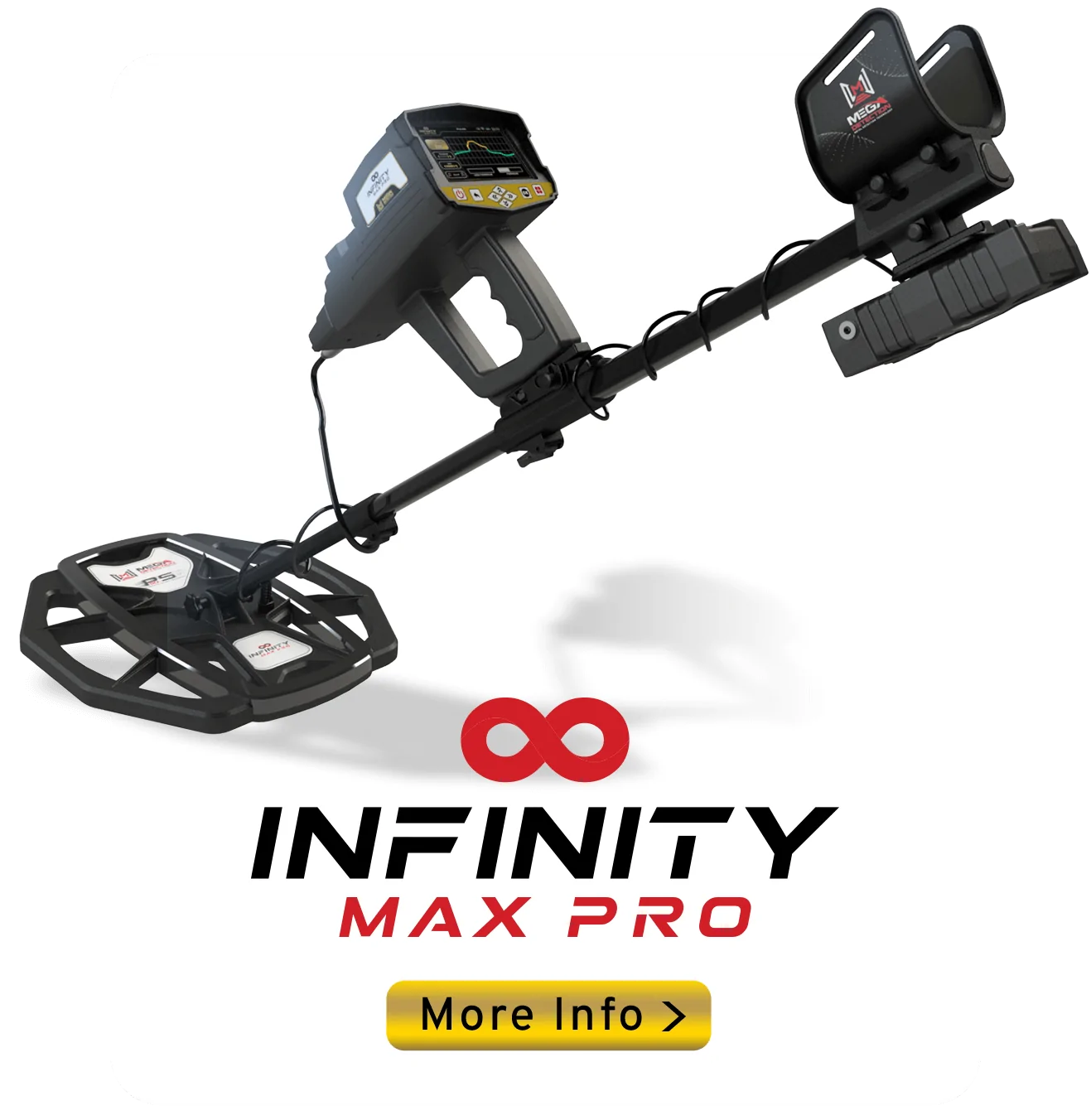
For deeper exploration, multi-system detectors and 3D ground scanners become more relevant. Gold Stinger X6 offers depth detection, 2D target scan, and cavity/void detection in addition to standard search modes. Gold Vision, Phoenix, Infinity Max Pro, and OKM eXp 7000 are examples of devices used when the goal includes 3D ground scanning, cavities, underground anomalies, or larger targets.
In rocky or mineralized soil, scanning devices also require disciplined technique. The user must create clean scan lines, avoid random movement, repeat suspicious results, and compare the scan with surface conditions. Deep treasure hunting should never rely on one signal alone.
Ground Balance: The Feature Beginners Should Not Ignore
Ground balance is the detector’s way of reducing the response from the soil so real metal targets can stand out. Garrett describes ground balance as a key setting that filters mineral interference. Minelab notes that ground balancing should be done on clean ground, away from metal, and that users may need tracking or sensitivity adjustments when the detector remains noisy.
There are three common types of ground balance. Automatic ground balance is easier for beginners and lets the detector calculate the ground response. Manual ground balance gives the user more control, which is helpful in severe soil and gold prospecting. Tracking ground balance updates continuously as the ground changes, which can be useful in variable terrain.
If your metal detector soil type is mild, automatic ground balance may be enough. If your soil changes often or contains hot rocks, manual or tracking ground balance becomes more important. If your detector lacks proper ground balance, difficult soil will limit performance even if the detector has good depth on paper.
Frequency: Low, High, and Multi-Frequency by Soil Type
Frequency affects target response. Lower frequencies often do better on larger and more conductive targets, while higher frequencies are more sensitive to small low-conductive targets such as small gold. Multi-frequency detectors transmit or process more than one frequency, which can improve stability and target information in variable ground.
For mild soil and coins, multi-frequency or mid-frequency VLF detectors are practical. For small gold, higher-frequency gold detectors can be very useful in manageable ground. For wet salt sand, simultaneous multi-frequency often has an advantage because it can handle conductive salt better than many single-frequency detectors. For severe mineralization, pulse induction may be more important than frequency selection alone.
Do not choose frequency without considering your metal detector soil type. A high-frequency detector may be excellent for small gold but noisy in certain mineralized ground. A low-frequency detector may reach deeper on larger targets but miss very small nuggets. A multi-frequency detector may be versatile, but even it needs correct ground settings.
Coil Choice by Soil Type
| Coil Choice | Best Soil Match | Advantage | Tradeoff |
|---|---|---|---|
| Small coil | Trashy soil, hot rocks, tight bedrock, mineralized goldfields | Better control, target separation, less ground under the coil | Less coverage and often less depth on large targets |
| Medium coil | General detecting in moderate soil | Balanced depth, sensitivity, and coverage | Not specialized for extremes |
| Large coil | Mild open ground, larger targets, wide areas | More coverage and possible depth on larger targets | More ground noise in mineralized soil |
| DD coil | Mineralized soil, red clay, beach, variable ground | Often handles difficult ground better | May require different pinpointing technique |
For Gold Stinger X6 users, the GS50 coil is suitable for wider coverage and larger/deeper targets, while the GS30 coil helps with precision and smaller targets. For your metal detector soil type, the right coil may be the difference between a stable day and a frustrating one.
Device Recommendations by Soil Scenario
For Mild Soil and Mixed Targets
Choose The Legend 2, Minelab Manticore, Garrett Vortex-type detectors, or Gold Stinger X6 if you want extra systems. These devices make sense for coins, jewelry, relics, and general exploration where soil is not extremely mineralized.
For Small Gold in Moderate Ground
Choose Gold Monster 2000 or a similar gold-focused detector. This category is useful when the target is small natural gold and the metal detector soil type is not too severe.
For Mineralized Goldfields
Choose Garrett Axiom, GPX 6000, or GPZ 8000 depending on budget and experience. These devices are more suitable when red clay, black sand, basalt, and hot rocks reduce VLF performance.
For Desert Exploration and Flexible Use
Choose Gold Stinger X6 if you want one device with multiple systems for gold, metals, depth checking, 2D scan, and cavity/void detection. This is useful in desert and rocky ground where the target type may change.
For Deep Treasure and Underground Structures
Choose Gold Vision, Phoenix, Infinity Max Pro, or OKM eXp 7000 when the goal includes 3D scans, cavities, large anomalies, or structured search beyond standard coil detection.
How to Test Your Soil Before Buying
You do not need a laboratory to understand your metal detector soil type. Start with visual clues. Red soil may indicate iron oxides. Black sand may indicate magnetite and heavy minerals. White crusty ground may indicate salts. Volcanic rocks and basalt can create hot-rock responses. Wet beach sand brings salt conductivity. Dry desert ground may look simple but still contain mineral pockets.
If possible, test a detector in the same soil before buying. Place a small coin, ring, or gold sample on clean ground and listen. Then bury it shallow and test again. Check whether the detector remains stable when you sweep over empty ground. Watch target ID stability. Adjust ground balance and sensitivity. If the machine becomes noisy at high sensitivity, lower it until stable and test whether the target is still detectable.
Ask the seller direct questions: Is this detector suitable for red clay? Does it have manual or tracking ground balance? Does it work on wet salt beaches? Which coil is best for black sand? Is it better for small gold or large targets? A serious supplier should answer according to your soil, not only according to price.
Buyer Mistakes to Avoid
Choosing by Depth Claims Alone
Depth depends on target size, soil, coil, settings, and operator skill. In difficult soil, stability may matter more than maximum depth. A deep detector that cannot handle your metal detector soil type will disappoint you.
Buying a Coin Detector for Severe Goldfields
Coin detectors can be excellent in mild soil, but small nuggets in mineralized ground need different performance. If your main target is raw gold, choose a gold-focused or PI option when conditions require it.
Ignoring Beach Conditions
Dry sand and wet salt sand are not the same. If you hunt near saltwater, buy a detector designed for beach conditions.
Using One Setting Everywhere
Soil changes. Rebalance when the ground changes, reduce sensitivity when needed, and test signals from multiple directions.
Thinking Discrimination Solves Everything
Discrimination is useful, but mineralized soil can distort target ID. In gold prospecting, using too much discrimination may cause you to miss valuable targets.
Practical Field Setup by Soil Type
| Soil | Starting Setup | Field Advice |
|---|---|---|
| Mild soil | Medium coil, normal sensitivity, discrimination as needed | Use target ID and tones confidently, but dig uncertain signals at first |
| Red clay | DD coil, ground balance, lower sensitivity if unstable | Check repeatability and avoid chasing random one-way signals |
| Black sand | Gold mode or PI detector, stable threshold, smaller coil if needed | Listen for repeatable small changes, not only loud signals |
| Wet salt beach | Beach mode, multi-frequency, salt balance | Recheck settings when moving from dry sand to wet sand |
| Desert hot rocks | Ground balance, test hot rocks, conservative sensitivity | Confirm signals from different angles before digging deep |
| Severe mineralization | PI or advanced gold detector, correct ground mode | Accept that target ID may be limited and audio skill matters more |
FAQ: Choosing a Metal Detector by Soil Type
What is the best metal detector soil type for beginners?
Mild inland soil is the easiest for beginners because it usually produces stable audio and clearer target ID. It allows new users to learn target signals before moving into mineralized ground.
How do I know if my soil is mineralized?
Look for red clay, black sand, basalt, hot rocks, or white salty crusts. Your detector may also become noisy over empty ground, lose depth, or show unstable target IDs. Ground balance and sensitivity adjustments can confirm the issue.
Is a VLF detector good for mineralized soil?
A VLF detector can work in mild to moderate mineralization, especially with good ground balance and the right coil. In severe mineralized goldfields, a PI detector may be more stable and effective.
What detector should I choose for beach soil?
For wet salt sand, choose a detector with a proper beach mode or simultaneous multi-frequency technology. Dry sand is easier, but the waterline and wet salt areas require specialized settings.
What soil type is hardest for gold detecting?
Highly mineralized goldfields with black sand, hot rocks, basalt, or ironstone are often the hardest. Small nuggets produce weak signals, while mineralized ground produces strong background noise.
Does soil type affect detection depth?
Yes. Mineralized soil can reduce detection depth, distort signals, and make target ID less reliable. Mild soil usually allows better depth than severe mineralized ground with the same detector.
Final Verdict: Let the Ground Choose the Detector
The best way to choose a detector is to begin with your metal detector soil type. Mild soil rewards versatile VLF and multi-frequency detectors. Wet salt beaches need beach-capable technology. Red clay, black sand, volcanic ground, and hot rocks require stronger ground balance and sometimes pulse induction. Deep treasure and cavity search may require multi-system or 3D scanning devices.
For beginners, this approach prevents expensive mistakes. Instead of asking only, “How deep does it detect?” ask, “Will it stay stable in my soil?” That question leads to better choices, better field results, and fewer frustrating hunts.
If you are choosing from Orient Detectors devices, start with the ground and target: Gold Monster 2000 for small gold in manageable mineralization, Gold Stinger X6 for flexible multi-system searching, Garrett Axiom or GPX 6000 for difficult goldfields, The Legend 2 or Manticore for multi-frequency coin and beach work, and 3D scanners such as Gold Vision, Phoenix, Infinity Max Pro, or OKM eXp 7000 for deeper underground anomalies.
External Sources
- Minelab – Detecting in Mineralized Soils
- Garrett – Ground Mineralization and Metal Detectors
- Garrett – Ground Balance Explained
- Minelab – Frequently Asked Questions