Define what “better” means for your detecting
Start with a sentence that describes the difficulty. “I want more depth” is too broad to evaluate. “My detector cannot maintain a usable response to a representative target in the soil I regularly search” is more useful. It identifies a target, an environment and an observable result that you can compare.
Other legitimate limitations include difficulty separating nearby targets, inadequate environmental protection, excessive weight, poor audio accessibility or unavailable replacement parts. These needs do not all require the most advanced detector. Sometimes a lighter model or a more appropriate coil improves your actual search time more than additional menu features.
Define success before viewing a demonstration. If your priority is working through dense iron, success might mean hearing a repeatable non-ferrous response beside known iron from several directions. If your priority is comfort, a twenty-minute standing demonstration is more relevant than a target-number chart. The objective should tell you how to test the proposed improvement.
| Recurring problem | A measurable upgrade goal | A weak substitute for evidence |
|---|---|---|
| Target masking | Repeatable response in a representative mixed-target exercise | A loud isolated coin in air |
| Unmanageable ground noise | Usable stability with a relevant small target | Maximum sensitivity on easy soil |
| Fatigue | Longer controlled searching without strained posture | Comparing weight figures alone |
| Limited water suitability | Appropriate documented protection for the intended use | Assuming a waterproof coil protects the housing |
| Poor target interpretation | Information you can use to improve decisions | An attractive display without explanation |
| Difficult servicing | Available support and essential parts | A promise that equipment never fails |
First check whether technique is the limiting factor
Before replacing equipment, observe your own searching. Does the coil rise at each swing end? Do you walk too quickly for overlapping coverage? Are you changing several settings whenever a weak response appears? These habits can hide targets with an expensive detector just as readily as with a basic one.
Return to a small practice area with known objects and an empty control. Use a familiar mode, establish a stable setup and repeat targets from two directions. If changing sweep height or pace transforms the response, spend time improving those variables before deciding that a new detector is essential. You have identified an improvement that costs practice rather than hardware.
Review your ground and interference procedures. Soil response and electrical interference can require different adjustments. A low-quality comparison happens when the current detector is left unstable while the proposed replacement is carefully configured. Both deserve an appropriate setup before you compare results. Our ground balance guide explains the soil side of that preparation.
Check whether your search locations match your goals
Equipment cannot create targets where your chosen location offers little opportunity. A coin hunter who repeatedly searches modern filled ground may need better site selection rather than a deeper detector. A new gold prospector needs a credible reason to expect natural gold in a permitted area before investing in specialist equipment.
Review several recent outings. Were you searching appropriate ground, covering it systematically and recovering enough signals to learn what was present? If you only search short strips around accessible parking areas, a more expensive detector may simply provide a more detailed account of the same modern rubbish.
This does not mean location is the only factor. It means that equipment and opportunity must work together. Write down the sites you can realistically visit in the next few months. Choose an upgrade for those sites rather than for an exceptional destination you might never reach.
Could a coil or accessory solve the problem?
A compatible coil can change coverage, manoeuvrability and how much surrounding material contributes to a response. In a congested area, a smaller coil may let you approach objects more precisely. On open ground, a larger appropriate coil may improve coverage for suitable targets. Neither change guarantees a result, and compatibility must be confirmed for the exact detector.
Headphones, shaft adjustment and reliable recovery equipment also deserve consideration. If wind makes weak sounds difficult to hear, compatible headphones may help you use the information already available. If recovery takes most of your session, better pinpointing technique or a suitable handheld pinpointer may improve efficiency without replacing the main detector.
Assess each option against the same goal. A second coil is not a bargain if the underlying platform still lacks the ground-handling ability or environmental protection your task requires. Conversely, replacing a healthy detector can be wasteful when an approved coil and a more controlled sweep address the problem.
| Option | Most relevant when | What it will not automatically solve |
|---|---|---|
| More practice | Results change strongly with technique | A documented hardware limitation |
| Compatible smaller coil | Crowded ground or restricted access dominates | Every deep isolated target |
| Compatible larger coil | Open coverage and suitable targets dominate | Tiny targets among dense rubbish |
| Better audio setup | You struggle to hear existing information | Inadequate response from the detector itself |
| Recovery improvement | Finding the object takes too long | A target never detected in the first place |
| New detector | The platform cannot meet a recurring requirement | Poor site choice and incomplete coverage |
Upgrading your metal detector for coins and jewellery
For mixed coin and jewellery hunting, consider separation, audio options, ground behaviour, target information and ease of use together. More information is beneficial only if you can interpret it while maintaining a controlled sweep. Test an advanced display alongside sound rather than using it as a replacement for repeatability.
The MANTICORE listed by Orient Detectors is an example of a platform offering simultaneous multi-frequency operation and a 2D ID display. Minelab’s product documentation describes these features. They create specific questions for a demonstration: can you understand the responses, manage the settings and make better decisions on the type of ground you actually search?
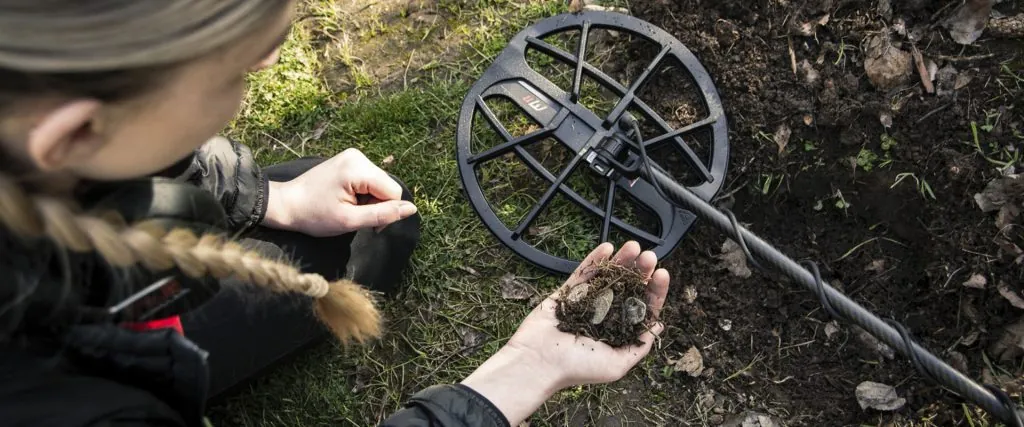
Do not turn a manufacturer’s power claim into an equivalent percentage increase in depth or finds. Actual results depend on the target and conditions. A premium coin detector can still respond to aluminium, miss masked targets or give uncertain identification near its detection limit. The upgrade should improve a defined task without requiring unrealistic expectations.
Upgrading for small natural gold and difficult ground
Natural-gold prospecting changes the comparison. A detector that works well on ordinary coins may not respond usefully to your representative small nugget, especially in difficult soil. Evaluate both target sensitivity and background stability. An audible test sample in air is encouraging, but the relevant question is whether you can recognize it against the ground you intend to search.
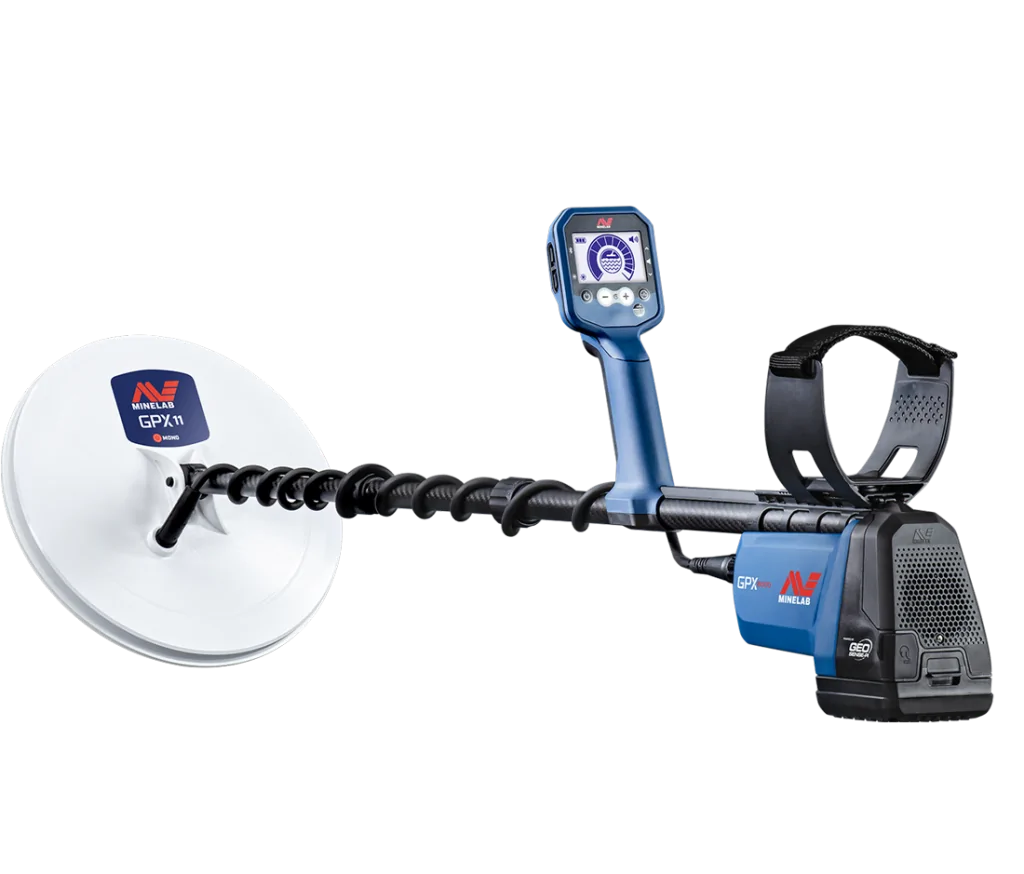
The Gold Monster 1000 provides an example of a dedicated gold-oriented VLF detector, while the GPX 6000 represents a different prospecting platform. Minelab describes GeoSense-PI technology for the GPX 6000 in its official product information. These are different approaches to a task, not steps on a universal ladder where every more expensive machine wins everywhere.
A useful demonstration includes the smallest type of gold you care about, a realistic coil, stable settings and representative ground. Record whether you detect the target and how easy it is to isolate and recover. If the new setup is quieter but does not preserve the target response you need, quietness alone is not enough.
When multiple systems help—and when they distract
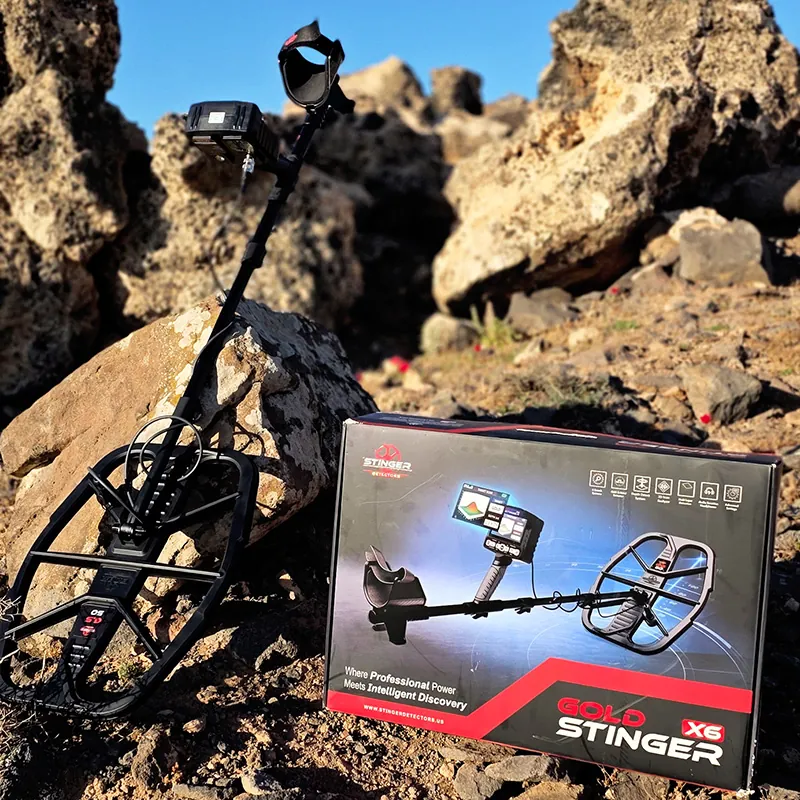
The Gold Stinger X6 illustrates a detector with multiple search workflows. Its official product page describes the platform and accessories. When considering it, decide which workflow addresses your task and ask for that operation to be demonstrated clearly rather than counting the number of available screens.
More modes can provide useful options, but they also introduce more choices to learn. A graph, category or depth estimate remains an interpretation of measured response. It does not establish exact material, target value or the existence of a particular underground structure. Ask how the operator confirms the result and what conditions can make it unreliable.
Ground imaging is also a different workflow from ordinary coin searching. Before treating an imaging system as an upgrade, establish whether your objective requires surveyed area data, what training is necessary and how interpretation will be verified. Buying a different type of tool only helps when the search problem calls for that tool.
Design a fair comparison before spending money
Select a small set of tasks that represents your actual limitation. Include an isolated target, a target near rubbish, an empty control and a ground condition that challenges your current machine. A fair comparison does not require identical numerical settings; sensitivity scales and modes differ. It requires appropriate stable operation for each detector under disclosed conditions.
Use the same target positions and keep coil height, direction and speed as consistent as practical. If coil sizes differ, record them rather than attributing every difference to the control box. Let a knowledgeable operator set up each device, then try both yourself. An expert’s demonstration does not prove that a new user can reproduce the same result immediately.
Record a decision before uncovering a target: detected or not, recover or pass, likely location and confidence. Repeat several trials, including empty positions, to reduce the influence of expectation. A comparison that reports only the best successful pass exaggerates what you can depend on during ordinary searching.
Read recovery speed explained if close-target separation is your main issue. The relevant improvement is whether responses become easier to distinguish in your exercise, not whether a specification lists a larger adjustment range.
| Comparison element | Keep consistent or document | Result worth recording |
|---|---|---|
| Targets | Material, shape, orientation and position | Detected consistently or intermittently |
| Ground | Same patch or clearly described conditions | Stability and weak-target audibility |
| Coils | Model, size and search height | Whether differences may come from the coil |
| Settings | Appropriate mode and stable sensitivity | Setup time and required adjustments |
| Operator | Experience and practice time | Whether you can reproduce the demonstration |
| Empty controls | Include locations without a target | False-positive decisions |
Comfort can justify an upgrade
Practical detecting time depends on more than specification-sheet weight. Balance, shaft geometry, grip, coil drag and the way the detector carries on uneven ground all matter. If you can search accurately for longer with a better-fitting machine, that is a real benefit even if no depth improvement is demonstrated.
Test at the shaft length you would actually use, with the coil and headphones you intend to carry. Walk, turn, kneel and resume searching. Notice whether the detector feels front-heavy or forces your wrist into an awkward position. A brief lift from a display stand cannot answer these questions.
Keep ergonomics separate from prestige. A lighter or simpler detector may be the better upgrade for someone whose current equipment limits session length. For another user, additional weight may be acceptable because a specific capability is essential. The correct tradeoff depends on your own searching, not on a universal definition of professional equipment.
Calculate the whole upgrade cost
List the detector, required coil, compatible headphones, charging equipment, spare power where applicable and any training or servicing needs. Subtract only a realistic resale value for your existing equipment. Keep uncertain resale income separate until a buyer exists. This gives a clearer view of the cash required to complete the change.
Include learning time. A sophisticated detector may take several sessions before its information becomes useful to you. If your current setup is reliable, retain it during the comparison period where practical. This lets you distinguish unfamiliarity from a genuine performance problem and avoids making the new machine your only option before you understand it.
Do not justify a purchase using assumed future treasure income. Finds are uncertain and depend on opportunity, permissions, skill and conditions. A more defensible budget is the amount you are comfortable paying for the demonstrated capability and enjoyment of the hobby, without requiring a discovery to make the purchase affordable.
Three decisions that show how the process works
The coin hunter who struggles around nails
A detectorist repeatedly hears strong iron but cannot isolate a known non-ferrous object nearby. First they slow the sweep, check rejection settings and test a compatible smaller coil. If the response becomes dependable, a coil may be sufficient. If an appropriately configured alternative still provides a clear, repeatable improvement across directions, a full upgrade has a measurable basis.
The prospector who cannot manage local soil
A prospector hears a small sample clearly in air but loses it against a constantly changing ground response. Raising sensitivity makes interpretation worse. They compare suitable gold detectors on that soil using the secured sample and an empty control. The choice depends on usable target response, not simply the loudest signal during a demonstration away from the ground.
The occasional user who wants a colour display
An occasional coin hunter already locates and recovers targets reliably but is attracted to an advanced screen. A demonstration shows interesting extra information, yet the user does not find it easier to make decisions. Waiting is reasonable. Alternatively, they may choose the machine for enjoyment while recognizing that a capability improvement has not been demonstrated.
A one-month plan after upgrading
Begin with one suitable preset and known targets. Learn the audio and display together before changing several advanced options. In the second phase, search a familiar area systematically and compare your observations with previous notes. The point is to build confidence in the new information rather than continually restoring someone else’s settings recipe.
Later, change one feature that relates to your original objective. If separation motivated the purchase, test recovery behaviour around known clutter. If small gold motivated it, repeat the sample and recovery exercise. Record both successes and uncertainty so that enthusiasm does not replace an honest assessment.
| Stage | Main task | Evidence of progress |
|---|---|---|
| First few sessions | Assembly, startup and known objects | Repeatable operation without menu confusion |
| Following sessions | Familiar ground with a stable preset | Better understanding of typical responses |
| Targeted practice | Test the feature that motivated the upgrade | Improvement in the original problem |
| End-of-month review | Compare notes, comfort and recovery | Clear benefit, remaining learning need or mismatch |
Set acceptance criteria before the demonstration
Choose three requirements that the proposed detector must meet and separate them from features you merely like. For example, you might require a recognizable response to your test target on difficult ground, comfortable use with the intended coil and a confirmed service route. A colour display or extra mode can remain desirable without compensating for failure on a requirement.
Write the outcome immediately after each test. Use concrete language such as “heard the target on four of five controlled passes” or “could not maintain coil height comfortably after the route.” These observations describe one exercise, not general performance percentages. Include the ground, settings and operator so that the result remains meaningful when you review it later.
Allow yourself to conclude that the comparison is inconclusive. Different coil sizes, changing interference or limited practice can prevent a clean answer. In that case, arrange another relevant demonstration or delay the purchase rather than turning uncertainty into a confident recommendation. A salesperson’s ability to explain those limitations is useful information about the support you may receive.
Finally, check whether you still want the upgrade when the exceptional demonstration target is removed. Most detecting time consists of ordinary coverage, uncertain sounds, recovery and walking. If the new machine makes those routine tasks better for you, it may be a worthwhile choice. If its appeal depends entirely on one dramatic response, your original need may remain unresolved.
Frequently asked questions
How long should I use my first detector before upgrading?
There is no required number of months. Wait until you can use its basic functions reliably and explain a recurring limitation. A specific environmental or accessibility need may justify changing sooner than a general desire for more features.
Does a professional detector always find deeper targets?
No. Target size, coil, soil and settings affect depth, and a detector optimized for one task may be less suitable for another. Compare repeatable responses to relevant targets rather than relying on a single maximum-depth statement.
Should I buy a new coil first?
Consider it when coverage, manoeuvrability or crowded-ground performance is the main issue. Confirm compatibility and test the coil if possible. A coil cannot supply environmental protection or processing capabilities the detector platform does not have.
Is simultaneous multi-frequency always the right upgrade?
It can be useful for a range of conditions, but the right choice still depends on your search task. Dedicated gold prospecting, mixed coin hunting and specialized surveying need different comparisons. Technology names alone do not settle the decision.
Can an advanced display identify gold with certainty?
No. Target information helps interpretation but does not certify metal purity or value. Different objects can overlap, and depth, orientation and nearby material affect the response. Recovery and appropriate examination are still needed.
What if my current detector is noisy?
Check connections, interference, ground setup and sensitivity before assuming replacement is necessary. If it remains unsuitable in your normal conditions after correct setup, compare alternatives on those conditions with a representative target.
Should I sell my old detector immediately?
If practical, keep it until you understand the replacement and can compare familiar sites. Budget according to your circumstances, but avoid assuming immediate resale or leaving yourself without working equipment during a learning or service period.
What is the strongest reason to upgrade?
A demonstrated improvement in a recurring need: clearer target separation, suitable ground performance, necessary protection, better comfort or reliable support. Upgrading your metal detector works best when the benefit can be described and checked.
Resources and further reading
- Orient Detectors: ground balance explained — check setup before blaming the platform.
- Orient Detectors: recovery speed explained — understand one part of close-target performance.
- Minelab: MANTICORE — official feature reference for a multi-purpose upgrade example.
- Minelab: GPX 6000 — official information for a prospecting example.
- Stinger Detectors: Gold Stinger X6 — manufacturer reference for the multiple-system example.