Gold Detector Buying Guide: How to Choose the Right Detector
Choose a gold detector by matching your target, soil, and search style before comparing price or advertised depth. A detector for small natural nuggets has a different job from a machine for lost gold jewelry, and both differ from equipment used to investigate large underground anomalies. The right purchase is the one that can do your main job reliably and that you can learn, carry, and maintain.
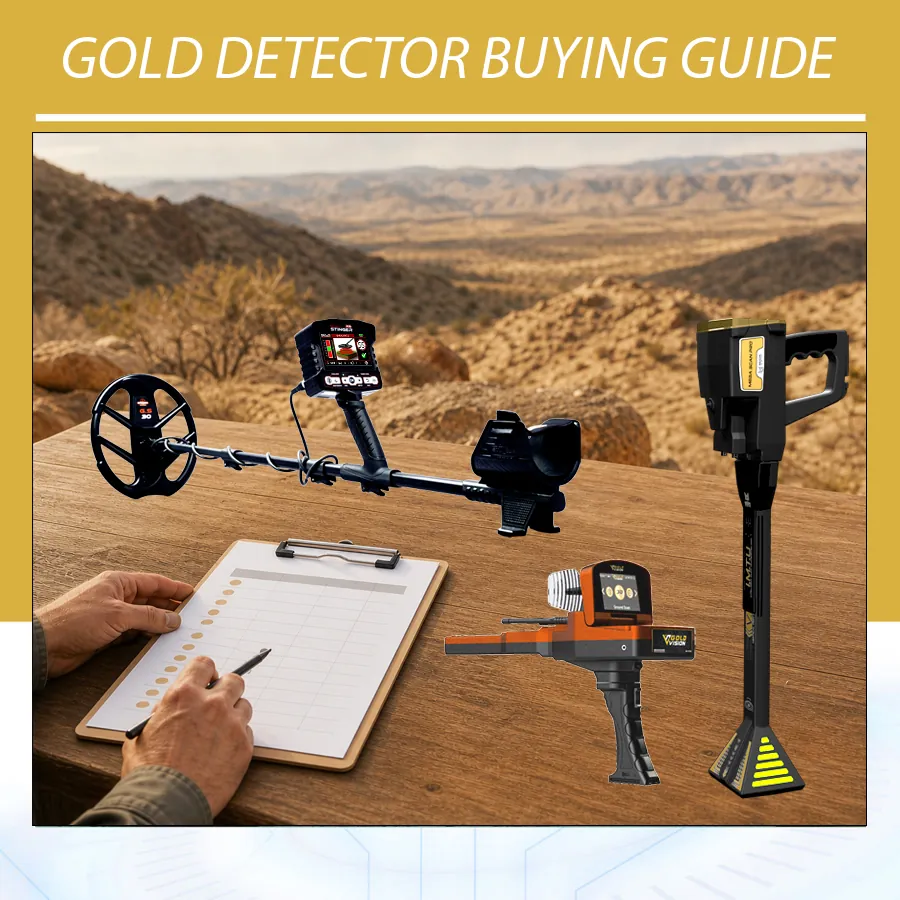
This gold detector buying guide brings those decisions together: VLF and simultaneous multi-frequency versus pulse induction, frequency, ground balance, coils, discrimination, waterproofing, realistic depth expectations, and the complete cost of ownership. It also includes current examples from the Orient Detectors range, including Gold Monster 2000, The Legend 2, MAGNETAR 9000, GPZ 8000, GPX 6000, Garrett Axiom, MANTICORE, Gold Stinger X6, Gold Vision, Infinity Max Pro, and OKM eXp 7000.
These examples help explain different buying directions. They are not a measured performance ranking, and no detector can guarantee a gold find.
Gold Detector Buying Guide: Quick Choices by Target
For small natural gold, start by comparing gold nugget detectors with a suitable coil. For difficult mineralized goldfields, compare specialist pulse induction and other dedicated goldfield platforms. For jewelry, coins, and mixed recreational detecting, compare metal detectors with useful discrimination and site versatility. For subsurface survey work, examine the sensor, scan method, and interpretation requirements of a ground scanner.
| Your main search | Buying direction | Examples to investigate | Main question before purchase |
|---|---|---|---|
| Small natural gold near the surface | Gold-focused detector with a small-target coil | Gold Monster 2000 | Does it remain usable over your local mineralization and hot rocks? |
| Nuggets in challenging goldfields | Specialist PI or dedicated advanced goldfield platform | GPX 6000, Garrett Axiom, MAGNETAR 9000, GPZ 8000 | Which coil and ground settings suit your actual terrain? |
| Gold jewelry, coins, and mixed targets | Simultaneous multi-frequency with useful target information | The Legend 2, MANTICORE | Can you interpret desirable targets among the site’s common trash? |
| Coil-based metal searching with configurable search options | Compare the exact search modes and coil package | Gold Stinger X6 | What does each mode measure, and what can you demonstrate with it? |
| Ground anomalies and possible buried structures | Ground scanning with a repeatable survey workflow | Gold Vision, OKM eXp 7000 | Can the operator repeat the anomaly and explain alternative causes? |
| Several distinct search and survey tasks | Multi-system platform with verified functions | Infinity Max Pro | Will you use and learn the included systems? |
Use this gold detector buying guide to identify your main search first. If your needs span several rows, decide which one accounts for most of your field time. A secondary capability is useful only when the machine still performs your primary task well.
1. Define Your Target and Ground Before Comparing Brands
Natural gold, jewelry, and buried objects require different priorities
Write down what you expect to recover. For natural gold, describe the likely piece size and terrain: small nuggets in shallow wash, pieces trapped in bedrock cracks, or larger targets beneath cover. For jewelry, describe the search area: a park, dry beach, wet salt sand, or shallow water. When comparing treasure detectors, distinguish an individual buried item from a large container or a possible structure.
A detector does not assay a deposit. Finding a metal response in a rock does not establish its gold content, and a gold-focused search mode does not mean that only gold will sound. If your goal is to assess ore grade or fine gold dispersed through rock, geological sampling and appropriate analysis answer questions that a handheld detector cannot settle.
A useful buying brief is specific: “I want to search exposed bedrock for small nuggets, walking for several hours in rocky mineralized terrain.” That brief gives a supplier something meaningful to match. “I want the deepest gold detector” does not establish a target, an environment, or a workable configuration.
Describe the site, not just the country
Conditions can vary greatly between nearby sites. Note iron-rich soil, hot rocks, black sand, conductive salt, uneven surfaces, vegetation, and nearby electrical equipment. Also identify how much modern metal trash is present. A machine that is comfortable in quiet open ground may be frustrating beside fences, power infrastructure, or heavily littered paths.
Minelab explains that ground balance reduces the effect of ground mineralization. The buying implication is practical: ask for a demonstration over representative soil, rather than relying entirely on a clean indoor test. There is little value in a strong target response if ground noise prevents you from recognizing it outside.
Consider physical access as well. A large coil may be awkward between rocks. A broad scan grid may be impractical on a steep, obstructed slope. The landscape determines how much of a machine’s theoretical capability you can actually use.
2. Understand the Main Gold Detector Technologies
VLF and simultaneous multi-frequency detectors
Electromagnetic metal detectors, including VLF designs, use electromagnetic transmission and reception to respond to conductive and magnetic targets. Many provide target numbers, tones, and adjustable discrimination. Simultaneous multi-frequency designs use multiple operating frequencies together, while selectable single-frequency operation lets the user choose one at a time. Those are different capabilities; a list of frequencies does not automatically mean simultaneous operation.
This category includes different specializations. Gold Monster 2000 is aimed at natural gold prospecting, while The Legend 2 and MANTICORE provide broader recreational detecting functions. Compare the intended search task rather than assuming that every multi-frequency detector behaves alike.
For a buyer who mainly searches parks, fields, and beaches, usable target information can matter more than owning a specialist goldfield platform. For someone who mainly searches for nuggets, the relevant question is how well the detector and coil handle small targets in the intended ground.
Pulse induction detectors
Pulse induction, usually shortened to PI, transmits pulses and measures the response after transmission. Dedicated prospecting PI machines are a sensible category to compare when mineralized ground is a central problem. They still require suitable coils, correct settings, and careful technique; PI does not make soil conditions irrelevant.
GPX 6000, Garrett Axiom, and MAGNETAR 9000 illustrate this category. Their control systems and coil arrangements differ, so a shared technology label is the beginning of a comparison rather than the final answer. Do not assume that each offers the same discrimination or that one model’s settings transfer to another.
For a fuller explanation of the tradeoffs, read our pulse induction versus VLF comparison. Your buying decision should still return to the target, ground, and operator rather than a universal claim that one technology is always superior.
Dedicated advanced goldfield platforms
Some manufacturer platforms use proprietary detection approaches and controls. Treat them as specific products to evaluate rather than forcing every model into a simple VLF-versus-PI comparison. GPZ 8000 belongs on an advanced prospecting shortlist, but its suitability depends on the supplied coil, operating modes, carrying arrangement, and the work you plan to do.
When using a gold detector buying guide to compare technologies, ask what each approach changes for your task. A useful answer connects it to a reproducible field demonstration, a documented operating procedure, or a practical advantage you can assess. A technology name alone does not establish a depth improvement.
3D ground scanners and multi-system devices
3D ground scanners produce data that software can display as a subsurface visualization. The display requires interpretation: it is not an underground photograph, and a colored region does not by itself identify gold, a chamber, or a valuable object.
Multi-system devices combine different advertised functions in one package. Buyers should ask which sensor each function uses, what data it records, and how its output can be checked independently. A larger number of menu options is not a measured increase in detection performance.
Apply particular care to long-range, ionic, and bionic claims. Do not assume that a directional indication establishes the presence, material, or depth of a target. Request a controlled demonstration with concealed target positions, blank locations, and repeat runs before basing a major purchase on that capability.
For survey work, establish a method before choosing hardware: how you will lay out the area, collect consistent readings, repeat the survey, and distinguish a possible target from site effects. If the seller cannot explain that process, a convincing screen image is insufficient evidence.
3. Compare the Features That Affect Field Use
Ground balance and stable operation
Ask whether the detector offers automatic, manual, or tracking ground balance and how the manufacturer expects you to use it. Tracking can be convenient in changing ground, while manual options may suit an operator who wants more direct control. The appropriate procedure is model-specific.
During a demonstration, listen to the detector over target-free soil before judging a target response. Can you recognize a weak signal without being overwhelmed by noise? Can the demonstrator explain a ground change and show the relevant adjustment? Stable operation is a more useful purchasing criterion than the highest available sensitivity setting.
Frequency and small-target response
Higher operating frequencies are often useful for small, low-conductive targets, including small gold pieces. However, frequency alone does not predict detection depth or overall performance. Coil design, ground response, processing, target shape, and settings all influence the result.
Gold should not be treated as one fixed target response. A small irregular nugget, a thin chain, and a solid ring differ in size and geometry. A gold-focused frequency range does not guarantee that each will be easy to detect. Ask to test examples relevant to your search rather than accepting a large ring as proof of tiny-nugget capability.
Coil size, shape, and compatibility
The coil is part of the detector configuration, not simply an accessory added after the main decision. Smaller coils can help with access and separating nearby responses; larger coils can improve coverage and may help with larger targets. Neither choice produces a universal advantage.
Ask which coil is included, which alternatives the exact model supports, and what each would change in your terrain. Coil type also matters: a mono coil, a DD coil, and a proprietary receiver design cannot be assumed interchangeable. Confirm compatibility in writing before ordering an additional coil.
If your budget allows only one coil, choose it for your main environment. A large coil that repeatedly catches on vegetation or cannot reach bedrock gaps may cost you useful coverage despite its wider footprint.
Target ID, discrimination, and audio
Target identification estimates aspects of a response; it does not chemically identify the object. Gold jewelry can overlap common trash responses. Small or difficult targets may produce uncertain information, and rejecting too much can also reject desirable finds.
For recreational detecting, compare how easily you can interpret mixed targets. For prospecting, ask how the detector handles weak responses and whether any iron-check function depends on a particular coil. Avoid choosing a machine solely because its display appears to label an object confidently.
Listen through the intended headphones as well as the speaker. Can you hear subtle changes comfortably? Can you adjust volume and tones to suit your hearing? Good audio that you understand has practical value beyond the appearance of the screen.
Recovery speed and target separation
In sites with closely spaced metal, test two nearby objects rather than a single isolated target. Ask the demonstrator to explain how sweep speed, coil size, and recovery settings change the response. A faster setting is not automatically optimal for every site.
This is particularly relevant when buying for coins and jewelry among iron or modern rubbish. A detector chosen for open goldfields may prioritize different behavior from a machine used around old habitation sites.
Waterproofing: check the whole system
A waterproof coil does not make the control unit submersible. Check the rating and conditions for the detector, battery compartment, connectors, and headphones. Confirm how the manufacturer expects seals and caps to be maintained.
The distinctions are substantial. Minelab specifies Gold Monster 2000 with a rainproof IP55 control pod and a coil waterproof to one meter. Nokta specifies The Legend 2 as submersible to five meters, while MAGNETAR 9000 is rated IP68 to three meters. Follow the relevant manual and accessory requirements for each.
Weight, balance, and transport
Hold the fully assembled detector with the intended coil and battery. Check its balance with the shaft adjusted to your height. A short showroom lift will not reveal everything, but it can expose an uncomfortable grip, excessive front weight, or an unsuitable armrest.
Also consider the walk to the site. Will it fit in your vehicle or travel case? Can you carry spare power and tools with it? For a larger prospecting platform, try the harness arrangement before deciding whether its weight is acceptable.
Battery, software, and ongoing support
Compare usable runtime, charging time, spare power options, and the cost of replacing a battery. Ask how a remote field day will work if charging is unavailable. Advertised maximum runtime should not be treated as a promise under every configuration and condition.
For scanners, confirm the required operating system, software edition, license terms, file export options, and included computer or tablet. Ask to open a saved scan and repeat the analysis after a restart. Check that training covers data collection as well as interpreting the finished image.
4. How Deep Can a Gold Detector Detect?
There is no single reliable depth figure for every gold target. A meaningful claim must describe the object, coil or sensor, ground, settings, and test method. Detecting a large metal object at a given depth does not establish that a small nugget can be found there.
Distinguish an audible response from reliable recognition and accurate identification. A demonstrator may hear a marginal signal that a new user cannot yet interpret. Likewise, a depth estimate on a display is not a measured excavation depth.
| Ask about | Information to request |
|---|---|
| Target | Material, dimensions, shape, mass, and orientation |
| Ground | Soil conditions, mineralization, moisture, and nearby interference |
| Configuration | Exact coil or probe, search mode, and relevant settings |
| Test method | Air test, controlled buried target, or documented recovered find |
| Result | Repeatable detection, uncertain response, or an estimated target identity |
An air test can help you learn responses and compare behavior under controlled conditions. It does not recreate the ground. Our metal detector depth guide provides further context; use any depth chart as a starting point for questions, not a guarantee for your location.
5. Current Device Examples: Build a Shortlist by Use Case
The models in this gold detector buying guide illustrate the buying categories discussed above. Manufacturer specifications establish documented features; they do not replace a comparison in your own conditions. Confirm the exact package, current availability, and regional support before ordering.
Gold Monster 2000: a focused natural-gold option
Gold Monster 2000 deserves consideration when your main goal is small natural gold rather than general treasure surveying. Among Minelab gold detectors, this model offers documented Multi-Au simultaneous multi-frequency operation from 12 to 76 kHz, a five-inch DD coil, 0–99 target IDs, and a weight of 1.25 kg including the battery.

Buying question: Does the supplied coil and interface suit the ground you intend to search? Check the control-pod water limitations described earlier if rivers or wet conditions are part of your plan.
Minelab GPX 6000: specialist PI prospecting
GPX 6000 is a dedicated prospecting option for a buyer comparing goldfield PI machines. Minelab documents GeoSense-PI technology, automatic ground balance, noise cancellation, and a weight of approximately 2.1 kg.
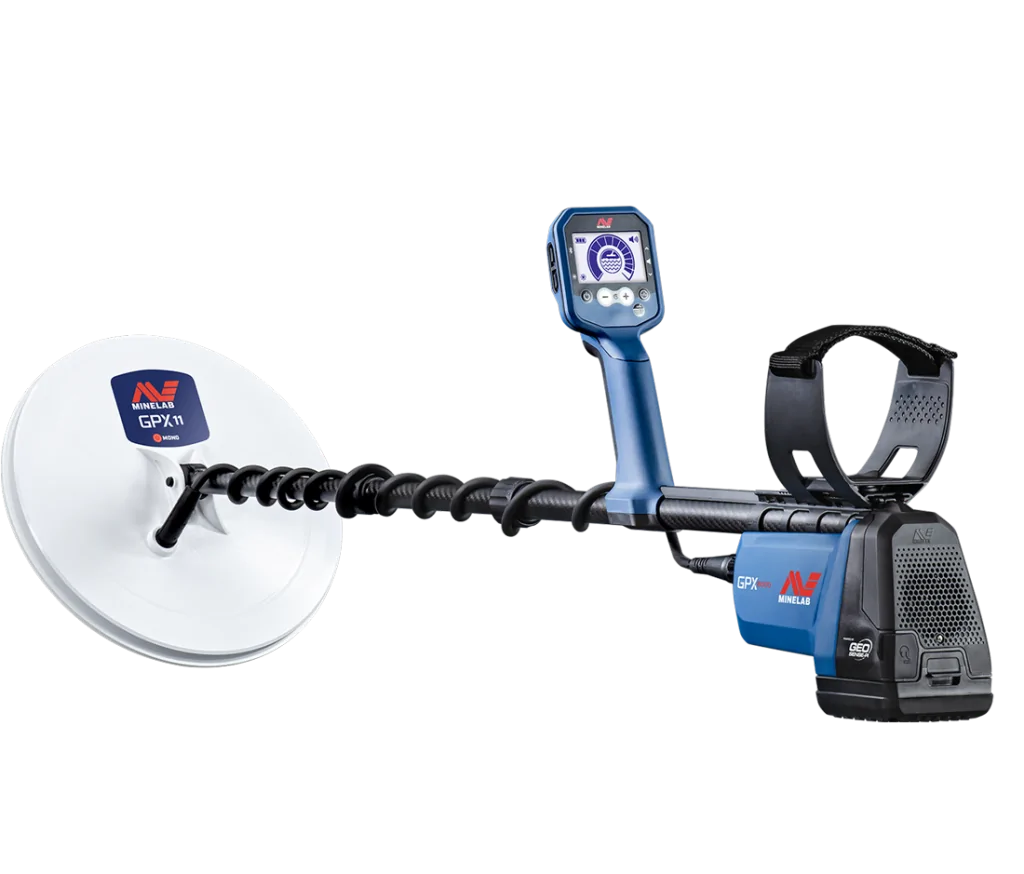
Buying question: Which included and optional coils fit your target sizes and soil? Ask for the exact package and compare its practical ground handling with the alternatives on your shortlist.
Garrett Axiom: a PI option with configurable ground tools
Garrett Axiom is another dedicated gold-prospecting PI platform. Within the Garrett metal detectors range, Axiom offers documented Ultra-Pulse technology, TERRA-SCAN ground balance, and selectable settings for different search conditions. Its manufacturer guidance also distinguishes waterproof coils from the weatherproof housing.
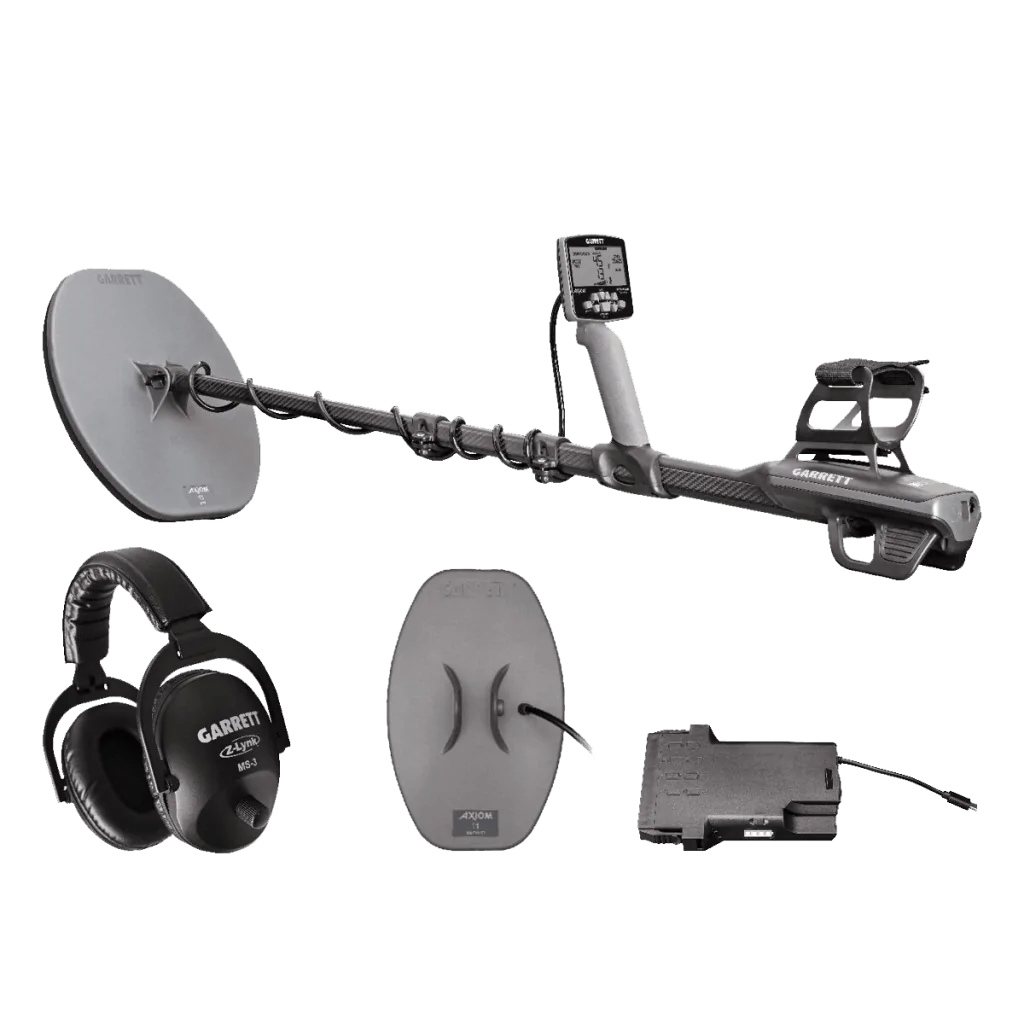
Buying question: Which package and coil combination are you comparing? Request a demonstration of the relevant ground controls and any coil-dependent iron-check function rather than assuming it behaves like VLF discrimination.
Nokta MAGNETAR 9000: a current goldfield PI alternative
MAGNETAR 9000 is documented by Nokta as an advanced pulse induction detector with dual-receiver coils and Easy and Expert menus. The manufacturer lists 2.4 kg with the 11-inch coil and 2.8 kg with the 14-inch coil, including the battery.
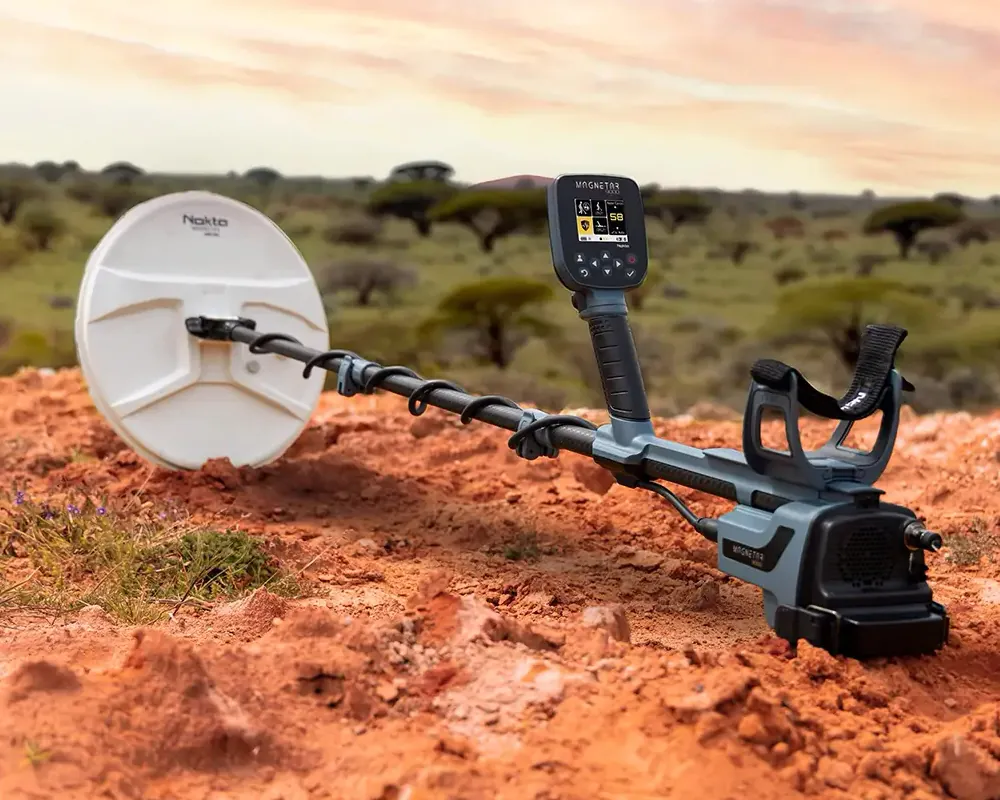
Buying question: Can you manage the assembled weight comfortably, and which coil suits your work? Compare the actual package rather than a bare-unit weight or a retailer’s generic technology category.
Minelab GPZ 8000: an advanced prospecting platform
GPZ 8000 is relevant to serious prospectors comparing dedicated goldfield systems. Minelab’s current specifications list several ground-related search modes, a weight of 2.78 kg, and model-specific coil and accessory arrangements.

Buying question: What is included in the offered coil pack, and can you use the complete setup effectively on your terrain? Compare it against your actual prospecting needs without assuming that a flagship model is automatically the right purchase.
The Legend 2: mixed-target and recreational detecting
The Legend 2 is a simultaneous multi-frequency option for buyers combining coins, jewelry, relics, beaches, and some goldfield use. Within the Nokta metal detectors range, this model has 99 target IDs, Park, Field, Beach, Relic, and Gold modes, and an approximately 1.2 kg weight.
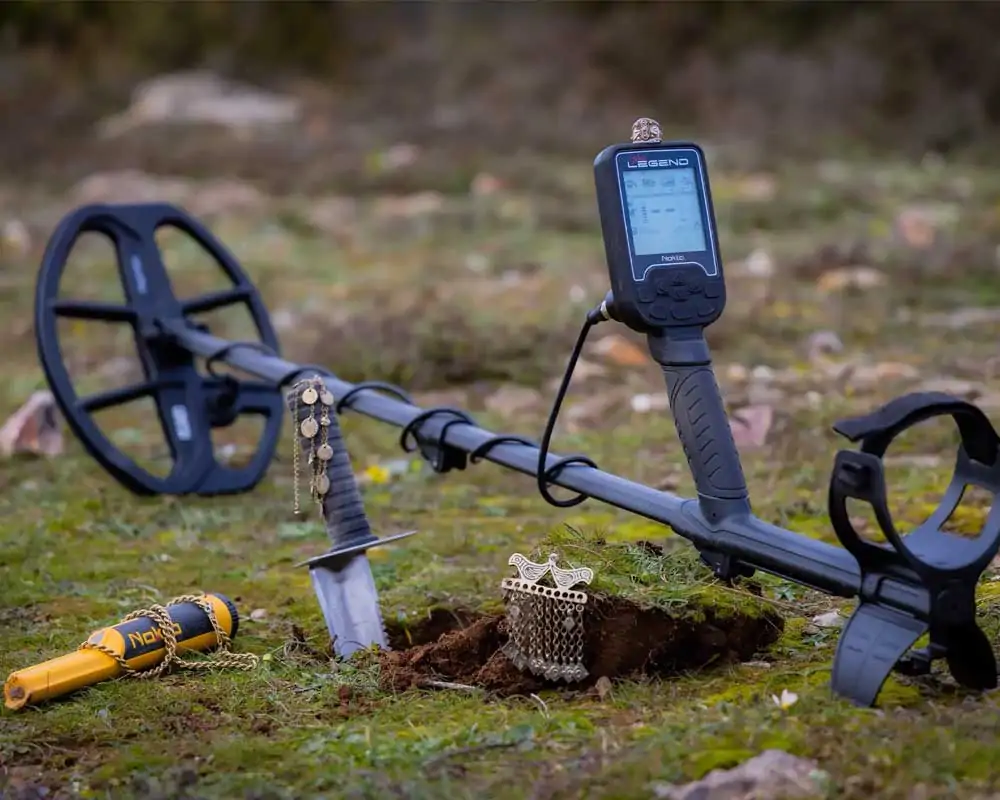
Buying question: Will most of your detecting involve mixed targets where discrimination and flexible site modes are useful? Test the responses of representative jewelry and trash rather than expecting a Gold mode to identify gold exclusively.
Minelab MANTICORE: advanced target information
MANTICORE suits a shortlist focused on multi-frequency recreational detecting and detailed target information. Minelab documents Multi-IQ+, conductive and ferrous target information, a 1.3 kg weight, and IP68 waterproofing to five meters.
Buying question: Will you benefit from the extra information and controls? Ask to interpret uncertain responses yourself. More display detail is useful when it supports a decision you understand.
Gold Stinger X6: examine the coil-based search package
Gold Stinger X6 is part of our Stinger Detectors range for buyers comparing metal-search configurations. Evaluate its documented operating modes and supplied coils directly. A description using the word “system” should not be assumed to mean that the detector includes every technology discussed in this guide.

Buying question: Can the supplier show the exact model’s ground-balancing procedure, target responses, coil choices, and package contents? Choose on demonstrated suitability for your work rather than transferring claims from a different multi-system product.
Gold Vision: portable ground-scanning workflows
Gold Vision is listed in our GeoGround detectors range with 3D ground scanning and additional search modes. It belongs in a different buying discussion from a simple coin detector or small-nugget machine.
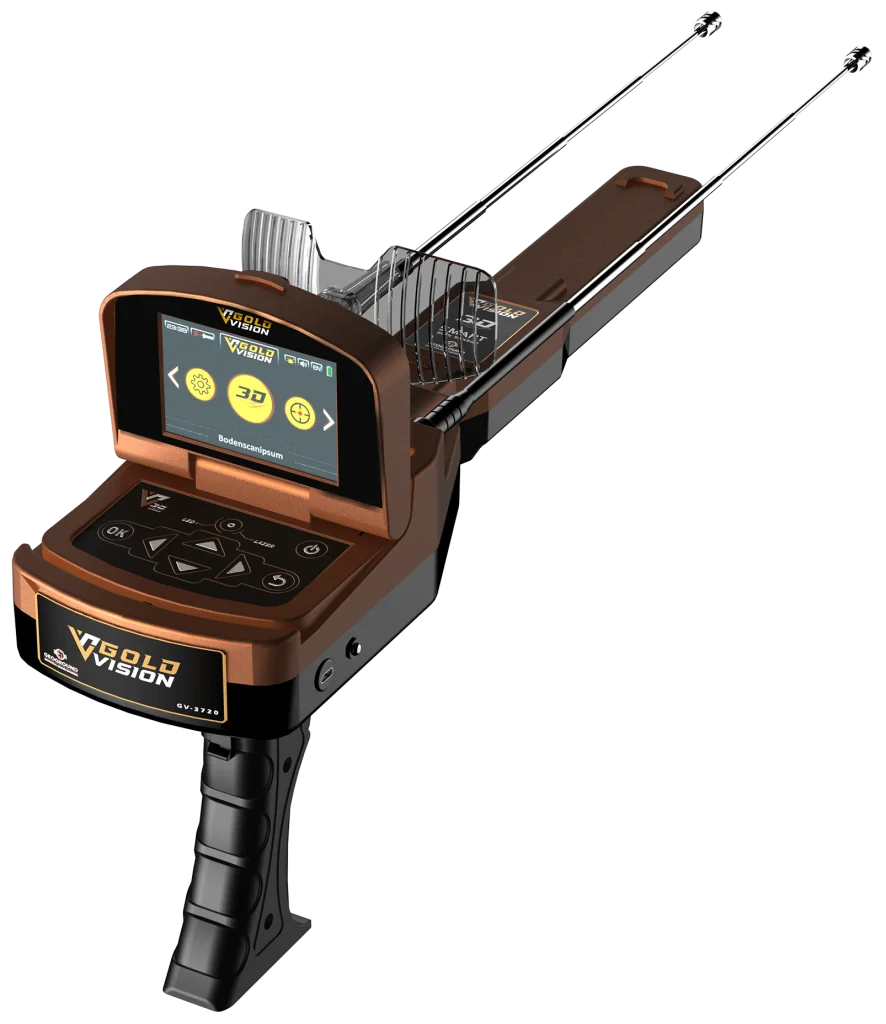
Buying question: Can you collect and repeat a scan with the exact model being offered? Confirm its software, sensors, training, and version. Treat material labels and depth outputs as indications requiring validation.
Infinity Max Pro: several search functions in one package
Infinity Max Pro is part of our Mega Detection detectors range and is listed with 12 search systems, including pulse induction and ground scanning. Its relevance depends on whether your work requires several of those functions and whether you can learn their separate procedures.
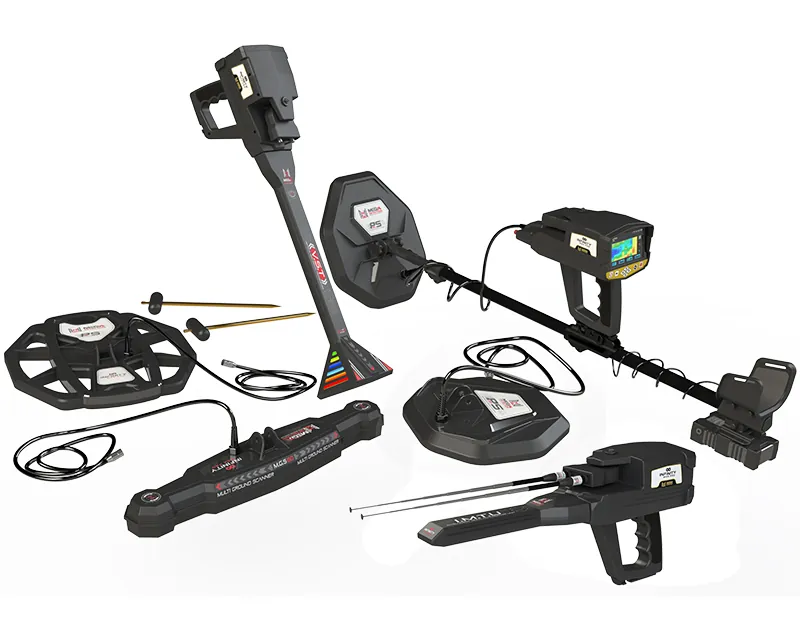
Buying question: Which functions can be demonstrated with known targets and blank locations? Ask for separate explanations of each sensor and mode; the presence of several indications is not automatically independent confirmation.
OKM eXp 7000: structured ground survey and analysis
OKM eXp 7000 is part of our OKM ground scanners range and is relevant when the task includes structured ground surveying. OKM’s Professional Plus documentation describes ground-scanning functions alongside VLF detection and software analysis.
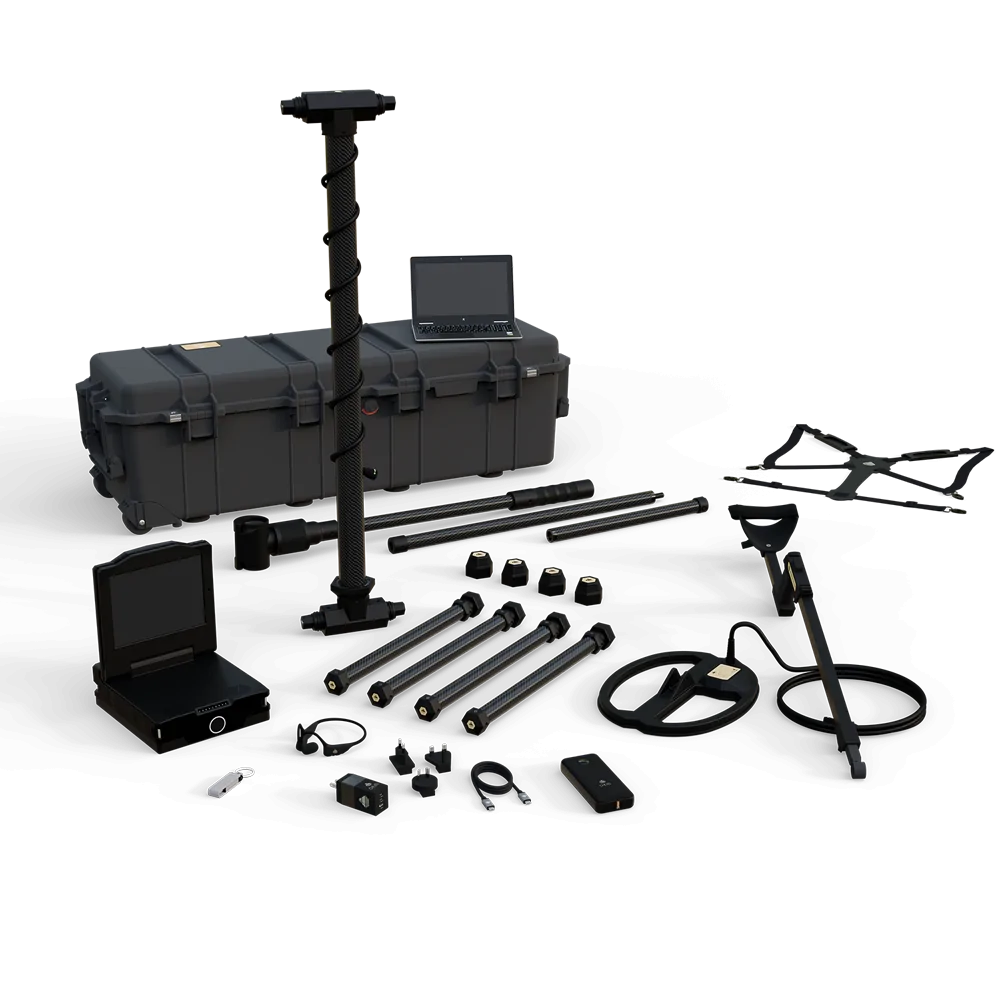
Buying question: Which probes, software edition, computer, and training are included? Verify the offered configuration against the manufacturer documentation. A professional scanner requires consistent acquisition and interpretation, even when its visualization looks straightforward.
6. Budget for the Complete Working Setup
A practical gold detector buying guide must account for the complete working setup. Start with the total amount you can spend and reserve enough to use the detector properly. The purchase price alone leaves out coils, headphones, power, transport, tools, software, and training. An attractive discount can lose its value if the package needs expensive additions before your first trip.
| Cost area | What to confirm |
|---|---|
| Detector and coil package | Exact model, included coils, covers, shafts, and accessories |
| Power and audio | Spare battery options, approved charging equipment, suitable headphones |
| Field equipment | Carrying solution, recovery tools, and a pinpointer if relevant |
| Software and training | Required hardware, license edition, instruction, and update access |
| Delivery and service | Shipping, applicable charges, warranty route, and repair transport |
For current product examples, consult our gold detector price guide and request an itemized quotation. Check the date, currency, package, and delivery terms. Comparing two totals without comparing their contents can make the less complete package look better than it is.
A beginner’s priority should be a suitable machine with enough support to learn it. An experienced buyer should identify the specific problem an upgrade will solve: difficult ground, limited target separation, physical fatigue, or a missing survey capability. Spending more is most useful when it addresses a clearly observed limitation.
7. A Practical Demonstration Before You Buy
A good demonstration should help you decide whether you can use the machine, not merely show that an expert can make it respond. Agree on the purpose beforehand and ask for a chance to operate the detector yourself.
- Choose representative targets. Use items relevant to your intended search, plus common unwanted metal. Record their dimensions and arrangement.
- Establish a baseline. Check an area without the test targets and listen for ground or interference responses.
- Record the configuration. Note the coil or probe, mode, and important settings so the demonstration can be repeated.
- Repeat from different directions. Check whether the response remains understandable rather than accepting one favorable pass.
- Include a mixed-target check. If separation matters, test a desirable item near unwanted metal.
- Operate it yourself. Adjust the shaft, follow the setup procedure, and explain what you hear or see.
- For scanners, repeat the survey. Save the raw scan, inspect the collection method, and compare repeat data before accepting an interpretation.
For a controlled concealed-target demonstration, the operator should not know every target location. Include empty positions, agree on the success criteria in advance, and record both correct and incorrect indications. One successful pass cannot establish general performance.
Ask the supplier to explain an uncertain result. Clear limits and an understandable procedure are more useful to your purchase than a demonstration that presents every response as a valuable target.
8. Common Gold Detector Buying Mistakes
- Buying for a maximum-depth number. Request target-specific conditions and a repeatable test.
- Confusing jewelry hunting with nugget prospecting. Match the machine to the kind of gold you actually expect to search for.
- Assuming expensive means appropriate. A specialist platform may solve a problem you do not have.
- Overlooking mineralization. A strong indoor response does not answer whether the detector is usable on your site.
- Rejecting every trash-like response. Desirable gold targets can overlap unwanted metal responses.
- Equating a waterproof coil with an underwater detector. Check the complete model and accessory requirements.
- Choosing by the number of systems. Identify what each sensor does and whether you need it.
- Trusting scan colors or target numbers as proof. Repeat the measurement and assess alternative explanations.
- Ignoring training and service. Confirm who will help you learn the exact model and handle a fault.
Equipment ownership also does not establish permission to search or excavate a location. Check the applicable rules and land access requirements for your intended site before planning fieldwork.
9. Gold Detector Buying Guide: Final Checklist
Before paying, make sure you can answer these questions in writing:
- What is my primary target, and what size or type am I expecting?
- What ground, interference, and access problems will I face?
- Why does this technology suit that task?
- Which exact model, coil, battery, and software package am I buying?
- Can I explain its target information and its limitations?
- Have I checked the water rating of the full setup?
- Can I carry and operate it comfortably?
- How will I power it for the intended field day?
- What does the complete setup cost, including required additions?
- What training, warranty, and service arrangements are included?
- Have I seen a relevant demonstration with repeatable results?
- Do I have the necessary access and permissions for the intended site?
If you are ready to narrow the options, contact Orient Detectors with your target, terrain, experience, water-use requirements, and total budget. Request a shortlist of two or three suitable configurations and an itemized comparison. That makes it easier to choose a detector you can use effectively.
Frequently Asked Questions
What is the best gold detector for a beginner?
Choose a detector suited to the target and ground that you can learn comfortably. Gold Monster 2000 is a relevant natural-gold example; The Legend 2 is a broader mixed-target option. Difficult mineralized ground may justify specialist equipment even for a new user, provided suitable training is available.
Should I choose VLF, multi-frequency, or pulse induction?
Compare VLF and simultaneous multi-frequency options when target information and mixed-site versatility matter. Compare dedicated PI prospecting machines when challenging goldfield ground is the main issue. A local demonstration should decide between suitable configurations rather than the technology label alone.
Can a gold detector identify only gold?
No ordinary target ID or gold-probability display proves that a buried item is gold. Responses overlap with other metals and vary with the target and conditions. Treat the reading as information for investigation, not a material certificate.
Can a detector find very fine gold?
Some gold-focused detectors are designed for small pieces, but there is no universal minimum detectable size. Dispersed fine gold and ore assessment are different problems from locating an individual detectable nugget. Match the method to the form in which gold occurs.
Does a larger coil always detect deeper?
No. A larger coil may help with coverage or certain larger targets, but terrain access, ground response, target separation, and small-target sensitivity also matter. Compare compatible coils against your main search rather than choosing diameter alone.
Is a 3D ground scanner better than a coil detector?
They can serve different tasks. A coil detector can be the practical choice for individual metal targets, while a scanner may support structured subsurface investigation. Neither a 3D image nor a scan mode guarantees gold or confirms a cavity without further assessment.
Can I use a goldfield detector underwater?
Only within the exact model’s documented limits and with the required accessories. Some have waterproof coils and weather-resistant control units; others allow full submersion under specified conditions. Read the manual rather than relying on a general “waterproof” label.
How much should I spend on a gold detector?
Set a total working budget and identify the least costly configuration that can realistically perform your main task. Include power, coils, transport, tools, training, and service costs. Request current quotes instead of relying on an old advertised price.
Will upgrading my detector guarantee more gold?
No. An upgrade may address a specific equipment limitation, but site selection, access, technique, time, and recoverable targets still determine results. Identify the problem you need to solve before paying for a more advanced platform.