
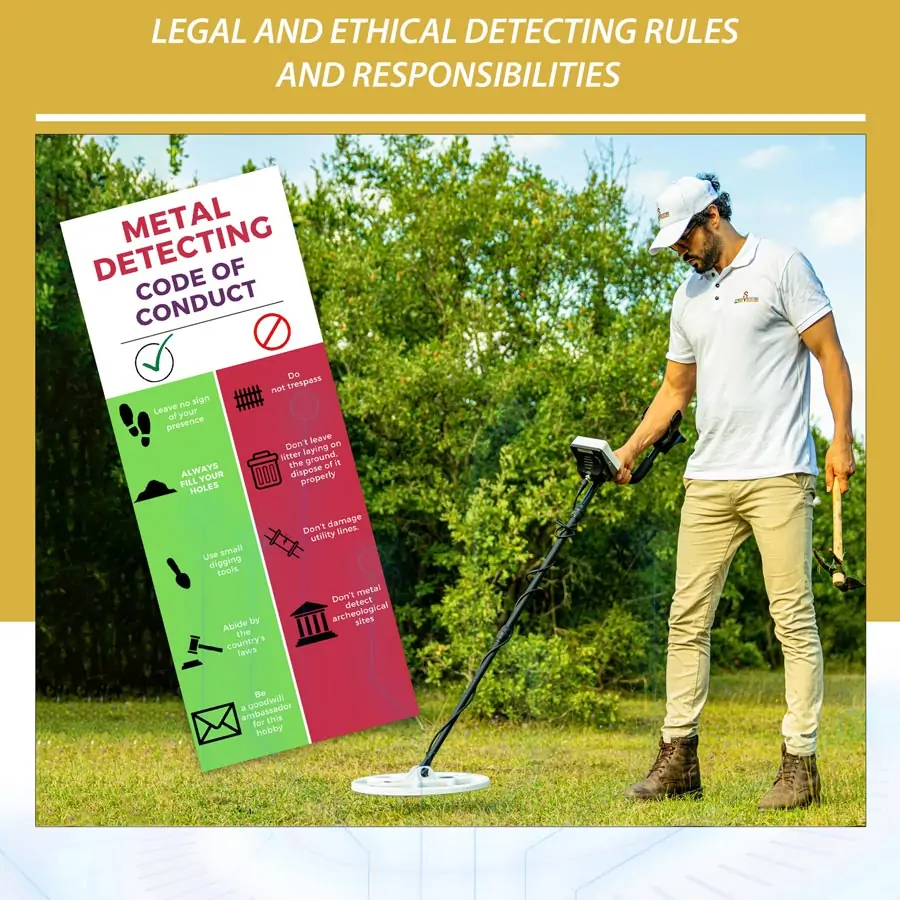
Legal and Ethical Metal and Gold Detecting Rules and Responsibilities
Metal detecting, a popular hobby among treasure seekers and history enthusiasts, involves using metal detectors to locate buried artifacts, coins, and precious metals. While this activity can be exciting and rewarding, it’s crucial to adhere to legal and ethical guidelines to ensure the preservation of historical sites and respect for property rights.
Importance of Legal and Ethical Rules
Metal and gold detecting enthusiasts play a significant role in preserving our cultural heritage by uncovering valuable artifacts and historical treasures. However, without proper regulations, these sites could be subject to looting and destruction, leading to the loss of invaluable historical information.
Respecting private property rights is another essential aspect of metal detecting ethics. Trespassing on private land without permission not only violates the law but also disrespects the property owner’s rights and can damage relationships between detectorists and landowners.
Legal Regulations
Metal and gold detecting enthusiasts must familiarize themselves with the legal regulations governing their hobby. In many countries, there are national laws that dictate where metal detecting is permitted and what types of artifacts can be collected. Additionally, local ordinances may impose restrictions on detecting in parks, beaches, and other public areas.
Ethical Considerations
Beyond legal requirements, detectorists should also consider the ethical implications of their actions. One such consideration is the environmental impact of metal detecting. Careless digging and excavation can disturb ecosystems and damage fragile habitats. Therefore, it’s essential to minimize environmental disruption and adhere to Leave No Trace principles.
Cultural sensitivity is another important ethical consideration for metal and gold detectors. Many archaeological sites hold significant cultural and religious significance for indigenous communities. It’s crucial to approach these sites with respect and sensitivity, avoiding any actions that could be perceived as disrespectful or harmful.
Responsibilities of Metal and Gold Detectors
As stewards of our shared history and natural resources, metal and gold detectors have certain responsibilities. First and foremost, obtaining permission from landowners or relevant authorities before detecting on private or protected land is essential. This ensures that detectorists are operating within the boundaries of the law and respecting property rights.
Proper disposal of waste is another responsibility of metal and gold detectors. This includes disposing of trash and debris collected during detecting outings in designated waste receptacles and following any local guidelines for the disposal of hazardous materials.
In conclusion, metal and gold detecting can be a rewarding hobby that allows enthusiasts to uncover hidden treasures and contribute to our understanding of history. However, it’s essential to adhere to legal and ethical rules to ensure the preservation of historical sites, respect for property rights, and minimize environmental impact. By following these guidelines, detectorists can enjoy their hobby responsibly and contribute positively to the preservation of our cultural heritage.
FAQs About Metal Detecting Rules and Responsibilities
- Are metal detectors legal everywhere?
- Metal detecting laws vary by country and region. It’s essential to research and understand the regulations in your area before detecting.
- Can I keep any artifacts I find?
- In many cases, you are required to report significant finds to the relevant authorities. Always check local laws and regulations regarding artifact collection.
- Is metal detecting harmful to the environment?
- While metal detecting itself may not be harmful, careless digging and excavation can disturb ecosystems. It’s crucial to minimize environmental impact and follow Leave No Trace principles.
- How do I obtain permission to detect on private property?
- Contact the landowner directly to request permission. Be respectful and transparent about your intentions, and always obtain written permission if possible.
- What should I do if I find something significant?
- If you uncover a significant artifact or archaeological site, stop digging immediately and contact the relevant authorities or archaeological experts for guidance on how to proceed.