Best Metal Detectors for Deep Buried Treasures
Choosing the best metal detectors for deep buried treasures is very different from choosing a simple detector for coins, jewelry, or shallow targets. Deep treasure hunting usually means larger objects, older burial sites, difficult soil, mineralized ground, possible cavities, and the need to confirm a target before serious excavation. This is why professional treasure hunters rarely ask only one question: “How deep can it detect?” A better question is: “Which technology gives me the most reliable information at depth for the type of treasure I am searching for?”
Deep buried treasures may include metal boxes, bronze or copper artifacts, gold and silver objects, relic collections, old weapons, containers, underground rooms, tunnels, tombs, or hidden cavities related to historical sites. Some of these targets are metallic. Others are not metal themselves, but the void or structure around them matters. A standard VLF metal detector may find coins and small targets very well near the surface, but it is usually not the ideal first choice for large deep targets. On the other hand, a 3D ground scanner may help visualize underground anomalies, but it requires more careful scanning and analysis than a conventional detector.
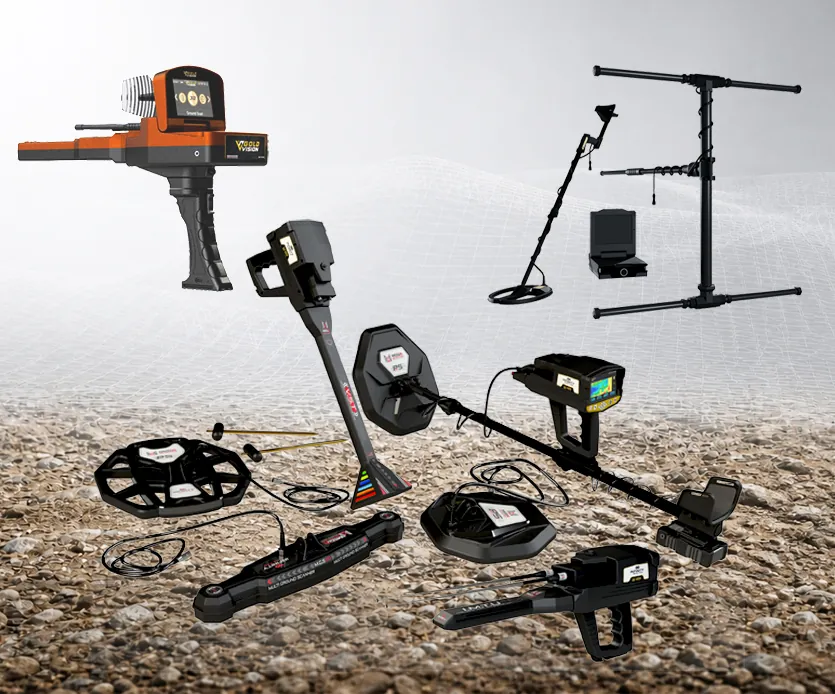
This guide compares the most suitable devices available on Orient Detectors for deep treasure work. The focus is not on advertising the most expensive machine. The goal is to explain which category of device fits each field situation, how to compare real depth claims, and how serious prospectors can use metal detectors for deep buried treasures more intelligently.
Quick Recommendation: Best Device Types for Deep Treasures
If your main target is a large buried treasure, an underground cavity, or a deep historical object, the most complete choice is usually a 3D ground scanner or a multi-system detector with ground scan capability. Devices such as Infinity Max Pro, Mega Scan Pro, Gold Star 3D Scanner, Phoenix, and EXP 7000 are designed for this type of deeper investigative search. They help the user scan an area, review visual results, and decide whether a signal is worth verifying.
If your main target is a large metal object at moderate to deep range, especially in difficult mineralized ground, pulse induction devices such as Lorenz Deep Max Z2 and Garrett ATX can be strong choices. These devices are not the same as imaging scanners, but they can provide excellent response on metal targets, especially when matched with the correct coil and field technique.
If you need one device for several stages of search, multi-system detectors are often the most practical. A treasure hunter may begin with long-range location or area scanning, move to 3D ground scan, then confirm with pinpointer or pulse induction systems. This is where devices like Infinity Max Pro, Gold Star 3D Scanner, Mega Scan Pro, and Concord become especially useful.
What Counts as a Deep Buried Treasure?
In metal detecting, the word “deep” is often used too loosely. A coin at 30 cm may be deep for a coin shooter. A small gold nugget at 50 cm may be extremely difficult for a gold detector. But for treasure hunting, deep buried treasure usually means a larger target that may be several meters underground, often surrounded by disturbed soil, stones, mineralization, or structural remains.
That difference matters because target size changes everything. A detector that can hear a small coin at modest depth may respond much deeper to a large metal container. A 3D scanner may not behave like a conventional detector at all; instead, it measures ground anomalies and visualizes differences between normal soil, metal, cavities, and other underground structures. Long-range locator systems work differently again, helping the operator investigate large areas before narrowing the search zone.
For this reason, the best metal detectors for deep buried treasures are usually not small-object hobby machines. They are devices built for larger targets, depth-oriented search methods, ground analysis, or multi-stage confirmation.
Why Depth Claims Need Careful Interpretation
Many buyers compare devices by maximum depth numbers, but real detecting depth depends on several conditions. Soil mineralization, target size, target metal, burial angle, moisture, surrounding rocks, electromagnetic interference, coil size, scan speed, and operator skill can all change the result. A manufacturer or seller may list a maximum depth under favorable conditions, but the practical result in the field can be lower or higher depending on the target and terrain.
This is why professional users evaluate deep treasure detectors by system type, not only by the depth number. A 3D imaging device may be better for a suspected underground room. A pulse induction detector may be better for a large metal object in mineralized soil. A multi-system device may be better when the site is unknown and the user needs several ways to verify the same location.
When comparing metal detectors for deep buried treasures, treat the depth specification as a useful starting point, not a guaranteed result for every target. The right question is whether the device technology matches your target size, ground conditions, and search method.
Main Technologies Used for Deep Treasure Detection
3D Ground Scanning
3D ground scanning is one of the most important technologies for serious deep treasure work. Instead of simply producing a beep, a 3D scanner collects measurement data from the ground and presents it visually, often through color maps, 2D views, or 3D graphics. This can help the user estimate the position, shape, size, and depth of underground anomalies.
On Orient Detectors, devices such as EXP 7000, Phoenix, Gold Star 3D Scanner, GR-4 GroundTech, A2 GEO, Mega Scan Pro, and Infinity Max Pro are examples of devices designed around scanning, imaging, or multi-system analysis. These are highly relevant when the target may be a deep container, a cavity, a tunnel, a chamber, or a large buried mass.
Pulse Induction
Pulse induction technology is valued for depth and performance in difficult soils. PI detectors send strong pulses through the coil and analyze the decay response from metallic objects. This technology is often less affected by mineralized ground than many conventional VLF detectors. Lorenz Deep Max Z2 and Garrett ATX are important examples for users who want strong metallic target response without relying on visual ground imaging.
Long-Range Locating
Long-range systems are designed to help investigate broad areas and guide the user toward a possible target direction or zone. They are best used as an early-stage search tool, not as the only proof before digging. Devices such as Infinity Max Pro, Gold Star 3D Scanner, Mega Scan Pro, Concord, and Mega G3 include long-range systems or long-range-oriented search options on Orient Detectors. For deep treasure hunters working across wide terrain, this can reduce wasted time.
Pinpointing and Confirmation
Deep treasure detection should always include confirmation. After a broad scan or long-range indication, a user should verify the target from multiple directions and, when possible, use another system such as pinpointer mode, live scan, pulse induction, or 3D analysis. The best metal detectors for deep buried treasures are not only deep; they help reduce false decisions before excavation.
Comparison Table: Best Metal Detectors for Deep Buried Treasures
| Device | Best For | Main Technology | Depth / Range Listed on Orient Detectors | Best User Level |
|---|---|---|---|---|
| Infinity Max Pro | Professional all-in-one treasure detection | 12 search systems, 3D scan, PI, LRL, tunnel scan | Depth 50 m, front range 3000 m | Advanced / professional |
| Mega Scan Pro | Multi-system treasure hunting and cavities | 6 search systems, 3D scan, LRL, ionic, bionic | Depth 50 m, front range 3000 m | Serious hobbyist / professional |
| Gold Star 3D Scanner | Treasure hunting with 3D and long-range systems | 8 search systems, M.G.S.60, VST, IMTU | Depth 50 m, front range 3000 m | Intermediate / professional |
| Phoenix Metal Detector | 3D ground scanning and live scan investigation | 3 search systems, MGS, VST, ground scan, live stream | Depth 40 m | Intermediate / professional |
| EXP 7000 | Premium 3D imaging, tunnels, cavities, artifacts | 3D imaging, sensors, VLF, visual analysis | Depth 25 m | Professional |
| Lorenz Deep Max Z2 | Deep metal targets and large objects | Pulse GBS pulse induction | Depth-oriented PI performance | Advanced / professional |
| GR-4 GroundTech | Portable 3D scanning for metals and cavities | 3D imaging, MFS-2 sensor, mobile app | Depth up to 15 m | Intermediate |
| A2 GEO | 3D imaging and geo-electric void detection | 3D imaging, geo-electric technology | Depth up to 20 m | Intermediate / professional |
| Concord | Multi-system LRL and pulse induction confirmation | 5 search systems, LRL, pulse induction | Depth 50 m, front range 3000 m | Intermediate / professional |
| Gold Stinger X6 | Affordable multi-system metal detecting | 6 search systems, coils, discrimination, depth mode | Depth 5 m | Beginner / intermediate |
1. Infinity Max Pro: Best Overall for Deep Buried Treasures
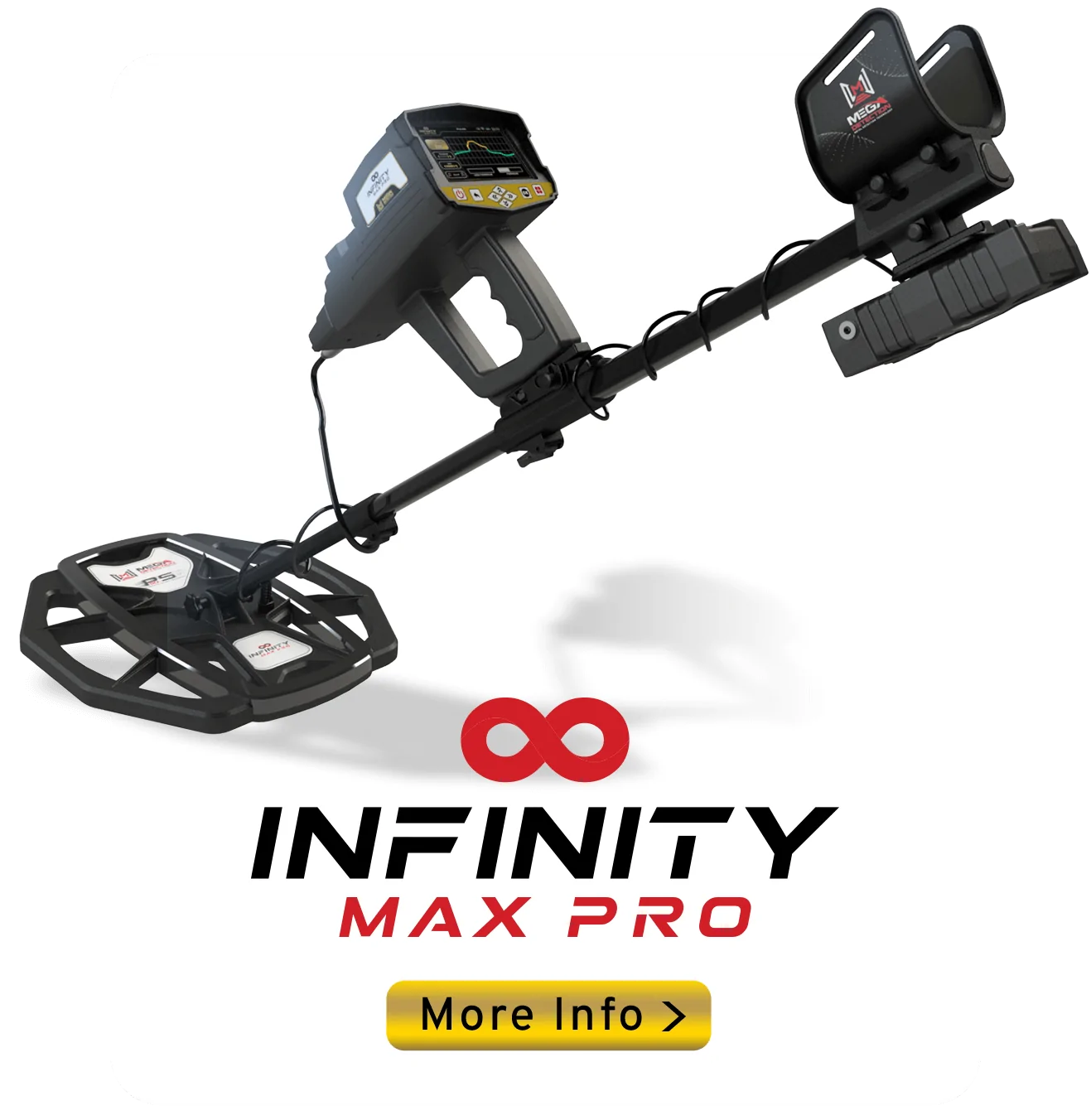
Infinity Max Pro is one of the strongest choices on Orient Detectors for users who want an all-in-one professional system. It is described as a multi-system detector with 12 search systems and a wide set of tools, including 3D ground scanning, long-range systems, pulse induction, smart detect, geophysical search, and tunnel scan. This makes it one of the most complete metal detectors for deep buried treasures because it can support several stages of professional searching.
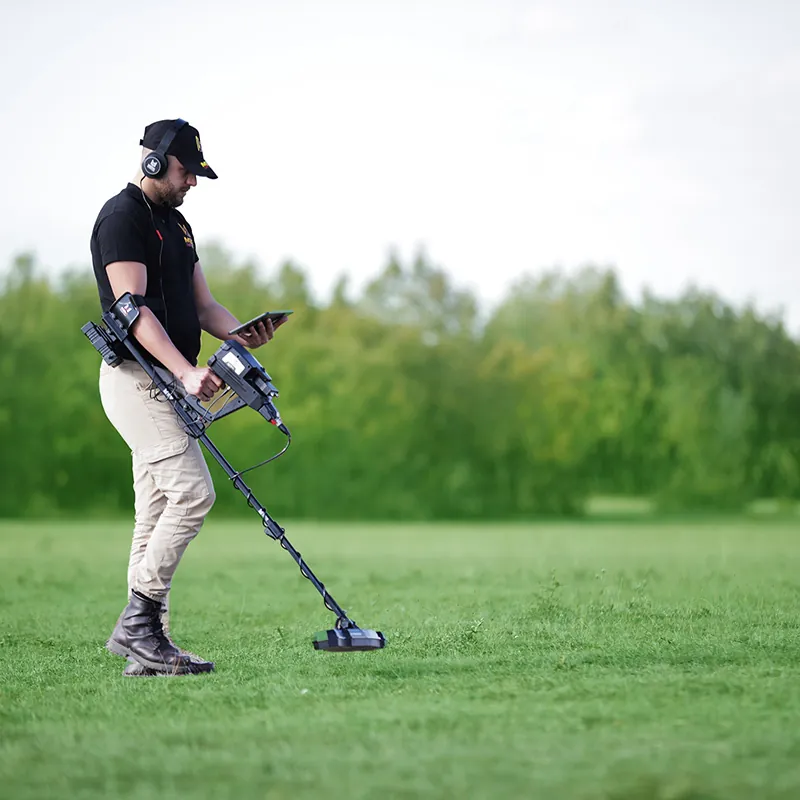
The main advantage of Infinity Max Pro is flexibility. A professional search rarely follows a straight line. You may begin by scanning a wide area, then detect a possible direction, then examine the ground visually, then confirm with a coil or a more focused mode. Infinity Max Pro is built for that kind of workflow. Its listed depth on Orient Detectors is 50 meters, with a front range of 3000 meters, making it suitable for large-area treasure hunting when used under appropriate conditions.
The device is especially relevant for users searching for buried treasures, archaeological objects, natural gold, tunnels, caves, and basements. The Multi Ground Scanner, VST probe, IMTU probe, search coils, tablet visualization, and multiple display methods give the operator more than one layer of information. This does not remove the need for experience, but it gives a serious treasure hunter more ways to interpret the ground.
Infinity Max Pro is best for advanced users, exploration teams, and buyers who want one device that can handle different scenarios. It is not the simplest option, but it is one of the most complete solutions when the search target is unknown or when the site may contain both metal and voids.
2. Mega Scan Pro: Best Multi-System Choice for Serious Treasure Hunters
Mega Scan Pro is another excellent option for deep treasure work. It includes six search systems: Ground Scan, Pinpointer, Manual LRL, Automatic LRL, Ionic, and Bionic. On Orient Detectors, it is presented as a multi-purpose detector for serious treasure hunters, combining 3D ground scanning and long-range detection in one device. Its listed depth is 50 meters, with a front range of 3000 meters.
For many users, Mega Scan Pro may be a practical balance between capability and complexity. It does not have as many systems as Infinity Max Pro, but it still covers the major professional needs: scanning, long-range locating, target narrowing, and visual interpretation. The VST probe is used for ground scan and pinpointer applications, while the IMTU probe is designed for electromagnetic interaction with buried targets through the antenna system.

Mega Scan Pro is especially suitable when the user wants to search for gold, silver, bronze, gems, coins, relics, and underground cavities or tunnels. It is also a good fit for wide open lands where the user needs to reduce the search area before detailed scanning. In that sense, it is one of the strongest metal detectors for deep buried treasures for serious buyers who want professional features without moving directly to the highest-priced category.
3. Gold Star 3D Scanner: Best Balanced 3D and Long-Range Treasure Device
Gold Star 3D Scanner is designed as a multi-system, multi-purpose detector with eight search systems. According to Orient Detectors, it combines technologies such as long-range detection, 3D imaging, ionic and bionic systems, live stream, ground scan, and pinpointer. It includes tools such as M.G.S.60, VST, and IMTU, and it is listed with a depth of 50 meters and a front range of 3000 meters.
This device is attractive for treasure hunters who want broad capabilities but still want a structured device focused on buried treasures and archaeological exploration. The 3D ground scan function is valuable because deep treasure hunting often needs visual analysis. A strong signal is useful, but a visual scan can help determine whether the underground object looks like a target, a void, normal ground, or an irregular anomaly.
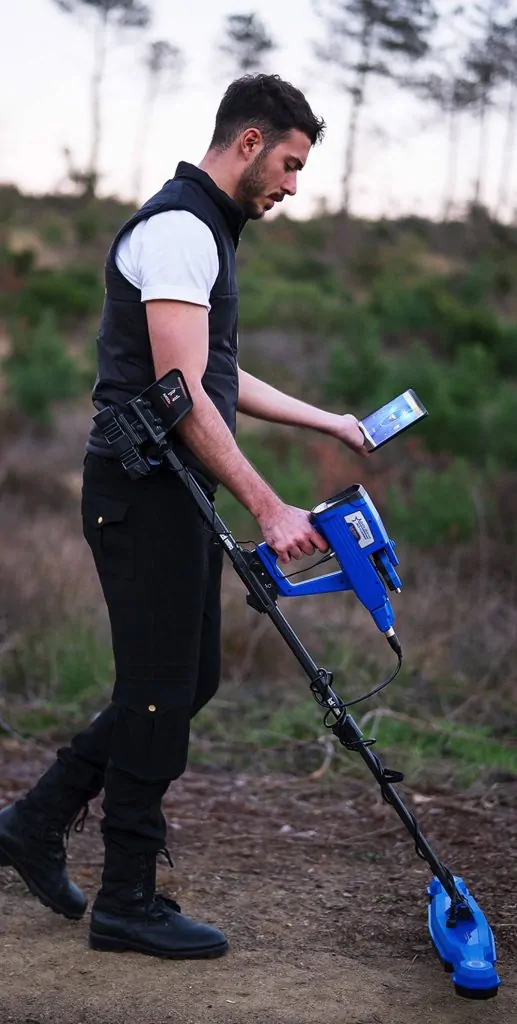
Gold Star 3D Scanner is also a strong educational step for users moving from simpler detectors toward professional ground scanning. It can serve both intermediate users and professionals, depending on how carefully the operator learns the scan process. As with all metal detectors for deep buried treasures, the quality of the result depends on controlled scanning, repeated confirmation, and correct interpretation.
4. Phoenix Metal Detector: Best Focused 3D Ground Scanner for Deep Investigation
Phoenix is a professional 3D ground scanner from Mega Detection with three search systems: Ground Scan, Live Stream, and Pinpointer. It uses M.G.S and VST tools and is listed on Orient Detectors with a depth of 40 meters. Unlike broader multi-system devices, Phoenix focuses strongly on imaging and ground investigation.
This makes Phoenix a strong choice when the user wants to study a suspected site in detail. The Ground Scan system helps visualize the scanned area. Live Stream provides real-time ground feedback. Pinpointer mode helps narrow the target after the main scan. For treasure hunters interested in buried chambers, tunnels, cavities, or large metallic objects, this focused workflow can be very useful.
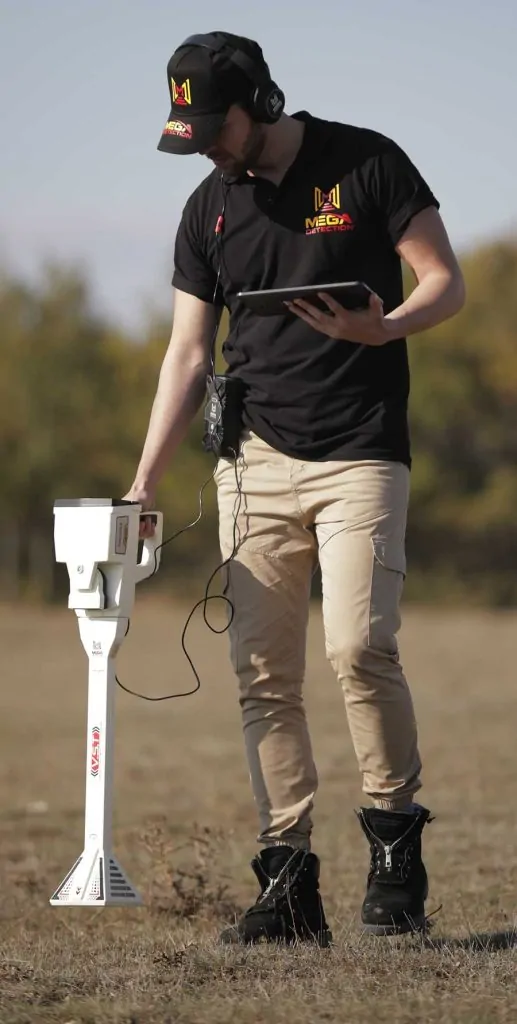
Phoenix is not simply a “beep and dig” detector. It is more like a field investigation tool. It suits users who are willing to scan carefully, review visual data, and compare results from different scan paths. For that reason, it belongs among the recommended metal detectors for deep buried treasures for users who value visual confirmation more than fast casual searching.
5. EXP 7000: Best Premium 3D Scanner for Professional Exploration
EXP 7000 is a premium 3D ground scanner from OKM, listed on Orient Detectors with 25 meters depth and a professional set of probes, sensors, and analysis tools.
It is considered one of top metal detectors for deep buried treasures for serious treasure hunters .
It is designed for gold treasures, artifacts, tunnels, cavities, underground structures, natural gold minerals, and professional exploration tasks. It supports multiple operating modes such as 3D Ground Scan, 3D VLF Scan, Tunnel Scan, Mineral Scan, Live Scan, Magnetometer, Pin Pointer Mode, and VLF Metal Detection.
The strength of EXP 7000 is high-level visualization and analysis. It is not just a detector for one type of target. It is a complete investigative scanner for users who need to map underground structures and objects. The Visualizer 3D software gives the operator a way to analyze scan data, inspect shapes, estimate depth, and make more informed excavation decisions.
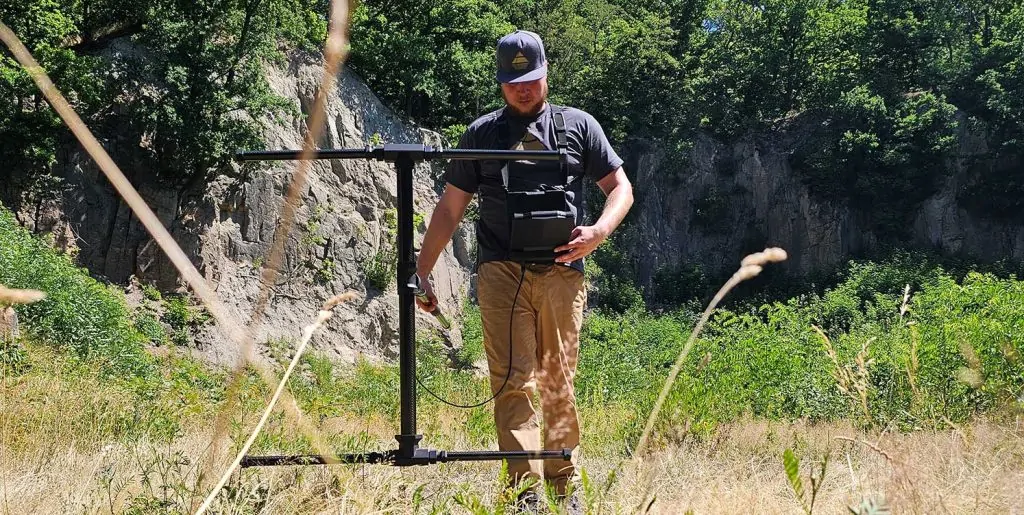
For archaeology-style search, serious treasure hunting, and professional underground surveying, EXP 7000 is one of the most advanced options. It requires a higher budget and a more careful learning process, but for professional teams looking for deep information rather than simple target alerts, it is one of the most capable metal detectors for deep buried treasures available on the site.
6. Lorenz Deep Max Z2: Best Pulse Induction Detector for Deep Metal Targets
Lorenz Deep Max Z2 is different from 3D scanners. It is a pulse induction detector using Lorenz Pulse GBS technology, designed for high sensitivity, depth, and stable performance in difficult ground. Orient Detectors describes it as suitable for buried relics, ancient artifacts, golden coins, jewelry, natural gold, and larger metal objects.
The biggest advantage of Lorenz Deep Max Z2 is its focus on metallic response. If your search goal is a large metal object, a cache of metallic items, or relics in mineralized soil, a strong PI detector can be very valuable. Unlike 3D scanners, it does not provide the same visual mapping of cavities and underground structures, but it can be highly effective for confirming metal targets.
Many serious treasure hunters use PI detectors as confirmation tools after scanning. For example, a 3D scanner may show an anomaly, while a PI detector can help test whether the anomaly includes metal. This makes Lorenz Deep Max Z2 a logical companion or alternative to imaging systems, especially for users who prioritize metallic targets over void detection.
7. GR-4 GroundTech: Best Portable 3D Scanner for Practical Field Use
GR-4 GroundTech is an advanced 3D ground scanner listed on Orient Detectors with MFS-2 technology and a depth of up to 15 meters. It is operated through Android and iOS applications and is designed to locate gold, metals, cavities, and buried treasures. Its portable design and app-based workflow make it a practical choice for users who want 3D scanning without a large or complicated setup.
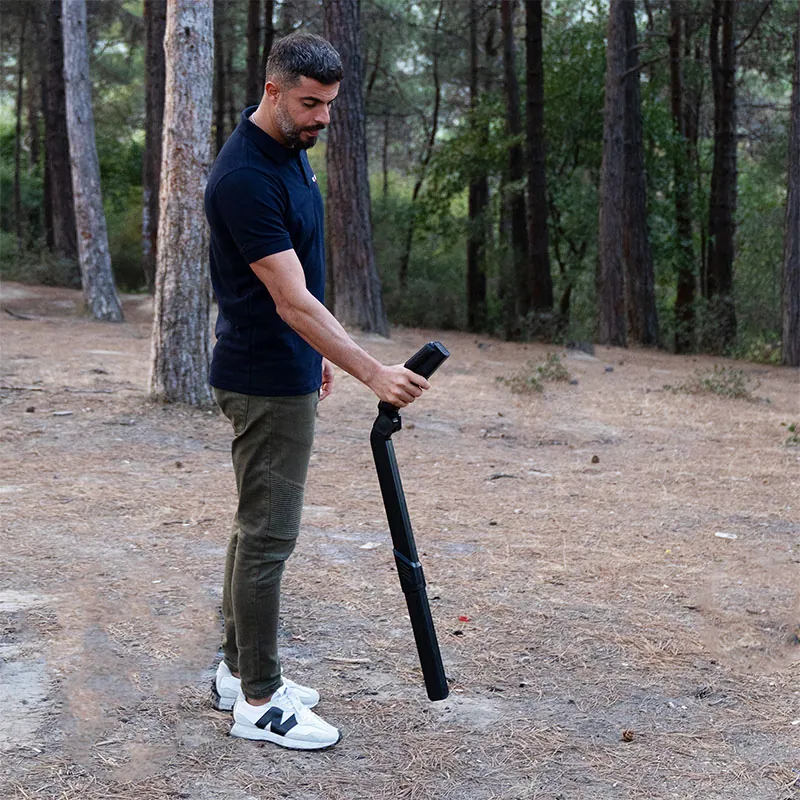
GR-4 is especially useful for targeted investigation. It may not have the same depth rating as the largest multi-system detectors, but 15 meters is still significant for many field situations. It offers 3D graphical imaging, live scan mode, saving scan results, and reviewing them later for analysis. This makes it a good option for intermediate users who want to move beyond simple metal detecting and begin working with visual ground data.
Among metal detectors for deep buried treasures, GR-4 is best for users who value portability, mobile control, and clear 3D analysis. It is a smart choice for smaller teams, repeat site checks, and field conditions where carrying a large setup is not ideal.
8. A2 GEO: Best for Voids, Tunnels, and Geo-Electric Investigation
A2 GEO from GroundTech is listed on Orient Detectors as an imaging detector for advanced treasure hunting and geological exploration, with depth up to 20 meters. It combines 3D imaging with geo-electric technology, making it especially relevant for detecting large voids such as tunnels and caves.
Not every treasure target is a clean metal object. In many old sites, the most important clue may be a cavity, tunnel, chamber, wall, or foundation. Geo-electric and imaging systems can help identify these anomalies in a way that a conventional metal detector cannot. For users searching for deep buried treasures connected to underground structures, A2 GEO can be a highly relevant device.
A2 GEO is best used by users who understand that void detection is different from coin detecting. It requires careful scan planning and interpretation. But when the target may be a tunnel or chamber rather than a single metal object, it becomes one of the more specialized metal detectors for deep buried treasures on the site.
9. Concord: Best Hybrid Option for LRL and Pulse Induction
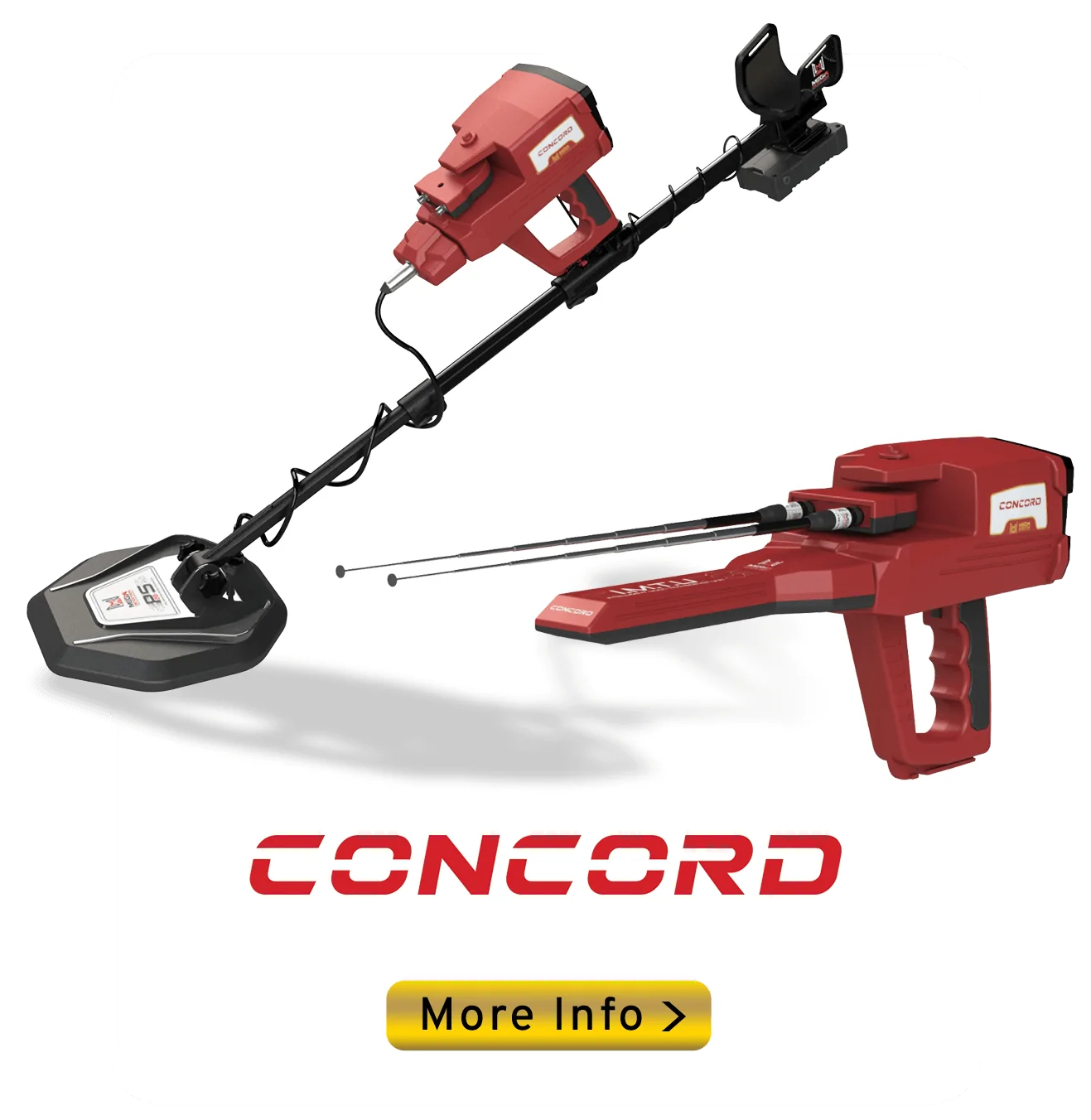
Concord is a multi-purpose, multi-system detector from Mega Detection. Orient Detectors lists it with five search systems, long-range locating, pulse induction technology, 50 meters depth, and 3000 meters front range. This combination makes it useful for treasure hunters who want both wide-area search and metallic target confirmation.
The practical value of Concord is workflow. Long-range systems can help guide the user toward a suspected area. Pulse induction can help investigate metallic responses more directly. The device also includes visual display of results and multilingual software, making it accessible to users who want several search methods in one device.
Concord fits users who do not necessarily need a full 3D imaging suite but still want a professional multi-system approach. It can be suitable for treasure hunters who search large lands, then need a stronger confirmation method before digging.
10. Gold Stinger X6: Best Affordable Entry into Deeper Multi-System Detecting
Gold Stinger X6 is not in the same category as the largest 3D scanners, but it deserves mention because many buyers need a more affordable and practical starting point. Orient Detectors lists Gold Stinger X6 with six search systems, dual coil technology, all-metals mode, discrimination, pinpointer mode, and depth detection. Its listed depth is 5 meters.
For beginners and intermediate users, Gold Stinger X6 can be a useful device for learning proper field technique and finding metals at practical depths. The GS50 coil is designed for greater depth and wider coverage, while the GS30 coil is better for precision and smaller targets. It is suitable for gold, metals, and underground targets in real field conditions.
Gold Stinger X6 is not the best choice for the deepest buried chambers or very large professional exploration projects, but it is a smart option for users who want a capable detector before investing in a high-end 3D scanner. In an SEO and buyer-guide context, it provides a realistic entry point in the category of metal detectors for deep buried treasures.
How to Choose the Right Deep Treasure Detector
Choose by Target Type
If you are searching for large metal containers, relic caches, or buried metallic objects, pulse induction and multi-system detectors are strong choices. If you are searching for cavities, tombs, chambers, tunnels, or deep anomalies, 3D imaging and geo-electric systems are more relevant. If your target is unknown, choose a multi-system device that can scan, locate, and confirm.
Choose by Terrain
Rocky ground, mineralized soil, salty soil, and mountainous terrain all affect detection performance. PI detectors are often strong in mineralized areas. 3D scanners can be excellent for structured surveys, but they need careful scanning lines and stable movement. Long-range systems may help in open areas, but they should be followed by local confirmation.
Choose by Experience Level
A beginner may get better value from Gold Stinger X6 or GR-4 GroundTech than from the most advanced scanner, because learning technique matters. Intermediate users may prefer Phoenix, Mega Scan Pro, or Gold Star 3D Scanner. Professional teams may benefit most from Infinity Max Pro or EXP 7000 because these systems provide deeper analysis and more advanced workflows.
Choose by Search Workflow
Deep treasure hunting is often a process: research the site, scan the area, mark suspicious points, repeat the scan from another direction, confirm with another technology, then dig only when the evidence is strong. The best metal detectors for deep buried treasures support this workflow instead of encouraging random digging.
Best Device by User Category
| User Category | Recommended Device | Why It Fits |
|---|---|---|
| Beginner looking for depth on a practical budget | Gold Stinger X6 | Affordable, multi-system, dual coils, easy entry into deeper detecting |
| Intermediate user wanting 3D scan data | GR-4 GroundTech | Portable 3D imaging with mobile app and up to 15 m depth |
| Treasure hunter needing focused imaging | Phoenix | 3D Ground Scan, Live Stream, Pinpointer, up to 40 m depth |
| Serious user needing multi-system power | Mega Scan Pro | 6 systems, 3D scan plus LRL, depth and range for wide search |
| Professional all-in-one buyer | Infinity Max Pro | 12 systems, multiple tools, PI, 3D scan, LRL, tunnel scan |
| Professional visual exploration | EXP 7000 | Premium 3D imaging, tunnel scan, mineral scan, advanced analysis |
Common Mistakes When Searching for Deep Buried Treasures
Buying Only by Maximum Depth
The deepest number is not always the best device for your job. A 50-meter long-range specification does not mean every small object can be detected at that depth. A 25-meter 3D scanner may provide more useful information for certain underground structures than a simple detector with a higher theoretical claim. Always compare technology, target type, and field workflow.
Digging After One Signal
Deep excavation is expensive, time-consuming, and sometimes risky. A single signal should never be treated as proof. Scan again from another direction, change the settings, confirm with another system, and compare the result with site history. Professional users reduce unnecessary digging by building evidence.
Ignoring Soil Conditions
Mineralized soil, hot rocks, wet ground, and salt can affect results. Ground balance, sensitivity, coil selection, and scan method must be adjusted to the field. Even the best metal detectors for deep buried treasures need correct operation.
Using a Small-Target Detector for a Large Deep Search
A coin detector and a deep treasure detector are not the same. A device optimized for small targets near the surface may not be ideal for deep chambers or large relic caches. Match the tool to the mission.
Suggested Field Workflow for Deep Treasure Hunting
Start with research. Study maps, terrain, old paths, historical settlement patterns, and legal restrictions. Then survey the location visually. Mark areas that make sense before turning on the detector. If using a long-range system, scan from multiple positions and look for repeated direction lines. If using a 3D scanner, create clean scan lines, maintain consistent movement, and save results for comparison. If using pulse induction, test the area slowly and listen for repeatable signals.
After a possible target appears, repeat the search from another angle. Change system settings if appropriate. Use a pinpointer or confirmation mode when the device provides it. If using a 3D scanner, analyze the target shape, depth, and color representation. A real deep treasure target should usually produce a repeatable and logical pattern, not a random one-time response.
This workflow is one reason multi-system devices are popular. They let the user move from discovery to confirmation without switching completely to another device. Still, professional teams may use more than one device: for example, EXP 7000 or Phoenix for imaging, and Lorenz Deep Max Z2 or Garrett ATX for metallic confirmation.
Legal and Safety Notes for Treasure Hunters
Before searching for buried treasures, always check local laws, land ownership rules, and heritage protection regulations. Many countries restrict detecting near archaeological sites, historical ruins, protected land, military areas, or private property. Permission is not optional; it protects both the user and the site. For general ethical guidance, users can review responsible detecting principles from organizations such as the National Council for Metal Detecting and heritage guidance such as the Portable Antiquities Scheme in the UK. Local laws differ, so these links are examples of responsible practice, not a replacement for local legal advice.
Safety is also important. Deep excavation can involve unstable soil, old wells, caves, dangerous gases, buried utilities, and unexploded materials in some regions. Use professional help when excavation becomes deep or structurally risky. A detector can indicate a target, but it cannot make excavation safe by itself.
FAQ: Metal Detectors for Deep Buried Treasures
What is the best detector for deep buried treasures?
For a complete professional solution, Infinity Max Pro is one of the strongest options because it includes multiple systems for ground scan, long-range search, pulse induction, geophysical work, and tunnel scan. For premium 3D imaging, EXP 7000 is an advanced choice. For focused imaging, Phoenix is strong. The best detector depends on your target and terrain.
Are 3D ground scanners better than normal metal detectors for deep treasures?
For deep large targets, cavities, tunnels, and underground structures, 3D ground scanners are often more informative because they provide visual data. For metallic confirmation, pulse induction detectors can be very useful. Many professionals use both technologies.
Can a detector really detect treasures at 40 or 50 meters?
Depth specifications depend on target size, soil, technology, and conditions. Large targets and cavities are different from small coins or nuggets. Treat maximum depth as a manufacturer or seller specification under favorable conditions, then verify in the field with proper scanning and confirmation.
Which device is best for beginners who want deep detection?
Gold Stinger X6 is a practical entry option because it is more affordable, includes multiple systems, and has dual coils. GR-4 GroundTech is another good step for users who want to begin with 3D scanning.
Which device is best for tunnels and cavities?
EXP 7000, Phoenix, A2 GEO, Infinity Max Pro, and GR-4 GroundTech are all relevant choices because they include imaging, ground scan, tunnel, cavity, or geo-electric capabilities depending on the model.
Which device is best for a large buried metal object?
Lorenz Deep Max Z2, Garrett ATX, Concord, and Infinity Max Pro are strong options depending on whether you need pulse induction, multi-system capability, or visual scanning. For large deep metal targets, PI technology and confirmation from multiple directions are especially useful.
Final Verdict: Which Deep Treasure Detector Should You Choose?
The best metal detectors for deep buried treasures are not chosen by depth number alone. They are chosen by search objective. If you want the most complete professional system, Infinity Max Pro is the strongest all-in-one recommendation. If you want a powerful multi-system treasure detector with 3D scan and long-range capability, Mega Scan Pro and Gold Star 3D Scanner are excellent choices. If your priority is focused imaging, Phoenix is a strong option. If you want a premium 3D exploration system, EXP 7000 is a high-end professional solution. If your target is mainly metallic and you need strong depth response in difficult ground, Lorenz Deep Max Z2 and Garrett ATX deserve serious attention.
For beginners, Gold Stinger X6 offers a more accessible way to enter deeper detecting without jumping immediately into advanced professional systems. For portable 3D scanning, GR-4 GroundTech and A2 GEO provide useful alternatives depending on whether the focus is metals, cavities, or geo-electric investigation.
In the end, deep treasure hunting is not about buying the loudest claim. It is about matching the device to the target, scanning method, soil, budget, and experience level. With the right workflow, the right detector, and responsible field practice, modern metal detectors for deep buried treasures can help serious prospectors make better decisions before excavation.
Suggested Links
Suggested External Links
- National Council for Metal Detecting – responsible detecting guidance.
- Portable Antiquities Scheme – heritage and finds recording reference.
- Minelab – manufacturer reference for advanced gold detector technology.
- Garrett – manufacturer reference for all-terrain and PI metal detectors.
- OKM Detectors – manufacturer reference for 3D ground scanners.