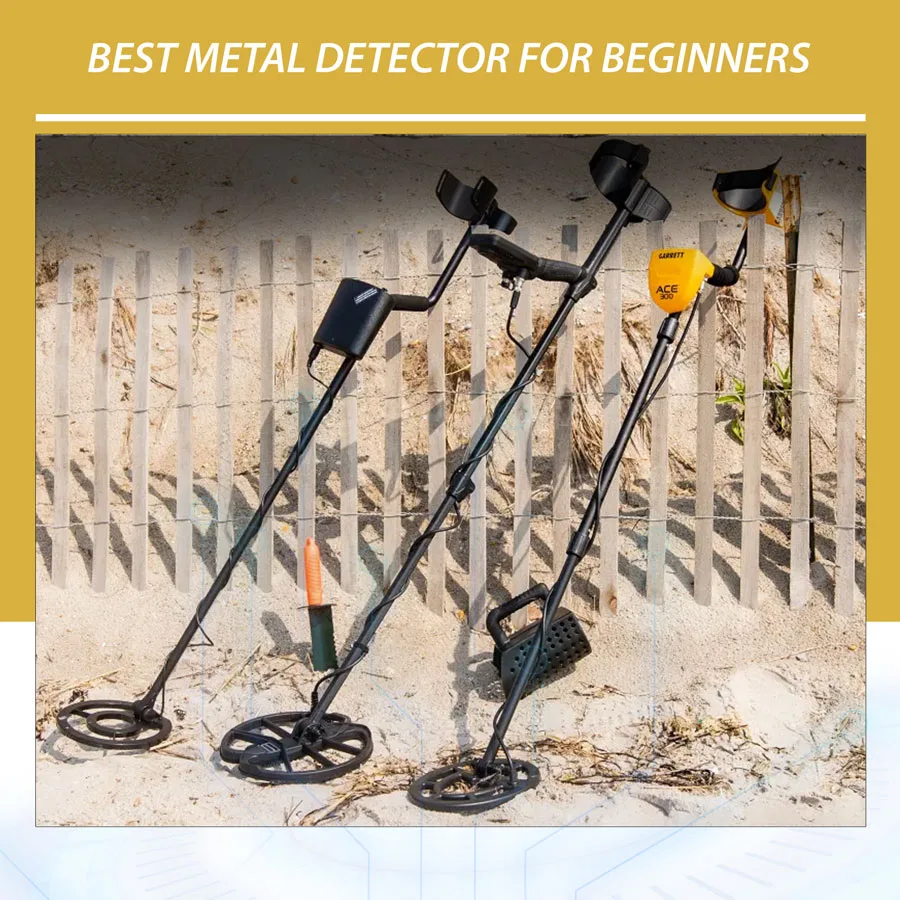
The best metal detector for beginners is a simple VLF machine with preset search modes, automatic ground balance, a numeric target ID and, ideally, a waterproof coil or a fully waterproof body. In our catalog that description fits the Nokta Simplex family, the Minelab Vanquish and the Garrett ACE series, with the Fisher F44 and the Garrett ACE APEX as close alternatives. All of them find coins, rings and relics at normal depths without a steep learning curve.
You do not need an expensive detector to start. A well-rounded entry-level machine, used often, teaches you more than a professional model that stays in the closet because its menus are confusing. Learn the hobby first, and upgrade when you know what ground you hunt and what you want to find. This guide explains what makes the best metal detector for beginners, compares the models we recommend and tells you which one suits which beginner.
What makes a metal detector good for beginners?
- Preset search modes. Park, Field, Beach or Coin modes set discrimination and sensitivity for you. You switch the detector on and start learning instead of adjusting menus.
- Automatic ground balance. Soil mineralization causes false signals. A detector that balances itself, with a manual option for later, stays quiet in most places.
- Numeric target ID and tones. A two-digit number and a few distinct tones let you learn quickly which signals are coins and which are bottle caps.
- Light weight and an adjustable shaft. Beginners swing for hours and often share the detector with children or a partner.
- Water protection. At minimum a waterproof coil for wet grass and shallow puddles. A fully submersible detector adds beaches, creeks and rain without worry.
- Pinpoint function. A button that narrows the signal to the exact spot saves digging large holes.
Depth figures in advertising are a poor basis for choosing. In real soil, a coin-sized target is detected at roughly 20 to 30 centimeters by any decent detector; the differences between entry-level models are in stability, target ID and comfort, not in dramatic depth gains. See our metal detector depth guide for realistic expectations.
Best metal detector for beginners: models compared
| Model | Technology | Search modes | Waterproof | Best for |
|---|---|---|---|---|
| Nokta Simplex | VLF, 12 kHz | 4 (All Metal, Field, Park, Beach) | Fully submersible | Beginners who want one detector for land, beach and shallow water |
| Nokta Simplex Ultra | VLF, 15 kHz | 6 (adds 4-tone and 99-tone) | Fully submersible | Lighter, newer Simplex with more audio options |
| Minelab Vanquish | Multi-IQ simultaneous multi-frequency | Preset modes | Waterproof coil; control box is not for submersion | Stable target ID on parks and beaches |
| Garrett ACE 400i | VLF, 10 kHz adjustable | 5 | Waterproof coil only | Classic coin and relic detector on dry land |
| Garrett ACE APEX | Multi-Flex multi-frequency | 6 | Waterproof coil only | Beginners who want multi-frequency in the ACE format |
| Fisher F44 | VLF | 5 (Jewelry, Coin, Artifact, Custom, All Metal) | Weatherproof body | Rainy climates, simple numeric ID |
Nokta Simplex: the all-round first detector
The Nokta Simplex became the standard beginner recommendation because it is fully waterproof at an entry-level price. It runs at 12 kHz, has automatic and manual ground balance, a clear LCD with target ID, depth and battery indicators, and four modes including a Beach mode for wet salt sand. The standard 11-inch DD coil covers ground quickly; a smaller coil is available for trashy sites. If a creek or the shoreline is part of your plans, this is the safest first choice.
Nokta Simplex Ultra: the updated version
The Simplex Ultra is the newer generation: lighter, running at 15 kHz, with six modes including 4-tone and 99-tone audio for users who want to learn target sounds in detail. It keeps the waterproof body. Choose it over the original Simplex if the budget allows and you value weight and audio flexibility.
Minelab Vanquish: multi-frequency on a budget
The Minelab Vanquish brings Multi-IQ, the simultaneous multi-frequency technology from the Equinox, to the entry level. Transmitting several frequencies at once (5 to 40 kHz) gives more stable target IDs on mixed targets and on salt beaches than a single frequency can. The shaft collapses short for transport and the detector runs on rechargeable batteries. The coil is waterproof, but the control box is not meant to go under water, so treat it as a land and dry-sand detector.
Garrett ACE 400i: the classic coin shooter
The Garrett ACE 400i is a simple 10 kHz detector with five modes, digital target ID, Iron Audio to hear discriminated iron, electronic pinpointing and a small frequency adjustment to avoid interference from other detectors. It is light, easy to understand and well suited to parks, fields and dry sand. It is not for use in water beyond the coil.
Garrett ACE APEX and Fisher F44: two worthwhile alternatives
The Garrett ACE APEX adds Garrett’s Multi-Flex multi-frequency technology and six modes in a light package, a good option if you want multi-frequency but prefer Garrett’s layout. The Fisher F44 is a weatherproof five-mode detector with a 1 to 99 numeric target ID and both manual and automatic ground balance, a sensible pick for wet climates where rain is common but you will not submerge the detector.
Which beginner detector should you choose?
- If you will hunt beaches, rivers or in the rain: Nokta Simplex or Simplex Ultra. Full waterproofing removes the biggest risk to a new detector.
- If target ID accuracy in parks matters most: Minelab Vanquish or Garrett ACE APEX, because multi-frequency gives steadier numbers on mixed targets.
- If you want the simplest possible machine for dry land: Garrett ACE 400i or Fisher F44.
- If natural gold is your goal: none of the above is ideal. Small nuggets need higher frequencies; read our guide to the best gold detector for beginners.
- If you dive or snorkel: add the Nokta Pulse Dive, a pulse induction detector and pinpointer in one that is rated to 60 meters, rather than buying a dive-capable main detector first.
How to get the most out of your first detector
- Read the manual and start with the factory presets. Lower the sensitivity only if the detector is noisy.
- Build a small test garden. Bury a coin, a ring, a pull tab and a nail at known depths and learn their IDs and tones. Our test garden guide shows how.
- Dig every repeatable signal for the first few outings. Trash teaches you what to ignore later.
- Use the pinpoint button and dig small, neat plugs. Fill every hole.
- Check local rules before you search and respect the heritage and mining laws of your country.
Frequently asked questions
How much should a beginner spend on a metal detector?
Enough to get preset modes, target ID and a waterproof coil from an established brand such as Nokta, Minelab, Garrett or Fisher. Very cheap toy detectors without these features frustrate beginners and are quickly abandoned.
Is a waterproof metal detector worth it for a beginner?
Yes if there is any chance you will hunt beaches, creeks or in wet weather. A fully waterproof model such as the Simplex costs little more than a land-only detector and cannot be ruined by a wave or a slip into the water.
Can a beginner metal detector find gold?
It can find gold jewelry and coins. Small natural gold nuggets are a different task that calls for a high-frequency or pulse induction gold detector and mineralized-ground skills.
What accessories do I need with my first detector?
A digging tool, a finds pouch, headphones and, when the budget allows, a pinpointer. A sand scoop replaces the digging tool on beaches.
Conclusion
The best metal detector for beginners is the one you will use often: simple presets, automatic ground balance, a readable target ID and protection from water. For most new detectorists the Nokta Simplex or Simplex Ultra is the safest first purchase, with the Minelab Vanquish, Garrett ACE 400i, ACE APEX and Fisher F44 as strong alternatives depending on where you hunt. If you are unsure which fits your ground and budget, message us on WhatsApp and we will help you decide.
Not sure which detector fits you? Contact us on WhatsApp.
Read also
Related Articles