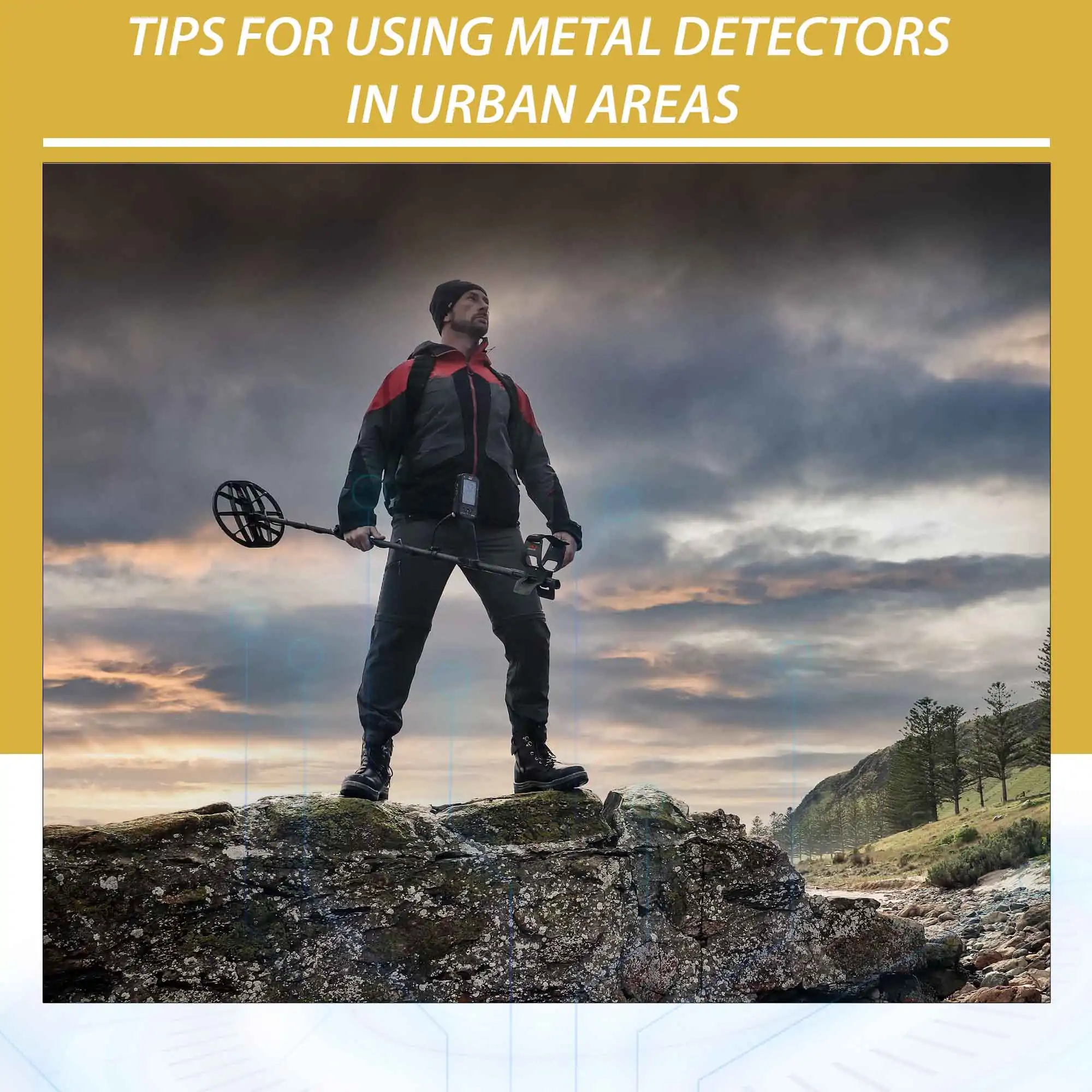
Tips for Using Metal Detectors in Urban Areas
Have you ever thought about what lies hidden beneath the ground you walk on? Using metal detectors is a popular hobby that gives you the chance to uncover these hidden treasures. It’s not just an outdoor activity; it’s an adventure that promises the thrill of discovery. Whether you’re a beginner or an experienced treasure hunter, the world of metal detecting is endless.
Metal detecting is a popular activity due to its simplicity and the excitement of discovering something valuable. You might find old coins, an expensive gold ring, or even artifacts from many years ago. It’s a treasure hunt in your own backyard, local park, or favorite beach.
Where you search with your metal detector greatly influences what you find. Different places have different kinds of treasures. Therefore, selecting the best places to use your metal detector depends on what you’re looking to find. Seeking gold coins or historical artifacts? Old homesteads and public lands could be your best bet. Want to find jewelry or unique valuables? Beaches and public city parks could be ideal.
But remember, with metal detecting comes responsibility. You must respect private property, obtain necessary permissions, and be aware of local laws that might impact your experience. Responsible practices ensure that metal detecting remains a fun activity for everyone.
Choose the Right Detector for Your Needs
There are multiple metal detectors on the market, and each can be used for a different purpose. When using metal detectors for you, it’s important to consider what you will be using it for. If you’re looking to find large objects, then you will need a different detector than someone who is coin shooting or looking for smaller objects like an old coin.
There are two main types of metal detectors: Very-Low Frequency and Pulse Induction metal detectors.
- A VLF detector is used to find a variety of objects, including coins, copper wire, relics, jewelry, and most commonly, gold. They use a low frequency to find objects buried underground.
- On the other hand, a PI metal detector detects buried metals by reflecting a pulse of energy. For best results, using metal detectors in areas with high mineral content in the soil, as it can be fooled by objects that contain metal but are not good conductors of electricity.
Gold metal detectors, for example, are made to find gold nuggets and other precious metals. The frequency of these gold prospecting detectors is set to a higher range so that they can pick up on these small pieces of valuable metals. Coin detectors, on the other hand, are made to find coins and other treasures buried underground. Using metal detectors have a frequency that is specifically calibrated to find smaller objects. While prospecting for gold, you might enjoy trying your hand at gold panning. Aside from hobby models, there are also industrial models used for locating a hidden metal contaminant or two in foods.
Some of the most common and effective hobby using metal detectors for beginners include:
Metal Detecting Technique
Your technique is key when metal detecting. There is a difference between the type of detector you have and the type of soil you are detecting.
Using Metal Detectors:
- Stand in a comfortable position
- The stem should be adjusted so that the transmitter coil and receiver coil hover just above the ground when you hold the device.
- Swipe the machine from side to side while walking slowly.
- Raise the search coils during a sweep to produce false readings.
- Continue sweeping in smaller paths and then a circular motion to isolate the area after a target ID is revealed by a beep.
The most common technique is to slowly sweep the detector back and forth across the ground. The detector’s magnetic field will cause any metal objects in the ground to create an electric current. When you hear an alarm or tone from the detector, stop and take a closer look at the area. You may have found something metal!
Another technique is to use a discrimination setting on your detector. This will help you to weed out unwanted metals, like aluminum cans or foil, from the objects you’re looking for.
When digging for buried treasure, use a small shovel or spade to carefully uncover the object. Be sure not to damage it or the roots of any plants in the process! If you are detecting on the beach, consider a beach scoop for recovering your targets.
Metal Detecting Tips for Gold Prospecting
- Gold is one of the most precious metals on earth, and there is no shortage of competitors that would love to find it before you. To this end, you need to invest in the best possible equipment to find it. If you are on a budget, get a high frequency gold prospecting VLF detector with a ground balance control. If money is no object, invest in a state of the art of using metal detectors with pulse induction . A pulse detector will find the tiniest nuggets in the toughest soil conditions.
- Get your hands on the best digging tools to help you extract your gold from the earth. You will want a gold pick to get through tough rock and ground conditions as well as a plastic scoop for filtering your gold from the earth around it. You can run your detector’s search coil over the plastic scoop to identify the gold.
- When hunting in areas with rattle snakes and other poisonous creatures, be sure that you are wearing proper boots and snake chaps. Nothing will dampen your day quicker than a deadly bit out in the field.
- When searching for gold nuggets, always use a high-quality set of metal detecting headphones. The slightest variation in tone will go unnoticed when masked by background noise. There are many small nuggets that will produce very faint signals.
- Slow is the name of the game when it comes to finding small nuggets. Once you get familiar with your machine lower the discrimination and you will find deeper and smaller targets. Swing your coil in a slow and methodical fashion overlapping each sweep.
Metal Detecting Tips for for Coins
- When searching for old coins, you need to go where they are. There are many public places just waiting to be searched. Early settlers to the United States brought coins with them from where they came. It is not uncommon in many parts of the country to find foreign coins from hundreds or even thousands of years ago. The best spots to find these coins are in locations where people would cue up to pay for admission or food. Old train stops, amusement parks, trolley stops, fairs and festivals are all hot spots for finding coins.
- Research is the key to finding the best spots to find coins. Start at your town hall or library’s local section. In it you will find historic maps, guides and directories. In these you will note many historic sites that may no longer be in vogue or even easily accessible. Sites off the beaten path are generally the most productive and offer the least competition.
- With a using metal detectors, following a few straightforward tips can help you find the most coins. Be sure that you are searching in locations where people frequently congregate. Parks, ball fields, train stations, stadiums, and beaches are excellent locations. Look for areas in these locations where people tend to gather. Concession stands, seating areas, old shade trees and rock formations along the shoreline are great places to start.”
- To find coins, keep your search coil close to the ground and overlap each sweep. For added depth and sensitivity, consider a larger coil. Coins tend to be low to mid-conductors and most easily found with a medium frequency. Keep your discrimination low and be patient. As you dig more, you will find more coin spills, caches, and other great finds.
Metal Detecting Tips for Relic Hunting
- When you are treasure hunting, locating the site is your first step. Research is key to finding the best sites. Many of these sites are in remote spots where armies of yesteryear congregated. River crossings, encampments and spots where soldiers would spend the night during their journey, can prove fruitful. Speak to old-timers, attend a relic club meeting and team up with others that can guide you.
- Search for early settlements to find relics. Maybe you’ve seen old stone walls or foundations while wandering through the woods. These are perfect spots for relic hunting. If you spot depressions in the ground, springs, old wells, or trash pits near the area, you may have discovered an ancient aquifer. Other great hunting spots include stone walls, rivers, and submerged or depressed roads and trails.
- In order to find relics, such as buckles and buttons, or cannon balls, you must choose the right site. Throughout history, many wars have been fought in unusual places, such as the Revolutionary War, Civil War, and others. Find out where troops gathered by looking at old maps of camp sites and battlefields. Respect local and national laws, and always obtain permission before hunting on private property.”
- The majority of relics are low conductors and require a detector that operates at a low frequency, usually under 10 kHz. Invest in a variety of search coils when looking for deeper or larger relics. Larger coils cover more ground and go deeper. The smaller coils will allow you to isolate targets on top of junk near foundations and in areas filled with trash targets.
Understand Your Equipment
Search Detection Mode
Using metal detectors that have a discriminate mode and an all metal mode. When using the discriminate mode, junk targets will be removed. The all metal mode is used to pinpoint the exact location of your targets. More advanced metal detectors include a notch filter discriminator to selectively choose which targets to filter out. Using metal detectors include a simple discrimination mode that will just filter out a broad range of targets. Preset search modes at low frequencies will penetrate the ground deeper for relics and low conductivity targets like iron. Higher frequency modes will not go as deep but are best for finding high conductivity targets like silver and copper. The all metal mode is also commonly referred to as a non-discriminate mode.
Ground Balance
Most mid and upper-level hand-held metal detectors include a ground balance feature. In areas with mineralized soil, it is important to ground balance before metal detecting. A properly ground balanced metal detector will be able to filter out ground minerals so that your handheld metal detector does not give false signals. The ground balance procedure can be automatic or manual, depending on the brand and model you own. Saltwater beaches, areas with very mineralized soil, and gold-bearing areas require ground balancing. This will reduce false ground signals from ruining your day. Proper balance will help you avoid ground mineralization interference.
Sensitivity Setting
Once you have set up your detector’s sensitivity adjustment, you can begin metal detecting. When you increase the sensitivity adjustment, using metal detectors will become more sensitive to smaller targets. You will also be able to locate deeper targets. If you decrease your sensitivity, you will not be able to locate targets as deeply or as small. If your sensitivity is too high, you will pick up interference from other metal detectors operating at the same frequency or devices nearby. Other devices such as radio towers, electrical lines, dog fences, etc., may also cause issues. With your sensitivity properly set, you will be able to find the valuable targets you are searching for even if they produce weak signals.
Metal Detecting Tips for Avoiding False Signals
- Adjust your sensitivity. Using metal detectors include a sensitivity adjustment. This control will allow you to make the unit more or less sensitive to metal targets. If the setting is too high, you can receive false signals from your metal detector. Simply reduce the setting to the point where you have found a happy balance between locating deep targets and avoiding chatter or interference.
- Check your surroundings. Other nearby detectors, power lines, radio towers and even electric dog fences can cause interference. You may need to return to the site at another time or move away from the interfering detector or source of interference.
- Adjust your detecting frequency. Simply changing the frequency that your detector is operating at may solve your problem. Many models offer slight frequency offsets or full frequency shifts within the operating menu. Check your manual for the frequency adjustment options.
- Adjust your ground balance. If your detector includes a manual or automatic ground balance control, be sure that you are setting it at the begging of each hunt. You can find instructions to make this adjustment in the manual or watch videos of the procedure. If this is your first metal detector, do not be intimidated by the ground balance adjustment. Once you have done it a few times, it will become second nature to you.
- Be sure that you have set up your detector per the instructions in your detectors operating guide. You will want to make sure that you wrap the search coil wire tightly around the pole. If the coil wire is loose or flopping around, the search coil can easily provide a false signal as it detects the metal in the coil wire. To prevent a loop of wire getting caught on objects protruding from the ground, wrap the coil wire over the pole, not under it, on the first wind around the pole.