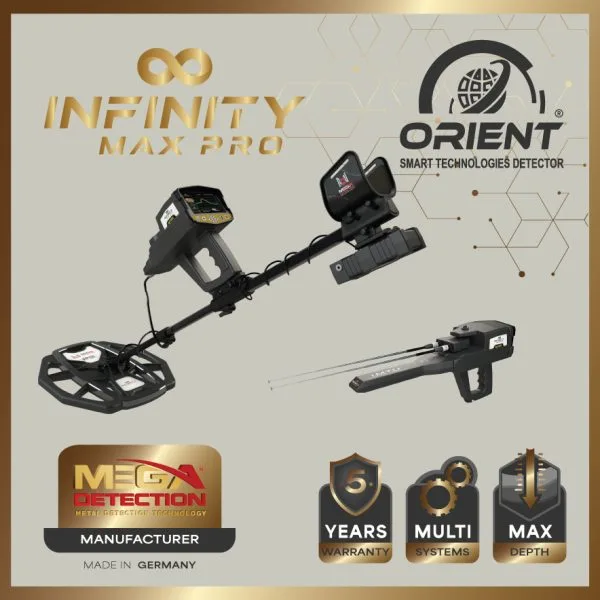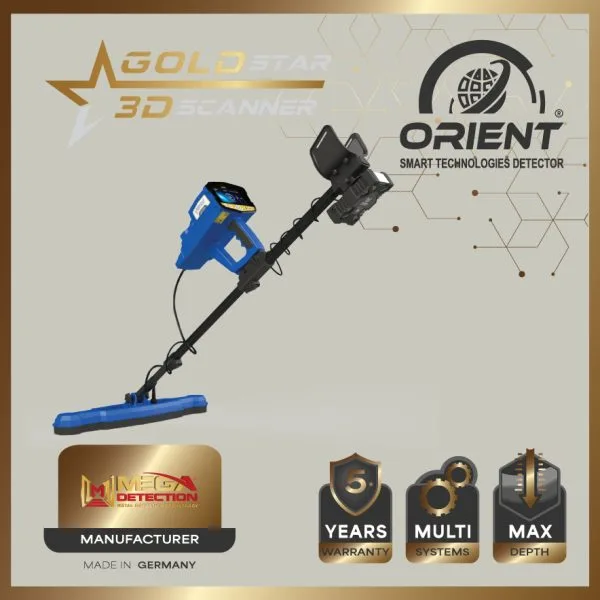

A professional metal detector is a detector built for people who search for a living or for serious, sustained prospecting rather than occasional hobby use. In practice this means one of four things: a high-end simultaneous multi-frequency VLF detector for coins, relics and jewelry in difficult ground; a pulse induction or ZVT detector for natural gold and deep metal in mineralized soil; a 3D ground imaging system that maps the ground’s response over a surveyed grid; or ground-penetrating radar for structures, cavities and utilities. The features that define the class are stability in all soils, precise ground balance and discrimination, interchangeable coils and probes, rugged construction, and advanced settings that reward an experienced operator.
This guide explains what separates professional detectors from entry-level machines, which technology fits which professional task, and which models in our catalog represent each category. Prices range from roughly a thousand dollars to well above twenty thousand, so the first decision is always what you need to find and in what ground.
What makes a metal detector professional?
Marketing labels aside, professional detectors share a set of measurable features:
- Multiple or simultaneous frequencies. Different metals and target sizes respond best to different frequencies. Selectable frequencies, or simultaneous multi-frequency (Minelab Multi-IQ, Nokta SMF), let one detector cover small gold, coins and large deep targets without buying three machines.
- Accurate, adjustable ground balance. Mineral-rich soil reads like metal on a basic detector. Professional models offer automatic, manual and tracking ground balance so the detector stays quiet on red soil, black sand and salt.
- Adjustable discrimination and notch filtering to ignore iron and specific trash while keeping the targets you want, plus a wide, stable target ID scale.
- Fine sensitivity and threshold control for hearing the faintest deep or small targets without noise.
- Fast recovery speed so a good target next to iron is still reported.
- Interchangeable coils and probes for depth, coverage or precision, and in imaging systems a choice of sensors.
- Rugged, often fully waterproof build, long battery life and wireless audio.
Depth is the most misunderstood feature. A professional detector does not find small gold at “meters”: a nugget of a few grams is detected in the first 10 to 20 cm by the best gold machines, and coins at roughly 20 to 35 cm. Depths of a meter or two apply to large metal objects with pulse induction and large coils. Depths of 10, 20 or 40 meters that appear in some product listings for imaging and long-range devices are manufacturer-stated specifications without independent scientific validation; treat them as claims to confirm with proven methods, not as guaranteed performance.
Professional applications and the technology for each
| Application | Best technology | Examples from our catalog |
|---|---|---|
| Coins, jewelry and relics in mineralized or salty ground | Simultaneous multi-frequency VLF | Minelab Manticore, Nokta The Legend 2, Minelab CTX 3030 |
| Natural gold nuggets in heavily mineralized soil | Pulse induction or ZVT | Minelab GPZ 7000, Minelab GPX 6000, Garrett Axiom |
| Large, deep metal objects and caches | Pulse induction with large coils | Lorenz Deep Max Z2, TDI SL |
| Mapping buried objects, foundations and cavities | 3D ground imaging (magnetometer or geoelectric sensors) | OKM EXP 6000, OKM Fusion Professional, Nokta Invenio |
| Structures, tunnels, pipes and cables | Ground-penetrating radar | OKM GEPARD GPR |
| Underwater recovery and diving | Pulse induction, pressure-rated | Nokta Pulse Dive |
Professional VLF and multi-frequency detectors
For archaeological survey support, coin and relic hunting and jewelry recovery, the professional choice today is a simultaneous multi-frequency detector. The Minelab Manticore uses Minelab’s Multi-IQ+ engine, which delivers more power to the coil than the Equinox series, and adds a two-dimensional target ID map that shows conductivity and ferrous content together so the operator can separate a ring from a bottle cap before digging. It is IP68 waterproof. Nokta’s The Legend 2 combines simultaneous multi-frequency with five selectable single frequencies from 4 to 40 kHz, a 99-point target ID and two waterproof coils in the box, which makes it a flexible tool from relic fields to goldfields. The CTX 3030 remains a reference for coin hunters who want full-color target mapping and GPS logging of finds.
Single-frequency professional machines still have a place. The Garrett AT MAX is a waterproof VLF detector with a True All-Metal mode for maximum depth, wireless audio and strong iron discrimination, and the Nokta Impact offers three selectable frequencies (5, 14 and 20 kHz) so one machine can be tuned for large deep targets or small shallow ones.
Professional gold detectors
Natural gold occurs in some of the most mineralized ground on earth, where VLF detectors become noisy. Professional prospectors therefore use pulse induction or Minelab’s ZVT. The GPZ 7000 uses Zero Voltage Transmission and is the most sensitive deep-gold detector in Minelab’s range for its generation, able to find small nuggets in soils where VLF machines cannot operate. The GPX 6000 uses GeoSense-PI, a refined pulse induction with largely automatic operation, a carbon-fiber shaft and low weight, which is why many professional prospectors in Africa and Australia carry it all day. The Garrett Axiom is Garrett’s pulse induction competitor in this class. For a detailed comparison of these machines, see our article on the best metal detectors for gold.
3D ground imaging systems and GPR
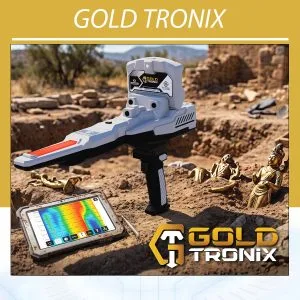
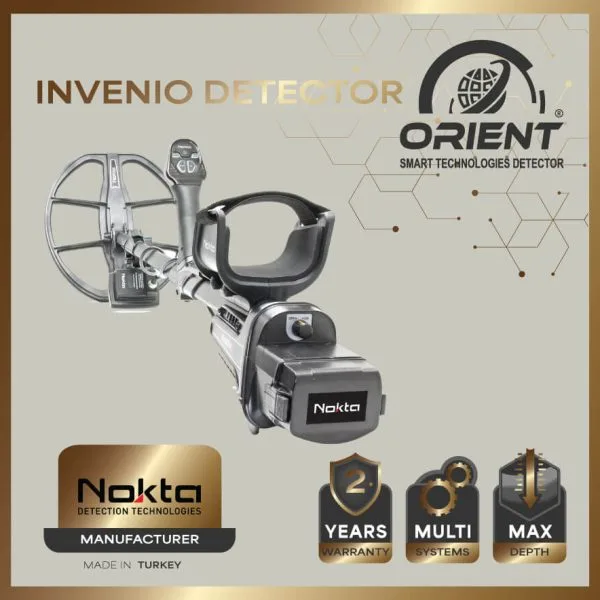
Imaging systems are a different kind of instrument. Instead of beeping over a target, they record sensor readings along a grid of lines and display the variation as a colored 3D plot on a tablet or computer. The OKM EXP 6000 is OKM’s flagship, with several probes and sensors for different survey tasks; the OKM Fusion series offers a lighter package for horizontal and vertical scanning; and the Nokta Invenio combines a conventional detector with real-time imaging of metal targets and cavities.
Two honest points about this category. First, a 3D scan shows variations in the ground’s response, not a photograph of a buried object; interpretation and test digging are always required. Second, the large depth figures attached to these devices are manufacturer-stated and are not independently verified. Used as survey tools by a trained operator, imaging systems are valuable for locating foundations, voids and large metal concentrations; they do not replace a conventional detector for small targets. Our guide to reading 3D ground scan results explains the workflow.
Ground-penetrating radar such as the OKM GEPARD GPR sends radar pulses into the ground and records reflections from layer boundaries, pipes, cables, tunnels and bunkers. GPR is an established geophysical method used by engineers and archaeologists; its effective depth depends strongly on soil conductivity and is far less in wet clay than in dry sand. It is a professional instrument for structures and cavities rather than a treasure detector.
Professional accessories: pinpointers, waterproof and diving detectors
A pinpointer is a hand-held probe that locates the target inside the hole once the main detector has found it. It responds at a few centimeters, which is exactly what is needed to recover a small coin or nugget from loose soil without widening the hole. The Quest XPOINTER is a pulse induction pinpointer rated by its manufacturer to 60 m of water, so it doubles as a diving probe.
A waterproof detector can be fully submerged to a stated depth, typically 3 to 5 m for wading detectors such as the Equinox, Manticore and Legend 2. An underwater or diving detector is pressure-rated far deeper and built for scuba use; the compact Nokta Pulse Dive converts between a scuba detector and a pinpointer and uses pulse induction for stable operation in salt water. Professional recovery divers and beach hunters rely on this category.
Where to buy a professional metal detector
Professional detectors are sold through authorized dealers who import directly from the manufacturers and can offer warranty service, training and spare coils. Buying from an unauthorized seller risks gray-market units without warranty. Orient Detectors is based in Istanbul, ships worldwide and advises on model selection over WhatsApp; because professional detectors cost from about one thousand dollars for a multi-frequency VLF to tens of thousands for imaging systems and GPR, that conversation about your targets, soil and budget is worth having before you order. Our article on metal detector prices explains what drives the cost.
Frequently asked questions
What is the difference between a professional and a beginner metal detector?
Professional detectors add multi-frequency operation, precise ground balance, adjustable discrimination and threshold, fast recovery, interchangeable coils and rugged waterproof construction. Beginner detectors simplify or omit these to keep the price and learning curve low.
How deep can a professional metal detector detect?
Small gold at 10 to 20 cm, coins at roughly 20 to 35 cm, and large metal objects at 1 to 2 m with pulse induction and large coils. Depth figures of tens of meters are manufacturer-stated claims for imaging and long-range devices, not verified detection depths.
Which professional detector is best for gold?
For natural gold in mineralized ground, the Minelab GPZ 7000 (ZVT) and GPX 6000 (pulse induction) are the professional standards; the Garrett Axiom is the main alternative.
Is a 3D ground scanner a metal detector?
Not in the usual sense. It maps variations in the ground’s response over a grid and displays them as an image; it does not show the shape of an object and must be followed by conventional detection and test digging.
Do professionals use pinpointers?
Yes. A pinpointer speeds up every recovery and protects the find and the site by keeping holes small.
Conclusion
The right professional metal detector depends on the job: simultaneous multi-frequency VLF for coins, relics and jewelry; pulse induction or ZVT for natural gold and deep metal; 3D imaging and GPR for structures and cavities when operated as survey tools with realistic expectations. Judge every model by its technology, ground handling and build rather than by advertised depth. If you tell our team in Istanbul what you need to find and where, we will recommend the right class of instrument over WhatsApp.
Not sure which detector fits you? Contact us on WhatsApp.
Read also
Related Articles