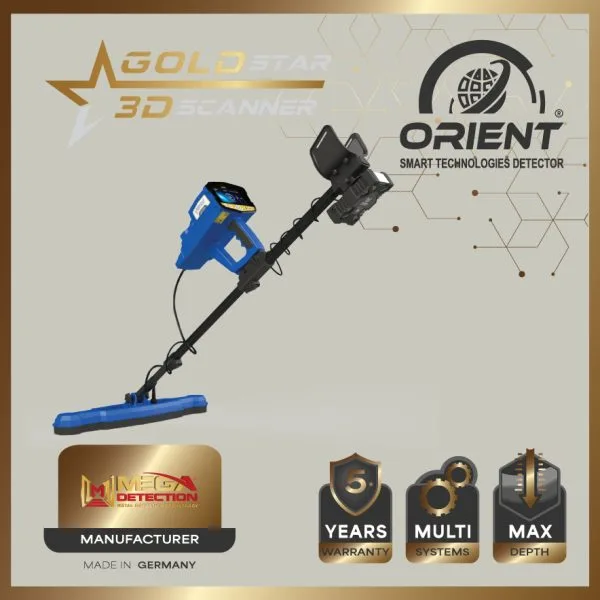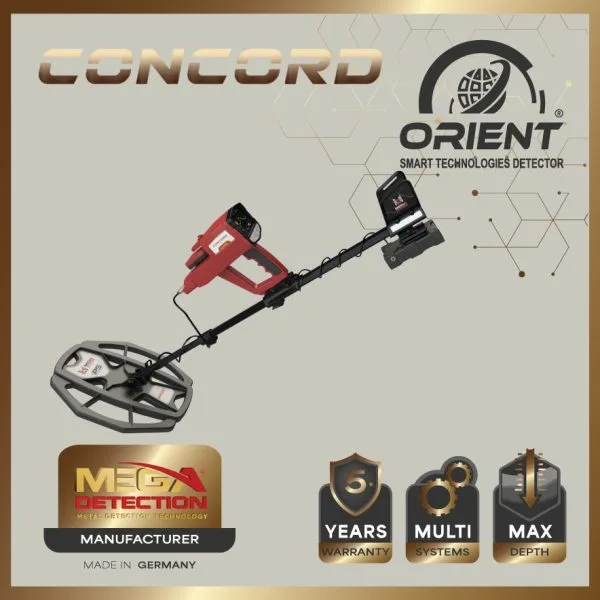

The main metal detector components are the search coil, the control box, the shaft and the armrest, plus the battery, speaker or headphones and, on most modern models, a display. The search coil transmits an electromagnetic field and receives the response from buried metal; the control box processes that response and turns it into sound, a Target ID number and a depth estimate; the shaft and armrest let you sweep the coil comfortably for hours. Knowing what each part does makes it much easier to set up, use and maintain a detector.
This guide describes the main metal detector components, how each affects performance, and what to check when you buy or maintain a detector. It applies to handheld VLF, multi-frequency and pulse induction detectors; fixed security arches and industrial inspection systems use related parts in a different layout.
What are the four basic components of a metal detector?
- Search coil (search head). The flat disc or ellipse you sweep over the ground. It contains the transmit and receive windings and is the part that actually senses metal.
- Control box. The electronics housing, usually with the display, buttons, speaker and battery compartment. It generates the transmit signal, analyzes the return and drives the audio and screen.
- Shaft. The pole, normally in two or three adjustable sections, that connects the coil to the control box and sets the detector’s length.
- Armrest (arm cuff) and grip. The cuff that supports your forearm and the handle you hold. Together they balance the detector and reduce fatigue.
The search coil: the part that finds the metal
Inside the coil housing are at least two windings. The transmit winding carries an alternating current that creates a changing magnetic field in the ground. When that field reaches a metal object, it induces small eddy currents in the metal, and those currents create their own weak field. The receive winding picks up this secondary field and passes it to the control box. In a pulse induction detector the same winding (or a mono coil) sends short pulses and listens for the decaying response between them.
Coil design changes what the detector sees:
- Concentric coils have a transmit winding around the outside and a receive winding in the center. They pinpoint precisely and suit clean parks and beaches.
- Double-D (DD) coils place two D-shaped windings back to back. They cover ground in a wide strip, separate targets well in trash and handle mineralized soil better. Most modern detectors ship with a DD coil.
- Mono coils are used on pulse induction gold detectors; one winding does both jobs, giving depth and sensitivity in mineralized ground.
- Size: a small coil (around 15 cm) finds small, shallow targets and works in trash; a large coil (28 cm and above) gains depth on larger objects and covers ground faster.
Most coils are waterproof even when the control box is not, and many detectors accept interchangeable coils. Our guide to metal detector coil types explains how to choose one.
The control box: the detector’s brain
The control box compares the transmitted and received signals. In a VLF detector it measures how much the return signal is shifted in phase and how strong it is; from these it estimates the target’s conductivity and size, assigns a Target ID number, picks an audio tone and applies your discrimination settings. The main controls you will find are:
- Sensitivity (gain): how small a signal the detector reports. Higher is deeper but noisier.
- Discrimination and notch: which target ranges are silenced, typically iron and foil.
- Ground balance: cancels the signal of the soil itself so that mineralized ground does not sound like metal. Automatic, manual or tracking.
- Search modes: presets such as Park, Field, Beach or Gold that bundle these settings.
- Threshold and audio tones: the background hum and the number of tones used to describe targets.
- Pinpoint: a non-motion mode to locate the exact center of a target before digging.
How these functions work together is covered in our metal detector principle article.
Display, audio and power
Display. Entry-level detectors use an LCD showing Target ID, depth estimate, mode, battery level and sensitivity; some high-end models add a large color screen with target traces. A few detectors have no screen and rely on audio alone.
Speaker and headphones. Audio is the primary output. Headphones block wind and let you hear faint deep targets; many current detectors include wireless headphones, and some brands use low-latency proprietary links so the tone arrives without noticeable delay.
Battery. Older and budget detectors run on AA cells; most current models use a rechargeable lithium battery charged by USB. Run time per charge is typically a working day. A battery indicator on the screen is a basic but important feature.
Shaft, armrest and ergonomics
These detector components decide comfort rather than depth. The shaft is usually aluminum or carbon fiber in telescopic or S-shaped sections, locked by cam locks or twist collars. Adjust it so that the coil rests flat on the ground with your arm relaxed and slightly bent. The armrest should hold your forearm without pinching, and a strap keeps the detector in place when you lift it. Total weight for a typical hobby detector is roughly 1 to 1.5 kg; balance matters as much as weight, because a nose-heavy detector tires the shoulder quickly. If weight is a priority, see our list of the lightest metal detectors.
Metal detector components compared at a glance
| Component | Function | What to check when buying |
|---|---|---|
| Search coil | Transmits the field and receives the target response | Type (DD, concentric, mono), size, waterproofing, interchangeability |
| Control box | Processes signals; discrimination, ground balance, Target ID | Ground balance options, modes, waterproof rating |
| Display | Shows ID, depth, settings and battery | Readability in sunlight, backlight |
| Audio | Tones that describe the target | Number of tones, headphone jack or wireless link |
| Battery | Powers the detector | Rechargeable or AA, run time, USB charging |
| Shaft and armrest | Length, balance and comfort | Adjustment range, locks, weight and balance |
Accessories that complete the kit
Three accessories are used so often that they count as part of the system alongside the core detector components: a pinpointer to find the target in the hole, a digging tool or sand scoop suited to your ground, and a finds pouch. Coil covers protect the coil from scratches, and spare coils extend what one detector can do. Our metal detecting accessories guide lists the rest.
Caring for the components
- Rinse the coil and lower shaft with fresh water after beach or river use, and dry the control box before storage.
- Check the coil cable for cuts and keep it wound loosely around the shaft, not stretched tight.
- Remove AA batteries before long storage; keep lithium batteries partly charged.
- Use a coil cover and never lift the detector by the cable.
More on caring for detector components in our article on metal detector maintenance.
Frequently asked questions
What is the most important component of a metal detector?
Of all the detector components, the search coil matters most, because it defines what the detector can sense, followed by the quality of the control box’s ground balance and discrimination. Shaft and display affect comfort and convenience rather than detection.
Can I change the coil on my metal detector?
On most mid-range and professional detectors, yes; manufacturers offer small, large and elliptical coils for the same control box. Entry-level detectors sometimes have a fixed coil. Check the product page or ask us before buying a spare coil.
Is the control box waterproof?
Not always. Coils are almost always waterproof, but the control box is only waterproof on detectors rated for submersion, such as the Nokta Simplex or Minelab Equinox (about 3 m). Weatherproof means rain-resistant, not submersible.
Why does my detector beep when there is no metal?
Usually because the ground itself (minerals, hot rocks or wet salt sand) is being detected, or because of electrical interference. Ground balancing, lowering sensitivity or shifting frequency normally solves it; a loose coil cable or connector can also cause false signals.
Conclusion
The core metal detector components are simple: a coil that senses, a control box that interprets, and a shaft and armrest that make the work comfortable. Understanding them helps you choose the right coil for your ground, set sensitivity and ground balance correctly, and keep the detector working for years. If you want advice on a detector or a spare coil for your conditions, our team in Istanbul can help over WhatsApp.
To choose the right device, browse all our detectors and GR-4 GroundTech / Quest XPOINTER.
Not sure which detector fits you? Contact us on WhatsApp.
Read also
Related Articles