
The newest metal detectors worth knowing about fall into three groups: flagship gold machines such as the Minelab GPZ 8000 (GeoZVT) and the Nokta Magnetar 9000 (pulse induction), new simultaneous multi-frequency VLF detectors such as the Minelab Manticore, Nokta Legend 2 and Garrett Vortex series, and specialized gold detectors such as the Garrett Axiom and the Minelab Gold Monster 2000. Which one is “best” depends entirely on your target and ground: small gold in mineralized soil, coins and jewelry in parks and beaches, or deep relics.
This guide summarizes the most recent additions to the Orient Detectors catalog, the technology behind each one, and who should consider it. We stick to the specifications published on the product pages and to established facts about each technology; where a manufacturer makes a performance claim we present it as the manufacturer’s statement.
What is actually new in metal detector technology?
Three developments define the current generation:
- Simultaneous multi-frequency VLF. Instead of one frequency, the detector transmits and processes several at once. The result is more stable target IDs, better handling of wet salt sand and mineralized ground, and good performance on both small and large targets. Minelab calls its version Multi-IQ (and Multi-IQ+ on the Manticore), Nokta calls it SMF, and Garrett calls the Vortex implementation Multi-Dimensional Multi-Frequency.
- Refined pulse induction and ZVT for gold. Pulse induction (PI) ignores most ground mineralization and finds large, deep gold; new designs such as Minelab’s GeoSense-PI in the GPX 6000, Garrett’s Ultra Pulse in the Axiom and Nokta’s dual-receiver coil in the Magnetar 9000 aim to recover the sensitivity to small nuggets that PI traditionally lacked. Minelab’s ZVT, now GeoZVT in the GPZ 8000, is a separate technology that targets depth on both small and large gold in bad ground.
- Better ergonomics and audio. Carbon fiber telescopic shafts, lighter control boxes, wireless low-latency headphones, color displays and vibration feedback are now standard on premium models.
The newest flagship gold detectors
Minelab GPZ 8000
The GPZ 8000 is Minelab’s current flagship gold detector. It uses GeoZVT technology, a development of the ZVT system of the GPZ 7000, with four selectable ground types, Echo Sonic Pro audio and a choice of three Z-Set toroidal coils (Z18, Z17 and Z13). Minelab lists the weight at approximately 2.78 kg and supplies the PRO-SWING 125 harness to carry it. It is built for serious prospectors working heavily mineralized goldfields where VLF detectors fail. Read our GPZ 8000 review for a detailed assessment.
Nokta Magnetar 9000
The Magnetar 9000 is Nokta’s flagship pulse induction detector for gold. Its Dual-Receiver Coil system runs two receive channels from one coil so that it can remain sensitive to small, shallow gold while reaching deep for large targets. It is rated IP68 and submersible to 3 m, offers Easy and Expert modes, a color LCD, LED flashlight and vibration, and weighs roughly 2.1 to 2.4 kg depending on configuration. It is aimed at prospectors who want PI performance in hot rocks and salt without the price of a GPZ.
Garrett Axiom
The Garrett Axiom is a pulse induction gold detector built around Garrett’s Ultra Pulse technology and Terra-Scan dual-channel ground balancing. It offers four detection modes tuned for different gold sizes and ground types, including salt. It is a practical choice for prospectors who want a lighter PI machine for mineralized ground.
The newest multi-frequency VLF detectors
Minelab Manticore
The Manticore runs Minelab’s Multi-IQ+ engine, which the manufacturer states delivers 50 percent more power to the coil than the Equinox series. Its signature feature is a 2D target ID map that plots conductivity against ferrous content, making it easier to separate good targets from iron. It is IP68 waterproof to 5 m and weighs about 1.3 kg. It suits coin, relic and jewelry hunters who work trashy sites and salt beaches and want the most information per signal.
Nokta The Legend 2
The Legend 2 is Nokta’s flagship SMF detector. It adds a 99-point target ID scale, FerroCheck ferrous filtering and seven audio tones to the SMF engine of the original Legend, keeps the five single frequencies (4, 10, 15, 20 and 40 kHz) and ships with two waterproof DD coils (11-inch and 8 x 5.5-inch) plus low-latency Bluetooth headphones. It is a strong all-rounder for parks, fields, beaches, relic sites and mild goldfields.
Garrett Vortex series
The Garrett Vortex series is Garrett’s new multi-frequency line using Multi-Dimensional Multi-Frequency (MD-MF) technology. Garrett describes it as a transformable series that can be upgraded as the user’s skills grow, aimed at coin shooting, relic hunting and beach and park detecting.
New specialized gold detectors
Minelab Gold Monster 2000
The Gold Monster 2000 follows the popular Gold Monster 1000 in Minelab’s entry-level gold range. Minelab describes its Multi-Au technology as combining VLF sensitivity with a pulse induction soil-handling engine, with Echo Wave audio to separate weak gold signals from hot rocks and iron, a Gold Chance Indicator on the display and a carbon fiber telescopic shaft. It targets prospectors who hunt small nuggets and want a simple, automatic machine. See our Gold Monster 2000 review.
Multi-system detectors
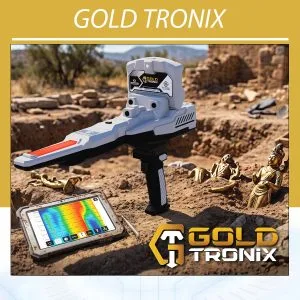
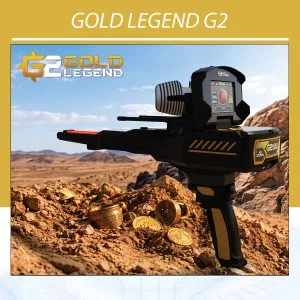
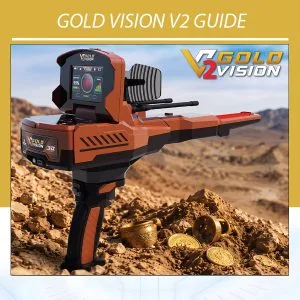
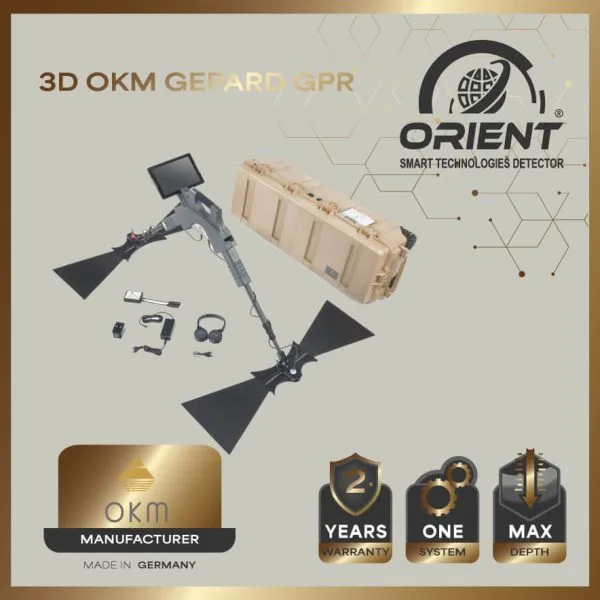
Our catalog also includes recent multi-system devices such as the Gold Stinger X6, which combines six detection systems in one unit. Depth and range figures for this class of equipment are manufacturer-stated specifications without independent scientific validation; the all-metal and discrimination systems work on conventional induction principles, while long-range or scanning systems should be confirmed with a PI or VLF detector before any excavation. Our Gold Stinger X6 review explains what each system does.
Comparison of the newest metal detectors
| Detector | Technology | Main purpose | Waterproof | Weight (manufacturer) |
|---|---|---|---|---|
| Minelab GPZ 8000 | GeoZVT | Deep and small gold in mineralized ground | See product page | About 2.78 kg |
| Nokta Magnetar 9000 | Pulse induction, dual-receiver coil | Gold in hot rocks and salt | IP68, 3 m | About 2.1 to 2.4 kg |
| Garrett Axiom | Ultra Pulse PI | Gold nuggets, salt and mineralized soil | See product page | See product page |
| Minelab Manticore | Multi-IQ+ SMF VLF | Coins, relics, jewelry, beaches | IP68, 5 m | About 1.3 kg |
| Nokta Legend 2 | SMF VLF | All-purpose, mild gold | Waterproof coils; see product page | See product page |
| Garrett Vortex | MD-MF VLF | Coins, relics, parks, beaches | See product page | See product page |
| Minelab Gold Monster 2000 | Multi-Au VLF with PI soil handling | Small gold nuggets | See product page | See product page |
How to choose among the newest detectors
- Define the target first. Small gold nuggets need a high-frequency VLF or a sensitive PI; coins and jewelry need multi-frequency VLF with good discrimination; large deep relics or caches need PI with a large coil.
- Then the ground. Mild soil: any VLF works. Heavily mineralized or hot-rock ground: PI or ZVT. Wet salt beaches: simultaneous multi-frequency or PI.
- Be realistic about depth. Small nuggets are found in the top few centimeters, coins at roughly 20 to 30 cm depending on the detector and soil, and large objects at around 1 to 2 m only with PI and large coils. No new detector changes these physics.
- Check the laws. Prospecting may require permits under the heritage and mining laws of your country, and digging on archaeological sites without authorization is illegal everywhere.
- Test before you trust. Bury known targets at known depths and learn the sounds of your new detector before you hunt.
Frequently asked questions
What is the newest Minelab gold detector?
The GPZ 8000 is Minelab’s latest flagship gold detector, using GeoZVT technology. For small nuggets at a lower price, the Gold Monster 2000 is the newest entry-level Minelab gold detector.
Is a new detector always deeper than an old one?
No. Depth is limited by the physics of target size, soil and coil size. New models improve stability, target separation, ergonomics and audio more than raw depth.
Which new detector is best for beginners?
A simultaneous multi-frequency VLF such as the Legend 2 or a Vortex model covers the widest range of targets with preset modes. For gold only, the Gold Monster 2000 is designed to be automatic and simple.
Are multi-system detectors a new technology?
They combine several existing systems in one box. Their conventional induction modes behave like any VLF or PI detector; their long-range and imaging claims are manufacturer-stated and not independently validated.
Conclusion
The newest metal detectors bring real gains in multi-frequency stability, pulse induction sensitivity to small gold, and comfort, but they do not change the basic rules: match the technology to your target and ground, and treat depth claims with caution. If you want a recommendation among the GPZ 8000, Magnetar 9000, Manticore, Legend 2, Axiom or Gold Monster 2000 for your specific sites, our team in Istanbul will advise you over WhatsApp.
Not sure which detector fits you? Contact us on WhatsApp.
Read also
Related Articles